Story code: ST-001136
Part 1: The Broken Window
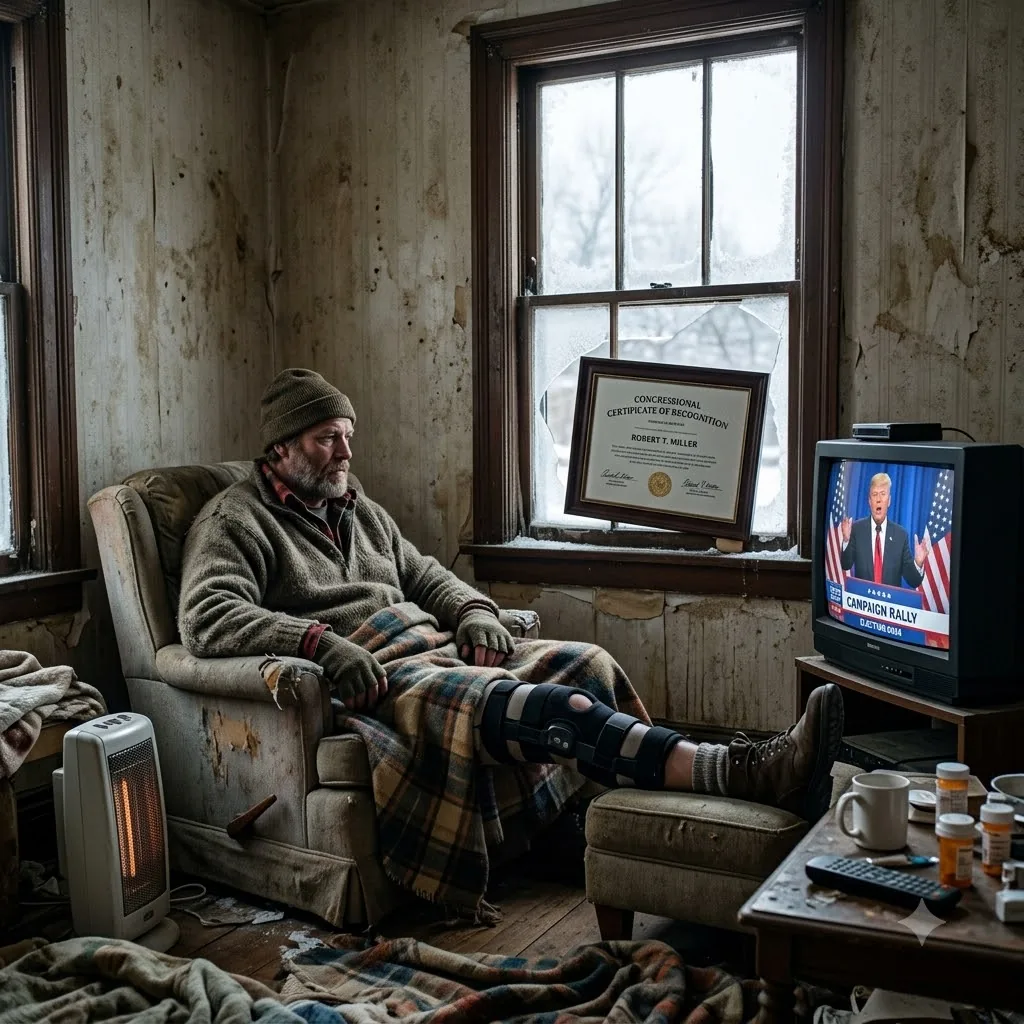
The gold-foil seal on Marcus’s “Hometown Hero” congressional certificate caught the flicker of the television screen as the heavy oak frame took the weight of a shattered window sash. Icy drafts slipped around the edges of the glass, but the thick wooden border held the broken pane steady against the bitter winter wind rattling the siding of the house. Marcus sat ten feet away, wrapped in two scratchy wool blankets, watching the governor pace across a brightly lit stage on the local news broadcast. The bold banner at the bottom of the screen flashed a familiar promise about bringing the automotive jobs back to the valley by the end of the year.
Marcus leaned closer to the glowing screen, his injured leg stretched out stiffly and propped on an overturned milk crate. The cold in the living room was deep enough to make his breath visible, a thin white mist hanging in the air with every exhale. But the man on the television was talking about domestic steel, assembly lines, and reopening the rusted plant gates by spring. Marcus slid an arm out from under the heavy blankets and pressed the volume button on the remote. The booming cadence of the political rally filled the empty, unheated house. The governor pointed directly at the camera, talking about the dignity of the factory floor, the resilience of the local workforce, and the loyalty owed to the men and women who built the town from the ground up.
A sharp, sudden knock at the front door broke the rhythm of the televised speech.
Marcus gripped the worn armrests of his chair, hauled himself upright with a grunt, and waited a few seconds for the familiar ache in his reconstructed knee to settle. The knocking came again, louder and more insistent this time, rattling the loose brass hinges of the front door. He limped across the bare hardwood floorboards, pulling his faded surplus coat tighter around his neck, and undid the heavy deadbolt.
Elias stood on the porch, his shoulders hunched against the biting chill. The state caseworker wore a heavy parka and clutched a thick manila folder tight to his chest. He looked past Marcus into the dark, narrow hallway, listening to the echoing voice of the governor spilling out from the living room television.
Marcus held the door open just enough to block the wind, planting his good leg firmly. He told Elias he had no business with the state today and told him to go back to his warm office.
Elias pushed against the door anyway, his boots squeaking on the frost-covered porch as he forced his way into the cramped entryway. He held up the manila folder and tapped the thick stack of paperwork clipped to the outside. It was a state-funded application for a solar panel installation retraining program. Elias stated he had driven forty miles on icy backroads to make sure Marcus signed the enrollment forms before the funding deadline closed at midnight.
Marcus refused to take the plastic pen Elias offered. He gestured aggressively back toward the living room, where the televised rally continued to echo off the bare walls. He told the caseworker to shut up and listen to the broadcast. There was no need for a crippled mechanic to learn how to wire solar panels on dangerous residential roofs when the main plant was opening back up. The governor was on the screen right this second, guaranteeing the heavy manufacturing jobs were returning to the valley. The politician was promising that wounded veterans and laid-off union men like Marcus would be the very first ones hired back on the line.
Elias stepped past Marcus, walking fully into the freezing living room. He stopped in the center of the faded rug, staring intently at the television. The broadcast showed the governor smiling broadly, shaking hands with men in pristine hardhats, holding up a shiny new engine part for the cheering crowd to see.
Marcus watched Elias’s expression completely flatten. The caseworker looked at the glowing television, then at the frost forming on the inside of the walls, and finally at the congressional certificate wedged desperately into the broken window frame to keep the snow out. The applause from the television rally reached a deafening crescendo as the governor raised his hands in victory.
Elias dropped his arm slowly. He let the heavy solar retraining application fall onto the nearest side table with a dull thud. He did not look back at the television screen. He turned slowly and looked directly into Marcus’s eyes, his face completely devoid of any emotion.
Elias said the broadcast on the screen was a complete lie.
Marcus stepped forward, his fists tightening at his sides as his heart hammered against his ribs. He pointed a trembling finger at the television, demanding Elias take back the words, insisting the governor was live on air making the official announcement to the entire state.
Elias did not flinch or back away. He told Marcus the state office had sent him out here for a specific reason, and it had absolutely nothing to do with saving Marcus a spot in a classroom. The caseworker stepped closer, his voice dropping to a low, urgent register that cut right through the volume of the cheering crowd on the television. He told Marcus they needed to sit down right now and talk about what was actually happening at the factory today.
The gold-foil seal on Marcus’s “Hometown Hero” congressional certificate caught the flicker of the television screen as the heavy oak frame took the weight of a shattered window sash. Icy drafts slipped around the edges of the glass, but the thick wooden border held the broken pane steady against the bitter winter wind rattling the siding of the house. Marcus sat ten feet away, wrapped in two scratchy wool blankets, watching the governor pace across a brightly lit stage on the local news broadcast. The bold banner at the bottom of the screen flashed a familiar promise about bringing the automotive jobs back to the valley by the end of the year.
Marcus leaned closer to the glowing screen, his injured leg stretched out stiffly and propped on an overturned milk crate. The cold in the living room was deep enough to make his breath visible, a thin white mist hanging in the air with every exhale. But the man on the television was talking about domestic steel, assembly lines, and reopening the rusted plant gates by spring. Marcus slid an arm out from under the heavy blankets and pressed the volume button on the remote. The booming cadence of the political rally filled the empty, unheated house. The governor pointed directly at the camera, talking about the dignity of the factory floor, the resilience of the local workforce, and the loyalty owed to the men and women who built the town from the ground up.
A sharp, sudden knock at the front door broke the rhythm of the televised speech.
Marcus gripped the worn armrests of his chair, hauled himself upright with a grunt, and waited a few seconds for the familiar ache in his reconstructed knee to settle. The knocking came again, louder and more insistent this time, rattling the loose brass hinges of the front door. He limped across the bare hardwood floorboards, pulling his faded surplus coat tighter around his neck, and undid the heavy deadbolt.
Elias stood on the porch, his shoulders hunched against the biting chill. The state caseworker wore a heavy parka and clutched a thick manila folder tight to his chest. He looked past Marcus into the dark, narrow hallway, listening to the echoing voice of the governor spilling out from the living room television.
Marcus held the door open just enough to block the wind, planting his good leg firmly. He told Elias he had no business with the state today and told him to go back to his warm office.
Elias pushed against the door anyway, his boots squeaking on the frost-covered porch as he forced his way into the cramped entryway. He held up the manila folder and tapped the thick stack of paperwork clipped to the outside. It was a state-funded application for a solar panel installation retraining program. Elias stated he had driven forty miles on icy backroads to make sure Marcus signed the enrollment forms before the funding deadline closed at midnight.
Marcus refused to take the plastic pen Elias offered. He gestured aggressively back toward the living room, where the televised rally continued to echo off the bare walls. He told the caseworker to shut up and listen to the broadcast. There was no need for a crippled mechanic to learn how to wire solar panels on dangerous residential roofs when the main plant was opening back up. The governor was on the screen right this second, guaranteeing the heavy manufacturing jobs were returning to the valley. The politician was promising that wounded veterans and laid-off union men like Marcus would be the very first ones hired back on the line.
Elias stepped past Marcus, walking fully into the freezing living room. He stopped in the center of the faded rug, staring intently at the television. The broadcast showed the governor smiling broadly, shaking hands with men in pristine hardhats, holding up a shiny new engine part for the cheering crowd to see.
Marcus watched Elias’s expression completely flatten. The caseworker looked at the glowing television, then at the frost forming on the inside of the walls, and finally at the congressional certificate wedged desperately into the broken window frame to keep the snow out. The applause from the television rally reached a deafening crescendo as the governor raised his hands in victory.
Elias dropped his arm slowly. He let the heavy solar retraining application fall onto the nearest side table with a dull thud. He did not look back at the television screen. He turned slowly and looked directly into Marcus’s eyes, his face completely devoid of any emotion.
Elias said the broadcast on the screen was a complete lie.
Marcus stepped forward, his fists tightening at his sides as his heart hammered against his ribs. He pointed a trembling finger at the television, demanding Elias take back the words, insisting the governor was live on air making the official announcement to the entire state.
Elias did not flinch or back away. He told Marcus the state office had sent him out here for a specific reason, and it had absolutely nothing to do with saving Marcus a spot in a classroom. The caseworker stepped closer, his voice dropping to a low, urgent register that cut right through the volume of the cheering crowd on the television. He told Marcus they needed to sit down right now and talk about what was actually happening at the factory today.