Story code: ST-000395
Part 2: The Architecture of Panic
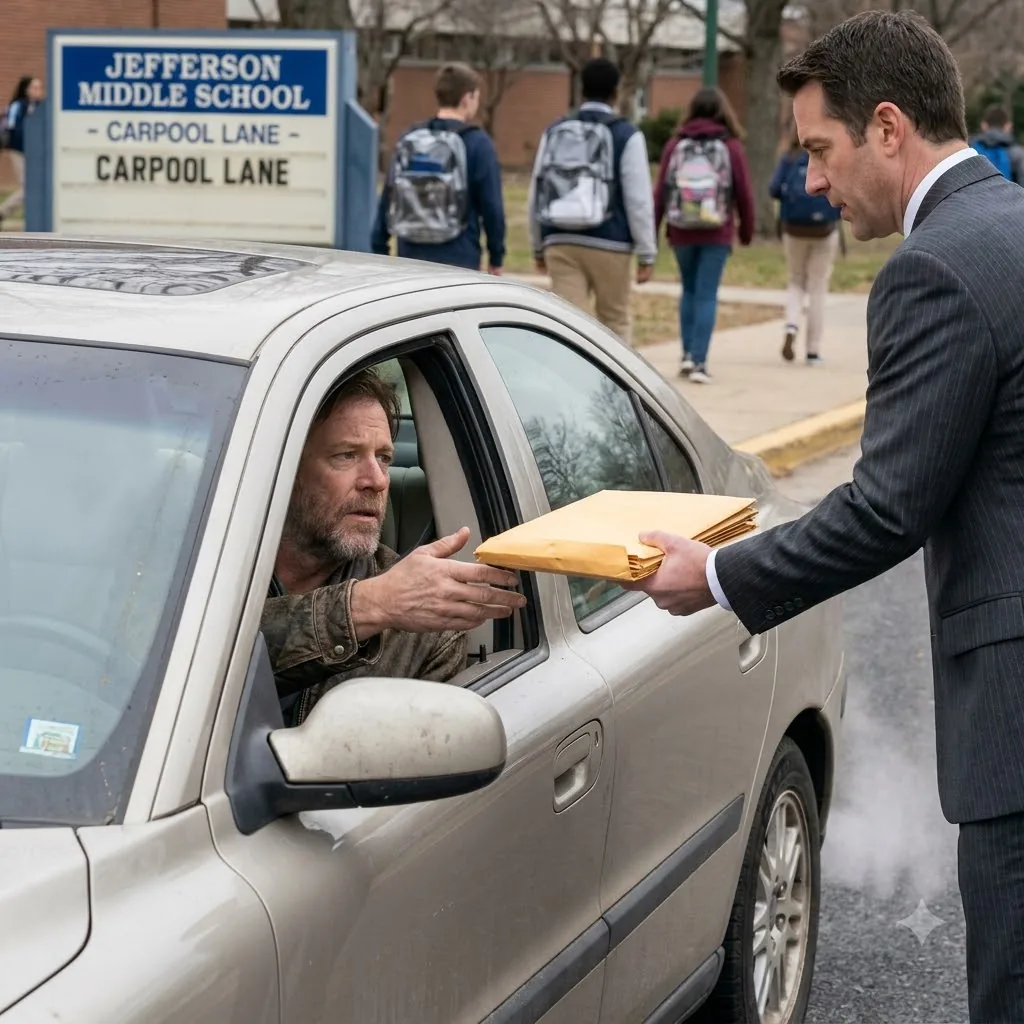
I stared at the man in the charcoal suit, the crisp autumn air suddenly feeling too thin to breathe. *One hundred and forty beats per minute.* The numbers echoed in my skull. I didn’t need to look at my phone to verify if he was lying. I knew the exact threshold for the extreme panic alert because I was the lead engineer who had coded it into the school district’s mandatory safety app three years ago.
My daughter yanked the heavy passenger door open before I could respond. She threw her clear plastic backpack onto the floorboard. It landed with a loud crack, the sound of hard plastic binders slapping against the car mats. She slumped into the leather seat, her breathing shallow and uneven. Her face was still drained of color, her eyes wide and glassy. Around her left wrist, the thick black band of the school-issued biometric tracker blinked with a slow, rhythmic amber light.
“Hey, sweetie,” I managed to say, forcing my voice to stay level. My hands shook as I quickly folded the thick stack of legal papers, hiding the bold ‘Forty Million Dollars’ from her view. I shoved the summons under my thigh. “Are you okay?”
“It was really loud in the hallway,” she whispered, pulling her knees up to her chest. “They made us press against the lockers. My watch buzzed the whole time.”
I looked back at the lawyer. He was watching the exchange with a detached, clinical fascination, like a scientist observing lab rats in a maze. He hadn’t moved his arms from my window sill.
“It is a necessary precaution,” the man said smoothly, his voice dropping to a volume only I could hear. “Stress inoculation. We need the data to refine the threat-assessment algorithms, Mark. You know that better than anyone.”
My stomach twisted. They weren’t just running a routine lockdown drill to test the heavy steel doors or the intercoms. They were running a live stress test on twelve-year-olds. They had deliberately terrified hundreds of kids just to calibrate the surveillance network I had helped them build.
“Get away from my car,” I snarled, keeping my voice low so my daughter wouldn’t hear the panic vibrating in my throat. “I resigned from SentinelTech six months ago. My non-compete is over. You have no legal right to serve me here, and you have absolutely no right to monitor her live biometrics without parental consent.”
The man chuckled, a dry, humorless sound that barely parted his lips. He finally lifted his arms off my door and stood up straight, adjusting his expensive silk tie.
“Read the fine print of the district’s mandatory safety policy, Mark,” he said, tapping a manicured finger against the roof of my car. “By enrolling her in public school, you gave consent. The network covers every student, every classroom, every hallway. We own the architecture. We own the data streams. And if you go through with your little whistleblowing crusade to the federal regulators tomorrow morning, we will own you, too.”
He gestured toward the folded papers hidden under my leg.
“Forty million dollars is just the opening salvo for intellectual property theft,” the lawyer continued, his tone conversational, as if we were discussing the weather. “You try to expose the backdoor protocols you built, you try to tell the world how we monetize the psychological profiles of millions of children, and my firm will freeze every asset you have before you finish your morning coffee. Your mortgage. Your retirement. Her college fund. It will take us less than an hour to financially erase your family.”
“Dad?” My daughter’s voice trembled from the passenger seat. I glanced over. She was staring at her wrist. The amber light on her tracker had shifted to a rapid, pulsing red. “Dad, it’s buzzing again. I didn’t do anything wrong. I’m sitting still.”
I felt a cold sweat break across my shoulders. The system was designed to automatically log ‘aberrant emotional spikes’ and report them directly to the school administration and local law enforcement. It was meant to flag potential threats. But now, they were triggering it manually. They were messing with her device from the outside.
“Make it stop,” I demanded, whipping my head back to the lawyer. “You’re scaring her. Turn it off.”
“I’m not doing anything, Mark,” the man said, raising his hands in a gesture of mock innocence. “The algorithm operates autonomously. It senses an unstable environment. Perhaps her heart rate is elevated because her father is acting erratically.”
He reached into his tailored jacket one last time and pulled out a sleek, black titanium card. He dropped it through the open window. It landed perfectly on the center console, right next to the gear shift. There was no name on the card, just a single phone number embossed in silver.
“You have until 8:00 AM tomorrow to withdraw your complaint with the regulatory board and sign the non-disclosure addendum,” he said, taking a deliberate step back from my sedan. “If you do, the lawsuit disappears. You go back to finding a nice, quiet job in the private sector, and your daughter goes back to being just another data point in a safe, secure school. If you don’t call that number, we proceed to discovery. And trust me, Mark, we know every digital footprint you’ve left since you were born.”
I watched him turn and walk away, his polished leather shoes clicking sharply against the asphalt as he merged into the crowd of parents.
“Dad, please,” my daughter begged, scratching frantically at the thick plastic band around her wrist. The skin beneath it was turning raw and red. “It’s burning. Why is it burning?”
I grabbed her hands, stopping her from tearing at the tracker. I knew exactly what would happen if she managed to unlatch it-an automatic distress signal would dispatch armed campus security to our vehicle within sixty seconds. We were trapped in a cage of my own making.
I looked down at the forty-million-dollar lawsuit crushing my leg, and then at the black titanium card gleaming on the console. The choice was clear: bankrupt my family and expose the nightmare I helped create, or sacrifice my daughter’s freedom to ensure our survival.
Then, my cell phone vibrated in the cup holder. The caller ID flashed my wife’s name, but when I answered, it wasn’t my wife’s voice on the line. It was an automated, synthesized audio prompt from our bank, politely informing me that all of my checking and savings accounts had just been placed under an emergency administrative hold.