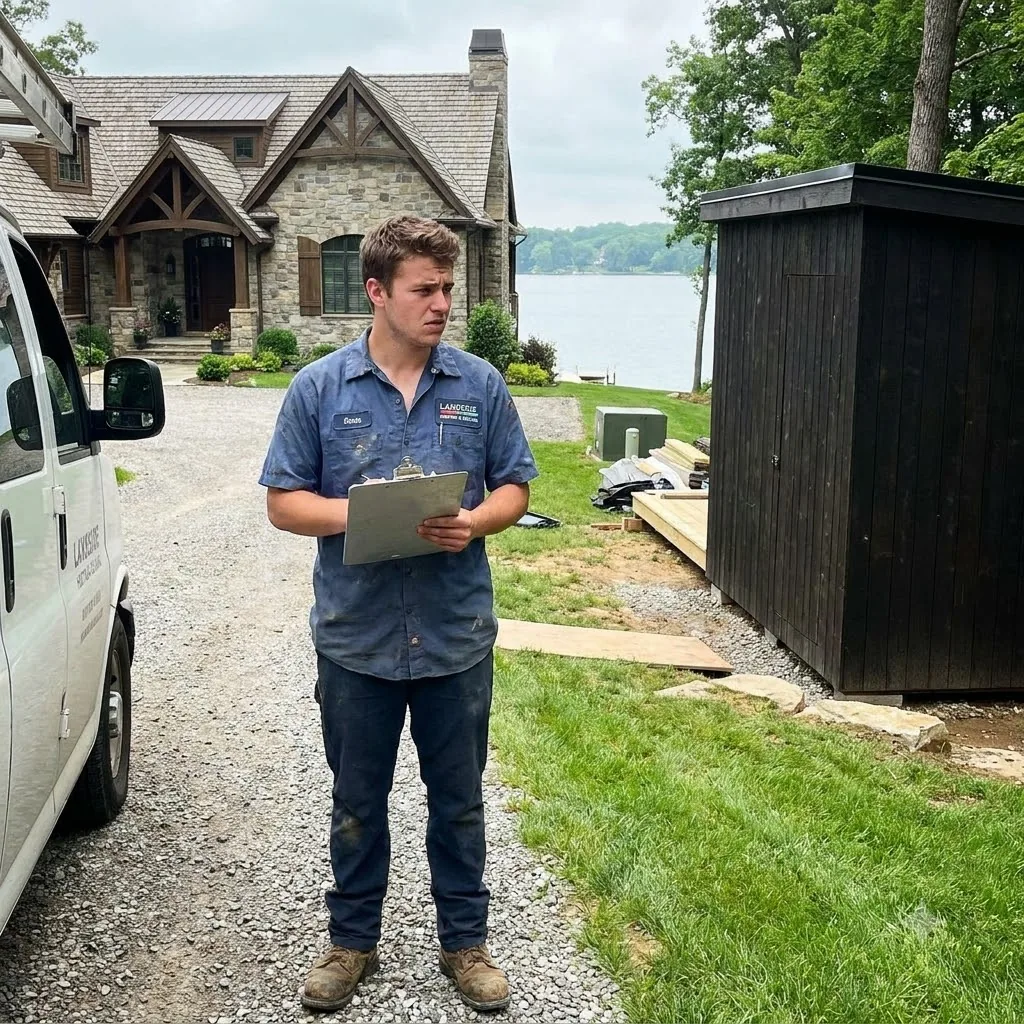
Story code: ST-000023
Part 3: Camper 8144
The heavy steel door locked behind them with a finality that vibrated through the soles of Silas’s scuffed boots. He stood in a long, concrete hallway bathed in the sterile glare of caged LED lights. The air in the corridor was chillingly cold, but an underlying dampness clung to it, carrying the distinct, sour odor of unwashed bodies and raw fear.
Julian Sterling marched ahead, his expensive dress shoes clicking sharply against the polished concrete. “Keep moving,” the estate manager snapped over his shoulder, his silk handkerchief tightly crumpled in his fist. “The primary chiller is past the holding area. We have less than twenty minutes before the ambient temperature breaches the safety threshold.”
The guard shoved the barrel of his stun gun into Silas’s spine. “You heard him. Walk.”
Silas adjusted the heavy canvas tool bag on his shoulder, his legs feeling like lead. He followed Julian through a set of double reinforced doors, stepping onto an elevated steel catwalk.
Below them lay the “asset pool.”
Silas’s breath hitched in his throat. The cavernous room was divided into dozens of identical, ten-by-ten chain-link cages, stacked two tiers high. Inside the enclosures sat teenagers-dozens of them, all wearing identical, oversized gray scrub suits. Some huddled in the corners on thin foam mats; others stood gripping the chain-link wire, their eyes wide and hollow as they stared up at the catwalk. There were no windows, no clocks, and no natural light. It was a sensory deprivation warehouse, an industrial-scale facility for breaking human beings.
The white vans outside. The windowless bunker. The kidnapped kids.
A phantom ache flared in Silas’s wrists, a ghost of the zip-ties from fifteen years ago. He remembered the blinding white lights of his own cage, the systemic abuse marketed to wealthy parents as “behavioral modification,” the absolute certainty that he was going to die in a concrete box just like this one. Vanguard wasn’t just a rich family; they were the silent investors behind the very nightmare that had stolen his childhood. He had tracked the shell companies for years, followed the paper trail of anonymous LLCs straight to this lakeside estate, but seeing it in person was a visceral shock that threatened to buckle his knees.
“Look straight ahead,” the guard growled, noticing Silas’s hesitation.
“They’re getting restless,” Julian muttered, wiping the sweat from his neck as they descended a metal staircase at the far end of the room. The teenagers in the cages watched them with silent, terrified intensity. “The ventilation is choking. If they start hyperventilating, the carbon dioxide levels will trigger an automated lockdown, and I’ll have to answer to the board. Get to the panel.”
They reached a heavy utility door at the rear of the facility. Julian swiped a keycard, pushing Silas into a cramped mechanical room dominated by a massive, groaning industrial chiller. Warning lights flashed crimson across a complex digital interface, illuminating a labyrinth of frosted copper pipes and heavy pressure valves.
“The remote bypass failed,” Julian said, his voice shrill with panic as he pointed to a locked, red-painted wheel valve. “The automated system has it clamped shut. You need to bleed the pressure manually and force the intake open. Do it. Now.”
The guard stepped inside, blocking the only exit, his hand resting firmly on his holstered firearm.
Silas set his heavy canvas bag on the metal grating of the floor. He didn’t know the first thing about industrial cooling loops. He didn’t know what the red valve did, or how to bleed the pressure. He unzipped the bag, the harsh metallic scrape echoing in the tight room. He stared down at the loose wrenches, the wire cutters, and the duct tape he had bought at a pawn shop two days ago to complete his costume.
He took a slow, deep breath, letting the icy air fill his lungs. The terror that had gripped him at the front gate, the crushing weight of his poverty, the paralyzing fear of the armed guard-it all suddenly evaporated, replaced by a cold, hardened clarity.
Silas stood up. He left the tools in the bag.
“What are you doing?” Julian demanded, taking a step toward the flashing control panel. “I said open the intake valve. If that temperature rises another two degrees-”
“I’m not opening the valve, Julian,” Silas said, his voice dropping the frantic, subservient pitch of a desperate blue-collar worker. It was steady. Calm.
Julian froze. He lowered the damp handkerchief, his eyes darting to Silas’s face. “How do you know my first name?”
The guard shifted his weight, his heavy tactical boots scraping the grating, his hand unlatching the safety strap on his holster.
“I know a lot more than your name,” Silas said, turning to face the executive directly. “I know this estate is shielded by three dummy corporations. I know Vanguard bills the state four thousand dollars a day per bed in this facility while classifying it as a private residential annex. And I know exactly what it smells like inside those white vans.”
Julian’s face drained of color. He looked at the guard, then back at Silas. “Who the hell are you?”
“Camper ID 8144,” Silas recited, the numbers carrying the weight of a fifteen-year-old scar. “Sector Four, Nevada. Your transport crews dragged me out of my bed at three in the morning. Your vans looked exactly the same back then, Julian, but the cages were in a basement instead of a lakeside bunker.”
Julian took a slow step backward, bumping into the vibrating metal of the failing chiller. “You’re… you were an asset?”
“I was a kid,” Silas corrected, his gaze boring into Julian’s terrified eyes. “And so are they.”
The guard drew his weapon, the metallic click of the safety disengaging echoing sharply over the hum of the machinery. “Hands in the air. Right now.”
Silas didn’t raise his hands. Instead, he reached up to the collar of his borrowed blue work shirt and pinched the thick, black top button. He twisted it a quarter turn.
A tiny, pinpoint green light flared to life in the center of the button, glowing steadily in the dim mechanical room.
“This is a cellular bodycam,” Silas said, keeping his voice perfectly level as he looked straight down the barrel of the guard’s gun. “It’s outfitted with a localized signal booster in my tool bag, operating on a frequency your jammer doesn’t cover. I’ve been live-streaming since the front gate.”
The guard hesitated, his eyes flicking to the glowing green dot.
“Who are you transmitting to?” Julian whispered, his hands trembling violently by his sides.
“The State Youth Advocacy Coalition,” Silas answered. “Along with two federal prosecutors and a dozen investigative journalists who received the encrypted link this morning. They just watched us walk through the holding cells. They saw the cages. They saw the unpermitted assets. And right now, Julian, they are looking directly at your face.”
Julian opened his mouth, but no sound came out. The crimson warning lights from the failing chiller washed over his pale, sweating features. The guard stood frozen, his gun still leveled at Silas’s chest, his knuckles white around the grip as his eyes darted nervously between Silas and the glowing green light on his collar.