Story code: ST-001256
Part 1: The Morning Rush
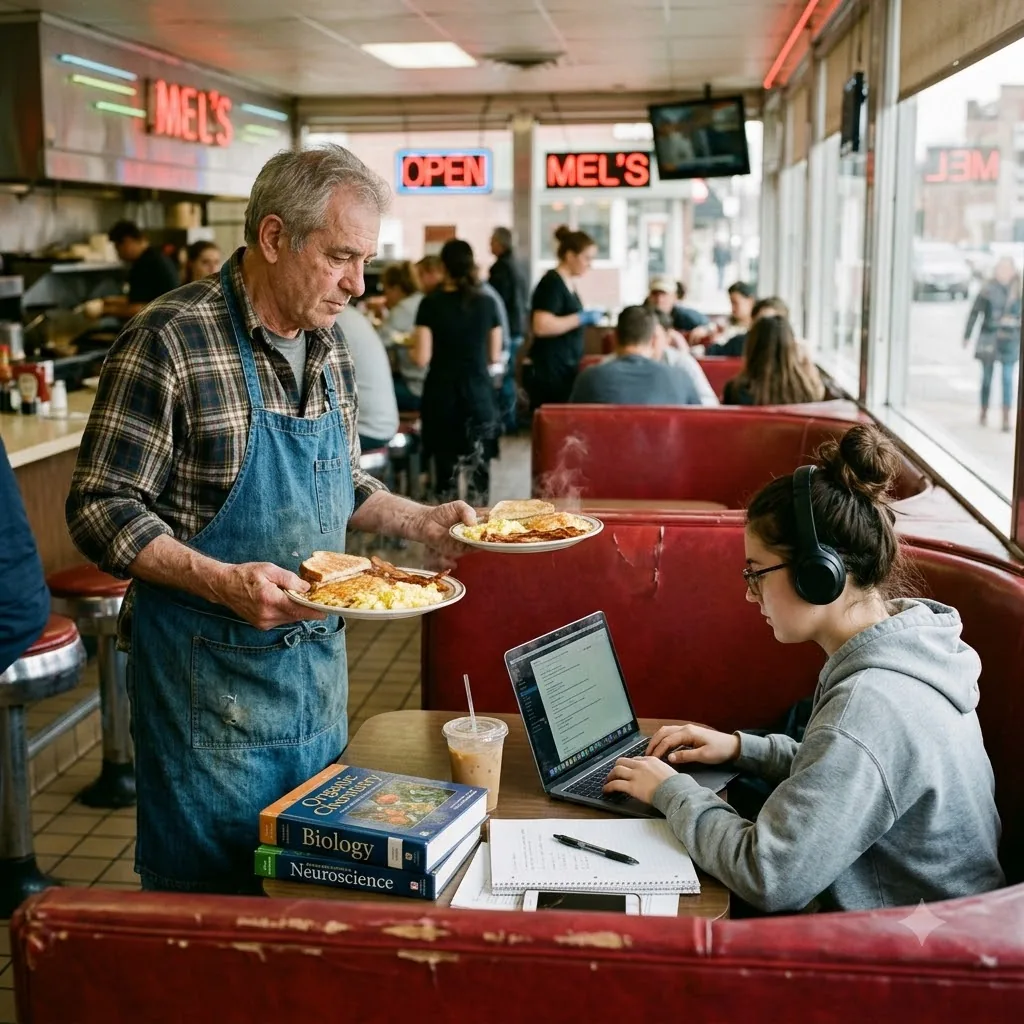
Frank locked his elbows against his ribs, trying to stop the tremors in his forearms as the heat from three ceramic platters of over-easy eggs, hash browns, and thick-cut ham seared through his thin cotton sleeves. The six in the morning rush at the copper-topped counter was a solid wall of flannel, denim, and damp wool, leaving him nowhere to set the heavy plates down. The diner hummed with the clatter of silverware and the hiss of the flat top grill behind him, but all Frank could focus on was the burning sensation radiating from his wrists to his shoulders.
The only open real estate in the entire building was booth number four. It was a massive corner unit, designed to seat six lumberjacks or a whole Little League team. Currently, it held one nineteen-year-old girl, an iced coffee she had ordered exactly forty-seven minutes ago, and a spiderweb of white charging cables stretched tight across the main aisle.
A drop of hot grease rolled over the rim of the top plate and blistered the skin on Frank’s thumb. He bit the inside of his cheek to keep from dropping the entire thirty-dollar order onto the checkerboard linoleum. He shuffled closer to the booth, stepping carefully over the taut power cord snaking from the wall outlet to the silver laptop dominating the center of the Formica table.
Chloe did not look up from her screen. She had constructed a fortified barricade out of canvas tote bags on the red vinyl bench seats, spilling thick stacks of freshly printed flyers across the table surface. A hand-painted cardboard sign rested against the stainless steel napkin dispenser, pushing the salt and pepper shakers precariously close to the edge.
Frank cleared his throat, a sharp, raspy sound meant to cut through the din of the morning rush. Chloe kept typing. The regulars, a crew of local roofers who came in every morning at dawn, stood by the jukebox with their hard hats tucked under their arms. They were the ones waiting for the food currently burning Frank’s arms. They watched the owner sweat, their expressions tightening with every passing second.
Frank shifted his weight, trying to find a cooler patch of ceramic against his forearms. The heat had soaked all the way through the thick diner plates. The muscles in his neck pulled taut.
“Excuse me, Chloe,” Frank said, keeping his voice steady and low. He nodded toward the waiting roofers. “I need this table cleared. The counter is completely full and these men need to eat before their shift starts.”
Chloe hit a key on her laptop with a loud, authoritative clack. She did not close the screen. She slowly turned her head, adjusting her wire-rimmed glasses, and looked at the stack of plates shaking in Frank’s hands. She looked at the grease staining his apron. She looked at the tired, dirt-stained roofers standing by the jukebox. Then, she reached for her glass and took a slow, deliberate sip of her watered-down iced coffee.
“This is a community space,” Chloe stated. Her voice carried a loud, practiced cadence that immediately silenced the quiet conversations at the nearby counter. “I am organizing a localized direct action initiative. Displacing me for the sake of your morning profit margin reinforces the systemic marginalization of unpaid labor.”
Frank’s left wrist cramped violently. The edge of the middle plate slipped a fraction of an inch, threatening to send a landslide of toast and scrambled eggs onto the floor. He clenched his jaw, sliding his work boot forward to brace himself against the heavy steel leg of the booth. The physical agony in his arms was blinding, a sharp contrast to the cool, detached tone of Chloe’s voice. She gestured widely with her hands, knocking a stack of flyers even closer to the edge of the table.
“You are prioritizing capitalist consumption over social progress, Frank,” she announced to the entire diner, ensuring every patron from the front door to the restrooms could hear her. She leaned back in the sprawling six-person booth, crossing her arms over her vintage denim jacket. “Your insistence on rushing these workers through their meal so you can turn over the table is a textbook example of wage exploitation. You are complicit in a machine that grinds down the working class.”
Frank felt the heat radiating up to his elbows. The roofers shifted uncomfortably, their eyes darting between Frank’s trembling, burning arms and Chloe’s sprawling barricade of protest materials. The sheer audacity of lecturing a man holding twenty pounds of scalding food about the struggles of the working class hung heavy in the greasy air. Frank opened his mouth to tell her to pack up her cables. He was a fraction of a second away from ordering her out the door, ready to accept the bad online reviews and the local college backlash.
He took a sharp breath, bracing his burning arms to deliver the eviction notice, when Chloe uncrossed her arms, leaned forward over her laptop, and delivered a sentence so staggering that Frank lost his grip on the bottom plate.
Frank locked his elbows against his ribs, trying to stop the tremors in his forearms as the heat from three ceramic platters of over-easy eggs, hash browns, and thick-cut ham seared through his thin cotton sleeves. The six in the morning rush at the copper-topped counter was a solid wall of flannel, denim, and damp wool, leaving him nowhere to set the heavy plates down. The diner hummed with the clatter of silverware and the hiss of the flat top grill behind him, but all Frank could focus on was the burning sensation radiating from his wrists to his shoulders.
The only open real estate in the entire building was booth number four. It was a massive corner unit, designed to seat six lumberjacks or a whole Little League team. Currently, it held one nineteen-year-old girl, an iced coffee she had ordered exactly forty-seven minutes ago, and a spiderweb of white charging cables stretched tight across the main aisle.
A drop of hot grease rolled over the rim of the top plate and blistered the skin on Frank’s thumb. He bit the inside of his cheek to keep from dropping the entire thirty-dollar order onto the checkerboard linoleum. He shuffled closer to the booth, stepping carefully over the taut power cord snaking from the wall outlet to the silver laptop dominating the center of the Formica table.
Chloe did not look up from her screen. She had constructed a fortified barricade out of canvas tote bags on the red vinyl bench seats, spilling thick stacks of freshly printed flyers across the table surface. A hand-painted cardboard sign rested against the stainless steel napkin dispenser, pushing the salt and pepper shakers precariously close to the edge.
Frank cleared his throat, a sharp, raspy sound meant to cut through the din of the morning rush. Chloe kept typing. The regulars, a crew of local roofers who came in every morning at dawn, stood by the jukebox with their hard hats tucked under their arms. They were the ones waiting for the food currently burning Frank’s arms. They watched the owner sweat, their expressions tightening with every passing second.
Frank shifted his weight, trying to find a cooler patch of ceramic against his forearms. The heat had soaked all the way through the thick diner plates. The muscles in his neck pulled taut.
“Excuse me, Chloe,” Frank said, keeping his voice steady and low. He nodded toward the waiting roofers. “I need this table cleared. The counter is completely full and these men need to eat before their shift starts.”
Chloe hit a key on her laptop with a loud, authoritative clack. She did not close the screen. She slowly turned her head, adjusting her wire-rimmed glasses, and looked at the stack of plates shaking in Frank’s hands. She looked at the grease staining his apron. She looked at the tired, dirt-stained roofers standing by the jukebox. Then, she reached for her glass and took a slow, deliberate sip of her watered-down iced coffee.
“This is a community space,” Chloe stated. Her voice carried a loud, practiced cadence that immediately silenced the quiet conversations at the nearby counter. “I am organizing a localized direct action initiative. Displacing me for the sake of your morning profit margin reinforces the systemic marginalization of unpaid labor.”
Frank’s left wrist cramped violently. The edge of the middle plate slipped a fraction of an inch, threatening to send a landslide of toast and scrambled eggs onto the floor. He clenched his jaw, sliding his work boot forward to brace himself against the heavy steel leg of the booth. The physical agony in his arms was blinding, a sharp contrast to the cool, detached tone of Chloe’s voice. She gestured widely with her hands, knocking a stack of flyers even closer to the edge of the table.
“You are prioritizing capitalist consumption over social progress, Frank,” she announced to the entire diner, ensuring every patron from the front door to the restrooms could hear her. She leaned back in the sprawling six-person booth, crossing her arms over her vintage denim jacket. “Your insistence on rushing these workers through their meal so you can turn over the table is a textbook example of wage exploitation. You are complicit in a machine that grinds down the working class.”
Frank felt the heat radiating up to his elbows. The roofers shifted uncomfortably, their eyes darting between Frank’s trembling, burning arms and Chloe’s sprawling barricade of protest materials. The sheer audacity of lecturing a man holding twenty pounds of scalding food about the struggles of the working class hung heavy in the greasy air. Frank opened his mouth to tell her to pack up her cables. He was a fraction of a second away from ordering her out the door, ready to accept the bad online reviews and the local college backlash.
He took a sharp breath, bracing his burning arms to deliver the eviction notice, when Chloe uncrossed her arms, leaned forward over her laptop, and delivered a sentence so staggering that Frank lost his grip on the bottom plate.