Story code: ST-000753
Part 1: The Bin in the Garage
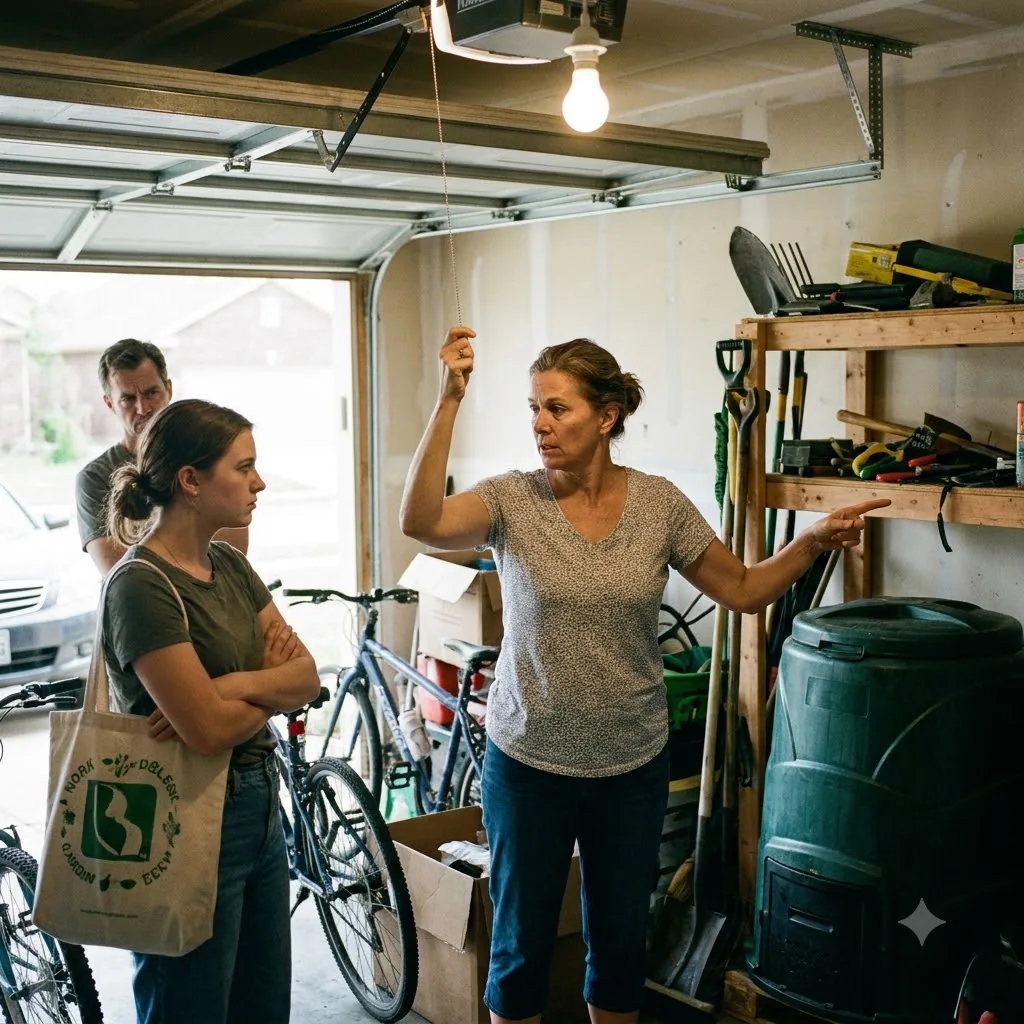
Marina Holt had one hand on the garage light chain and the other pointed at the compost bin when Tessa said, in front of Evan, that there was no smell at all and her mother needed to stop making the garage into a drama. The bin sat beside the second refrigerator with its green lid bowed up a fraction, a white label on the front that said CLOSED LOOP in neat black letters, and Marina was suddenly the only person in the room being treated like she had invented what was right there. It was late enough that the garage door was shut but not late enough for anyone to leave the conversation. Evan stood near the workbench with a paper grocery bag folded under one arm. Tessa had come in carrying a stack of rinsed jars, still damp, and lined them on the shelf above the shoe rack as if the argument had already been settled somewhere else. Marina kept her voice even. “The lid is lifting,” she said. “And something in there is wrong. I need that bin out of the garage tonight.” Tessa set down the last jar. “The lid lifts when the pressure changes,” she said. “That doesn’t mean anything is wrong.” Evan looked from the bin to Marina, then back to Tessa. “Is it one of those sealed systems?” “Yes,” Tessa said at once. “Exactly. It’s supposed to work that way.” Marina turned toward him. “Sealed systems don’t leak from the rim.” There was a dark line around the edge where the green lid met the black body of the bin. A damp paper scrap clung to the hinge side. Marina did not move closer. She did not need to. The line was visible from the step into the kitchen. Tessa gave a short smile that did not reach her eyes. “That’s condensation mixed with coffee grounds. Mom saw one thing and decided it meant another thing.” The correction landed neatly, the way Tessa always arranged them, with a calm tone and a finished sound at the end. Marina watched Evan shift his grocery bag to the other arm. “I didn’t decide anything,” Marina said. “I opened the garage and stepped back. That’s what happened.” “You stepped back because you expected it to smell,” Tessa said. “You’ve hated this setup from the beginning.” The word hated changed the room. It moved the argument away from the bin and onto Marina’s reliability. Evan’s mouth tightened a little, not in agreement exactly, but in the way people stand still when they do not want to take the first side. Marina pointed again. “I’m talking about the bin. Not your project. The bin.” Tessa crossed to it, laid two fingers on the lid, and pressed down gently as if demonstrating a product feature. “See? Fine.” The lid stayed down for one second after her hand left it, then eased up again with the same small rise at the front edge. No one spoke for a moment. Evan cleared his throat. “Maybe just take it outside until morning.” Tessa turned to him before Marina could answer. “Outside for what? So raccoons can get into it? This is why these systems fail. People panic and break the conditions.” Marina kept her gaze on the bin. The white label had another line under CLOSED LOOP, smaller and centered: NO LANDFILL WASTE. Tessa had printed it herself and laminated it. There was a smear on the lower corner now, as if something damp had touched it and dried there. “Then open it,” Marina said. Tessa’s chin lifted. “No. Because every time you get nervous, I don’t have to prove basic composting to you.” “If it’s fine, open it.” “That would ruin the balance.” Evan let out a breath through his nose. “Maybe nobody needs to open anything right now.” Marina faced him. “Look at the floor.” The concrete under the front lip of the bin had a shallow fan of darkened spots. Nothing dramatic. Nothing that would force a gasp. But it did not match the story Tessa was offering. The spots ran out past the footprint of the bin by several inches, thin at the ends, thicker at the base. Evan bent a little without getting too close. “Could be from when you added something wet.” Tessa seized that immediately. “Thank you. Yes. That’s all that is.” Marina watched Tessa’s hand flatten against the side of the bin. She kept it there, not quite gripping, as if claiming ownership in front of witnesses mattered more than moving it. “What wet thing?” Marina asked. Tessa did not answer that first. She moved the stack of jars farther from the edge of the shelf, one by one, buying herself a few seconds. “Citrus pulp. Maybe tea leaves. It doesn’t matter. The point is, this isn’t a crisis.” “You told me yesterday no food had gone into it since Sunday,” Marina said. Tessa looked back at her. “I said no new scraps bag had gone in. That’s different.” It was a cleaner explanation, but also a stranger one, the kind that made Marina sound careless for hearing plain words plainly. Evan rubbed his thumb along the folded top of the grocery bag and said nothing. Marina stepped to the side wall and hit the switch for the second strip light over the freezer. The brighter light cut across the floor, the workbench, the rake handles, the bike hooks, and the black curve of the bin. Under that light the dark spots on the concrete did not stop at the front. There was another mark trailing from the back corner toward the drain by the water heater, thin as if something had been dragged or had run there slowly. Evan saw it too. His head turned before he said a word. Tessa spoke first, quickly. “That’s old.” Marina looked from the trail on the floor to the untouched latch on the bin lid. If the system had not been opened, and nothing new had gone.
Marina Holt had one hand on the garage light chain and the other pointed at the compost bin when Tessa said, in front of Evan, that there was no smell at all and her mother needed to stop making the garage into a drama. The bin sat beside the second refrigerator with its green lid bowed up a fraction, a white label on the front that said CLOSED LOOP in neat black letters, and Marina was suddenly the only person in the room being treated like she had invented what was right there. It was late enough that the garage door was shut but not late enough for anyone to leave the conversation. Evan stood near the workbench with a paper grocery bag folded under one arm. Tessa had come in carrying a stack of rinsed jars, still damp, and lined them on the shelf above the shoe rack as if the argument had already been settled somewhere else. Marina kept her voice even. “The lid is lifting,” she said. “And something in there is wrong. I need that bin out of the garage tonight.” Tessa set down the last jar. “The lid lifts when the pressure changes,” she said. “That doesn’t mean anything is wrong.” Evan looked from the bin to Marina, then back to Tessa. “Is it one of those sealed systems?” “Yes,” Tessa said at once. “Exactly. It’s supposed to work that way.” Marina turned toward him. “Sealed systems don’t leak from the rim.” There was a dark line around the edge where the green lid met the black body of the bin. A damp paper scrap clung to the hinge side. Marina did not move closer. She did not need to. The line was visible from the step into the kitchen. Tessa gave a short smile that did not reach her eyes. “That’s condensation mixed with coffee grounds. Mom saw one thing and decided it meant another thing.” The correction landed neatly, the way Tessa always arranged them, with a calm tone and a finished sound at the end. Marina watched Evan shift his grocery bag to the other arm. “I didn’t decide anything,” Marina said. “I opened the garage and stepped back. That’s what happened.” “You stepped back because you expected it to smell,” Tessa said. “You’ve hated this setup from the beginning.” The word hated changed the room. It moved the argument away from the bin and onto Marina’s reliability. Evan’s mouth tightened a little, not in agreement exactly, but in the way people stand still when they do not want to take the first side. Marina pointed again. “I’m talking about the bin. Not your project. The bin.” Tessa crossed to it, laid two fingers on the lid, and pressed down gently as if demonstrating a product feature. “See? Fine.” The lid stayed down for one second after her hand left it, then eased up again with the same small rise at the front edge. No one spoke for a moment. Evan cleared his throat. “Maybe just take it outside until morning.” Tessa turned to him before Marina could answer. “Outside for what? So raccoons can get into it? This is why these systems fail. People panic and break the conditions.” Marina kept her gaze on the bin. The white label had another line under CLOSED LOOP, smaller and centered: NO LANDFILL WASTE. Tessa had printed it herself and laminated it. There was a smear on the lower corner now, as if something damp had touched it and dried there. “Then open it,” Marina said. Tessa’s chin lifted. “No. Because every time you get nervous, I don’t have to prove basic composting to you.” “If it’s fine, open it.” “That would ruin the balance.” Evan let out a breath through his nose. “Maybe nobody needs to open anything right now.” Marina faced him. “Look at the floor.” The concrete under the front lip of the bin had a shallow fan of darkened spots. Nothing dramatic. Nothing that would force a gasp. But it did not match the story Tessa was offering. The spots ran out past the footprint of the bin by several inches, thin at the ends, thicker at the base. Evan bent a little without getting too close. “Could be from when you added something wet.” Tessa seized that immediately. “Thank you. Yes. That’s all that is.” Marina watched Tessa’s hand flatten against the side of the bin. She kept it there, not quite gripping, as if claiming ownership in front of witnesses mattered more than moving it. “What wet thing?” Marina asked. Tessa did not answer that first. She moved the stack of jars farther from the edge of the shelf, one by one, buying herself a few seconds. “Citrus pulp. Maybe tea leaves. It doesn’t matter. The point is, this isn’t a crisis.” “You told me yesterday no food had gone into it since Sunday,” Marina said. Tessa looked back at her. “I said no new scraps bag had gone in. That’s different.” It was a cleaner explanation, but also a stranger one, the kind that made Marina sound careless for hearing plain words plainly. Evan rubbed his thumb along the folded top of the grocery bag and said nothing. Marina stepped to the side wall and hit the switch for the second strip light over the freezer. The brighter light cut across the floor, the workbench, the rake handles, the bike hooks, and the black curve of the bin. Under that light the dark spots on the concrete did not stop at the front. There was another mark trailing from the back corner toward the drain by the water heater, thin as if something had been dragged or had run there slowly. Evan saw it too. His head turned before he said a word. Tessa spoke first, quickly. “That’s old.” Marina looked from the trail on the floor to the untouched latch on the bin lid. If the system had not been opened, and nothing new had gone.