Story code: ST-000037
Part 1: She Said the Ramp Needed Approval
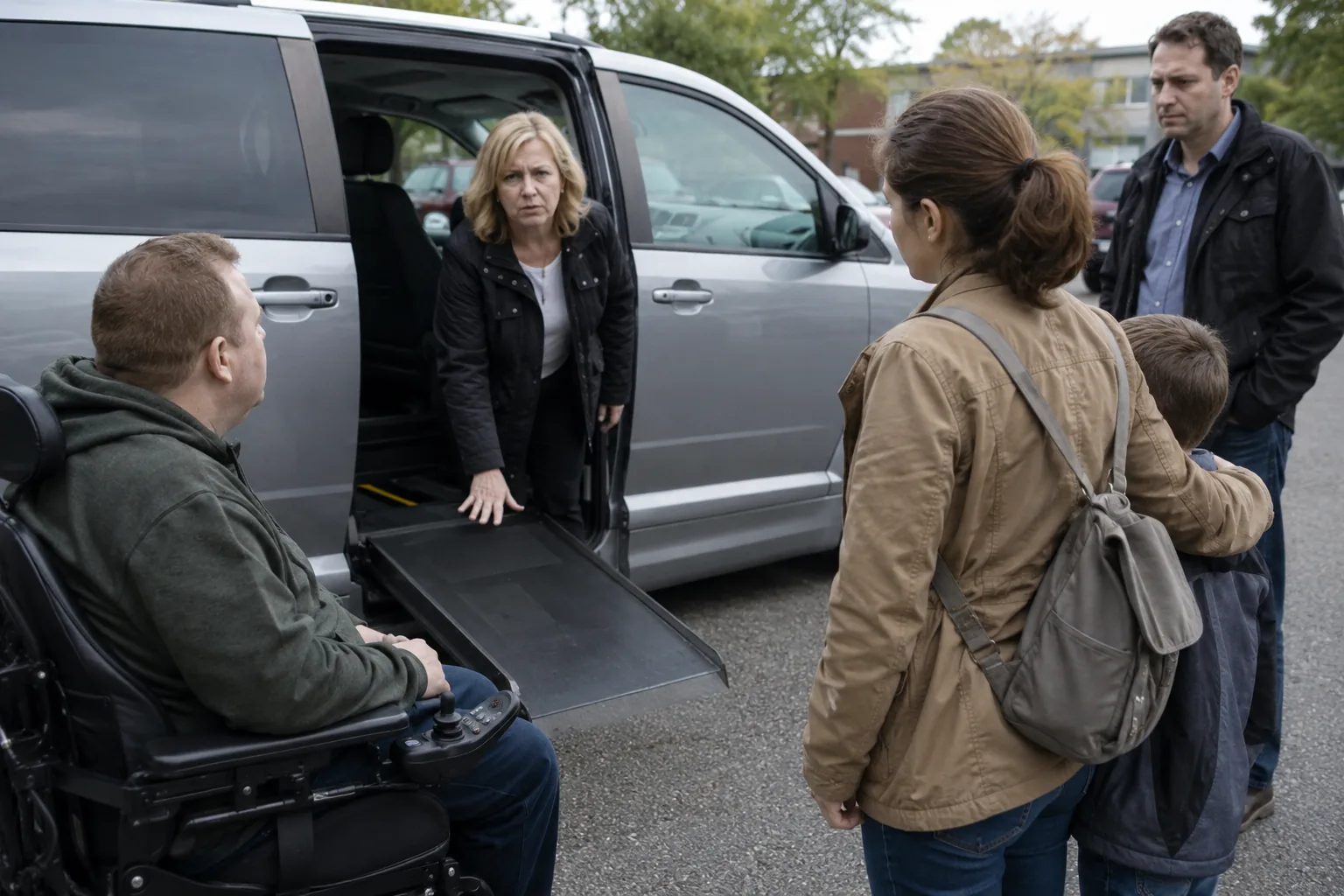
Marlene Pike put her hand on the folded wheelchair ramp and said, flat as a posted rule, “No. That ramp can’t be used until I get special approval.” Eli Morgan was already turned toward the side door of the van with his chair lined up, his mobility bag on his lap, and there was nowhere else for him to go. The shock wasn’t just that she blocked the ramp during a routine stop. It was that she said it like everybody else had missed a policy that no one could actually name.
The van was parked in the side loading area outside a day program office that handled drop-offs all morning. The engine was still ticking. One tie-down strap lay unhooked on the floor inside the van. Tessa Morgan stood close enough to see Marlene’s shoe braced near the threshold, the kind of stance people use when they mean to stop movement without saying they are stopping movement.
Eli looked at the ramp, then at Marlene.
“What special approval?” he asked.
“The approval for deployment,” Marlene said. “We’ve been over this. You can’t just put it down. Not here. Not without clearance.”
She used the kind of language that sounds finished even when it explains nothing. Tessa noticed that first. Not the volume. The shape of it.
“Who gives the clearance?” Tessa asked.
Marlene did not answer right away. She shifted her grip from the door frame to the handle near the lift controls and said, “It’s procedure.”
That did not move Eli any closer to getting out of the van.
A staff coordinator from the office, Denise Carter, came through the side door with a clipboard tucked under one arm. She had the worn look of somebody who had already solved six little problems before nine-thirty. She glanced at the van, then at Eli still sitting there.
“You all okay?” Denise asked.
Marlene answered before anyone else could.
“We’re waiting on special approval for the ramp.”
Denise frowned, not dramatically, just enough to show that the sentence had landed wrong.
“Approval from who?” she asked.
“Transport,” Marlene said.
“Which person in transport?”
“The one who handles safety exceptions.”
It was the first time “exceptions” had entered the scene. Tessa watched Denise’s face for recognition and did not see any. Denise flipped one page on her clipboard and looked back at the van.
“I just need to know if he’s unloading here or not,” she said.
“Not until approval comes through,” Marlene said.
The harm by then was visible enough that nobody had to explain it. Eli was still in the van. The stop was still happening around him instead of with him. Other families passed through the loading area doing the ordinary movements this one routine needed: a door sliding open, a chair turning, a bag handed down, somebody saying see you later. Here, the whole routine had narrowed to one folded ramp and one person claiming it had become restricted property.
Tessa kept her questions small.
“Has this ever been the rule before?”
Marlene gave a short breath through her nose. “It is now.”
That answer hung there longer than she seemed to expect.
Eli turned his chair slightly, enough to look past Marlene into the van interior. “So I can ride in it,” he said, “but I can’t use it to get out of it?”
“Don’t start,” Marlene said.
Tessa looked at the control panel beside the ramp housing, then at the empty strip of pavement where the ramp would have landed if anyone had pushed the switch. No cones. No caution tape. No maintenance tag. No posted notice. Just ordinary concrete in an ordinary loading zone.
Denise stepped closer to the side door. “I’m not familiar with that approval step,” she said carefully. “If it’s a new safety rule, I need to know what it is.”
“It’s not your side of it,” Marlene said.
The sentence was brisk, but it exposed something. Real rules usually survive being described. This one kept retreating into vaguer language every time somebody asked where it came from.
Tessa asked, “If the ramp needs special approval to come down here, did it need special approval when he got into the van this morning?”
Marlene turned toward her so fast the keys on her lanyard clicked against the door.
“That’s different.”
“How?”
“Because loading and unloading are separate operations.”
That was new too. Separate operations. More wording, no source.
Denise lowered her clipboard. “Are you saying the ramp can be used at home but not at the program? Or can be used to board but not to exit? Because those are two different claims.”
Marlene’s mouth tightened. She looked at the phone in her hand without unlocking it.
“I’m saying,” she said, “that until I get approval, this ramp stays up. And if that means he stays in the van a little longer, then that’s what it means.”
Nobody in the loading area raised their voice after that. They did not need to. The problem was suddenly clean enough to see. A woman was blocking an accessible ramp with a rule she could not source, and now she was extending the same rule into separate parts of the same trip.
Tessa’s next question was the one Marlene could not answer cleanly.
“If the ramp needs special approval to let Eli out here,” she asked, “what exactly authorized it to let him in at all?”
Marlene Pike put her hand on the folded wheelchair ramp and said, flat as a posted rule, “No. That ramp can’t be used until I get special approval.” Eli Morgan was already turned toward the side door of the van with his chair lined up, his mobility bag on his lap, and there was nowhere else for him to go. The shock wasn’t just that she blocked the ramp during a routine stop. It was that she said it like everybody else had missed a policy that no one could actually name.
The van was parked in the side loading area outside a day program office that handled drop-offs all morning. The engine was still ticking. One tie-down strap lay unhooked on the floor inside the van. Tessa Morgan stood close enough to see Marlene’s shoe braced near the threshold, the kind of stance people use when they mean to stop movement without saying they are stopping movement.
Eli looked at the ramp, then at Marlene.
“What special approval?” he asked.
“The approval for deployment,” Marlene said. “We’ve been over this. You can’t just put it down. Not here. Not without clearance.”
She used the kind of language that sounds finished even when it explains nothing. Tessa noticed that first. Not the volume. The shape of it.
“Who gives the clearance?” Tessa asked.
Marlene did not answer right away. She shifted her grip from the door frame to the handle near the lift controls and said, “It’s procedure.”
That did not move Eli any closer to getting out of the van.
A staff coordinator from the office, Denise Carter, came through the side door with a clipboard tucked under one arm. She had the worn look of somebody who had already solved six little problems before nine-thirty. She glanced at the van, then at Eli still sitting there.
“You all okay?” Denise asked.
Marlene answered before anyone else could.
“We’re waiting on special approval for the ramp.”
Denise frowned, not dramatically, just enough to show that the sentence had landed wrong.
“Approval from who?” she asked.
“Transport,” Marlene said.
“Which person in transport?”
“The one who handles safety exceptions.”
It was the first time “exceptions” had entered the scene. Tessa watched Denise’s face for recognition and did not see any. Denise flipped one page on her clipboard and looked back at the van.
“I just need to know if he’s unloading here or not,” she said.
“Not until approval comes through,” Marlene said.
The harm by then was visible enough that nobody had to explain it. Eli was still in the van. The stop was still happening around him instead of with him. Other families passed through the loading area doing the ordinary movements this one routine needed: a door sliding open, a chair turning, a bag handed down, somebody saying see you later. Here, the whole routine had narrowed to one folded ramp and one person claiming it had become restricted property.
Tessa kept her questions small.
“Has this ever been the rule before?”
Marlene gave a short breath through her nose. “It is now.”
That answer hung there longer than she seemed to expect.
Eli turned his chair slightly, enough to look past Marlene into the van interior. “So I can ride in it,” he said, “but I can’t use it to get out of it?”
“Don’t start,” Marlene said.
Tessa looked at the control panel beside the ramp housing, then at the empty strip of pavement where the ramp would have landed if anyone had pushed the switch. No cones. No caution tape. No maintenance tag. No posted notice. Just ordinary concrete in an ordinary loading zone.
Denise stepped closer to the side door. “I’m not familiar with that approval step,” she said carefully. “If it’s a new safety rule, I need to know what it is.”
“It’s not your side of it,” Marlene said.
The sentence was brisk, but it exposed something. Real rules usually survive being described. This one kept retreating into vaguer language every time somebody asked where it came from.
Tessa asked, “If the ramp needs special approval to come down here, did it need special approval when he got into the van this morning?”
Marlene turned toward her so fast the keys on her lanyard clicked against the door.
“That’s different.”
“How?”
“Because loading and unloading are separate operations.”
That was new too. Separate operations. More wording, no source.
Denise lowered her clipboard. “Are you saying the ramp can be used at home but not at the program? Or can be used to board but not to exit? Because those are two different claims.”
Marlene’s mouth tightened. She looked at the phone in her hand without unlocking it.
“I’m saying,” she said, “that until I get approval, this ramp stays up. And if that means he stays in the van a little longer, then that’s what it means.”
Nobody in the loading area raised their voice after that. They did not need to. The problem was suddenly clean enough to see. A woman was blocking an accessible ramp with a rule she could not source, and now she was extending the same rule into separate parts of the same trip.
Tessa’s next question was the one Marlene could not answer cleanly.
“If the ramp needs special approval to let Eli out here,” she asked, “what exactly authorized it to let him in at all?”