Story code: ST-000091
Part 1: He Cut Off Her Ride In My Meeting
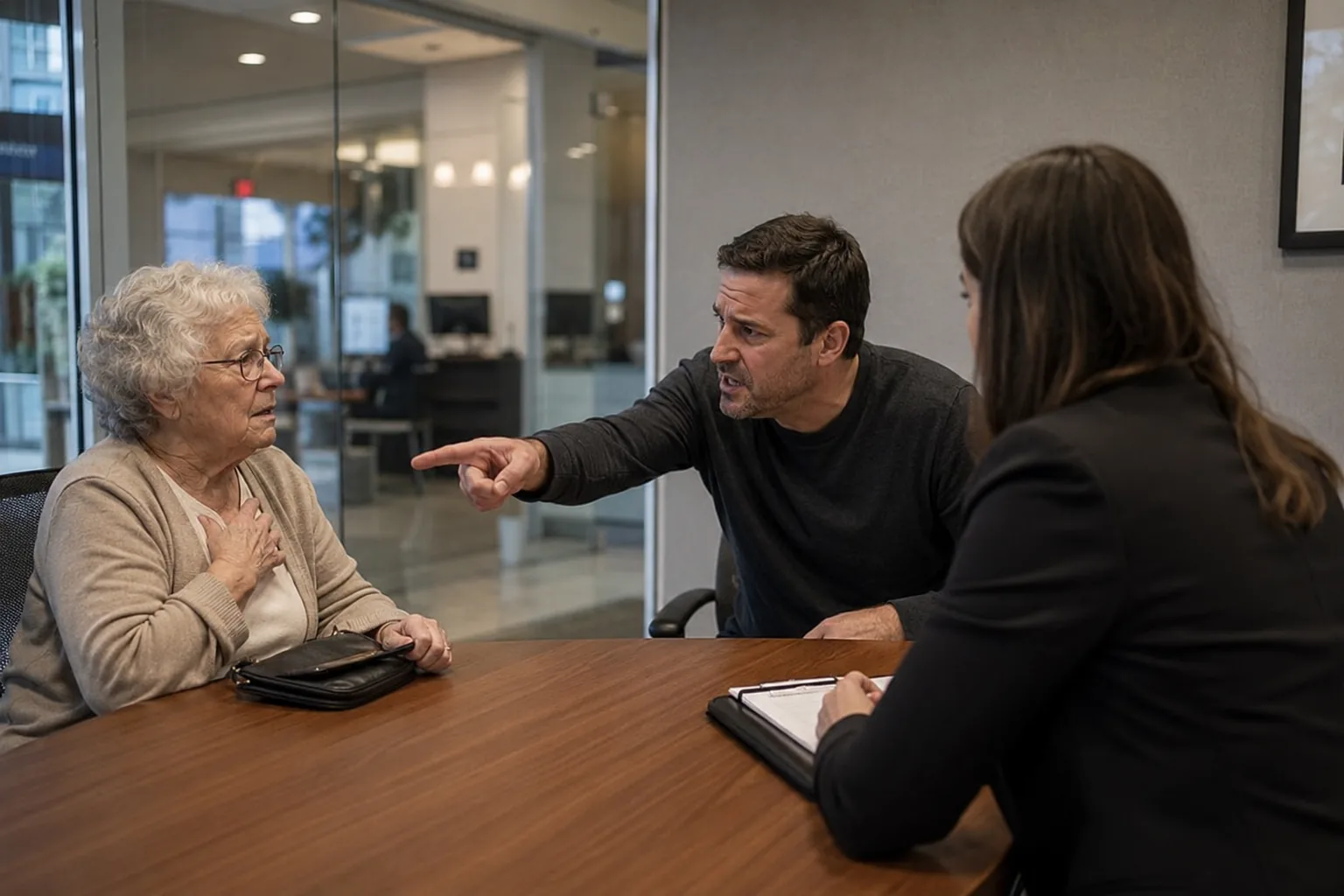
Mark Carter said, right there in our little bank meeting room, that his aunt could sign the paper now or find her own way home. He had already taken her car keys off the table, folded them into his palm, and pushed a single-page document toward her while the printer hummed outside and a teller counted cash at the next station. Linda Carter sat very still with both hands on her folder, and the ugliest part was that he said it like this was just practical family business.
I was the branch employee assigned to the meeting, and from my chair at the side of the round table, all I could do at first was track what was in front of me.
Linda had arrived ten minutes early. Mark had come in behind her carrying a coffee and doing most of the talking before the door even shut. He answered my first greeting for her. He answered when I asked whether they were both there for account access questions. He answered when I offered water.
Linda let him run for maybe thirty seconds. Then she said, in a low even voice, “I can answer for myself.”
He leaned back, smiled without showing teeth, and slid the page closer to her. “Then answer this now so we can get out of here.”
The paper was not one of ours. I could tell that much without lifting it. Wrong margin spacing, no branch header, and a line near the bottom that looked copied from a form but didn’t match any signature section we use. It was dressed up to look official from a distance, which is different from being official.
Linda did not pick it up.
I said, “Before anything gets discussed, I need to be clear what service you’re asking for today.”
Mark tapped the paper with one finger. “She needs me on the account to help pay her bills. I’ve been handling everything anyway. We don’t need to make this difficult.”
Linda kept looking at the page, not at him. “I asked for information,” she said. “Not that.”
He gave a short laugh and reached into his jacket pocket. That was when the keys flashed again between his fingers.
“If you want my help,” he said, “we do this today. Otherwise I’m not driving all over town anymore. I’m done being treated like hired help.”
The room stayed quiet in that bank way where normal sounds keep going outside the glass. A phone rang at the front desk. Someone rolled a cart past the copier. Inside the room, Linda’s hands tightened on the folder until the edges bent.
I said, “Transportation arrangements are separate from anything we can process here.”
Mark turned to me fast. “No, what’s separate is everybody pretending she can manage this alone.”
Linda finally looked at me. “Can you tell me if that paper is from this bank?”
That question mattered more than everything Mark had been saying.
I held my hand out. Mark touched the page first like he might pull it back, then let me take it. The stock was thin, home printer quality. There was a title in bold that used our bank name without our logo. Two paragraphs of dense language sat over a blank line with Linda’s printed name beneath it. Another line listed Mark as “authorized family coordinator,” which is not a role that exists here.
“It is not a bank form,” I said.
Mark sat forward so quickly his chair legs scraped. “It doesn’t have to be your exact form. It states her intent.”
Linda’s eyes stayed on the page in my hand. “Who wrote it?”
He answered too fast. “It’s what we talked about.”
She did not move. “Who wrote it?”
He looked at the door, then at the keys in his own hand, then back to me. “Are we doing this or not? Because if not, I’m leaving, and she can figure out a ride, her groceries, all of it. I’m tired of games.”
That was the first time he lined all the pieces up out loud: ride, errands, routine help, account access. Not one problem. A whole chain.
Linda opened her folder by an inch. Inside I saw a prescription pickup slip, a small notepad, and a bank envelope folded twice. She shut it again before Mark could see what I saw.
“I didn’t agree to sign anything today,” she said.
“Then why are we here?” he shot back.
She took a breath, slow and visible, and asked me, “If I choose not to sign a private paper, can I still ask questions about my own account?”
“Yes,” I said.
Mark’s jaw set. He stood halfway, then dropped back into his seat. “Unbelievable.”
Linda nodded once, like she had been waiting to hear that answer in plain words. Then she did something I still remember because it changed the air in the room without changing her volume.
She turned her folder sideways, took out the folded bank envelope, and placed it on the table between us.
“Before we go any further,” she said, “I need to know whether he can still do what he has been doing if I stop today.”
Mark stopped touching the keys.
And that was the moment I realized the ride he was threatening to cut off might not be the only thing in that room he could not afford to lose.
Mark Carter said, right there in our little bank meeting room, that his aunt could sign the paper now or find her own way home. He had already taken her car keys off the table, folded them into his palm, and pushed a single-page document toward her while the printer hummed outside and a teller counted cash at the next station. Linda Carter sat very still with both hands on her folder, and the ugliest part was that he said it like this was just practical family business.
I was the branch employee assigned to the meeting, and from my chair at the side of the round table, all I could do at first was track what was in front of me.
Linda had arrived ten minutes early. Mark had come in behind her carrying a coffee and doing most of the talking before the door even shut. He answered my first greeting for her. He answered when I asked whether they were both there for account access questions. He answered when I offered water.
Linda let him run for maybe thirty seconds. Then she said, in a low even voice, “I can answer for myself.”
He leaned back, smiled without showing teeth, and slid the page closer to her. “Then answer this now so we can get out of here.”
The paper was not one of ours. I could tell that much without lifting it. Wrong margin spacing, no branch header, and a line near the bottom that looked copied from a form but didn’t match any signature section we use. It was dressed up to look official from a distance, which is different from being official.
Linda did not pick it up.
I said, “Before anything gets discussed, I need to be clear what service you’re asking for today.”
Mark tapped the paper with one finger. “She needs me on the account to help pay her bills. I’ve been handling everything anyway. We don’t need to make this difficult.”
Linda kept looking at the page, not at him. “I asked for information,” she said. “Not that.”
He gave a short laugh and reached into his jacket pocket. That was when the keys flashed again between his fingers.
“If you want my help,” he said, “we do this today. Otherwise I’m not driving all over town anymore. I’m done being treated like hired help.”
The room stayed quiet in that bank way where normal sounds keep going outside the glass. A phone rang at the front desk. Someone rolled a cart past the copier. Inside the room, Linda’s hands tightened on the folder until the edges bent.
I said, “Transportation arrangements are separate from anything we can process here.”
Mark turned to me fast. “No, what’s separate is everybody pretending she can manage this alone.”
Linda finally looked at me. “Can you tell me if that paper is from this bank?”
That question mattered more than everything Mark had been saying.
I held my hand out. Mark touched the page first like he might pull it back, then let me take it. The stock was thin, home printer quality. There was a title in bold that used our bank name without our logo. Two paragraphs of dense language sat over a blank line with Linda’s printed name beneath it. Another line listed Mark as “authorized family coordinator,” which is not a role that exists here.
“It is not a bank form,” I said.
Mark sat forward so quickly his chair legs scraped. “It doesn’t have to be your exact form. It states her intent.”
Linda’s eyes stayed on the page in my hand. “Who wrote it?”
He answered too fast. “It’s what we talked about.”
She did not move. “Who wrote it?”
He looked at the door, then at the keys in his own hand, then back to me. “Are we doing this or not? Because if not, I’m leaving, and she can figure out a ride, her groceries, all of it. I’m tired of games.”
That was the first time he lined all the pieces up out loud: ride, errands, routine help, account access. Not one problem. A whole chain.
Linda opened her folder by an inch. Inside I saw a prescription pickup slip, a small notepad, and a bank envelope folded twice. She shut it again before Mark could see what I saw.
“I didn’t agree to sign anything today,” she said.
“Then why are we here?” he shot back.
She took a breath, slow and visible, and asked me, “If I choose not to sign a private paper, can I still ask questions about my own account?”
“Yes,” I said.
Mark’s jaw set. He stood halfway, then dropped back into his seat. “Unbelievable.”
Linda nodded once, like she had been waiting to hear that answer in plain words. Then she did something I still remember because it changed the air in the room without changing her volume.
She turned her folder sideways, took out the folded bank envelope, and placed it on the table between us.
“Before we go any further,” she said, “I need to know whether he can still do what he has been doing if I stop today.”
Mark stopped touching the keys.
And that was the moment I realized the ride he was threatening to cut off might not be the only thing in that room he could not afford to lose.