Story code: ST-001092
Part 1: The Algorithm of Suffering
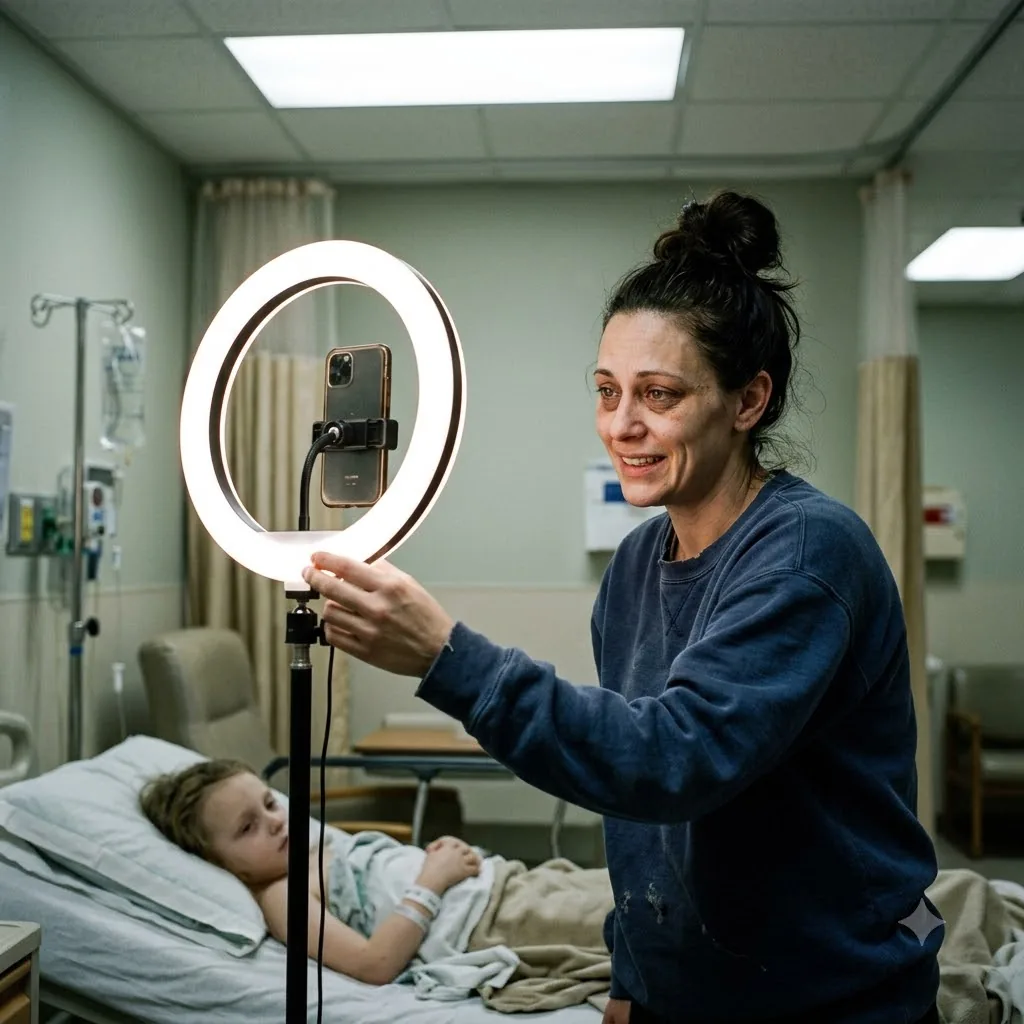
Chloe locked the plastic clamp of the eighteen-inch ring light onto the metal side rail of the hospital bed, angling the harsh, brilliant LED away from the dark purple hematomas mottling her seven-year-old son’s arm. She adjusted the color temperature to a warm, sun-kissed glow, painting a layer of artificial vitality over Leo’s pale, sunken cheeks. Smoothing her rumpled sweater, she stretched her lips into a blinding, unyielding smile and pressed the red record button on her screen.
“Happy Tuesday, prayer warriors,” Chloe said, infusing her voice with a relentless, melodic cheer that echoed off the sterile linoleum walls of the pediatric oncology ward. “Leo is doing absolutely incredible today. We are just so blessed by all your donations and your beautiful messages.”
Behind the camera’s narrow field of view, the reality of Room 412 remained utterly grim. A tower of infusion pumps hissed and clicked, dispensing toxic, life-saving fluids through a tangle of clear plastic tubing routed straight into a port in Leo’s chest. Half-eaten cups of institutional applesauce sat browning on the tray table. The air smelled of sharp chemical bleach and the metallic tang of illness. Chloe ignored all of it, keeping the lens tight on her own face, maintaining the illusion of the perfect, photogenic tragedy.
The internet demanded a very specific type of victim. Her followers wanted a mother who was exhausted but unbroken, a child who was sick but still capable of a brave, gap-toothed smile. They paid for inspiration. If Chloe showed them the true, ugly terror of the midnight vomiting, or the crushing, suffocating debt, the engagement metrics plummeted. The GoFundMe donations would dry up. She had learned exactly how to perform the delicate dance of algorithmic suffering to keep the money flowing.
She tilted the camera down toward the bed. She instructed her son to show his internet family how strong he was today.
Leo barely opened his eyes. He raised a trembling hand and offered a weak, rehearsed thumbs-up, right on cue.
“We are just waiting on the final insurance clearance for his marrow transplant,” Chloe said to the lens, her smile remaining rigid and frozen. “God is so good. We are going to beat this.”
She tapped the screen. The recording stopped.
Instantly, the smile dropped from Chloe’s face like a heavy theater curtain. Her shoulders slumped, the forced optimism evaporating into the cold hospital air. She rubbed her aching jaw and let out a long, ragged exhale. The silence of the room rushed back in, heavy and oppressive, broken only by the rhythmic beep of the cardiac monitor. Leo had already drifted back into a restless sleep, his small chest rising and falling in shallow, jagged increments.
Chloe sat heavily in the cracked vinyl recliner beside the bed, staring at her phone. The crowdfunding campaign had plateaued. It was enough to cover the rent and the specialty medications, but it would never touch the six-figure cost of the bone marrow transplant. For that, she needed the corporate giant. She needed the 1-800 number to call with an authorization code. Her doctor had promised it was merely a formality.
The screen of her phone suddenly illuminated in her palm. The caller ID displayed the toll-free number of the insurance provider’s claims department.
Chloe sat up straight, her heart hammering against her ribs. She cleared her throat, smoothed her hair out of habit, and swiped to accept the call. She greeted the representative, her voice instinctively returning to the bright, compliant tone she used for the videos.
The woman on the other end did not return the pleasantry. The voice was flat, mechanical, and reading directly from an automated prompt. The representative recited Chloe’s name, Leo’s policy number, and the billing code for the marrow transplant.
Chloe held her breath, waiting for the word she desperately needed to hear.
Instead, the representative stated that the algorithmic review board had flagged the claim for an immediate and total denial.
Panic flared in Chloe’s chest. She interrupted the monotone voice, stating clearly that the primary oncologist had already submitted the medical necessity forms. She insisted there had to be a mistake. She pleaded with the woman to bypass the automated system and check the screen again.
The representative paused. The sound of rapid typing echoed over the line. When the woman spoke again, the corporate script was gone, replaced by a cold, sharp hesitation. The representative stated that the denial was not based on Leo’s medical necessity.
Chloe gripped the edge of the vinyl recliner, demanding the reason.
The woman read a new sequence of dates. She stated that the system had unearthed a discrepancy in a closed, archived file. It was a file Chloe had never mentioned, one she believed had been buried permanently three years ago. The representative read out the name on the flagged file.
David, her late husband.
Chloe felt the blood drain from her face, the sterile room spinning violently around her. She ordered the representative to explain what David’s file had to do with her son’s transplant.
The representative informed her that the fraud division was initiating a freeze on all family policies, advised her that an investigator had been assigned to her husband’s case, and disconnected the line.
Chloe locked the plastic clamp of the eighteen-inch ring light onto the metal side rail of the hospital bed, angling the harsh, brilliant LED away from the dark purple hematomas mottling her seven-year-old son’s arm. She adjusted the color temperature to a warm, sun-kissed glow, painting a layer of artificial vitality over Leo’s pale, sunken cheeks. Smoothing her rumpled sweater, she stretched her lips into a blinding, unyielding smile and pressed the red record button on her screen.
“Happy Tuesday, prayer warriors,” Chloe said, infusing her voice with a relentless, melodic cheer that echoed off the sterile linoleum walls of the pediatric oncology ward. “Leo is doing absolutely incredible today. We are just so blessed by all your donations and your beautiful messages.”
Behind the camera’s narrow field of view, the reality of Room 412 remained utterly grim. A tower of infusion pumps hissed and clicked, dispensing toxic, life-saving fluids through a tangle of clear plastic tubing routed straight into a port in Leo’s chest. Half-eaten cups of institutional applesauce sat browning on the tray table. The air smelled of sharp chemical bleach and the metallic tang of illness. Chloe ignored all of it, keeping the lens tight on her own face, maintaining the illusion of the perfect, photogenic tragedy.
The internet demanded a very specific type of victim. Her followers wanted a mother who was exhausted but unbroken, a child who was sick but still capable of a brave, gap-toothed smile. They paid for inspiration. If Chloe showed them the true, ugly terror of the midnight vomiting, or the crushing, suffocating debt, the engagement metrics plummeted. The GoFundMe donations would dry up. She had learned exactly how to perform the delicate dance of algorithmic suffering to keep the money flowing.
She tilted the camera down toward the bed. She instructed her son to show his internet family how strong he was today.
Leo barely opened his eyes. He raised a trembling hand and offered a weak, rehearsed thumbs-up, right on cue.
“We are just waiting on the final insurance clearance for his marrow transplant,” Chloe said to the lens, her smile remaining rigid and frozen. “God is so good. We are going to beat this.”
She tapped the screen. The recording stopped.
Instantly, the smile dropped from Chloe’s face like a heavy theater curtain. Her shoulders slumped, the forced optimism evaporating into the cold hospital air. She rubbed her aching jaw and let out a long, ragged exhale. The silence of the room rushed back in, heavy and oppressive, broken only by the rhythmic beep of the cardiac monitor. Leo had already drifted back into a restless sleep, his small chest rising and falling in shallow, jagged increments.
Chloe sat heavily in the cracked vinyl recliner beside the bed, staring at her phone. The crowdfunding campaign had plateaued. It was enough to cover the rent and the specialty medications, but it would never touch the six-figure cost of the bone marrow transplant. For that, she needed the corporate giant. She needed the 1-800 number to call with an authorization code. Her doctor had promised it was merely a formality.
The screen of her phone suddenly illuminated in her palm. The caller ID displayed the toll-free number of the insurance provider’s claims department.
Chloe sat up straight, her heart hammering against her ribs. She cleared her throat, smoothed her hair out of habit, and swiped to accept the call. She greeted the representative, her voice instinctively returning to the bright, compliant tone she used for the videos.
The woman on the other end did not return the pleasantry. The voice was flat, mechanical, and reading directly from an automated prompt. The representative recited Chloe’s name, Leo’s policy number, and the billing code for the marrow transplant.
Chloe held her breath, waiting for the word she desperately needed to hear.
Instead, the representative stated that the algorithmic review board had flagged the claim for an immediate and total denial.
Panic flared in Chloe’s chest. She interrupted the monotone voice, stating clearly that the primary oncologist had already submitted the medical necessity forms. She insisted there had to be a mistake. She pleaded with the woman to bypass the automated system and check the screen again.
The representative paused. The sound of rapid typing echoed over the line. When the woman spoke again, the corporate script was gone, replaced by a cold, sharp hesitation. The representative stated that the denial was not based on Leo’s medical necessity.
Chloe gripped the edge of the vinyl recliner, demanding the reason.
The woman read a new sequence of dates. She stated that the system had unearthed a discrepancy in a closed, archived file. It was a file Chloe had never mentioned, one she believed had been buried permanently three years ago. The representative read out the name on the flagged file.
David, her late husband.
Chloe felt the blood drain from her face, the sterile room spinning violently around her. She ordered the representative to explain what David’s file had to do with her son’s transplant.
The representative informed her that the fraud division was initiating a freeze on all family policies, advised her that an investigator had been assigned to her husband’s case, and disconnected the line.