Story code: ST-001607
Part 1: Node 4
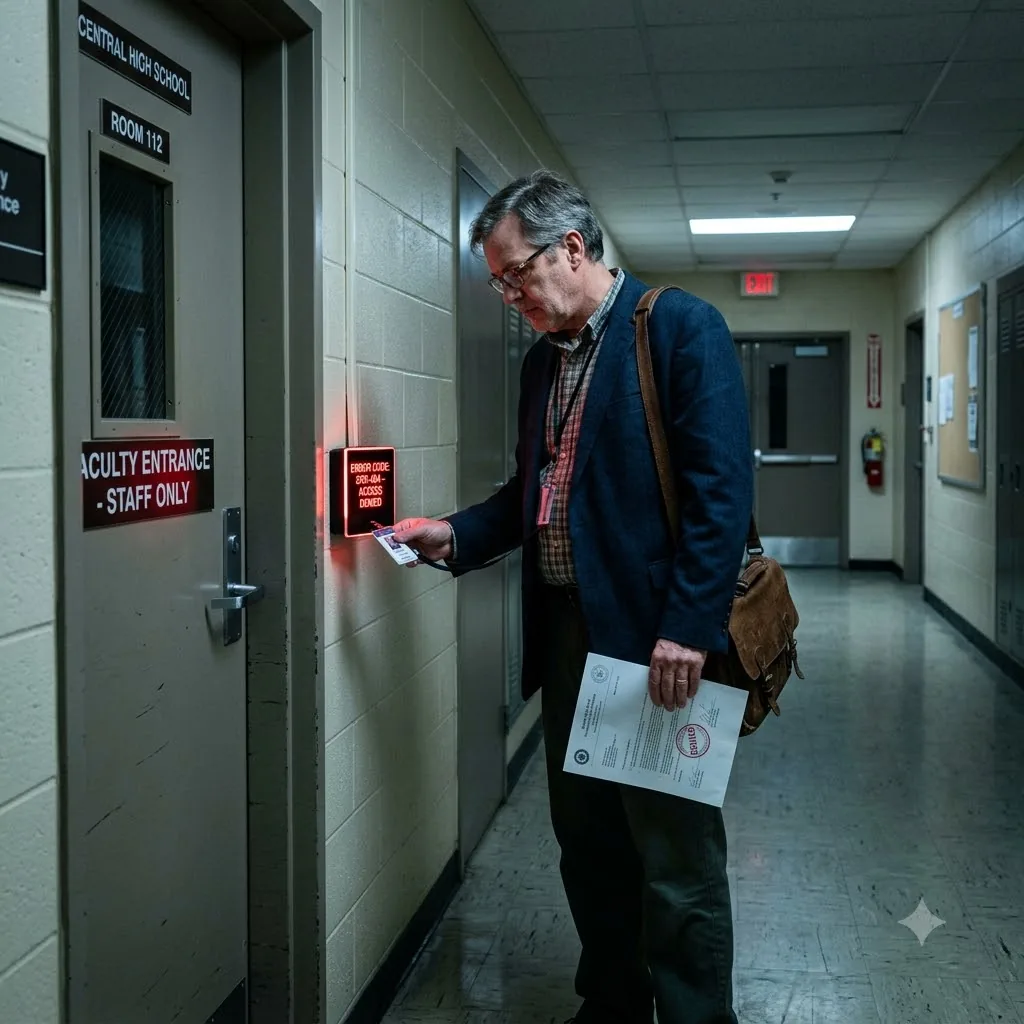
The scanner beside the AP Physics door blinked a steady, cold red. Mateo swiped his plastic school ID again. The expected heavy metallic click of the latch unlocking never came. Through the narrow vertical window, Mr. Harrison was writing torque equations on the whiteboard, oblivious to the hallway. Mateo pressed the card flat against the reader, holding it there. A high-pitched, flat electronic tone buzzed, followed by the LED screen displaying a stark, fatal error code. The alphanumeric string glared against the dark plastic. The hallway was entirely empty, the final bell having rung three minutes prior. The silence felt thick, sudden, and entirely wrong.
He jiggled the metal handle. It remained locked tight. The school’s new automated security mesh operated flawlessly, sealing the corridors during instructional hours to ensure safety and track attendance. Usually, a late swipe triggered a yellow tardy slip from the kiosk down the hall, granting access with a minor demerit. Red meant something else entirely. Red meant the system did not recognize him as a student. He backed away from the reinforced glass, holding the plastic card as if it had burned his palm. The magnetic strip on the back was intact. His photo, smiling and slightly out of focus from freshman year, was still there. The network had simply decided he no longer belonged on this side of the threshold.
The walk to the main office was a procession through sterile, echoing corridors. The overhead fluorescent lights hummed a low, synthetic drone that grated against his nerves. At the front desk, the usual morning bustle of student aides and ringing phones was entirely absent. Principal Evans stood directly behind the long laminate counter. He was waiting. Evans did not offer his usual tired smile. He did not demand an explanation for Mateo wandering the halls during first period. The man simply stood there, his posture rigid, his hands resting flat on the counter. A single sheet of paper was positioned exactly between his palms.
Mateo stepped up to the counter. He placed his dead ID card next to the paper, a silent demand for it to be fixed. Evans looked at the card, then up at Mateo. The principal’s eyes were completely vacant of the warmth that had greeted Mateo at honor roll assemblies for three consecutive years. Evans slid the paper forward using just his index finger. The principal did not speak a single word. He took a deliberate step backward, creating physical distance. Then another. He retreated into his inner office, grasped the brass handle of his heavy wooden door, and pulled it shut with a quiet, definitive click. The blinds rattled against the glass, obscuring him completely.
Mateo stood alone in the reception area. He looked down at the paper. It was not a suspension notice. It bore the heavy, dark seal of the Department of Homeland Security. The text was a dense block of bureaucratic finality. At the center, bolded and underlined, was his name, followed by a sequence of tracking characters. Below that, a single line of text shattered the foundation of his entire life. The document stated his Deferred Action for Childhood Arrivals status was voided. The reason was not a paragraph of legal justification or a cited infraction. It was a single, terrifyingly vague machine output. The bold text blamed Software Node 4.
There was no signature at the bottom. No printed name of a caseworker. No phone number for an appeal. A digital system had silently reached out in the middle of the night, severed his legal right to exist in the only country he remembered, and locked him out of his high school before first period. He picked up the paper. The edges felt sharp, freshly printed on the school’s heavy stock. A flawed algorithm had flagged him for deportation, operating entirely in the shadows. The mechanism was completely invisible, offering no surface to fight against.
He needed a human being. He needed someone with a pulse to look at his clean record, his continuous residency paperwork, the pristine file of his life. Mateo turned away from the closed principal’s office and pushed through the main double doors, out into the biting morning air. The regional field office was three miles away in the downtown federal plaza. He walked the entire distance. The paper remained gripped so tightly in his fist that the laser-printed text began to smear from the sweat of his palm.
The federal building was a fortress of brutalist concrete and tinted glass. Inside, the waiting room was a sea of orange plastic chairs bolted to the linoleum floor. Mateo bypassed the automated ticketing kiosks. He walked straight to the thick plexiglass window of the primary intake desk. A man in a blue uniform sat behind the barrier, staring at a dual-monitor setup. His silver nametag identified him as an auditor. This was the human failsafe. This was the person tasked with reviewing the machine’s work.
Mateo pressed the crumpled DHS notice flat against the scratched plexiglass. He pointed specifically to the line citing Software Node 4. The auditor did not look up from his glowing screens. Mateo tapped the glass harder. He unzipped his backpack and retrieved his thick folder of physical proof, sliding it beneath the narrow steel transaction slot. The pristine tax returns, the perfect attendance records, the sealed transcripts all piled up in the metal tray. The auditor finally shifted his gaze. He looked at the mountain of physical paperwork sitting in the tray, then looked Mateo directly in the eye. The man’s expression was utterly blank. Without breaking eye contact, the auditor reached out with one hand and pressed a red button on his console. A heavy steel shutter dropped from the ceiling with a violent crash, sealing the transaction window completely and leaving Mateo staring at his own reflection in the corrugated metal.
The scanner beside the AP Physics door blinked a steady, cold red. Mateo swiped his plastic school ID again. The expected heavy metallic click of the latch unlocking never came. Through the narrow vertical window, Mr. Harrison was writing torque equations on the whiteboard, oblivious to the hallway. Mateo pressed the card flat against the reader, holding it there. A high-pitched, flat electronic tone buzzed, followed by the LED screen displaying a stark, fatal error code. The alphanumeric string glared against the dark plastic. The hallway was entirely empty, the final bell having rung three minutes prior. The silence felt thick, sudden, and entirely wrong.
He jiggled the metal handle. It remained locked tight. The school’s new automated security mesh operated flawlessly, sealing the corridors during instructional hours to ensure safety and track attendance. Usually, a late swipe triggered a yellow tardy slip from the kiosk down the hall, granting access with a minor demerit. Red meant something else entirely. Red meant the system did not recognize him as a student. He backed away from the reinforced glass, holding the plastic card as if it had burned his palm. The magnetic strip on the back was intact. His photo, smiling and slightly out of focus from freshman year, was still there. The network had simply decided he no longer belonged on this side of the threshold.
The walk to the main office was a procession through sterile, echoing corridors. The overhead fluorescent lights hummed a low, synthetic drone that grated against his nerves. At the front desk, the usual morning bustle of student aides and ringing phones was entirely absent. Principal Evans stood directly behind the long laminate counter. He was waiting. Evans did not offer his usual tired smile. He did not demand an explanation for Mateo wandering the halls during first period. The man simply stood there, his posture rigid, his hands resting flat on the counter. A single sheet of paper was positioned exactly between his palms.
Mateo stepped up to the counter. He placed his dead ID card next to the paper, a silent demand for it to be fixed. Evans looked at the card, then up at Mateo. The principal’s eyes were completely vacant of the warmth that had greeted Mateo at honor roll assemblies for three consecutive years. Evans slid the paper forward using just his index finger. The principal did not speak a single word. He took a deliberate step backward, creating physical distance. Then another. He retreated into his inner office, grasped the brass handle of his heavy wooden door, and pulled it shut with a quiet, definitive click. The blinds rattled against the glass, obscuring him completely.
Mateo stood alone in the reception area. He looked down at the paper. It was not a suspension notice. It bore the heavy, dark seal of the Department of Homeland Security. The text was a dense block of bureaucratic finality. At the center, bolded and underlined, was his name, followed by a sequence of tracking characters. Below that, a single line of text shattered the foundation of his entire life. The document stated his Deferred Action for Childhood Arrivals status was voided. The reason was not a paragraph of legal justification or a cited infraction. It was a single, terrifyingly vague machine output. The bold text blamed Software Node 4.
There was no signature at the bottom. No printed name of a caseworker. No phone number for an appeal. A digital system had silently reached out in the middle of the night, severed his legal right to exist in the only country he remembered, and locked him out of his high school before first period. He picked up the paper. The edges felt sharp, freshly printed on the school’s heavy stock. A flawed algorithm had flagged him for deportation, operating entirely in the shadows. The mechanism was completely invisible, offering no surface to fight against.
He needed a human being. He needed someone with a pulse to look at his clean record, his continuous residency paperwork, the pristine file of his life. Mateo turned away from the closed principal’s office and pushed through the main double doors, out into the biting morning air. The regional field office was three miles away in the downtown federal plaza. He walked the entire distance. The paper remained gripped so tightly in his fist that the laser-printed text began to smear from the sweat of his palm.
The federal building was a fortress of brutalist concrete and tinted glass. Inside, the waiting room was a sea of orange plastic chairs bolted to the linoleum floor. Mateo bypassed the automated ticketing kiosks. He walked straight to the thick plexiglass window of the primary intake desk. A man in a blue uniform sat behind the barrier, staring at a dual-monitor setup. His silver nametag identified him as an auditor. This was the human failsafe. This was the person tasked with reviewing the machine’s work.
Mateo pressed the crumpled DHS notice flat against the scratched plexiglass. He pointed specifically to the line citing Software Node 4. The auditor did not look up from his glowing screens. Mateo tapped the glass harder. He unzipped his backpack and retrieved his thick folder of physical proof, sliding it beneath the narrow steel transaction slot. The pristine tax returns, the perfect attendance records, the sealed transcripts all piled up in the metal tray. The auditor finally shifted his gaze. He looked at the mountain of physical paperwork sitting in the tray, then looked Mateo directly in the eye. The man’s expression was utterly blank. Without breaking eye contact, the auditor reached out with one hand and pressed a red button on his console. A heavy steel shutter dropped from the ceiling with a violent crash, sealing the transaction window completely and leaving Mateo staring at his own reflection in the corrugated metal.