Story code: ST-000919
Part 1: The Ten Minute Warning
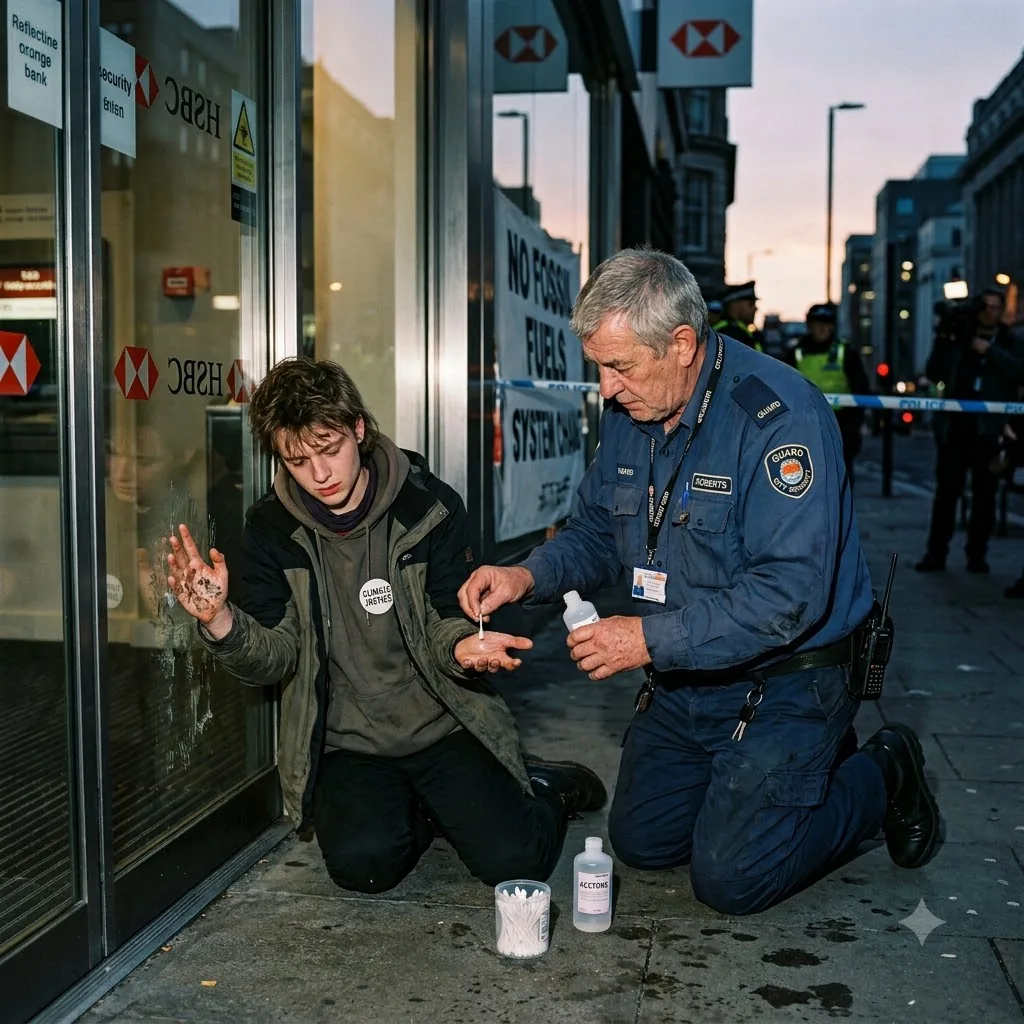
The harsh chemical sting of cheap acetone burned Marcus’s eyes as he wedged the plastic putty knife against the freezing bank doors. The girl attached to the glass let out a sharp, jagged sob, her knuckles white where the superglue held her flesh fast to the pane.
“Hold still,” Marcus muttered, his knees popping as he shifted his weight on the concrete.
He had exactly nine minutes before Mr. Gable’s black sedan pulled into the branch manager’s spot. Nine minutes to detach a weeping environmentalist from the First National entrance, scrub the residue, and get back to the security desk. If Gable found her here, Marcus would be fired on the spot. At sixty-two, with a bad hip and his wife’s medical bills stacked on the kitchen table, he could not afford to lose the uniform.
The girl squirmed, pulling her left palm frantically. The skin stretched.
“Stop,” Marcus ordered, pressing his worn, calloused hand flat against her trembling shoulder. “You are going to tear your skin off. The glue has to dissolve.”
He poured another capful of the pink liquid from the drugstore bottle over her trapped fingers. The smell of nail polish remover overpowered the exhaust fumes of the early morning city traffic. The cold seeped through his thin trousers. He rubbed his aching lower back with his free hand and leaned closer to the glass.
She was barely out of her teens. She wore a ratty olive-green oversized jacket and frayed black jeans, her face hidden behind a tangled curtain of dark, unwashed hair. A bulky canvas backpack hung off one shoulder, weighing her down, dragging her glued hands lower on the pane. She kept shivering, her breath fogging the glass right where Marcus needed to see the adhesive line.
He scraped the plastic knife millimeter by millimeter. The pink liquid pooled in the web of her thumb.
“It burns,” she gasped, her voice cracking.
“It works,” Marcus corrected gently, his chest heaving with the exertion of staying crouched. “Just let it work.”
He checked his watch. Seven minutes. The sky was turning a bruising, pale purple. The streetlights flickered off, signaling the dawn and the imminent arrival of the day shift.
“You should have waited for the police,” she whispered, a fresh tear tracking through the dirt on her cheek. “You are interfering with a direct action.”
Marcus sighed, dipping a cotton pad into the acetone bottle. He dabbed it along her pinky.
“The police would use a chemical solvent too,” Marcus said, keeping his tone flat and steady. “But they would also put you in zip-ties and put me out of a job for letting you get past the perimeter. I have a pension to make.”
She jerked her arm again. The glass groaned softly.
“Hold still,” Marcus commanded, louder this time. The putty knife slipped, scraping loudly against the thick corporate glass. He winced, glancing nervously down the empty street. No sign of Gable’s sedan yet.
The girl slumped forward, her forehead resting against the cold door. She looked exhausted, defeated, just a kid who had made a terrible, impulsive choice in the dark. Marcus felt a familiar, heavy pity in his chest. He had seen a dozen like her over the years, chaining themselves to ATMs, throwing paint on the lobby floor. They always thought they were changing the world. They never realized they were only making extra work for the people sweeping the floors and guarding the doors.
“Four minutes,” Marcus muttered to himself, pouring the last of the acetone directly onto her right palm. The glue finally began to turn gummy and white.
He gripped her wrist with his large, steady hand.
“On three, pull straight back,” he instructed, his own heart hammering against his ribs. “One. Two. Three.”
She yanked. With a sickening, wet tearing sound, her right hand popped free. She stumbled backward, clutching her raw, red palm to her chest.
Marcus immediately attacked the left hand, scraping frantically. The plastic knife bent under his desperate pressure. The street was getting brighter. The distant hum of a car engine grew louder, echoing off the brick canyon of the financial district.
Three minutes.
“Come on, come on,” Marcus gritted his teeth, pouring the very last drops from the bottle.
The girl tugged hard on her own. Her canvas backpack, unbalanced by her sudden movement, slipped completely off her shoulder. The strap caught on her elbow, yanking her sideways.
“My bag,” she cried out.
The left hand tore free from the glass. She fell hard onto the concrete.
The heavy canvas backpack hit the ground and unzipped. Everything spilled out across the pavement in a messy heap of protest flyers, a metal water bottle, and a thick leather wallet that snapped open upon impact.
Marcus reached down to help her up, his eyes darting frantically down the street. The heavy purr of an engine turned the corner. A black sedan. Gable.
Marcus grabbed her arm to pull her behind the decorative concrete planters, but his gaze fell on the open wallet on the pavement. A premium, heavy-metal black credit card glinted in the dawn light. Beside it lay a driver’s license.
The photo showed the messy-haired girl. The name printed in bold black letters was Eleanor Sterling.
Marcus froze, staring at the last name of the bank’s CEO, the man who owned the very building they were standing in.
Twin beams of bright white headlights swept across the glass doors, washing over Marcus, the sobbing billionaire heiress, and the peeling patches of superglue.
The harsh chemical sting of cheap acetone burned Marcus’s eyes as he wedged the plastic putty knife against the freezing bank doors. The girl attached to the glass let out a sharp, jagged sob, her knuckles white where the superglue held her flesh fast to the pane.
“Hold still,” Marcus muttered, his knees popping as he shifted his weight on the concrete.
He had exactly nine minutes before Mr. Gable’s black sedan pulled into the branch manager’s spot. Nine minutes to detach a weeping environmentalist from the First National entrance, scrub the residue, and get back to the security desk. If Gable found her here, Marcus would be fired on the spot. At sixty-two, with a bad hip and his wife’s medical bills stacked on the kitchen table, he could not afford to lose the uniform.
The girl squirmed, pulling her left palm frantically. The skin stretched.
“Stop,” Marcus ordered, pressing his worn, calloused hand flat against her trembling shoulder. “You are going to tear your skin off. The glue has to dissolve.”
He poured another capful of the pink liquid from the drugstore bottle over her trapped fingers. The smell of nail polish remover overpowered the exhaust fumes of the early morning city traffic. The cold seeped through his thin trousers. He rubbed his aching lower back with his free hand and leaned closer to the glass.
She was barely out of her teens. She wore a ratty olive-green oversized jacket and frayed black jeans, her face hidden behind a tangled curtain of dark, unwashed hair. A bulky canvas backpack hung off one shoulder, weighing her down, dragging her glued hands lower on the pane. She kept shivering, her breath fogging the glass right where Marcus needed to see the adhesive line.
He scraped the plastic knife millimeter by millimeter. The pink liquid pooled in the web of her thumb.
“It burns,” she gasped, her voice cracking.
“It works,” Marcus corrected gently, his chest heaving with the exertion of staying crouched. “Just let it work.”
He checked his watch. Seven minutes. The sky was turning a bruising, pale purple. The streetlights flickered off, signaling the dawn and the imminent arrival of the day shift.
“You should have waited for the police,” she whispered, a fresh tear tracking through the dirt on her cheek. “You are interfering with a direct action.”
Marcus sighed, dipping a cotton pad into the acetone bottle. He dabbed it along her pinky.
“The police would use a chemical solvent too,” Marcus said, keeping his tone flat and steady. “But they would also put you in zip-ties and put me out of a job for letting you get past the perimeter. I have a pension to make.”
She jerked her arm again. The glass groaned softly.
“Hold still,” Marcus commanded, louder this time. The putty knife slipped, scraping loudly against the thick corporate glass. He winced, glancing nervously down the empty street. No sign of Gable’s sedan yet.
The girl slumped forward, her forehead resting against the cold door. She looked exhausted, defeated, just a kid who had made a terrible, impulsive choice in the dark. Marcus felt a familiar, heavy pity in his chest. He had seen a dozen like her over the years, chaining themselves to ATMs, throwing paint on the lobby floor. They always thought they were changing the world. They never realized they were only making extra work for the people sweeping the floors and guarding the doors.
“Four minutes,” Marcus muttered to himself, pouring the last of the acetone directly onto her right palm. The glue finally began to turn gummy and white.
He gripped her wrist with his large, steady hand.
“On three, pull straight back,” he instructed, his own heart hammering against his ribs. “One. Two. Three.”
She yanked. With a sickening, wet tearing sound, her right hand popped free. She stumbled backward, clutching her raw, red palm to her chest.
Marcus immediately attacked the left hand, scraping frantically. The plastic knife bent under his desperate pressure. The street was getting brighter. The distant hum of a car engine grew louder, echoing off the brick canyon of the financial district.
Three minutes.
“Come on, come on,” Marcus gritted his teeth, pouring the very last drops from the bottle.
The girl tugged hard on her own. Her canvas backpack, unbalanced by her sudden movement, slipped completely off her shoulder. The strap caught on her elbow, yanking her sideways.
“My bag,” she cried out.
The left hand tore free from the glass. She fell hard onto the concrete.
The heavy canvas backpack hit the ground and unzipped. Everything spilled out across the pavement in a messy heap of protest flyers, a metal water bottle, and a thick leather wallet that snapped open upon impact.
Marcus reached down to help her up, his eyes darting frantically down the street. The heavy purr of an engine turned the corner. A black sedan. Gable.
Marcus grabbed her arm to pull her behind the decorative concrete planters, but his gaze fell on the open wallet on the pavement. A premium, heavy-metal black credit card glinted in the dawn light. Beside it lay a driver’s license.
The photo showed the messy-haired girl. The name printed in bold black letters was Eleanor Sterling.
Marcus froze, staring at the last name of the bank’s CEO, the man who owned the very building they were standing in.
Twin beams of bright white headlights swept across the glass doors, washing over Marcus, the sobbing billionaire heiress, and the peeling patches of superglue.