Story code: ST-000842
Part 2: The Remediation Path
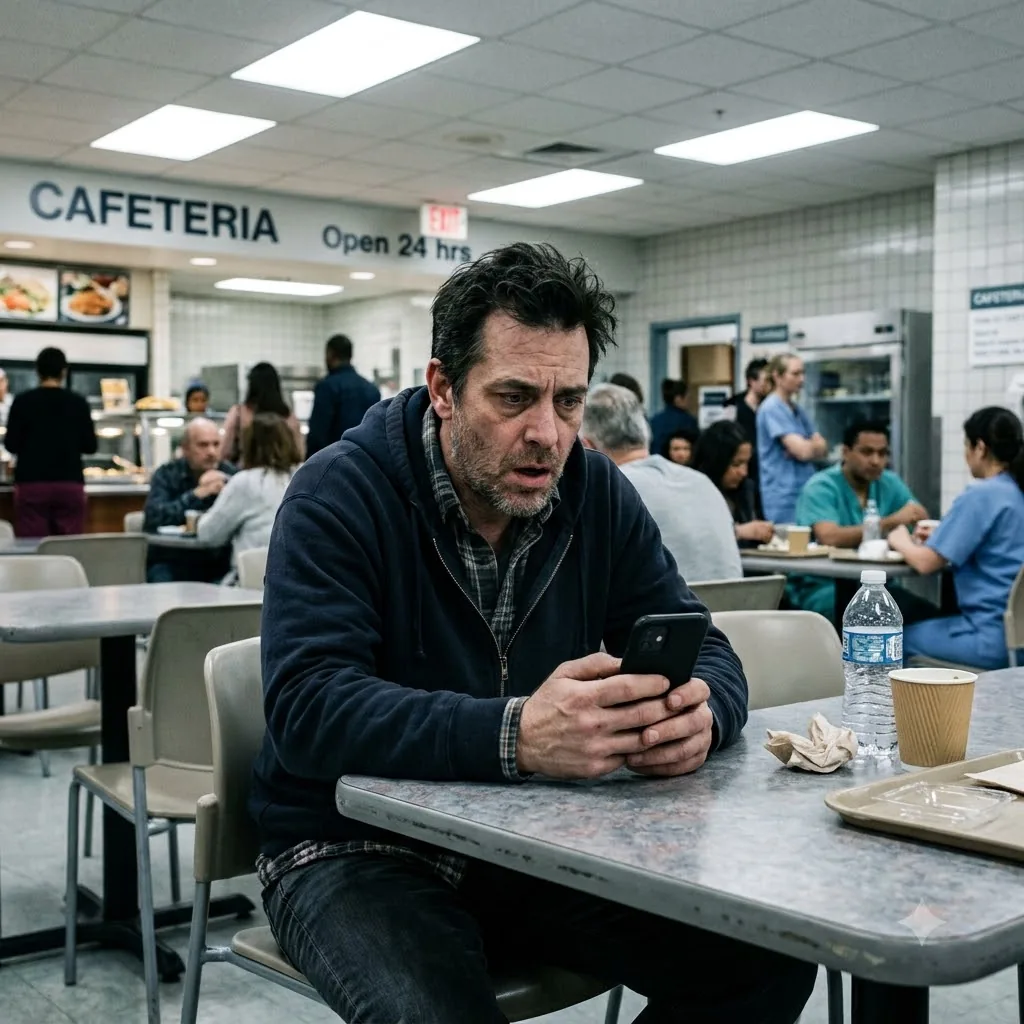
David’s eyes scanned the harsh, unformatted text on his screen. The bright glare of the hospital atrium seemed to dim around him as he absorbed the two sentences.
*Your campaign is under a Tier 3 Anti-Money Laundering lockdown due to anomalous deposit routing. Standard customer service has no jurisdiction over this automated freeze.*
*To prevent a mandatory sixty-day federal audit, review the attached ledger and select a remediation path.*
David clicked the PDF icon. The file loaded instantly, displaying a stark, black-and-white spreadsheet. It appeared to be a backend diagnostic report of Maya’s crowdfunding page. The layout was chaotic, filled with raw code strings and truncated IP addresses, but at the very bottom, a summary box presented the devastating math.
His total raised amount sat at exactly $42,000.00.
However, a thick red bracket grouped eighty-two separate donations together. According to the notes typed in the margin, these transactions-totaling exactly $14,000-had all originated from a cluster of blacklisted servers in Eastern Europe. The platform’s security algorithm had flagged them as stolen credit card tests, a common tactic where digital thieves used sympathetic, high-traffic crowdfunding pages to quietly verify stolen card numbers.
Below the math was a digital form with a single, brutal ultimatum.
He had two options. Option A was to dispute the flag. If he checked that box, the platform would initiate a manual compliance investigation, locking all $42,000 in a legal vacuum for a minimum of sixty business days while investigators contacted the cardholders.
Option B was the ‘Remediation Path.’ If he signed the digital waiver, he agreed to voluntarily forfeit the contested $14,000, allowing the platform to immediately refund the flagged cards. In exchange, the system would instantly release the legitimate $28,000 from escrow, clearing it for an immediate bank transfer.
David stared at the glowing screen, a sick, hollow feeling opening up in his stomach. He rubbed his face, his skin suddenly cold and clammy. Maya did not have sixty days. She didn’t even have sixty hours. The defective valve in her small heart was tearing, and Dr. Aris had already prepped the specialized surgical team for this afternoon. If she didn’t get into that operating room today, the damage would become inoperable.
He desperately needed the money. But twenty-eight thousand was not forty-two.
David shoved the phone into his pocket and bolted for the elevators. He slammed the ‘Up’ button repeatedly, his pulse hammering against his ribs. When the stainless-steel doors finally parted on the fourth floor, he rushed down the pristine, white-tiled corridor toward the Surgical Admissions and Billing department.
The waiting area was entirely quiet, smelling sharply of lavender floor cleaner and heavy antiseptic. David approached the thick glass partition. A man in a crisp blue shirt and wire-rimmed glasses looked up from a dual-monitor workstation. His silver nametag read *Mr. Hayes – Patient Financial Services*.
“I’m David Vance,” David said, struggling to keep his voice steady as he leaned against the glass. “My daughter, Maya Vance. She’s scheduled for a valve replacement at one o’clock. I need to talk to you about the surgical deposit.”
Mr. Hayes clicked his mouse a few times, pulling up Maya’s file. His expression remained neutral, practiced, and deeply institutional. “Yes, Mr. Vance. We are still waiting on the escrow clearance. The forty-two thousand must be wired into the hospital’s holding account by eleven o’clock this morning, or the system will automatically release the operating room to an emergency trauma standby.”
“I have twenty-eight thousand,” David said quickly, pressing his palm against the counter. “I can wire you twenty-eight thousand dollars right this second. It’s cleared. It’s liquid. I just need you to accept it as a deposit and give me a payment plan for the remaining fourteen.”
Mr. Hayes stopped clicking. He looked at David with a weary sigh, the specific kind of sigh reserved for grieving families and impossible hospital policies. “Mr. Vance, we went over this thoroughly during the preoperative consultation. The hospital does not offer financing for this specific cardiothoracic procedure because it requires an out-of-network specialist. Dr. Aris’s team operates on a strict flat-fee guarantee. We cannot initiate anesthesia without the full amount secured.”
“It’s just fourteen thousand,” David pleaded, his voice cracking loudly in the quiet lobby. “I can get a loan. I can sell my car. I just need a few days. You can’t cancel a child’s life-saving surgery over a partial balance.”
“I do not have the authorization to override the billing software,” Mr. Hayes said softly, adjusting his glasses. “If the full wire is not received by eleven, the network literally locks us out of generating the surgical barcodes for the pharmacy. You have sixty-five minutes.”
David backed away from the glass. He felt like the air was being sucked out of the corridor. He pulled his phone from his pocket. The PDF was still open on his screen.
He had to secure the twenty-eight thousand now, or he would lose it all to the sixty-day federal audit. With trembling fingers, he tapped the digital signature box on Option B. He traced his name across the glass and hit ‘Submit’.
Within three seconds, his crowdfunding dashboard force-refreshed again. The grey padlock vanished. The total available balance now read $28,000.00. He hit the orange ‘Withdraw’ button, routing the funds directly to the hospital’s routing number.
“Okay,” David breathed out, pointing at Mr. Hayes. “Check your system. Check it right now.”
Mr. Hayes tapped his keyboard. “I see a pending incoming wire for twenty-eight thousand dollars. It is holding in our partial-payment queue.”
“So she stays on the schedule?” David asked, stepping back to the glass.
“She stays on the schedule until eleven o’clock,” Mr. Hayes corrected, pointing at the digital clock on the wall. It read 9:58 AM. “But Mr. Vance, I need to warn you. If you do not provide the remaining fourteen thousand dollars in exactly one hour, the system will void the surgery entirely. And because external wire transfers cannot be held indefinitely in our partial queue without a matching invoice, the twenty-eight thousand will automatically bounce back to the sender.”
David froze, the color draining from his face. “Wait. No. It can’t bounce back. My account on the platform is suspended. If the money bounces back, it goes into a frozen digital wallet. I won’t be able to access it for months. I’ll lose it completely.”
“That is our automated banking policy,” Mr. Hayes said, offering a helpless shrug. “You need fourteen thousand dollars in sixty-two minutes, Mr. Vance, or you lose the deposit.”
David turned away from the desk, staring down the long, empty hospital corridor. His personal checking account had less than a thousand dollars. His credit cards were maxed. He was fourteen thousand dollars short, entirely isolated, and out of time.
Before he could take a breath, his phone vibrated again. Another plain-text email from the Account Integrity Unit appeared.