Story code: ST-001931
Part 2: The Sync Loop
The deadbolt sheared through the strike plate, sending a shower of metal fragments and wood splinters across the linoleum. The heavy fire door rebounded against the interior classroom wall with a concussive thud that rattled the glass anatomical models on the nearby storage shelves. The hinges shrieked in protest as the metal frame warped under the sheer kinetic force of the breach.
Beneath her jacket canopy, Maya’s thumb remained crushed against the red deletion block on her screen. The blinding white legal disclaimer vanished, replaced instantly by a terminal black screen. For a fraction of a second, the sudden darkness offered an illusion of safety. Then, the haptic motor inside the phone’s chassis vibrated. It was a long, continuous, heavy pulse that resonated through the floorboards.
The application had not terminated. It had entered a localized caching state.
A pale, low-luminosity progress bar appeared at the top of her display. Text rendered in a sterile, default sans-serif font below it read: *Data purge queued. Awaiting server synchronization.*
The school’s emergency lockdown protocol included automated cellular signal dampening to prevent misinformation and keep local frequencies clear for emergency responders. Her phone’s status bar displayed zero bars of connectivity. The application could not reach the external server to finalize the destruction of her logs. The data-a granular, timestamped history of physical movements, audio snippets, and proximity pings-remained entirely intact on the device’s flash memory. The software was locked in an endless, hardcoded loop, attempting to broadcast its final state to a server it could not see.
Heavy boots stepped over the threshold of the classroom. The intruder’s movements were methodical. There was no erratic rushing, only the calculated, rhythmic tread of rubber soles compressing the debris left by the shattered door. A beam of white light swept across the ceiling, casting long, distorted shadows of the inverted biology desks against the far wall.
Under the adjacent desk, Mr. Aris remained motionless, his grip on the red cylinder of the fire extinguisher white-knuckled. He did not swing. He did not move to attack. The element of surprise had evaporated the moment Maya’s screen had flashed its maximum-brightness legal warning. The intruder’s flashlight beam cut a deliberate path directly toward their specific corner of the room.
Maya stared at the device in her shaking hands. The processor was cycling at maximum capacity, causing the backplate to grow uncomfortably hot against her palms. The progress bar hung stubbornly at two percent.
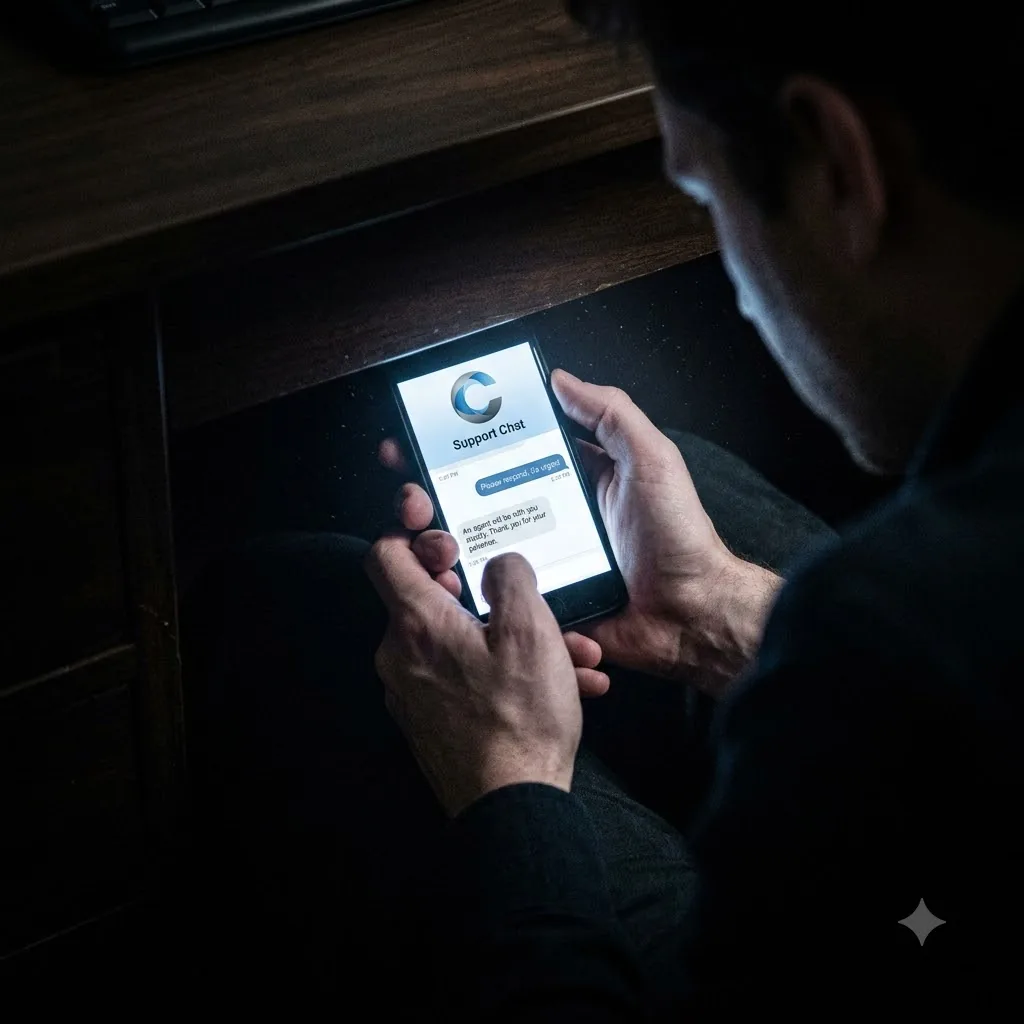
The live-chat interface with Support_Kevin, which had previously acted as the retention firewall, re-initialized over the progress bar. The automated facade dropped entirely. The interface lacked the simulated typing delay it had utilized just minutes earlier. The keystrokes appeared instantly, stripped of the corporate polish.
*Support_Kevin: I see the purge request. I can’t override the sync requirement from the backend.*
*Support_Kevin: The retention architecture is hardcoded to prevent data loss. It requires a confirmed handshake to delete the local cache.*
*Support_Kevin: It is still broadcasting your telemetry ping searching for a network. I cannot stop it.*
The developer was trapped outside his own safety parameters. The automated system, engineered specifically to harvest and retain user data at all costs, offered no manual kill switch. The underlying code dictated that a user could not disappear without the server’s explicit permission, and the server was currently unreachable.
The boots advanced three paces into the room. The intruder stopped. A sharp, rhythmic clicking sound echoed from the front of the classroom. It was the mechanical static of a handheld radio frequency receiver. The intruder was not searching visually. He was sweeping for active local network pings.
Maya’s phone vibrated again, executing a scheduled attempt to connect to any available mesh node. The static from the intruder’s receiver spiked into a harsh, metallic screech for half a second before he manually adjusted the dial. He had isolated the frequency.
The logs in Maya’s local cache contained the complete spatial map of the restricted zones, the exact timestamps of the security patrols, and the compiled access codes she had aggregated over the last four months. If the hardware fell into the intruder’s possession intact, the encryption would not hold against a physical extraction. The data would expose every structural vulnerability in the district’s grid, the precise information the intruder was here to collect.
*Support_Kevin: You have to get it online. One bar of signal. Just for three seconds.*
*Support_Kevin: If he takes the device while the cache is whole, the zero-day deployment is compromised.*
Maya swiped the chat box away. The proximity ping was a digital flare. She could not power down the device; the application possessed root administrative privileges that actively prevented a hard shutdown while a critical data sync was queued. The battery was sealed beneath a unified glass backplate. Smashing the phone against the linoleum might destroy the screen, but the logic board and the internal antenna would likely survive long enough to keep broadcasting her exact coordinates.
The beam of the flashlight lowered, sweeping across the floor tiles toward the biology desks. The static on the receiver grew louder, a steady, escalating crackle that tracked the diminishing distance between the intruder and the device in her hands.
She had two options. She could remain perfectly still, allowing the intruder to follow the automated signal directly to her position under the desk, guaranteeing the capture of the unencrypted local data. Or, she could break cover, abandon the relative safety of the dark corner, and move toward the exterior windows. The thick, reinforced glass of the classroom windows overlooked the staff parking lot. It was the only perimeter wall in the building where the school’s signal dampeners occasionally failed to block the regional tower frequencies.
Moving meant stepping directly into the path of the flashlight. It meant exposing herself to whatever the intruder was carrying in his other hand.
The receiver’s static flared into a continuous, high-pitched whine. The boots took another deliberate step. The flashlight beam struck the metal leg of Maya’s desk, illuminating the dust motes dancing in the air right beside her face.
Maya slipped her fingers around the smooth, aluminum edges of the phone. She gathered her weight beneath her, pressing her sneakers flat against the cold floor. The progress bar on the screen remained frozen at two percent, the automated system stubbornly waiting for a connection that would cost her everything to establish.