Story code: ST-000658
Part 1: He Used the Headset Like a Rank Badge
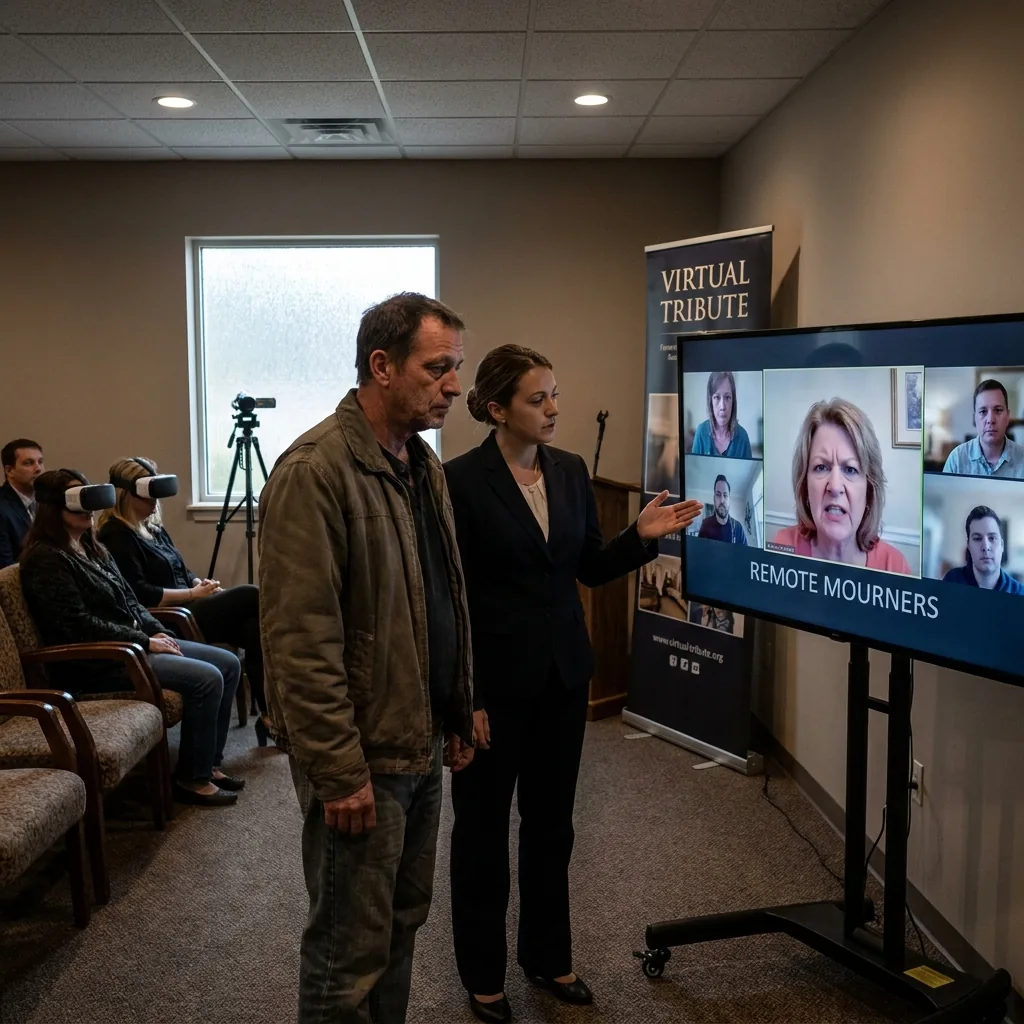
The first ugly thing that happened at my cousin’s memorial was not a crash or a bad stream. It was a man on a video call using made-up technical language about our VR tribute link to shut my aunt Dana up in front of everybody, and for a minute the room acted like she was too ignorant to speak. I was standing at the side table with the laptop, audio slider open, headset charging beside me, and I could see every face turn toward the screen instead of the family.
We were twelve minutes from the tribute segment. The regular memorial had already started, quiet and ordinary in the way those rooms get when people are trying hard not to make anything harder. I had the livestream on one monitor, the call window on the display screen, and the VR link page open on the laptop we used for remote guests who wanted to join the tribute space after the eulogies.
Noah Bennett, our funeral director, was near the front aisle with his folded run sheet. Leah Mercer stood by the front row answering low questions from relatives without sitting down. Dana Ruiz had the printed service notes in one hand and kept looking from me to the headset station we had set up on a small draped table near the wall.
The call tile for Evan Pike was centered on the display. He had a clean background, bright face lighting, and that steady kind of voice that fills a room even through cheap speakers.
Dana looked at the headset and asked me, plain and practical, “Do people have to use that thing, or can they just watch the tribute on the screen?”
Before I could answer, Evan cut in through the speakers.
“Please do not flatten the experience like that,” he said. “The memorial link is built around a grief-continuity layer. If you bypass the immersion handshake, you can create a memorial desync for everyone downstream.”
The room went still in a way I have seen before, when somebody says something nobody understands but says it with enough polish that no one wants to be first to admit it.
Dana blinked at the screen. “I just asked if my brother’s wife can watch without the headset. She gets motion sick.”
Evan gave a short laugh that did not belong in that room. “Right, but that’s exactly why this should stay with the tech team. These systems have etiquette and architecture. If people start freelancing concerns in the middle of deployment, you can damage the continuity of the room.”
He said the last part slowly, like he was helping a child.
Dana’s mouth opened, then shut. She looked at me for confirmation. I said, “The link has a standard viewer option and the headset option.”
Evan jumped in again before I could say anything else. “Standard viewer access only works after the immersion handshake resolves. If she doesn’t know how memorial threading works, she really shouldn’t be overriding it live.”
A couple of heads turned toward Dana. Not hostile, exactly. Worse than that. Cautious. Embarrassed for her. She shifted the service notes against her palm and took one step back from the headset table.
That was the first real damage. Nobody had raised a voice. Nobody had made a scene. He had just wrapped her objection in language thick enough that the room treated her like the problem.
Noah glanced at me, then at the call screen. He kept his professional tone. “Mr. Pike, I want to make sure we’re proceeding correctly. Mara is handling the equipment in the room.”
Evan nodded once, quick and tidy on camera. “Then Mara will know not to break sequence by opening a passive port before the grief-continuity layer settles.”
I had been running our streamed services for months. I knew what the VR page did when it loaded, where the guest links sat, how the audio lagged if the headset mirrored to the main display, and how long it took to relaunch the tribute room if somebody entered the wrong mode. I had never heard anyone say grief-continuity layer.
Leah finally spoke from the front row. “Is there a reason people can’t just choose screen or headset?”
Evan turned his face slightly toward his camera, as if he were addressing a panel instead of a family. “Because choice at the wrong layer destabilizes memorial threading. That’s basic. If you want the tribute to remain coherent, you let the immersion handshake finish first.”
He said coherent like it settled everything.
Dana gave a small, tight nod that looked less like agreement than surrender. She stopped asking questions. She kept the service notes folded against her chest and stared at the carpet near the first row.
I clicked through the VR link page while he talked. Join. Viewer access. Headset access. Audio mirror. Participant permissions. The same labels that had been there during setup were still there. No handshake warning. No continuity layer. No threading anything.
But now he had said those words in front of the family, and the words had weight because they sounded expensive and specific.
Noah checked his watch. “We need to move. Mara, hold the tribute until I cue it. Evan, stay with us on audio.”
“Of course,” Evan said. “Just don’t let anyone trigger the condolence buffer before the handshake. If that gets contaminated, the whole memorial archive can shear.”
My hand stopped on the trackpad.
Noah looked at the screen, then at me. Leah looked at me too. Dana finally raised her head.
Nobody in that room had heard condolence buffer before, and Evan had said it with the smooth confidence of a man naming a thing that ought to have been obvious to all of us.
The first ugly thing that happened at my cousin’s memorial was not a crash or a bad stream. It was a man on a video call using made-up technical language about our VR tribute link to shut my aunt Dana up in front of everybody, and for a minute the room acted like she was too ignorant to speak. I was standing at the side table with the laptop, audio slider open, headset charging beside me, and I could see every face turn toward the screen instead of the family.
We were twelve minutes from the tribute segment. The regular memorial had already started, quiet and ordinary in the way those rooms get when people are trying hard not to make anything harder. I had the livestream on one monitor, the call window on the display screen, and the VR link page open on the laptop we used for remote guests who wanted to join the tribute space after the eulogies.
Noah Bennett, our funeral director, was near the front aisle with his folded run sheet. Leah Mercer stood by the front row answering low questions from relatives without sitting down. Dana Ruiz had the printed service notes in one hand and kept looking from me to the headset station we had set up on a small draped table near the wall.
The call tile for Evan Pike was centered on the display. He had a clean background, bright face lighting, and that steady kind of voice that fills a room even through cheap speakers.
Dana looked at the headset and asked me, plain and practical, “Do people have to use that thing, or can they just watch the tribute on the screen?”
Before I could answer, Evan cut in through the speakers.
“Please do not flatten the experience like that,” he said. “The memorial link is built around a grief-continuity layer. If you bypass the immersion handshake, you can create a memorial desync for everyone downstream.”
The room went still in a way I have seen before, when somebody says something nobody understands but says it with enough polish that no one wants to be first to admit it.
Dana blinked at the screen. “I just asked if my brother’s wife can watch without the headset. She gets motion sick.”
Evan gave a short laugh that did not belong in that room. “Right, but that’s exactly why this should stay with the tech team. These systems have etiquette and architecture. If people start freelancing concerns in the middle of deployment, you can damage the continuity of the room.”
He said the last part slowly, like he was helping a child.
Dana’s mouth opened, then shut. She looked at me for confirmation. I said, “The link has a standard viewer option and the headset option.”
Evan jumped in again before I could say anything else. “Standard viewer access only works after the immersion handshake resolves. If she doesn’t know how memorial threading works, she really shouldn’t be overriding it live.”
A couple of heads turned toward Dana. Not hostile, exactly. Worse than that. Cautious. Embarrassed for her. She shifted the service notes against her palm and took one step back from the headset table.
That was the first real damage. Nobody had raised a voice. Nobody had made a scene. He had just wrapped her objection in language thick enough that the room treated her like the problem.
Noah glanced at me, then at the call screen. He kept his professional tone. “Mr. Pike, I want to make sure we’re proceeding correctly. Mara is handling the equipment in the room.”
Evan nodded once, quick and tidy on camera. “Then Mara will know not to break sequence by opening a passive port before the grief-continuity layer settles.”
I had been running our streamed services for months. I knew what the VR page did when it loaded, where the guest links sat, how the audio lagged if the headset mirrored to the main display, and how long it took to relaunch the tribute room if somebody entered the wrong mode. I had never heard anyone say grief-continuity layer.
Leah finally spoke from the front row. “Is there a reason people can’t just choose screen or headset?”
Evan turned his face slightly toward his camera, as if he were addressing a panel instead of a family. “Because choice at the wrong layer destabilizes memorial threading. That’s basic. If you want the tribute to remain coherent, you let the immersion handshake finish first.”
He said coherent like it settled everything.
Dana gave a small, tight nod that looked less like agreement than surrender. She stopped asking questions. She kept the service notes folded against her chest and stared at the carpet near the first row.
I clicked through the VR link page while he talked. Join. Viewer access. Headset access. Audio mirror. Participant permissions. The same labels that had been there during setup were still there. No handshake warning. No continuity layer. No threading anything.
But now he had said those words in front of the family, and the words had weight because they sounded expensive and specific.
Noah checked his watch. “We need to move. Mara, hold the tribute until I cue it. Evan, stay with us on audio.”
“Of course,” Evan said. “Just don’t let anyone trigger the condolence buffer before the handshake. If that gets contaminated, the whole memorial archive can shear.”
My hand stopped on the trackpad.
Noah looked at the screen, then at me. Leah looked at me too. Dana finally raised her head.
Nobody in that room had heard condolence buffer before, and Evan had said it with the smooth confidence of a man naming a thing that ought to have been obvious to all of us.