Story code: ST-000658
Part 4: After That, He Could Not Run the Room
The strange thing was how small the final moment looked.
No one gasped. No one pointed. The room did not explode into anything dramatic. We just stood there with the proof still visible: the settings drawer open on the laptop, the headset untouched on the draped table, the tribute room already running as a plain viewer launch while Evan’s made-up sequence sat in the air with nowhere to land.
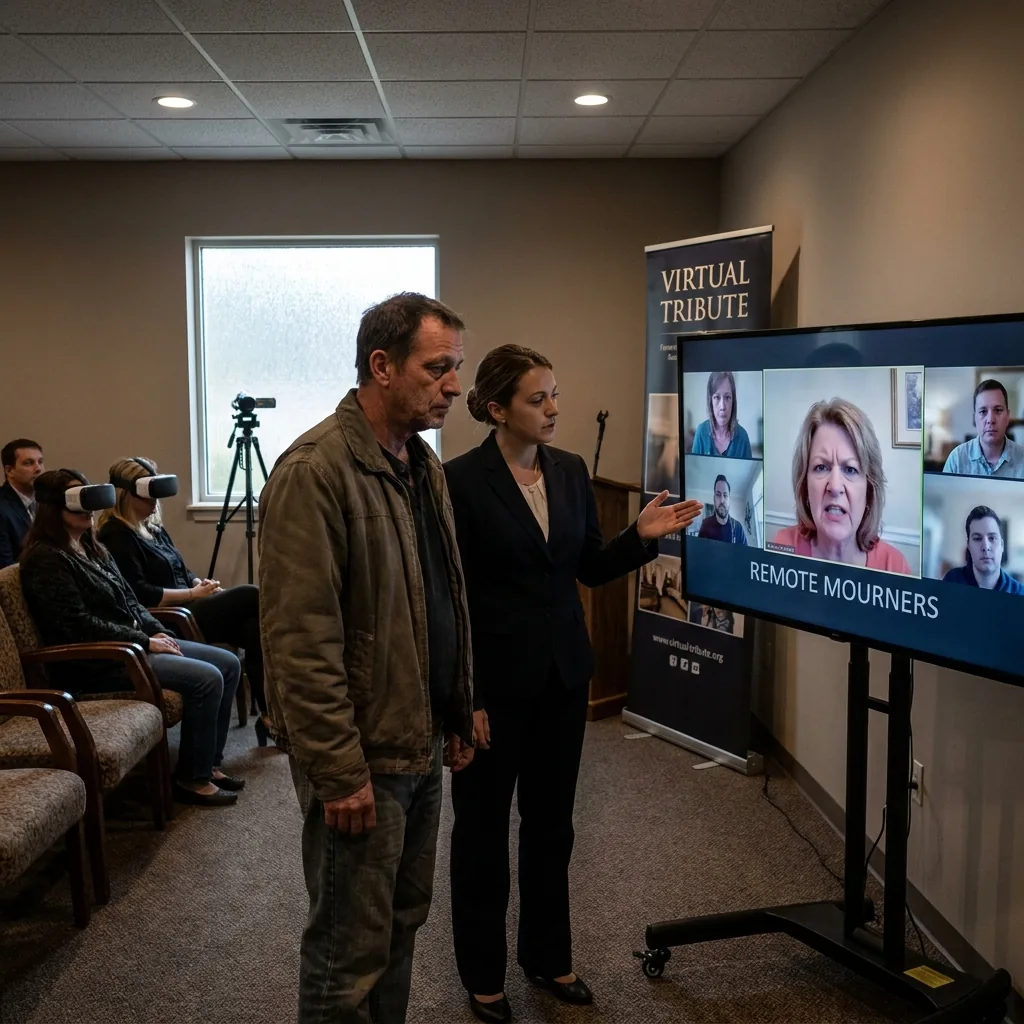
On the wall display, his mouth moved once before Noah muted the call speaker completely. The music from the tribute room stayed low under everything.
Leah was the first person to break the stillness. She looked at me, not at the screen. “Open the viewer for my mother when it’s time,” she said. Then she touched the folded program in Dana’s hand with two fingers. “And nobody talks to her like that again.”
Dana gave one short nod. She did not look at Evan’s tile.
Noah closed the settings drawer, straightened the laptop, and said in the same formal tone he used at the start of services, “We proceed with the standard viewer option. Headset only if requested in the room. Mara, stay on that plan.”
That was the whole reversal. Not loud. Just the room putting its weight somewhere else.
I minimized the call window so Evan’s tile dropped to a narrow strip along the side of the display. He was still there, but he was not centered anymore. The memorial slide returned to the main screen. From the front row, a relative lifted a hand for a tissue. Someone else eased back into a chair. The ordinary work of the room came back in around the damage.
We ran the tribute after the eulogy. I opened the viewer link for Leah’s mother on the side display exactly the way I had shown. The tribute room loaded cleanly. When one of the younger cousins wanted the headset later, I launched that separately too, with Noah standing close enough to see the screen for himself. It worked the same way it had in the test. No hidden warning arrived. No delayed failure appeared. The room watched, then stopped watching, because once the thing did what I said it would do, it became equipment again instead of a weapon.
Evan stayed on the call strip through the segment. Once, while I was adjusting the audio mirror for the headset user, I saw his hand lift as if he wanted to interrupt again. Noah did not restore his sound.
After the closing prayer, families moved the way they always do at the end of a service: slow, uneven, some people heading for the hallway, some staying near the front because leaving too quickly looked wrong. I began shutting down the extra browser windows and coiling the headset cable back into its tray.
Noah came to the side table with the run sheet still tucked under his arm. He held out his hand. “Give me the remote participant list.”
I turned the laptop toward him and pulled up the call controls. He read the names once, found Evan Pike, and unchecked the box that allowed direct unmuted entry to the family room for the reception stream upstairs. Then he handed the laptop back.
“Remote guests can stay view-only from here on,” he said.
It was a simple change. One click. But it was visible, and everyone close enough to the table could see what it meant. Evan still had access to watch. He no longer had the room.
Leah had come over in time to see it. “Leave it that way,” she said.
Noah nodded. Then he looked at me. “For future services, no outside participant speaks over room tech during launch. If anyone wants a change, it goes through staff in the room first.”
That should have sounded like support. It mostly did. But it also drew a hard line around where I stood now. Before that day, I had been the cousin helping and the staff person filling gaps, the one who could smooth things quietly because I belonged enough to move without being noticed. After that click, I was something more official and less welcome at the same time.
When I carried the headset case toward the prep closet, two older relatives moved aside for me in the hallway and lowered their voices mid-conversation. Dana thanked me as she passed, but she did it with the careful tone people use after a public mess, when gratitude is real and the distance is real too.
At the end, Leah met me by the door with a stack of leftover programs against her ribs. “You were right to stop it,” she said.
I shifted the headset case in my hand. “We still got through it.”
She gave a tired half smile, then looked back toward the room. “Yeah. Just not the same way.”
That was true of more than the tribute.
I walked out through the side hall instead of the family lounge. Behind me, the reception stream was already running in silent view-only mode on the monitor by the chapel door. Evan’s name was still in the participant list. His tile was still there. But the microphone icon beside it had a slash through it, and it stayed that way while people filed past without turning their heads.
Some exits are clean only because they cost you your old place in the room.