Story code: ST-000698
Part 1: She Said I Didn’t Understand the Tablet
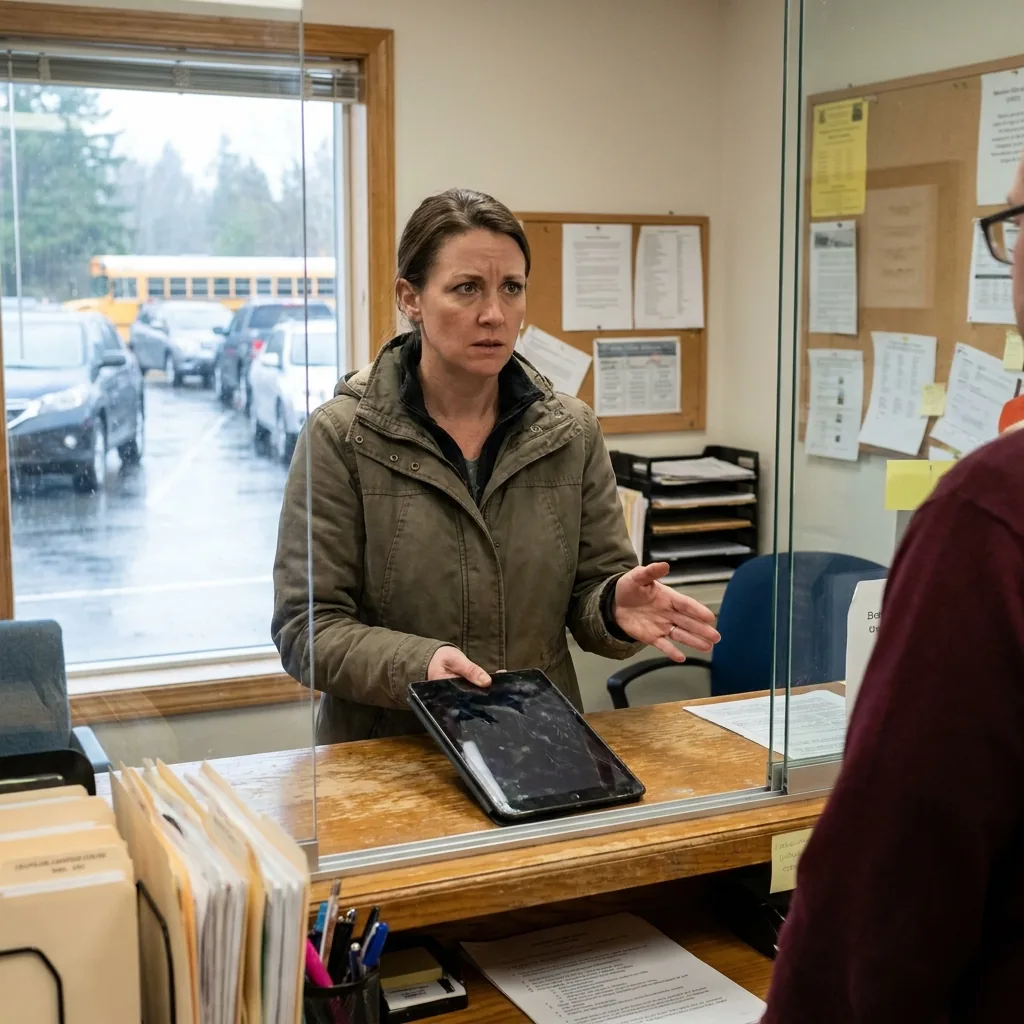
Heather Colburn set a cracked school tablet on my pickup counter like she was presenting evidence in court, then used a made-up tech term to tell me I was too uninformed to speak on it. The radios behind me kept chirping names for carline release, kids were still being called out to the curb, and there I was in the middle of active pickup being lectured by a parent who acted like she ran district IT. Her son Brayden stood by her shoulder with one hand locked on his backpack strap while she pointed at the broken screen and told me the damage was “consistent with a failed sync-panel cascade,” like that settled everything.
I work the front office window during pickup, so I am used to people being rushed, annoyed, loud, or all three. I am also used to damaged chargers, missing cases, and kids swearing a school device “just did that.” What I am not used to is a parent showing up with a broken tablet and trying to turn the whole thing into a lesson on why staff should defer to her.
“You all really need better training on student hardware,” Heather said, not to me exactly but into the room, polished and easy. “Because if someone had recognized the sync-panel cascade before it reached fracture stage, we would not be standing here. This is not impact damage.”
The tablet sat between us faceup. The glass had a hard diagonal crack from one corner, with a little burst pattern near the edge. I kept my hands flat on the counter.
“Okay,” I said. “Let me log the device number and call Mr. Navarro from the specialist room so we can check it in properly.”
She gave me a quick smile that did not reach her eyes. “No, that is exactly how these things get mishandled. You are already framing it as if Brayden caused it. He did not. The screen destabilized during a thermal lag event.”
Brayden looked at the tablet for half a second, then back down at the strap in his hand.
I reached for the barcode sticker on the back. Heather slid two fingers onto the case before I could turn it.
“Please don’t rotate it,” she said. “If the panel is still floating, you’ll worsen the fracture pattern.”
There was a beat where the pickup radio squawked two more names, a teacher called from the hallway for a dismissal slip, and Heather held that pose like she had just saved me from making some expensive mistake.
“We still have to identify the device,” I said.
“By serial, yes, if someone here knows where to find the non-surface registration sequence without forcing a reboot. Do you?”
It was smooth. That was the part that got under my skin. Not yelling. Not swearing. Just a tone that made plain process sound ignorant.
I said, “We use the asset tag and device log.”
She let out a soft breath through her nose and looked toward Brayden, then back to me. “That is front-office language, not hardware language.”
A parent waiting for an early sign-out glanced over from the chairs by the wall. I turned slightly so my body blocked the tablet from becoming more of a public show.
“Brayden,” I said, keeping my voice even, “were you using this during seventh period?”
Heather answered before he could open his mouth. “He was using a district-issued learning platform under normal classroom conditions, yes. Then the panel failed.”
“I asked Brayden.”
“And I am his parent,” she said. “I am also the only person in this room apparently familiar with composite screen fatigue.”
The term landed the same way the first one did: fast, confident, designed to make stopping her sound embarrassing. Brayden shifted one foot back. He still did not touch the tablet.
I picked up the pickup handset, called for coverage at the front desk, and told Ms. Bell I needed two minutes in the specialist room next door. Heather watched me do it without blinking.
“Good,” she said. “Because this needs someone who understands device-layer causation, not assumptions based on visible cracking.”
I wrote the student name and time on the intake pad. She tilted her head at the paper like I was proving her point.
“You’re documenting before verification?” she asked. “That is how false attributions get institutionalized.”
“I’m documenting that you’re here during pickup with a damaged school tablet,” I said.
That was the first sentence I got all the way out without being cut off.
Brayden finally spoke, barely above the radio chatter. “Mom.”
She did not look at him. She kept her eyes on me and tapped one nail beside the cracked corner of the screen.
“If Mr. Navarro comes in,” she said, “I want him to confirm whether the tablet is still in latent dock-memory. Because once that is verified, this whole blame narrative ends.”
Latent dock-memory.
She said it cleanly, like it belonged in a manual I had somehow failed to read. The tablet stayed on the counter between us, cracked and ordinary and very real, while her words tried to make it something else. I looked through the office window toward the small specialist room beside the lane just as Eli Navarro stepped out with a test cable in his hand, and Heather turned toward him ready to explain a term I had never heard once in any school device training.
Heather Colburn set a cracked school tablet on my pickup counter like she was presenting evidence in court, then used a made-up tech term to tell me I was too uninformed to speak on it. The radios behind me kept chirping names for carline release, kids were still being called out to the curb, and there I was in the middle of active pickup being lectured by a parent who acted like she ran district IT. Her son Brayden stood by her shoulder with one hand locked on his backpack strap while she pointed at the broken screen and told me the damage was “consistent with a failed sync-panel cascade,” like that settled everything.
I work the front office window during pickup, so I am used to people being rushed, annoyed, loud, or all three. I am also used to damaged chargers, missing cases, and kids swearing a school device “just did that.” What I am not used to is a parent showing up with a broken tablet and trying to turn the whole thing into a lesson on why staff should defer to her.
“You all really need better training on student hardware,” Heather said, not to me exactly but into the room, polished and easy. “Because if someone had recognized the sync-panel cascade before it reached fracture stage, we would not be standing here. This is not impact damage.”
The tablet sat between us faceup. The glass had a hard diagonal crack from one corner, with a little burst pattern near the edge. I kept my hands flat on the counter.
“Okay,” I said. “Let me log the device number and call Mr. Navarro from the specialist room so we can check it in properly.”
She gave me a quick smile that did not reach her eyes. “No, that is exactly how these things get mishandled. You are already framing it as if Brayden caused it. He did not. The screen destabilized during a thermal lag event.”
Brayden looked at the tablet for half a second, then back down at the strap in his hand.
I reached for the barcode sticker on the back. Heather slid two fingers onto the case before I could turn it.
“Please don’t rotate it,” she said. “If the panel is still floating, you’ll worsen the fracture pattern.”
There was a beat where the pickup radio squawked two more names, a teacher called from the hallway for a dismissal slip, and Heather held that pose like she had just saved me from making some expensive mistake.
“We still have to identify the device,” I said.
“By serial, yes, if someone here knows where to find the non-surface registration sequence without forcing a reboot. Do you?”
It was smooth. That was the part that got under my skin. Not yelling. Not swearing. Just a tone that made plain process sound ignorant.
I said, “We use the asset tag and device log.”
She let out a soft breath through her nose and looked toward Brayden, then back to me. “That is front-office language, not hardware language.”
A parent waiting for an early sign-out glanced over from the chairs by the wall. I turned slightly so my body blocked the tablet from becoming more of a public show.
“Brayden,” I said, keeping my voice even, “were you using this during seventh period?”
Heather answered before he could open his mouth. “He was using a district-issued learning platform under normal classroom conditions, yes. Then the panel failed.”
“I asked Brayden.”
“And I am his parent,” she said. “I am also the only person in this room apparently familiar with composite screen fatigue.”
The term landed the same way the first one did: fast, confident, designed to make stopping her sound embarrassing. Brayden shifted one foot back. He still did not touch the tablet.
I picked up the pickup handset, called for coverage at the front desk, and told Ms. Bell I needed two minutes in the specialist room next door. Heather watched me do it without blinking.
“Good,” she said. “Because this needs someone who understands device-layer causation, not assumptions based on visible cracking.”
I wrote the student name and time on the intake pad. She tilted her head at the paper like I was proving her point.
“You’re documenting before verification?” she asked. “That is how false attributions get institutionalized.”
“I’m documenting that you’re here during pickup with a damaged school tablet,” I said.
That was the first sentence I got all the way out without being cut off.
Brayden finally spoke, barely above the radio chatter. “Mom.”
She did not look at him. She kept her eyes on me and tapped one nail beside the cracked corner of the screen.
“If Mr. Navarro comes in,” she said, “I want him to confirm whether the tablet is still in latent dock-memory. Because once that is verified, this whole blame narrative ends.”
Latent dock-memory.
She said it cleanly, like it belonged in a manual I had somehow failed to read. The tablet stayed on the counter between us, cracked and ordinary and very real, while her words tried to make it something else. I looked through the office window toward the small specialist room beside the lane just as Eli Navarro stepped out with a test cable in his hand, and Heather turned toward him ready to explain a term I had never heard once in any school device training.