Story code: ST-000047
Part 1: The Ashes
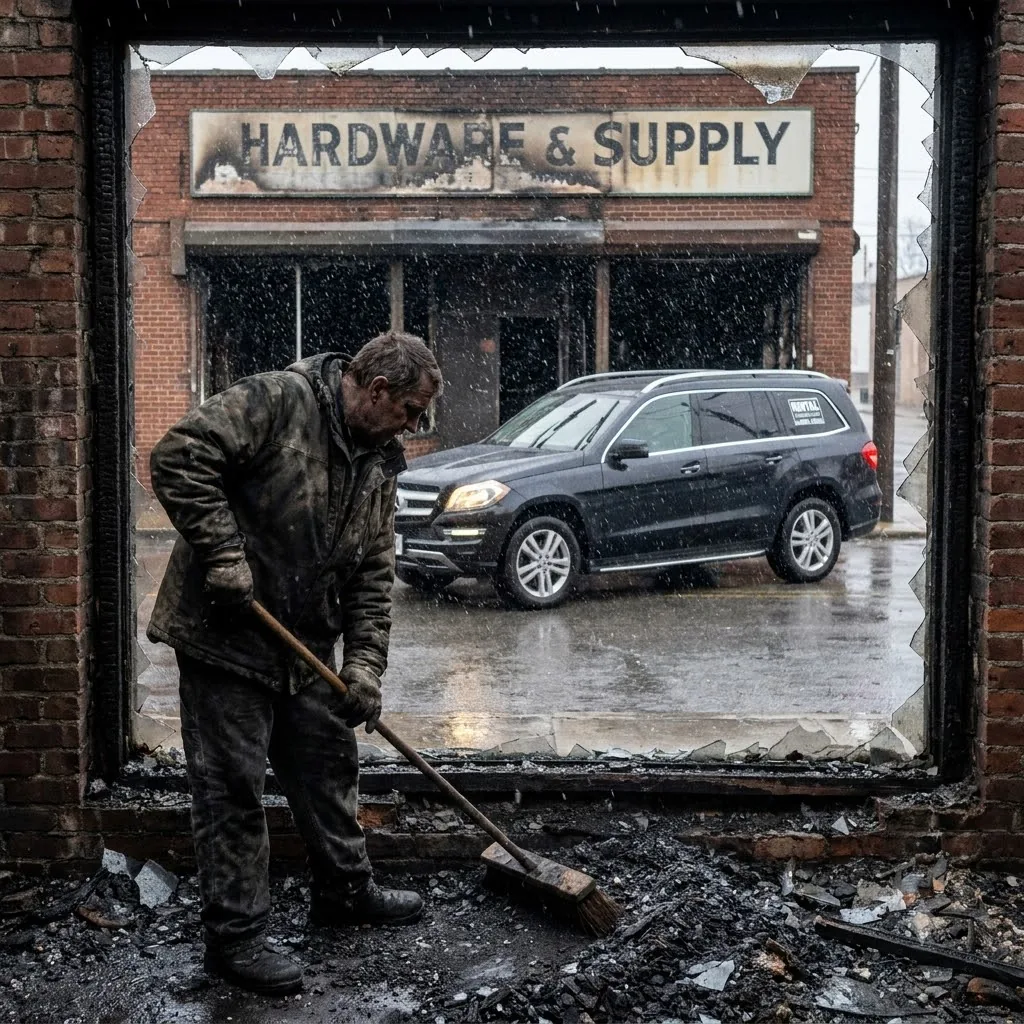
The shovel scraped against the blistered linoleum, scooping up a mixture of wet ash, shattered glass, and blackened brass drawer pulls. Elias dumped the heavy load into an industrial wheelbarrow, his lungs burning despite the particulate mask strapped tightly over his face. The roof of his family’s century-old hardware store was mostly gone, leaving the blackened structural joists exposed to the harsh midday sun. He wiped soot from his forehead with the back of a canvas work glove, smearing the greasy residue deeper into his skin.
His great-grandfather had built those oak display counters by hand in nineteen-twenty. For generations, the store had been a pillar of the coastal community, surviving hurricanes and economic crashes. Now the fixtures were just splintered charcoal, reeking violently of the chemical accelerant the arsonists had dumped over them three nights ago. Elias dug the spade into another mound of melted plastic tool handles and warped copper tubing. Every scrape of metal on stone felt like a physical blow.
A car door slammed out on the street. Elias paused, resting his weight on the wooden handle of the shovel. Through the jagged maw of the shattered front window, a black luxury SUV sat idling at the curb. Its heavily tinted windows gleamed in stark contrast to the soot-stained brick of the ruined street. The engine hummed with a low, expensive vibration that rattled the remaining shards of window glass in their frames.
A young man in a crisp beige linen suit picked his way delicately over the yellow police tape and stepped onto the ruined threshold. He held a thick leather portfolio tight against his chest, looking down at his white sneakers as they crunched over the pulverized remains of the storefront.
“Elias Thorne,” the man said, pitching his voice over the rumble of the idling engine.
Elias did not offer a greeting. He maintained his grip on the shovel and waited for the man to explain his presence. The intruder stood out terribly amid the devastation, smelling faintly of expensive cologne that failed to mask the overpowering stench of wet ash.
“I represent the production team currently setting up at the coastal pavilion,” the young man said, stepping carefully around a puddle of stagnant sprinkler water. “We know this week has been incredibly difficult for you and your family. We want to extend a gesture of goodwill.”
Elias lowered his mask, letting the elastic bands snap against his collar. The air tasted bitterly of burnt rubber and scorched wiring. He stared at the man’s pristine suit, then down at his own ruined, ash-covered boots.
“State your business,” Elias told him.
The assistant unzipped the leather portfolio. He produced a thick manila envelope and extended it across the charred remains of a display table. Elias did not reach out to take it.
“Inside is a certified check for ten thousand dollars,” the assistant said, his tone adopting a practiced, sympathetic cadence. “We are calling it a talent fee. My employer wants to feature you in the VIP section of tomorrow night’s live broadcast. Just a quick shot of you in the audience, smiling, showing the community that healing is already underway.”
Elias stared at the extended envelope. Ten thousand dollars to sit in a folding chair and smile while the cameras rolled.
“There is a standard nondisclosure agreement attached to the funds,” the assistant added, his voice dropping half an octave. “It just outlines that you agree not to discuss the circumstances of the fire with any other media outlets, and that you waive any future legal claims against the production or its host.”
Elias leaned the shovel slowly against a charred support beam. He pulled off his heavy canvas gloves, beating them together once to knock loose a cloud of gray dust, and tucked them into his back pocket. The silence stretched between them, heavy and suffocating. The assistant shifted his weight, clearly uncomfortable in the sweltering, toxic air of the gutted store.
Elias finally reached out and took the envelope. The paper felt absurdly clean against his calloused, soot-stained fingers. He flipped the flap open and pulled out the stapled document. The top page was a dense block of legal text, headed by the bolded letters of a comprehensive confidentiality agreement. Beneath the staple, the corner of a heavy cardstock check peeked out. The zeroes were printed in stark black ink.
“My employer believes in restorative justice,” the assistant said, taking the silence as an invitation to keep speaking. “The broadcast will bring a lot of positive attention to your rebuilding effort. It is a win for everybody involved. You get a massive platform, and we get to show that the town is moving forward together.”
Elias turned the envelope over in his hands. A silver foil logo was pressed firmly into the back flap. A stylized microphone wrapped in a cresting wave of ocean water.
The breath caught in Elias’s throat. He recognized that exact logo. It was plastered on the side of the massive production trucks currently parked near the marina. It belonged to the true-crime podcaster who had spent the last three weeks broadcasting reckless, entirely unfounded accusations to millions of loyal listeners. She had painted his modest hardware store as a front for a coastal smuggling ring, stringing together vague coincidences and anonymous rumors into a compelling, entirely fictional narrative. Three days after her most downloaded episode aired, a group of enraged listeners had thrown incendiary devices through his front windows in the middle of the night.
Now, her assistant was standing directly in the ashes of his livelihood, offering him a fraction of the damages to smile for the cameras and sign away his right to hold her accountable.
Elias looked from the silver foil logo to the assistant’s expectant face. The man gave a tight, encouraging nod, pulling a sleek silver pen from his breast pocket and holding it out over the ruined display counter.
“Just a signature on the bottom line,” the assistant said, gesturing to the paperwork. “Then I can leave you to your work.”
Elias looked down at the extended pen, then back up at the young man, his hand closing tightly around the wooden handle of his shovel as he stepped out from behind the counter.
The shovel scraped against the blistered linoleum, scooping up a mixture of wet ash, shattered glass, and blackened brass drawer pulls. Elias dumped the heavy load into an industrial wheelbarrow, his lungs burning despite the particulate mask strapped tightly over his face. The roof of his family’s century-old hardware store was mostly gone, leaving the blackened structural joists exposed to the harsh midday sun. He wiped soot from his forehead with the back of a canvas work glove, smearing the greasy residue deeper into his skin.
His great-grandfather had built those oak display counters by hand in nineteen-twenty. For generations, the store had been a pillar of the coastal community, surviving hurricanes and economic crashes. Now the fixtures were just splintered charcoal, reeking violently of the chemical accelerant the arsonists had dumped over them three nights ago. Elias dug the spade into another mound of melted plastic tool handles and warped copper tubing. Every scrape of metal on stone felt like a physical blow.
A car door slammed out on the street. Elias paused, resting his weight on the wooden handle of the shovel. Through the jagged maw of the shattered front window, a black luxury SUV sat idling at the curb. Its heavily tinted windows gleamed in stark contrast to the soot-stained brick of the ruined street. The engine hummed with a low, expensive vibration that rattled the remaining shards of window glass in their frames.
A young man in a crisp beige linen suit picked his way delicately over the yellow police tape and stepped onto the ruined threshold. He held a thick leather portfolio tight against his chest, looking down at his white sneakers as they crunched over the pulverized remains of the storefront.
“Elias Thorne,” the man said, pitching his voice over the rumble of the idling engine.
Elias did not offer a greeting. He maintained his grip on the shovel and waited for the man to explain his presence. The intruder stood out terribly amid the devastation, smelling faintly of expensive cologne that failed to mask the overpowering stench of wet ash.
“I represent the production team currently setting up at the coastal pavilion,” the young man said, stepping carefully around a puddle of stagnant sprinkler water. “We know this week has been incredibly difficult for you and your family. We want to extend a gesture of goodwill.”
Elias lowered his mask, letting the elastic bands snap against his collar. The air tasted bitterly of burnt rubber and scorched wiring. He stared at the man’s pristine suit, then down at his own ruined, ash-covered boots.
“State your business,” Elias told him.
The assistant unzipped the leather portfolio. He produced a thick manila envelope and extended it across the charred remains of a display table. Elias did not reach out to take it.
“Inside is a certified check for ten thousand dollars,” the assistant said, his tone adopting a practiced, sympathetic cadence. “We are calling it a talent fee. My employer wants to feature you in the VIP section of tomorrow night’s live broadcast. Just a quick shot of you in the audience, smiling, showing the community that healing is already underway.”
Elias stared at the extended envelope. Ten thousand dollars to sit in a folding chair and smile while the cameras rolled.
“There is a standard nondisclosure agreement attached to the funds,” the assistant added, his voice dropping half an octave. “It just outlines that you agree not to discuss the circumstances of the fire with any other media outlets, and that you waive any future legal claims against the production or its host.”
Elias leaned the shovel slowly against a charred support beam. He pulled off his heavy canvas gloves, beating them together once to knock loose a cloud of gray dust, and tucked them into his back pocket. The silence stretched between them, heavy and suffocating. The assistant shifted his weight, clearly uncomfortable in the sweltering, toxic air of the gutted store.
Elias finally reached out and took the envelope. The paper felt absurdly clean against his calloused, soot-stained fingers. He flipped the flap open and pulled out the stapled document. The top page was a dense block of legal text, headed by the bolded letters of a comprehensive confidentiality agreement. Beneath the staple, the corner of a heavy cardstock check peeked out. The zeroes were printed in stark black ink.
“My employer believes in restorative justice,” the assistant said, taking the silence as an invitation to keep speaking. “The broadcast will bring a lot of positive attention to your rebuilding effort. It is a win for everybody involved. You get a massive platform, and we get to show that the town is moving forward together.”
Elias turned the envelope over in his hands. A silver foil logo was pressed firmly into the back flap. A stylized microphone wrapped in a cresting wave of ocean water.
The breath caught in Elias’s throat. He recognized that exact logo. It was plastered on the side of the massive production trucks currently parked near the marina. It belonged to the true-crime podcaster who had spent the last three weeks broadcasting reckless, entirely unfounded accusations to millions of loyal listeners. She had painted his modest hardware store as a front for a coastal smuggling ring, stringing together vague coincidences and anonymous rumors into a compelling, entirely fictional narrative. Three days after her most downloaded episode aired, a group of enraged listeners had thrown incendiary devices through his front windows in the middle of the night.
Now, her assistant was standing directly in the ashes of his livelihood, offering him a fraction of the damages to smile for the cameras and sign away his right to hold her accountable.
Elias looked from the silver foil logo to the assistant’s expectant face. The man gave a tight, encouraging nod, pulling a sleek silver pen from his breast pocket and holding it out over the ruined display counter.
“Just a signature on the bottom line,” the assistant said, gesturing to the paperwork. “Then I can leave you to your work.”
Elias looked down at the extended pen, then back up at the young man, his hand closing tightly around the wooden handle of his shovel as he stepped out from behind the counter.