Story code: ST-001231
Part 2: Containment Protocol
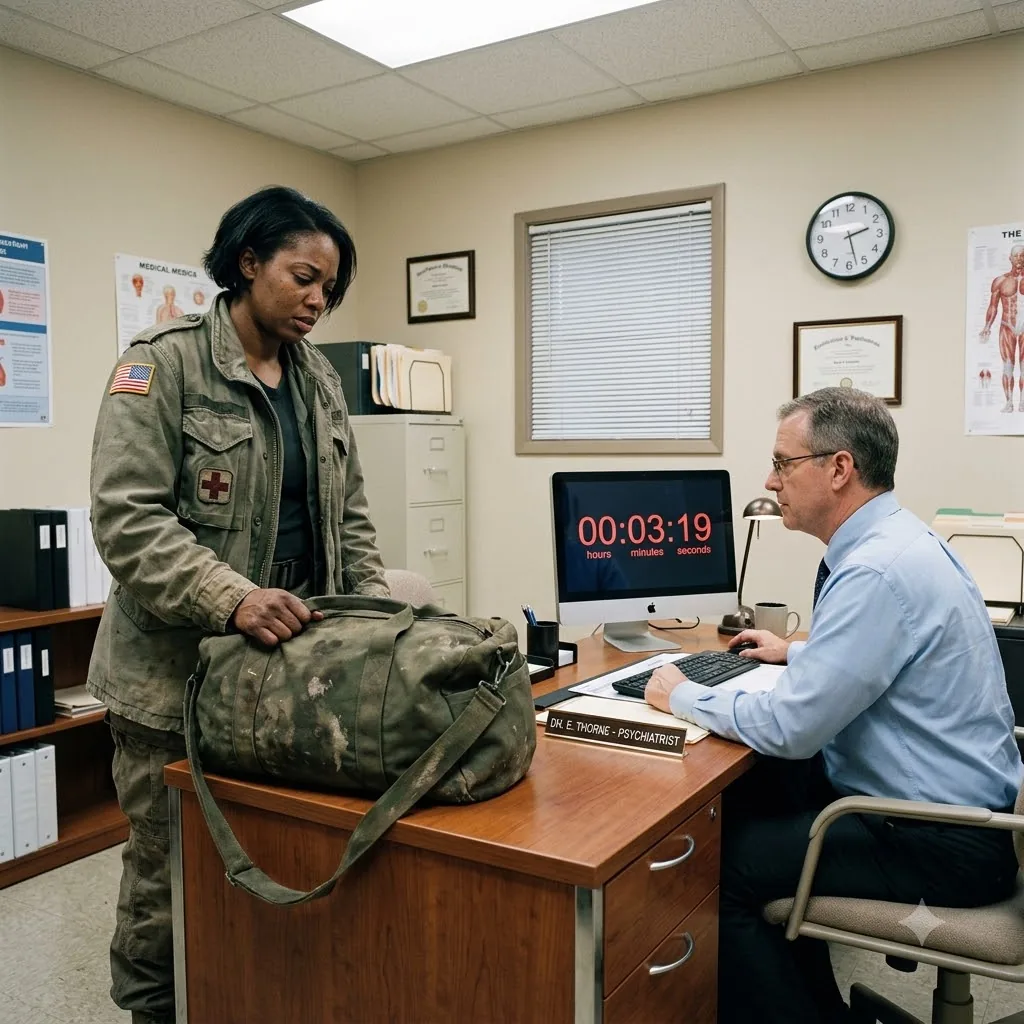
The canvas folded back upon itself, the heavy brass zipper biting into the fabric. Gravity took hold of the loose material packed near the top of the duffel. A cascade of jagged, heavy debris hit the desk with a deafening crash, moving with the heavy, dead momentum of a landslide. Chunks of sheared iron, heavily oxidized and caked in dense, foul-smelling river mud, slammed directly onto the glowing keyboard. The pristine plastic keys exploded outward in a hail of white shrapnel, scattering across the room like broken teeth. A twisted length of industrial rebar, fused to a shattered, mud-packed pressure gauge housing, struck the center of the monitor. The flat screen cracked in an instantaneous spiderweb pattern. The red digital countdown timer glitched, freezing at forty-two seconds before the display shorted out in a shower of sharp blue sparks and went dead black.
The smell hit the sterile, climate-controlled room like a physical blow. It was the scent of the lowest, flooded depths of the collapsed foundry-sulfur, stagnant groundwater, chemical runoff, and the unmistakable, sharp metallic tang of dried blood baked into rust. It completely swallowed the clinic’s artificial lavender masking agent, replacing the engineered scent of compliance with the raw stench of the dying town outside. Dark, brackish water began to seep from the pile of wreckage, pooling on the polished synthetic mahogany. It cascaded over the edge of the desk, dripping steadily onto the pristine linoleum floor with a wet, rhythmic slapping sound.
Vance scrambled backward so violently his starched white coat caught on the ergonomic armrest of his chair. The chair tipped, its expensive casters spinning uselessly in the air, sending the doctor crashing to the floor. He kicked his legs, scrambling away from the desk on his hands and knees until his back slammed hard against the examination bed. His hand slapped wildly at the underside of the desk edge, blindly finding the silent panic button and leaning his entire body weight into it.
Ray did not flinch at the sparks. She did not drop the bag. She merely lowered the slack upper half of the canvas, keeping the heavy, rounded mass still resting in the bottom of the duffel securely supported by her forearm. The physical exertion burned in her shoulders, a familiar, grounding ache that kept her focused. Her heart beat in a slow, heavy rhythm, a stark contrast to the frantic, panicked breaths echoing from the corner of the room. She looked at the wreckage on the desk. The white prescription slip-the chemical eraser meant to make her go away-was currently pinned beneath a ten-pound chunk of fractured safety glass and a rusted, sheared bolt.
Above the door, a small LED fixture that Ray had previously assumed was a motion sensor suddenly flashed a brilliant, blinding strobe-light red. A heavy magnetic lock engaged within the door frame with a definitive, echoing clunk, sealing the hermetic room from the hallway. The engineered quiet was abruptly replaced by the low, pulsating wail of an automated lockdown alarm. The cold air blowing from the overhead vents clicked off, sealing the ventilation system to prevent airborne contamination.
“Are you insane?” Vance gasped. His voice was stripped of its practiced, flat authority. It was reedy, thin, pitching upward in pure panic. He pressed his palms flat against the wall, staring at the pile of rusted debris as if it were a live explosive. “That is a biological hazard! You just triggered a Level Three containment!”
Ray adjusted her grip on the canvas handles. “It’s the secondary housing from Sector Four,” she said, her voice steady, barely carrying over the hum of the lockdown alarm. “The one your clinic signed off on as a ‘standard occupational hazard’ in my medical file. The one you said didn’t warrant a physical examination.”
“I don’t know what you’re talking about! Put the bag down!” Vance shouted, his chest heaving. His eyes darted from her impassive face to the remaining, heavily stained bulge hanging in the canvas bag. He didn’t care about the valve. He didn’t care about the mill. He only saw an immediate, violent threat. “Security is already on their way. If you have a weapon in there, if you try to-”
He wasn’t listening. He had never been listening. The entire building was designed to stop doctors from listening. Ray looked down at the duffel. The primary weight, the piece she had actually come to show him, the piece that proved the exposure wasn’t just a phantom anxiety to be suppressed with a generic central nervous depressant, was still wrapped in a layer of oil-soaked burlap at the very bottom.
Heavy, booted footsteps thundered in the hallway outside. The muffled shouts of clinic security guards filtered through the reinforced drywall. A heavy fist hammered against the frosted glass of the locked door, vibrating the metal frame. The automated lockdown was holding them out, but the system was designed to isolate patients until tactical teams could arrive.
“Open the door!” a muffled voice yelled from the corridor. “Doctor Vance, step away from the patient!”
The temperature in the small, sealed room was already rising, the oppressive smell of the rusted wreckage thickening the stagnant air. Vance was hyperventilating, his eyes locked on the door, praying for it to open, then darting back to the bag in sheer terror.
The heavy thud of a tactical baton struck the frosted glass, sending a sharp spiderweb fracture through the reinforced pane.
Ray realized the fifteen-minute window was officially closed. They were going to breach the room, tackle her, and incinerate the evidence as hazardous waste before anyone ever logged it into the system. She shifted her boots on the wet linoleum, bracing her core. If she wanted him to see the undeniable truth of what the mill had done to her crew, she had seconds left. She reached her free hand deep into the dark opening of the bag, her fingers finding the cold, damp edge of the burlap sack inside.