Story code: ST-000985
Part 1: The Compliance Timer
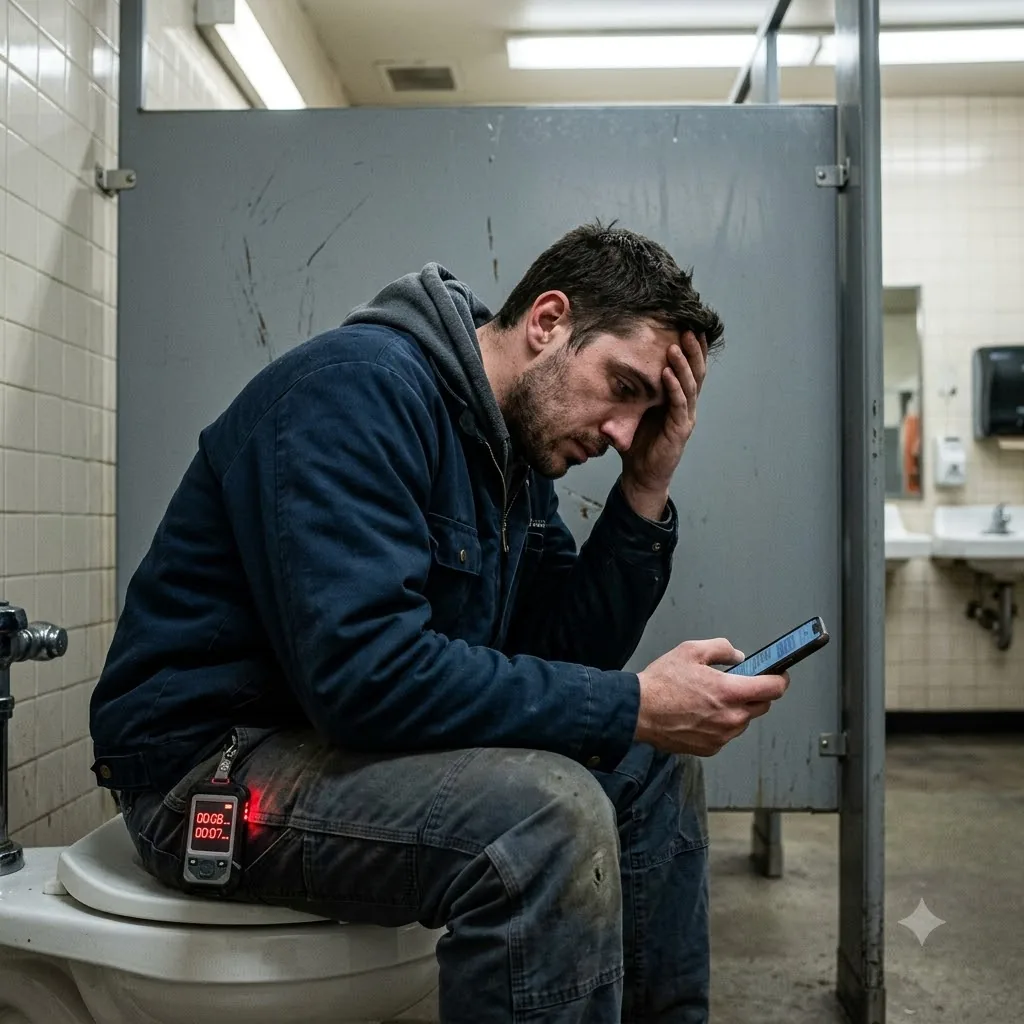
The scarlet glow of the biometric lanyard illuminated the grimy grout lines of the bathroom tile. Artie leaned his damp forehead against the cold metal partition, his lungs pulling in jagged, burning breaths. The digital display stitched into his heavy canvas vest collar vibrated against his clavicle, a tactile warning that his allotted biological break was evaporating. He tried to force his hands to stop shaking long enough to manage his zipper.
His knuckles were swollen, thick with arthritis aggravated by the freezing temperatures of the cold-chain shipping floor. The lanyard pulsed again, casting a harsh strobe effect across the steel toes of his boots. Forty-five seconds. He needed to pee, but his prostate, stubborn and inflamed, refused to cooperate under the crushing pressure of the countdown. He stared at the stainless steel bowl, begging his body to just work. The automated penalty system did not account for failing organs. If the timer hit zero, a Tier 3 time-theft infraction would automatically upload to his permanent file. Three infractions meant immediate termination.
The air in the narrow stall smelled of industrial bleach, ozone, and his own sour sweat. A yellow sensor eye mounted on the ceiling tracked his thermal signature, ensuring he was actually occupying the space and not loitering in a blind spot to rest his legs. Artie closed his eyes, squeezing them shut against the flashing red light. At sixty-two, finding another job with medical benefits was a statistical impossibility. He lived alone in a fourth-floor walk-up where the silence was only broken by the rattle of the radiators. There was no wife waiting for him, no children to borrow money from, just a stack of medical bills and the looming threat of eviction. This job, hauling thirty-pound boxes of frozen pharmaceuticals across a two-million-square-foot concrete floor, was the only barrier between him and a cot in a city shelter.
The vest buzzed a double-beat, the vibration rattling his teeth. Thirty seconds.
Over the warehouse public address system, barely muffled by the cinderblock walls, Manager Croft’s voice echoed over the hum of the conveyor belts. Croft loved the biometric badges. The manager monitored the central dashboard from his glass-walled mezzanine like a military tactician, hunting for the pulsing red dots that indicated a worker had dropped below optimal efficiency. Artie pictured Croft up there right now, sipping espresso, watching Artie’s dot blink frantically in Restroom Sector 4. Croft had written up a woman last week because her heart rate did not match the algorithm’s expected exertion levels for her assigned aisle.
Artie whispered to himself, his voice a dry rasp, ordering his body to function.
He shifted his weight, his knees popping like dry twigs. His lower back was a tight, radiating knot of agony from eight hours of bending and lifting. Just a few drops. He just needed enough to trigger the acoustic flush sensor so the system would log a completed biological event, validate the break, and reset his timer. He pressed his palm against the wall for leverage. The lanyard turned a deeper, furious crimson. The light filled the small cubicle, painting his wrinkled, panicked face in the color of an emergency.
Fifteen seconds.
He simply could not do it. The panic was a physical band of iron tightening around his chest, restricting his airflow with every escalating vibration of the collar. Defeated, he fumbled with his zipper, deciding to just wash his hands and sprint back to his station. Perhaps he could make it before the final penalty locked in. But the strict protocol required a sensor-activated flush to prove the bathroom was used for its designated purpose. He reached for the manual override button on the back of the toilet, desperate to fake the process, but a smooth metal plate covered the plumbing. The warehouse had upgraded to fully automated efficiency last quarter.
Ten seconds.
The vest issued a high-pitched, sustained whine. It was a frequency deliberately designed to induce compliance through inner-ear discomfort. Artie clamped his heavy hands over his ears, his shoulders hunching as the sound drilled into his skull. He stumbled backward, his boots slipping on the wet tile, his spine slamming against the stall door.
Five seconds.
The system demanded biological proof. Artie stared in horror at the ceiling sensor as it shifted from yellow to a bright, scanning green. It was taking a volumetric reading of the toilet bowl. He stood frozen, his chest heaving, trapped in the three-by-five space with the screaming alarm on his neck.
The timer hit zero.
The crimson light on his chest snapped to a blinding, surgical white. A loud, electronic klaxon replaced the whine, echoing off the tiles. The stall’s heavy magnetic lock disengaged with a violent, metallic clack. Artie lunged for the handle to hold it shut, but the automated pneumatic hinge overpowered his frail grip, violently throwing the door wide open to the crowded main sink gallery. The ceiling track-camera dropped from its recessed housing on a mechanized arm, extending down and leveling its wide-angle lens directly at his waist.
The scarlet glow of the biometric lanyard illuminated the grimy grout lines of the bathroom tile. Artie leaned his damp forehead against the cold metal partition, his lungs pulling in jagged, burning breaths. The digital display stitched into his heavy canvas vest collar vibrated against his clavicle, a tactile warning that his allotted biological break was evaporating. He tried to force his hands to stop shaking long enough to manage his zipper.
His knuckles were swollen, thick with arthritis aggravated by the freezing temperatures of the cold-chain shipping floor. The lanyard pulsed again, casting a harsh strobe effect across the steel toes of his boots. Forty-five seconds. He needed to pee, but his prostate, stubborn and inflamed, refused to cooperate under the crushing pressure of the countdown. He stared at the stainless steel bowl, begging his body to just work. The automated penalty system did not account for failing organs. If the timer hit zero, a Tier 3 time-theft infraction would automatically upload to his permanent file. Three infractions meant immediate termination.
The air in the narrow stall smelled of industrial bleach, ozone, and his own sour sweat. A yellow sensor eye mounted on the ceiling tracked his thermal signature, ensuring he was actually occupying the space and not loitering in a blind spot to rest his legs. Artie closed his eyes, squeezing them shut against the flashing red light. At sixty-two, finding another job with medical benefits was a statistical impossibility. He lived alone in a fourth-floor walk-up where the silence was only broken by the rattle of the radiators. There was no wife waiting for him, no children to borrow money from, just a stack of medical bills and the looming threat of eviction. This job, hauling thirty-pound boxes of frozen pharmaceuticals across a two-million-square-foot concrete floor, was the only barrier between him and a cot in a city shelter.
The vest buzzed a double-beat, the vibration rattling his teeth. Thirty seconds.
Over the warehouse public address system, barely muffled by the cinderblock walls, Manager Croft’s voice echoed over the hum of the conveyor belts. Croft loved the biometric badges. The manager monitored the central dashboard from his glass-walled mezzanine like a military tactician, hunting for the pulsing red dots that indicated a worker had dropped below optimal efficiency. Artie pictured Croft up there right now, sipping espresso, watching Artie’s dot blink frantically in Restroom Sector 4. Croft had written up a woman last week because her heart rate did not match the algorithm’s expected exertion levels for her assigned aisle.
Artie whispered to himself, his voice a dry rasp, ordering his body to function.
He shifted his weight, his knees popping like dry twigs. His lower back was a tight, radiating knot of agony from eight hours of bending and lifting. Just a few drops. He just needed enough to trigger the acoustic flush sensor so the system would log a completed biological event, validate the break, and reset his timer. He pressed his palm against the wall for leverage. The lanyard turned a deeper, furious crimson. The light filled the small cubicle, painting his wrinkled, panicked face in the color of an emergency.
Fifteen seconds.
He simply could not do it. The panic was a physical band of iron tightening around his chest, restricting his airflow with every escalating vibration of the collar. Defeated, he fumbled with his zipper, deciding to just wash his hands and sprint back to his station. Perhaps he could make it before the final penalty locked in. But the strict protocol required a sensor-activated flush to prove the bathroom was used for its designated purpose. He reached for the manual override button on the back of the toilet, desperate to fake the process, but a smooth metal plate covered the plumbing. The warehouse had upgraded to fully automated efficiency last quarter.
Ten seconds.
The vest issued a high-pitched, sustained whine. It was a frequency deliberately designed to induce compliance through inner-ear discomfort. Artie clamped his heavy hands over his ears, his shoulders hunching as the sound drilled into his skull. He stumbled backward, his boots slipping on the wet tile, his spine slamming against the stall door.
Five seconds.
The system demanded biological proof. Artie stared in horror at the ceiling sensor as it shifted from yellow to a bright, scanning green. It was taking a volumetric reading of the toilet bowl. He stood frozen, his chest heaving, trapped in the three-by-five space with the screaming alarm on his neck.
The timer hit zero.
The crimson light on his chest snapped to a blinding, surgical white. A loud, electronic klaxon replaced the whine, echoing off the tiles. The stall’s heavy magnetic lock disengaged with a violent, metallic clack. Artie lunged for the handle to hold it shut, but the automated pneumatic hinge overpowered his frail grip, violently throwing the door wide open to the crowded main sink gallery. The ceiling track-camera dropped from its recessed housing on a mechanized arm, extending down and leveling its wide-angle lens directly at his waist.