Story code: ST-001311
Part 4: The Glass Cage
The wail of the sirens hit the narrow street before the cruisers did, the sound bouncing violently off the brick buildings. Above Chloe, the automated steel security shutters finally hit the pavement with a heavy, final thud, crushing the last few jagged shards of glass beneath their weight. The boutique was sealed, trapping the piercing shriek of the alarm inside, muffling it into a relentless, muffled drone.
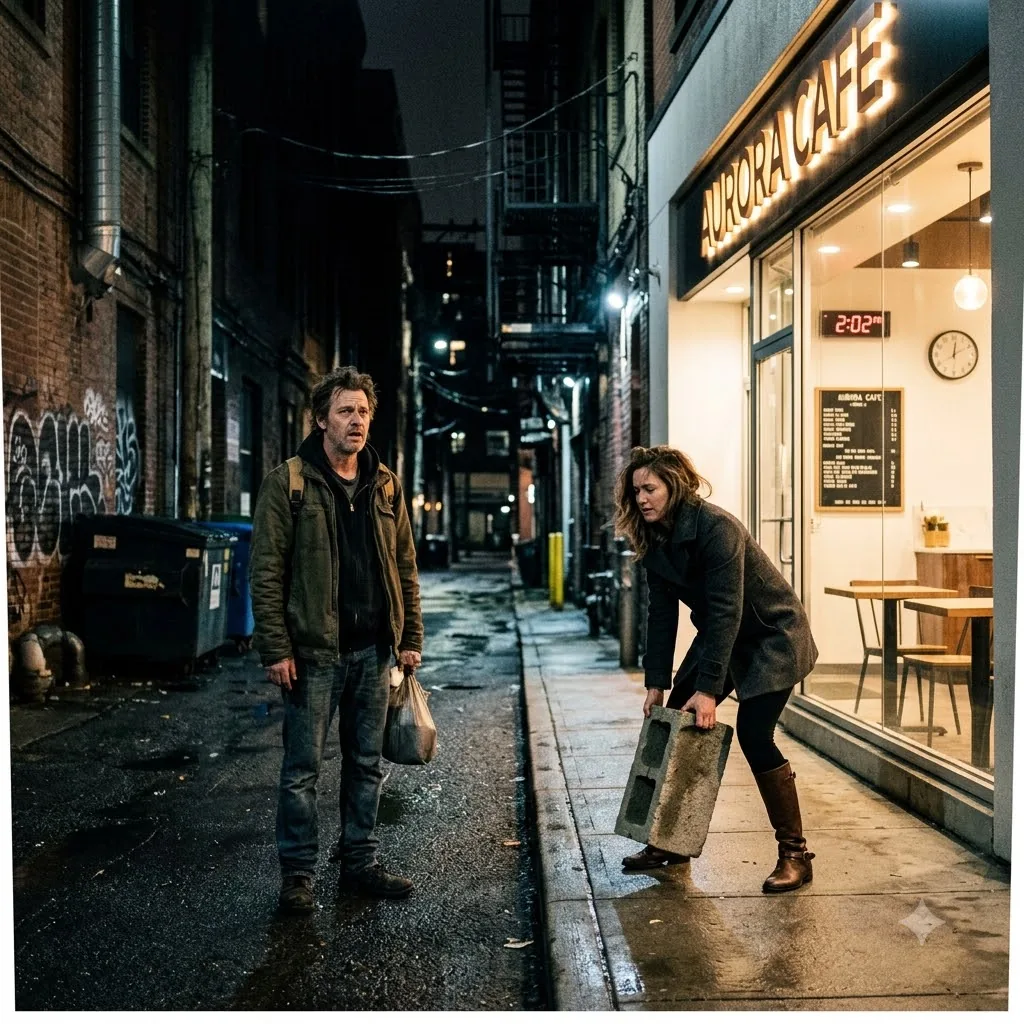
Mateo didn’t move. He kept his hands entirely visible, out of his pockets, as two NYPD cruisers aggressively rounded the corner and skidded to a halt in front of the alley. Their blinding red and blue lightbars washed over the frost-covered asphalt, illuminating the wreckage.
Four officers spilled out of the vehicles, doors left wide open, heavy flashlights instantly cutting through the darkness. The beams hit Mateo first.
“Hey! Hands where I can see them! Turn around!” a sharp voice barked over the muffled alarm.
Mateo complied immediately, raising his calloused hands in the freezing air, his pulse steadying into a familiar, grim rhythm. He knew how this looked. He knew exactly what the officers saw: a guy in a faded, grease-stained work jacket standing at the edge of a shattered luxury storefront.
But before the officers could close the distance to press him against the brick wall, another flashlight beam caught Chloe. She was still standing on the sidewalk, surrounded by the glittering debris of her own window, her expensive camel-colored coat shredded at the sleeves. Her hands were bleeding, and her knuckles were white around the heavy brass espresso tamper.
“Ma’am! Drop the weapon! Drop it right now!”
Chloe blinked, blinded by the harsh light. She looked down at the heavy brass instrument in her hand as if she had no idea how it had gotten there. Her fingers went slack. The tamper hit the concrete with a dull, heavy ring.
“Are you hurt? Ma’am, step away from the glass!”
The aggressive posture of the officers evaporated instantly. Two of them rushed forward, holstering their weapons, their voices dropping into soothing, protective registers. They guided Chloe away from the shuttered store, treating her with a fragile deference.
An older officer with a thick gray mustache stepped up to Mateo, his flashlight still blindingly bright. “You want to tell me what you’re doing out here?”
Mateo looked past the glare, watching Chloe. She was trembling violently as an officer draped a thick yellow emergency blanket over her shoulders. The officer asked her what happened. Chloe opened her mouth, but only a ragged, choking sob came out. She was entirely paralyzed by the shock of her own actions, completely unable to form the lie she had been so desperate to tell. She looked over the officer’s shoulder, her bloodshot, mascara-streaked eyes locking onto Mateo.
The terror in her expression was absolute. She knew he held her entire life in his hands. One sentence from him about the cinder block in the alley, the force majeure clause, and the extortion attempt, and she would be arrested for felony insurance fraud. The corporate machine that owned her would take her parents’ home, seize her assets, and ruin her forever.
Mateo stared back at her. He felt the thick, folded paper of his eviction notice resting in his jacket pocket. He had every right to destroy her. She had been perfectly willing to let him go to jail just ten minutes ago to save her own skin.
But as he looked at her standing shivering in the ruins of her fake, heavily leveraged success, he realized she was already destroyed. The management company owned her completely. She was a prisoner to the sleek oak counters and the imported aesthetic lighting. She had sold her soul for a franchise that was actively bleeding her dry, turning her into a cornered, feral animal in an alleyway.
Mateo didn’t want any part of her ugly, desperate world.
“I was locking up my store,” Mateo said, his voice calm and flat, gesturing with his chin toward the darkened bodega next door. “I heard glass break. Walked over and saw some kid in a dark hoodie sprinting down the avenue. The lady came running out of her shop to try and stop him. Must have grabbed that metal thing off her counter to defend herself. The alarm scared the kid off.”
Chloe let out a sharp, shuddering gasp, sagging against the officer holding her.
The older cop scrutinized Mateo for a long moment, then glanced at the shattered glass and the heavy metal tamper on the ground. “You own the bodega?”
“Twenty years,” Mateo said.
The cop nodded slowly, lowering the flashlight. “We’ll need your ID to put you in the report as a witness. Then you can go home.”
Twenty minutes later, Mateo pushed the heavy glass door of his bodega open. The familiar chime rang out in the dark, quiet space. He didn’t turn on the overhead fluorescents. He just walked down the narrow center aisle, inhaling the deep, familiar scent of old wood, floor wax, and the spices his father had imported for decades.
He stopped at the front counter and pulled the eviction notice from his pocket. He smoothed the crumpled paper out against the worn laminate surface.
The numbers hadn’t changed. The three hundred percent rent hike was still there. The management company was still going to take the space. He had exactly thirty days to clear out his entire life.
Through the front window, the red and blue lights of the police cruisers continued to wash over the street, flashing against the dust-covered cans of beans and rows of candles. Mateo looked at the reflection of the ruined boutique next door, knowing Chloe would spend the rest of her life tangled in lawsuits, debt, and the hollow lie she had built her identity around.
Mateo tapped his knuckles gently against his own counter. He was losing the store, but as he stood in the quiet dark, he realized the profound weight of what he still had. He owned himself. He wasn’t tied to a corporate master. He wasn’t trapped in a desperate cycle of debt and fraud. When he locked these doors for the final time next month, he would walk away with his hands clean and his dignity completely intact.
He folded the notice, tucked it back into his pocket, and went to the back room to find some empty cardboard boxes. It was time to start packing.