Story code: ST-001509
Part 1: The Thirty-Second Window
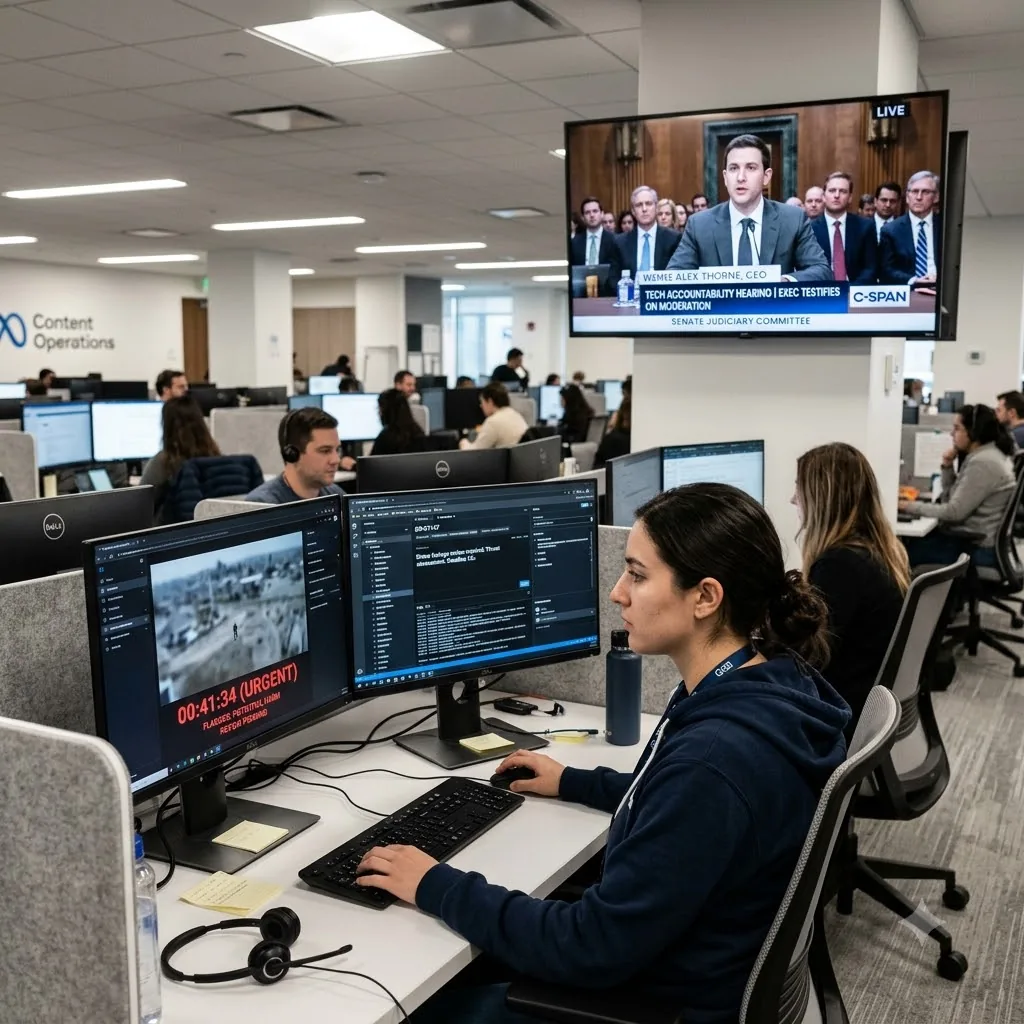
The progress bar on the upper right of the moderation terminal burned a harsh fluorescent green, the digits ticking down with merciless rhythm. Twenty-nine. Twenty-eight. Twenty-seven. Elena rubbed the bridge of her nose, her eyes stinging from the sterile blue glow of the queue interface, and slammed the spacebar to lock in the tag. The screen flashed white, immediately replacing the low-resolution street brawl with a fresh block of surveillance footage. Twenty-nine. Twenty-eight. Her right wrist throbbed with a dull, familiar ache that radiated up to her forearm, the physical receipt of an eight-hour shift spent acting as the human rubber stamp for the company’s new algorithmic safety net.
On the muted television mounted above the breakroom door, the CEO adjusted his tailored suit jacket and leaned into a congressional microphone. The chyron beneath his perfectly white smile boasted about the new era of automated security. He held up a hand, clearly delivering a polished anecdote about the platform’s flawless detection rate, looking entirely detached from the windowless basement where Elena sat grinding through the false positives his flawless machine produced.
She focused back on the terminal. A strict 30-second timer dictated every motion of her day, an unforgiving Service Level Agreement metric that determined her continued employment. The new footage showed a grainy convenience store aisle. A teenager pocketed a candy bar. The AI had flagged it as a severe infraction. Elena sighed, hitting the shortcut key to downgrade the alert. The timer reset. Twenty-nine. Twenty-eight.
Next video. A blurry parking lot at night. Two figures shoving each other near a dumpster. The bounding boxes flashed yellow, indicating potential violence. She hit the confirmation key. Click. Twenty-nine. Twenty-eight.
Next video. A dog running loose off its leash in a residential park. Flagged as a public safety hazard. Rejected. Click. Twenty-nine. Twenty-eight.
She took a sip of lukewarm coffee, the bitter taste grounding her for a moment. Her eyes darted between the sterile UI and the muted broadcast. The CEO was nodding earnestly now, placing a hand over his heart. The congressional committee members on the split-screen looked suitably impressed by whatever metric he was touting. The company had just rolled out the beta version of the Predictive Response system in her city, granting the AI direct integration with local law enforcement dispatch. Elena and her floor of tired contractors were the final human fail-safe, required to verify the machine’s alerts before an automated order went out.
A harsh, double-toned chime shattered the dull hum of the server racks and the cooling fans. The standard gray UI border snapped to a vibrant, alarming crimson.
Priority override. High severity.
Elena sat up straighter, the sudden spike in adrenaline temporarily clearing the fog of exhaustion. The timer for priority alerts was faster, offering no grace period for tired eyes. Fifteen seconds. Fourteen. Thirteen.
The footage populated in the center of her screen. It was a monochrome feed from a residential doorbell camera, heavily compressed and distorted by rain. The time stamp read 3:14 AM. The street looked entirely ordinary, lined with identical hedges and cracked sidewalks. A vehicle was parked awkwardly halfway onto the curb, its headlights cutting through the downpour in sharp, static-filled cones.
The AI bounding box, a pulsing red rectangle, highlighted the trunk of the car.
Eleven. Ten.
Elena leaned closer to the monitor, her face inches from the glass. The action within the red box was entirely ambiguous, obscured by the heavy rain and the low frame rate. A figure in a dark hooded raincoat was struggling with something heavy, hauling it out of the trunk. The object was wrapped in a thick, dark material. It could have been a rolled-up rug, a heavy bag of fertilizer, or a bundle of wet canvas. The figure slipped in the mud, catching themselves on the bumper, before hoisting the long, awkward bundle onto their shoulder and disappearing into the shadows off-camera.
The AI flashed its verdict in bold red text across the bottom of the feed. Local felony detected. Dispatch authorization required.
Nine. Eight.
Elena squinted at the car, her finger hovering over the mouse. The vehicle was a battered early-2000s sedan, the kind that populated every lower-income suburb in the county. But as the figure had slammed the trunk shut, the taillights flared, illuminating the rear bumper in stark monochrome.
Her breath caught in her throat.
The rear bumper was missing its left side, replaced by a jagged stretch of silver duct tape that formed a crude, overlapping starburst pattern. The right taillight cover was cracked, emitting a harsh, unregulated glare that washed out the license plate. The rear driver-side tire was a spare, significantly smaller than the rest, giving the car a distinct, lopsided stance even in the blurry footage.
It was not a generic vehicle. She knew that duct tape starburst. She knew the uneven tilt of that suspension. It was parked two spots down from her own car every single night.
Seven. Six.
The CEO on the television raised both hands in a gesture of absolute transparency, his mouth forming words about unshakeable algorithmic certainty.
Elena stared at the screen, the sterile UI now a suffocating trap. The rules dictated a strict binary. A felony flag with a human confirmation sent an immediate, unrecallable dispatch order to the police, locking the coordinates and the vehicle data into the automated system. A rejection required a detailed manual override log that would be audited by her supervisor.
The figure in the raincoat had not done anything explicitly illegal on camera. Moving a heavy object in the rain was not a crime. Yet the system had flagged it with its highest severity rating.
Five. Four.
The system prompt pulsed angrily, demanding a resolution. The glaring red button dominated the screen, waiting for her input to execute the arrest order. The coordinates listed in the metadata matched her own street. The lopsided car sat perfectly still in the grainy loop, the rain washing over the duct tape.
Three. Two.
Elena gripped the edge of her desk and stood up, knocking her chair backward into the aisle.
The progress bar on the upper right of the moderation terminal burned a harsh fluorescent green, the digits ticking down with merciless rhythm. Twenty-nine. Twenty-eight. Twenty-seven. Elena rubbed the bridge of her nose, her eyes stinging from the sterile blue glow of the queue interface, and slammed the spacebar to lock in the tag. The screen flashed white, immediately replacing the low-resolution street brawl with a fresh block of surveillance footage. Twenty-nine. Twenty-eight. Her right wrist throbbed with a dull, familiar ache that radiated up to her forearm, the physical receipt of an eight-hour shift spent acting as the human rubber stamp for the company’s new algorithmic safety net.
On the muted television mounted above the breakroom door, the CEO adjusted his tailored suit jacket and leaned into a congressional microphone. The chyron beneath his perfectly white smile boasted about the new era of automated security. He held up a hand, clearly delivering a polished anecdote about the platform’s flawless detection rate, looking entirely detached from the windowless basement where Elena sat grinding through the false positives his flawless machine produced.
She focused back on the terminal. A strict 30-second timer dictated every motion of her day, an unforgiving Service Level Agreement metric that determined her continued employment. The new footage showed a grainy convenience store aisle. A teenager pocketed a candy bar. The AI had flagged it as a severe infraction. Elena sighed, hitting the shortcut key to downgrade the alert. The timer reset. Twenty-nine. Twenty-eight.
Next video. A blurry parking lot at night. Two figures shoving each other near a dumpster. The bounding boxes flashed yellow, indicating potential violence. She hit the confirmation key. Click. Twenty-nine. Twenty-eight.
Next video. A dog running loose off its leash in a residential park. Flagged as a public safety hazard. Rejected. Click. Twenty-nine. Twenty-eight.
She took a sip of lukewarm coffee, the bitter taste grounding her for a moment. Her eyes darted between the sterile UI and the muted broadcast. The CEO was nodding earnestly now, placing a hand over his heart. The congressional committee members on the split-screen looked suitably impressed by whatever metric he was touting. The company had just rolled out the beta version of the Predictive Response system in her city, granting the AI direct integration with local law enforcement dispatch. Elena and her floor of tired contractors were the final human fail-safe, required to verify the machine’s alerts before an automated order went out.
A harsh, double-toned chime shattered the dull hum of the server racks and the cooling fans. The standard gray UI border snapped to a vibrant, alarming crimson.
Priority override. High severity.
Elena sat up straighter, the sudden spike in adrenaline temporarily clearing the fog of exhaustion. The timer for priority alerts was faster, offering no grace period for tired eyes. Fifteen seconds. Fourteen. Thirteen.
The footage populated in the center of her screen. It was a monochrome feed from a residential doorbell camera, heavily compressed and distorted by rain. The time stamp read 3:14 AM. The street looked entirely ordinary, lined with identical hedges and cracked sidewalks. A vehicle was parked awkwardly halfway onto the curb, its headlights cutting through the downpour in sharp, static-filled cones.
The AI bounding box, a pulsing red rectangle, highlighted the trunk of the car.
Eleven. Ten.
Elena leaned closer to the monitor, her face inches from the glass. The action within the red box was entirely ambiguous, obscured by the heavy rain and the low frame rate. A figure in a dark hooded raincoat was struggling with something heavy, hauling it out of the trunk. The object was wrapped in a thick, dark material. It could have been a rolled-up rug, a heavy bag of fertilizer, or a bundle of wet canvas. The figure slipped in the mud, catching themselves on the bumper, before hoisting the long, awkward bundle onto their shoulder and disappearing into the shadows off-camera.
The AI flashed its verdict in bold red text across the bottom of the feed. Local felony detected. Dispatch authorization required.
Nine. Eight.
Elena squinted at the car, her finger hovering over the mouse. The vehicle was a battered early-2000s sedan, the kind that populated every lower-income suburb in the county. But as the figure had slammed the trunk shut, the taillights flared, illuminating the rear bumper in stark monochrome.
Her breath caught in her throat.
The rear bumper was missing its left side, replaced by a jagged stretch of silver duct tape that formed a crude, overlapping starburst pattern. The right taillight cover was cracked, emitting a harsh, unregulated glare that washed out the license plate. The rear driver-side tire was a spare, significantly smaller than the rest, giving the car a distinct, lopsided stance even in the blurry footage.
It was not a generic vehicle. She knew that duct tape starburst. She knew the uneven tilt of that suspension. It was parked two spots down from her own car every single night.
Seven. Six.
The CEO on the television raised both hands in a gesture of absolute transparency, his mouth forming words about unshakeable algorithmic certainty.
Elena stared at the screen, the sterile UI now a suffocating trap. The rules dictated a strict binary. A felony flag with a human confirmation sent an immediate, unrecallable dispatch order to the police, locking the coordinates and the vehicle data into the automated system. A rejection required a detailed manual override log that would be audited by her supervisor.
The figure in the raincoat had not done anything explicitly illegal on camera. Moving a heavy object in the rain was not a crime. Yet the system had flagged it with its highest severity rating.
Five. Four.
The system prompt pulsed angrily, demanding a resolution. The glaring red button dominated the screen, waiting for her input to execute the arrest order. The coordinates listed in the metadata matched her own street. The lopsided car sat perfectly still in the grainy loop, the rain washing over the duct tape.
Three. Two.
Elena gripped the edge of her desk and stood up, knocking her chair backward into the aisle.