Story code: ST-001626
Part 1: The 4:00 AM Wipe
The fan of the Dell Latitude spun up to a frantic whine at exactly 4:00 AM before the screen flashed a fatal, irreversible white. Greg sat frozen in the glow of his home office as the corporate logo dissolved into a terminal prompt, watching strings of automated commands delete his sixteen-year career folder by folder. He tapped the spacebar, then hammered the escape key, but the keyboard was already dead. The machine powered down with a soft click, leaving him in total darkness.
He did not move for over an hour. The silence of the suburban house felt incredibly heavy, pressing violently against his chest. His title as Senior Vice President of Operations, his fifty-person department, and his meticulously planned schedule for the next six months had just evaporated into a remote server. He pushed away from the mahogany desk and began to pace the length of the room, his bare feet sinking into the thick carpet. The walls felt entirely too close. He needed to draft an email, call human resources, and demand an explanation from his superiors, but he had absolutely no access. He was a ghost in his own company, erased by an automated script in the middle of the night.
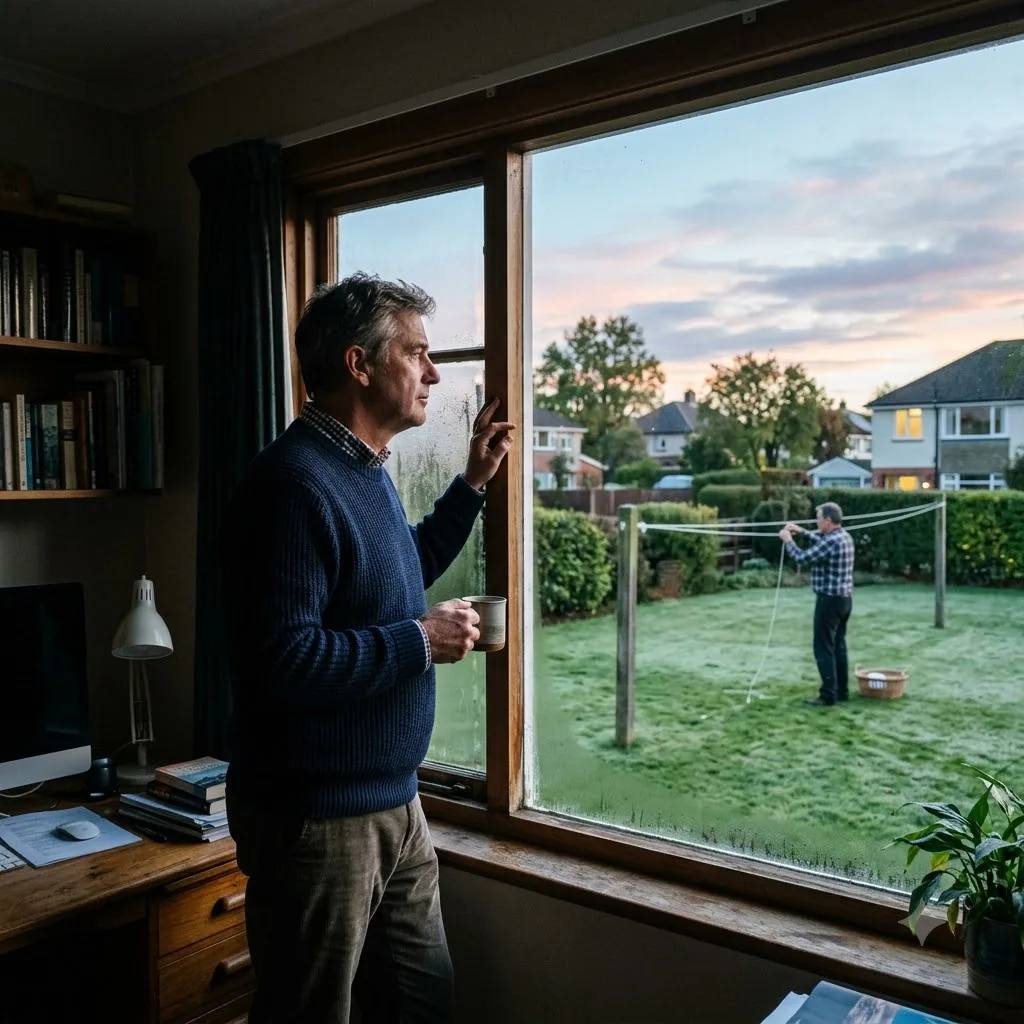
The early light of dawn began to bleed through the slatted blinds, casting long gray shadows across the floor. Greg dragged his hand across his face and stopped at the window, desperate for something familiar to anchor his spiraling thoughts. Across the cul-de-sac, unexpected movement caught his eye. The new family at number forty-two-the ones who had moved in three days ago with a rented box truck and no professional movers-were already awake and active. The father, a thick-shouldered man in a faded gray sweatshirt, was tying a braided nylon rope to the trunk of a mature oak tree. The mother was pulling the other end taut, looping it around a decorative white porch pillar.
Greg pressed his forehead against the cold glass of the windowpane. They were erecting a makeshift clothesline directly in the front yard. A plastic laundry basket overflowing with damp, brightly colored garments sat on the dewy grass nearby. Section Four, Article Twelve of the Oak Creek Homeowners Association covenants explicitly prohibited visible front-yard drying apparatuses. Greg’s chest tightened with a sudden, overwhelming surge of righteous indignation. He might not have his corporate security badge anymore, but he was still the elected president of the HOA board. There were established rules here. There was structure. People could not simply do whatever they wanted in his neighborhood.
He spun away from the window, ignoring the bricked laptop sitting uselessly on his desk. He threw on a navy windbreaker over his pajama shirt, shoved his bare feet into his leather loafers, and grabbed the thick, heavy binder of community bylaws from the hall table. The physical weight of the binder in his hands offered a small, solid comfort in a morning completely devoid of control. He marched out the front door into the crisp morning air, his stride lengthening with every step across the wet asphalt of the street. He rehearsed the verbal warning in his head, making sure it sounded firm, authoritative, and completely uncompromising.
He crossed their property line, his hard-soled shoes leaving dark prints in the dew-soaked grass of their front lawn. The father was just pinning a dripping yellow towel to the rope when he heard Greg approaching. The man turned around, his expression entirely neutral, hands still raised near the sagging nylon line.
“You need to take that down right now,” Greg said, stopping six feet away and squaring his shoulders. He tapped the rigid plastic cover of his binder for emphasis. “Front yard clotheslines are a direct violation of the neighborhood covenants.”
The father did not blink. He did not look down at the official binder, nor did he offer any sort of apology for the infraction. He lowered his arms very slowly. He looked past Greg, scanning the quiet street from left to right, then locked eyes with him. The silence stretched between them, dense and incredibly uncomfortable. Greg opened his mouth to recite the specific penalty clause and the daily fine amount.
Before Greg could utter a single syllable, the father turned away from the clothesline. He walked right past the laundry basket to a sealed plastic storage bin sitting on the edge of the driveway. He unlatched the heavy plastic lid, reached deep inside, and pulled out a jagged, incredibly dark object. He closed the distance between them in three rapid, purposeful strides. Greg instinctively stepped back, his grip tightening on his binder. The father thrust his hand forward, forcing the object directly against Greg’s chest with sudden force. Greg gasped and dropped his binder onto the wet grass to catch the heavy item before it fell.
It was ice cold. It felt incredibly dense and industrial against his skin. Greg looked down at his trembling hands, his fingers wrapping around a thick, severely shredded piece of black rubber. The edges were violently torn and frayed, exposing thick steel wire mesh embedded deep within the material. The surface was scored with deep, unnatural gouges that looked like massive claw marks. It smelled sharply of burnt chemicals and stagnant, swampy water.
Greg stared at the destroyed mass of rubber, unable to process what it was doing in his hands or what it meant. He looked up to demand a rational explanation, but the father had already stepped dangerously close, raising a dirt-stained finger to his own lips.
The fan of the Dell Latitude spun up to a frantic whine at exactly 4:00 AM before the screen flashed a fatal, irreversible white. Greg sat frozen in the glow of his home office as the corporate logo dissolved into a terminal prompt, watching strings of automated commands delete his sixteen-year career folder by folder. He tapped the spacebar, then hammered the escape key, but the keyboard was already dead. The machine powered down with a soft click, leaving him in total darkness.
He did not move for over an hour. The silence of the suburban house felt incredibly heavy, pressing violently against his chest. His title as Senior Vice President of Operations, his fifty-person department, and his meticulously planned schedule for the next six months had just evaporated into a remote server. He pushed away from the mahogany desk and began to pace the length of the room, his bare feet sinking into the thick carpet. The walls felt entirely too close. He needed to draft an email, call human resources, and demand an explanation from his superiors, but he had absolutely no access. He was a ghost in his own company, erased by an automated script in the middle of the night.
The early light of dawn began to bleed through the slatted blinds, casting long gray shadows across the floor. Greg dragged his hand across his face and stopped at the window, desperate for something familiar to anchor his spiraling thoughts. Across the cul-de-sac, unexpected movement caught his eye. The new family at number forty-two-the ones who had moved in three days ago with a rented box truck and no professional movers-were already awake and active. The father, a thick-shouldered man in a faded gray sweatshirt, was tying a braided nylon rope to the trunk of a mature oak tree. The mother was pulling the other end taut, looping it around a decorative white porch pillar.
Greg pressed his forehead against the cold glass of the windowpane. They were erecting a makeshift clothesline directly in the front yard. A plastic laundry basket overflowing with damp, brightly colored garments sat on the dewy grass nearby. Section Four, Article Twelve of the Oak Creek Homeowners Association covenants explicitly prohibited visible front-yard drying apparatuses. Greg’s chest tightened with a sudden, overwhelming surge of righteous indignation. He might not have his corporate security badge anymore, but he was still the elected president of the HOA board. There were established rules here. There was structure. People could not simply do whatever they wanted in his neighborhood.
He spun away from the window, ignoring the bricked laptop sitting uselessly on his desk. He threw on a navy windbreaker over his pajama shirt, shoved his bare feet into his leather loafers, and grabbed the thick, heavy binder of community bylaws from the hall table. The physical weight of the binder in his hands offered a small, solid comfort in a morning completely devoid of control. He marched out the front door into the crisp morning air, his stride lengthening with every step across the wet asphalt of the street. He rehearsed the verbal warning in his head, making sure it sounded firm, authoritative, and completely uncompromising.
He crossed their property line, his hard-soled shoes leaving dark prints in the dew-soaked grass of their front lawn. The father was just pinning a dripping yellow towel to the rope when he heard Greg approaching. The man turned around, his expression entirely neutral, hands still raised near the sagging nylon line.
“You need to take that down right now,” Greg said, stopping six feet away and squaring his shoulders. He tapped the rigid plastic cover of his binder for emphasis. “Front yard clotheslines are a direct violation of the neighborhood covenants.”
The father did not blink. He did not look down at the official binder, nor did he offer any sort of apology for the infraction. He lowered his arms very slowly. He looked past Greg, scanning the quiet street from left to right, then locked eyes with him. The silence stretched between them, dense and incredibly uncomfortable. Greg opened his mouth to recite the specific penalty clause and the daily fine amount.
Before Greg could utter a single syllable, the father turned away from the clothesline. He walked right past the laundry basket to a sealed plastic storage bin sitting on the edge of the driveway. He unlatched the heavy plastic lid, reached deep inside, and pulled out a jagged, incredibly dark object. He closed the distance between them in three rapid, purposeful strides. Greg instinctively stepped back, his grip tightening on his binder. The father thrust his hand forward, forcing the object directly against Greg’s chest with sudden force. Greg gasped and dropped his binder onto the wet grass to catch the heavy item before it fell.
It was ice cold. It felt incredibly dense and industrial against his skin. Greg looked down at his trembling hands, his fingers wrapping around a thick, severely shredded piece of black rubber. The edges were violently torn and frayed, exposing thick steel wire mesh embedded deep within the material. The surface was scored with deep, unnatural gouges that looked like massive claw marks. It smelled sharply of burnt chemicals and stagnant, swampy water.
Greg stared at the destroyed mass of rubber, unable to process what it was doing in his hands or what it meant. He looked up to demand a rational explanation, but the father had already stepped dangerously close, raising a dirt-stained finger to his own lips.