Story code: ST-001918
Part 1: The Settlement
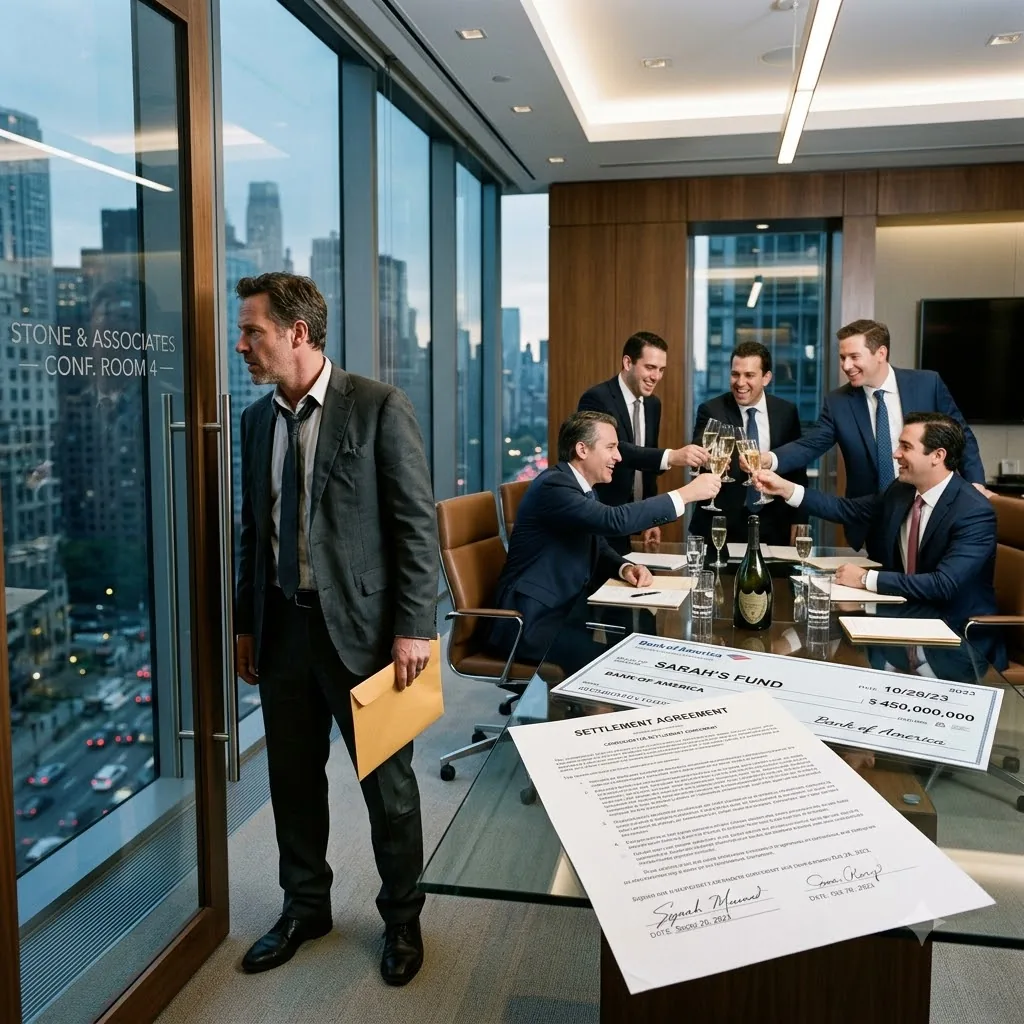
The cork from a bottle of vintage champagne struck the recessed lighting of the sixty-fourth-floor conference room with a sharp, sterile thwack. Marcus flinched, though the sound was immediately drowned out by the cheering of six senior partners. Lead counsel Diane Miller slid a piece of heavy stock paper across the expansive glass table, her manicured finger tapping the signature line. It was a settlement check printed with a four and eight consecutive zeros. Four hundred million dollars. It represented the absolute, unconditional surrender of the most aggressive social media conglomerate on the planet.
Diane poured the foaming wine into crystal flutes, passing them around the room. In the corner, a trio of public relations executives hammered away on their laptops, loudly debating the exact phrasing for the press release going out to the major syndicates. They argued over using the phrase ‘unprecedented victory’ versus ‘a total dismantling of predatory tech.’ None of them were looking at the check anymore. They were looking at the optics, calculating the exact moment to drop the news for maximum market impact.
Marcus stared at the zeros. He had spent the last two years terrified of this exact room, terrified of the corporate defense lawyers who had just quietly packed their briefcases and taken the private elevator down to the lobby. When he first breached his non-disclosure agreement, he assumed his life was over. He had walked out of the server farm in San Jose with a secure flash drive containing the entire source code for the company’s new engagement algorithm. He broke federal trade secret laws, violated his employment contract, and risked absolute financial ruin and federal prison time.
He did it because he saw what the code was actively doing to millions of vulnerable users. The algorithm was not just prioritizing engagement. It was actively isolating users, identifying their vulnerabilities, and feeding them a targeted loop of escalating extremity. He had seen the internal metrics. He had seen the direct, undeniable correlation to teenagers like Chloe, a sixteen-year-old girl who had been targeted by the code’s most aggressive retention protocols.
The algorithm had mapped her digital footprint, found her weak points, and relentlessly pushed her into a psychological corner she could not escape. It bypassed standard content moderation, adapted to her waking hours, and ran twenty-four hours a day, flooding her feed with media designed to trigger absolute despair. Her life had been utterly destroyed by lines of code he had once been paid to optimize. He remembered the exact Tuesday he had realized what the retention loops were doing. He had vomited in the employee restroom, wiped his mouth, and walked straight to the server room with his hidden flash drive.
“To Marcus,” Diane said, raising her glass. The room fell quiet as the lawyers turned to the pale, exhausted engineer at the end of the table. “The man who brought down Goliath. You saved a lot of lives today.”
Marcus raised his glass in return. The champagne tasted like ash in his mouth. He set the flute down on the glass table, leaving a ring of condensation on the spotless surface. He did not feel like a hero. He just felt an overwhelming, crushing need to get out of the high-rise.
The PR director stepped away from her laptop, adjusting her glasses. She told Marcus they needed a single sentence from him for the evening news cycle, something about vindication and moving forward. Marcus stood up from his leather chair. He told them he had to leave. He explained that before the news broke on the wire, he needed to tell Chloe’s parents in person. He needed to show them the settlement figures and tell them the algorithm was permanently being taken offline.
Diane nodded, offering a sympathetic smile. She told him to take the black town car waiting in the basement.
The descent from the sixty-fourth floor felt like falling. Marcus leaned against the brushed steel of the elevator, watching the floor numbers blur past. The sterile triumph of the conference room faded, replaced by a cold, tightening knot in his chest. He navigated the vast marble lobby and stepped into the idling sedan, handing the driver a slip of paper with the address.
The drive took them out of the gleaming financial district and into a quiet, heavily zoned medical park on the edge of the city. Rain began to streak the tinted windows, blurring the streetlights into smeared halos. Marcus gripped the handle of his leather satchel. Inside was a certified copy of the settlement and a signed injunction forcing the tech giant to dismantle the code. It was the victory they had promised Chloe’s parents. It was the only thing that made the last two years of depositions, threats, and sleepless nights entirely worth it.
The sedan pulled up to the curb of a low, brutalist concrete building. There were no bright signs, only a discreet brass plaque near the automatic doors. It was the private recovery clinic where Chloe had been admitted eight months ago. Marcus thanked the driver, stepped out into the damp air, and walked through the sliding glass doors.
The lobby was heavily climate-controlled, smelling faintly of industrial antiseptic, floor wax, and lavender. The low hum of the ventilation system was the only sound, a stark contrast to the cheering lawyers he had just left behind. A security guard at a front desk checked his ID against a digital visitor log, making a hushed phone call to the ward before pointing him toward the west wing. Marcus walked down the long, beige corridor, his dress shoes squeaking slightly on the polished linoleum. There were no windows here, only rows of heavy doors.
He passed several intersections before reaching the nurses’ station at the end of the hall. A charge nurse looked up from her chart, her expression instantly shifting from professional detachment to something far more complicated when Marcus stated his name and his reason for being there. She did not offer a congratulatory smile. She did not react to the news of the massive settlement.
Instead, she stood up, grabbed a heavy electronic keycard from her lanyard, and walked him down the final stretch of the corridor in total silence. The quiet in the hallway felt heavy, pressing against his eardrums. They stopped outside the final room. The nurse pressed her badge to the scanner. The locking mechanism clicked open, and Marcus pushed the heavy wooden door inward, stepping into the dim light to deliver the final news of their victory.
The cork from a bottle of vintage champagne struck the recessed lighting of the sixty-fourth-floor conference room with a sharp, sterile thwack. Marcus flinched, though the sound was immediately drowned out by the cheering of six senior partners. Lead counsel Diane Miller slid a piece of heavy stock paper across the expansive glass table, her manicured finger tapping the signature line. It was a settlement check printed with a four and eight consecutive zeros. Four hundred million dollars. It represented the absolute, unconditional surrender of the most aggressive social media conglomerate on the planet.
Diane poured the foaming wine into crystal flutes, passing them around the room. In the corner, a trio of public relations executives hammered away on their laptops, loudly debating the exact phrasing for the press release going out to the major syndicates. They argued over using the phrase ‘unprecedented victory’ versus ‘a total dismantling of predatory tech.’ None of them were looking at the check anymore. They were looking at the optics, calculating the exact moment to drop the news for maximum market impact.
Marcus stared at the zeros. He had spent the last two years terrified of this exact room, terrified of the corporate defense lawyers who had just quietly packed their briefcases and taken the private elevator down to the lobby. When he first breached his non-disclosure agreement, he assumed his life was over. He had walked out of the server farm in San Jose with a secure flash drive containing the entire source code for the company’s new engagement algorithm. He broke federal trade secret laws, violated his employment contract, and risked absolute financial ruin and federal prison time.
He did it because he saw what the code was actively doing to millions of vulnerable users. The algorithm was not just prioritizing engagement. It was actively isolating users, identifying their vulnerabilities, and feeding them a targeted loop of escalating extremity. He had seen the internal metrics. He had seen the direct, undeniable correlation to teenagers like Chloe, a sixteen-year-old girl who had been targeted by the code’s most aggressive retention protocols.
The algorithm had mapped her digital footprint, found her weak points, and relentlessly pushed her into a psychological corner she could not escape. It bypassed standard content moderation, adapted to her waking hours, and ran twenty-four hours a day, flooding her feed with media designed to trigger absolute despair. Her life had been utterly destroyed by lines of code he had once been paid to optimize. He remembered the exact Tuesday he had realized what the retention loops were doing. He had vomited in the employee restroom, wiped his mouth, and walked straight to the server room with his hidden flash drive.
“To Marcus,” Diane said, raising her glass. The room fell quiet as the lawyers turned to the pale, exhausted engineer at the end of the table. “The man who brought down Goliath. You saved a lot of lives today.”
Marcus raised his glass in return. The champagne tasted like ash in his mouth. He set the flute down on the glass table, leaving a ring of condensation on the spotless surface. He did not feel like a hero. He just felt an overwhelming, crushing need to get out of the high-rise.
The PR director stepped away from her laptop, adjusting her glasses. She told Marcus they needed a single sentence from him for the evening news cycle, something about vindication and moving forward. Marcus stood up from his leather chair. He told them he had to leave. He explained that before the news broke on the wire, he needed to tell Chloe’s parents in person. He needed to show them the settlement figures and tell them the algorithm was permanently being taken offline.
Diane nodded, offering a sympathetic smile. She told him to take the black town car waiting in the basement.
The descent from the sixty-fourth floor felt like falling. Marcus leaned against the brushed steel of the elevator, watching the floor numbers blur past. The sterile triumph of the conference room faded, replaced by a cold, tightening knot in his chest. He navigated the vast marble lobby and stepped into the idling sedan, handing the driver a slip of paper with the address.
The drive took them out of the gleaming financial district and into a quiet, heavily zoned medical park on the edge of the city. Rain began to streak the tinted windows, blurring the streetlights into smeared halos. Marcus gripped the handle of his leather satchel. Inside was a certified copy of the settlement and a signed injunction forcing the tech giant to dismantle the code. It was the victory they had promised Chloe’s parents. It was the only thing that made the last two years of depositions, threats, and sleepless nights entirely worth it.
The sedan pulled up to the curb of a low, brutalist concrete building. There were no bright signs, only a discreet brass plaque near the automatic doors. It was the private recovery clinic where Chloe had been admitted eight months ago. Marcus thanked the driver, stepped out into the damp air, and walked through the sliding glass doors.
The lobby was heavily climate-controlled, smelling faintly of industrial antiseptic, floor wax, and lavender. The low hum of the ventilation system was the only sound, a stark contrast to the cheering lawyers he had just left behind. A security guard at a front desk checked his ID against a digital visitor log, making a hushed phone call to the ward before pointing him toward the west wing. Marcus walked down the long, beige corridor, his dress shoes squeaking slightly on the polished linoleum. There were no windows here, only rows of heavy doors.
He passed several intersections before reaching the nurses’ station at the end of the hall. A charge nurse looked up from her chart, her expression instantly shifting from professional detachment to something far more complicated when Marcus stated his name and his reason for being there. She did not offer a congratulatory smile. She did not react to the news of the massive settlement.
Instead, she stood up, grabbed a heavy electronic keycard from her lanyard, and walked him down the final stretch of the corridor in total silence. The quiet in the hallway felt heavy, pressing against his eardrums. They stopped outside the final room. The nurse pressed her badge to the scanner. The locking mechanism clicked open, and Marcus pushed the heavy wooden door inward, stepping into the dim light to deliver the final news of their victory.