Story code: ST-000001
Part 1: The Binder
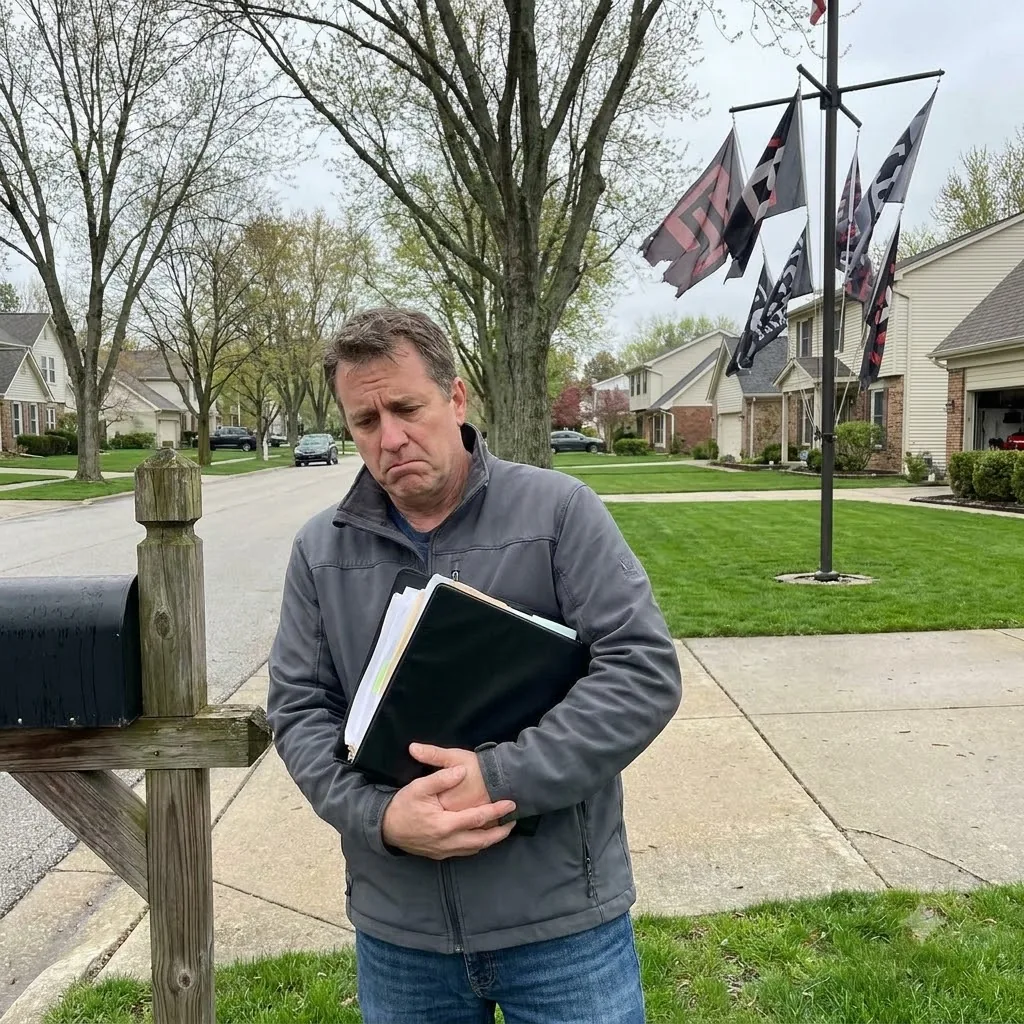
Greg stood on the curb with the steel door of his mailbox hanging open, the unexpected weight of a three-inch-thick legal binder pressing heavily against his forearms. The return address in the upper corner belonged to a sprawling corporate law firm in the city, but the shipping label in the center was directed exclusively to him, bypassing the homeowner’s association entirely. Down the street, the sharp, rhythmic cracking of heavy nylon drew his attention to a thirty-foot aluminum pole erected in the front lawn of the corner estate. Three massive flags whipped violently in the afternoon wind, their bright, oversized fabric dominated by bold, aggressive profanity that was legible from a full block away.
Just forty-eight hours ago, Greg had acted in his capacity as the neighborhood compliance committee chair and slipped a standard fifty-dollar citation into the mail. It was the lowest-tier form letter available for unapproved exterior modifications, the exact same notice he would send for a faded mailbox or an overgrown hedge. He had expected a grumpy email or a begrudging check. He had certainly not expected a four-hundred-page legal assault delivered directly to his doorstep by a private courier.
He walked back up his driveway, his eyes fixed on the towering flagpole. The sheer scale of the installation defied every zoning regulation in the township, let alone the modest community bylaws. The wealthy new owner of the corner estate had moved in three weeks prior, maintaining total silence while an army of landscapers and contractors remodeled the property. Then, the steel pole had gone up overnight, a deliberate and unignorable challenge to the entire neighborhood. The snapping of the enormous flags echoed down the asphalt like gunfire.
Inside his kitchen, Greg dropped the heavy package onto the granite island. The thud echoed through the quiet house, a solid, physical manifestation of the trouble he had just invited into his life. He sliced the thick shipping tape with a paring knife and pushed aside layers of protective cardboard to reveal a black, leather-bound volume. The cover page bore his full legal name, his home address, and a frightening string of civil codes that he could not immediately interpret.
Greg flipped through the first dozen pages, the crisp white paper slicing against his fingertips. There was no mention of the homeowner’s association. There was no reference to a fifty-dollar fine. Instead, the dense paragraphs outlined a targeted personal liability claim. His eyes scanned over terrifying phrases demanding immediate injunctions, asset freezing, and claims of tortious interference.
The binder contained hundreds of pages of printed exhibits. He turned to a section tabbed in red plastic and felt the blood drain from his face. The pages held recent satellite imagery of Greg’s own property, heavily annotated with property lines and utility easements. The next section contained copies of his personal employment history and public tax records. They were pulling back the curtain on an operation far beyond a simple neighborhood grievance. They were not just contesting a local rule. They were building a fortress of intimidation, and they had aimed all of their heavy artillery directly at him.
His heart began a heavy, rapid rhythm against his ribs. He needed to loop in the board immediately. He pulled his smartphone from his pocket and scrolled to the contact for Arthur, the long-standing president of the HOA. Arthur was a retired insurance adjuster who thrived on conflict and approached every neighborhood dispute with unshakeable, smug authority. If anyone knew how to swat down a frivolous legal threat and mobilize the neighborhood’s official attorneys, it was him.
Greg pressed the call button and lifted the phone to his ear, staring out the kitchen window at the distant, violently snapping flags.
The line clicked open after a single, agonizing ring.
Before Greg could even introduce himself or explain the terrifying binder on his counter, Arthur spoke in a hushed, breathless rush that sounded entirely foreign to his usual booming tone. The older man commanded him to stop talking immediately and listen.
Greg tried to force the words out anyway, needing to explain that he had been named personally in a massive lawsuit over the flag citation.
Arthur cut him off again. The board president was whispering, his voice trembling with a frantic, uncharacteristic panic. Arthur told him that the professional management company that handled the neighborhood’s finances and legal retainer had just terminated their contract entirely. According to Arthur, the management executives had received a single phone call from the owner of the corner estate that morning and had instantly abandoned the community, terrified of whatever immense leverage the new neighbor possessed.
Greg stared at the four-hundred pages of legal threats sitting on his kitchen island, suddenly realizing the absolute severity of his isolation. He tried to tell Arthur about the private courier delivery, about the personal liability clauses and the bizarre exhibits targeting his personal assets and employment history.
Arthur interrupted him with a desperate, ragged intake of breath. He warned Greg that the fifty-dollar citation had triggered something deeply dangerous, something that had already stripped the neighborhood board of all its legal protection.
“Greg, you need to lock your doors and stay entirely away from the windows right now,” Arthur whispered, his breath hitching audibly over the speaker. “The fine triggered a tripwire. They stripped our legal protection in one phone call, and I just saw a black vehicle pull up to your-”
The line went dead with a sharp electronic click.
Greg stood on the curb with the steel door of his mailbox hanging open, the unexpected weight of a three-inch-thick legal binder pressing heavily against his forearms. The return address in the upper corner belonged to a sprawling corporate law firm in the city, but the shipping label in the center was directed exclusively to him, bypassing the homeowner’s association entirely. Down the street, the sharp, rhythmic cracking of heavy nylon drew his attention to a thirty-foot aluminum pole erected in the front lawn of the corner estate. Three massive flags whipped violently in the afternoon wind, their bright, oversized fabric dominated by bold, aggressive profanity that was legible from a full block away.
Just forty-eight hours ago, Greg had acted in his capacity as the neighborhood compliance committee chair and slipped a standard fifty-dollar citation into the mail. It was the lowest-tier form letter available for unapproved exterior modifications, the exact same notice he would send for a faded mailbox or an overgrown hedge. He had expected a grumpy email or a begrudging check. He had certainly not expected a four-hundred-page legal assault delivered directly to his doorstep by a private courier.
He walked back up his driveway, his eyes fixed on the towering flagpole. The sheer scale of the installation defied every zoning regulation in the township, let alone the modest community bylaws. The wealthy new owner of the corner estate had moved in three weeks prior, maintaining total silence while an army of landscapers and contractors remodeled the property. Then, the steel pole had gone up overnight, a deliberate and unignorable challenge to the entire neighborhood. The snapping of the enormous flags echoed down the asphalt like gunfire.
Inside his kitchen, Greg dropped the heavy package onto the granite island. The thud echoed through the quiet house, a solid, physical manifestation of the trouble he had just invited into his life. He sliced the thick shipping tape with a paring knife and pushed aside layers of protective cardboard to reveal a black, leather-bound volume. The cover page bore his full legal name, his home address, and a frightening string of civil codes that he could not immediately interpret.
Greg flipped through the first dozen pages, the crisp white paper slicing against his fingertips. There was no mention of the homeowner’s association. There was no reference to a fifty-dollar fine. Instead, the dense paragraphs outlined a targeted personal liability claim. His eyes scanned over terrifying phrases demanding immediate injunctions, asset freezing, and claims of tortious interference.
The binder contained hundreds of pages of printed exhibits. He turned to a section tabbed in red plastic and felt the blood drain from his face. The pages held recent satellite imagery of Greg’s own property, heavily annotated with property lines and utility easements. The next section contained copies of his personal employment history and public tax records. They were pulling back the curtain on an operation far beyond a simple neighborhood grievance. They were not just contesting a local rule. They were building a fortress of intimidation, and they had aimed all of their heavy artillery directly at him.
His heart began a heavy, rapid rhythm against his ribs. He needed to loop in the board immediately. He pulled his smartphone from his pocket and scrolled to the contact for Arthur, the long-standing president of the HOA. Arthur was a retired insurance adjuster who thrived on conflict and approached every neighborhood dispute with unshakeable, smug authority. If anyone knew how to swat down a frivolous legal threat and mobilize the neighborhood’s official attorneys, it was him.
Greg pressed the call button and lifted the phone to his ear, staring out the kitchen window at the distant, violently snapping flags.
The line clicked open after a single, agonizing ring.
Before Greg could even introduce himself or explain the terrifying binder on his counter, Arthur spoke in a hushed, breathless rush that sounded entirely foreign to his usual booming tone. The older man commanded him to stop talking immediately and listen.
Greg tried to force the words out anyway, needing to explain that he had been named personally in a massive lawsuit over the flag citation.
Arthur cut him off again. The board president was whispering, his voice trembling with a frantic, uncharacteristic panic. Arthur told him that the professional management company that handled the neighborhood’s finances and legal retainer had just terminated their contract entirely. According to Arthur, the management executives had received a single phone call from the owner of the corner estate that morning and had instantly abandoned the community, terrified of whatever immense leverage the new neighbor possessed.
Greg stared at the four-hundred pages of legal threats sitting on his kitchen island, suddenly realizing the absolute severity of his isolation. He tried to tell Arthur about the private courier delivery, about the personal liability clauses and the bizarre exhibits targeting his personal assets and employment history.
Arthur interrupted him with a desperate, ragged intake of breath. He warned Greg that the fifty-dollar citation had triggered something deeply dangerous, something that had already stripped the neighborhood board of all its legal protection.
“Greg, you need to lock your doors and stay entirely away from the windows right now,” Arthur whispered, his breath hitching audibly over the speaker. “The fine triggered a tripwire. They stripped our legal protection in one phone call, and I just saw a black vehicle pull up to your-”
The line went dead with a sharp electronic click.