Story code: ST-000498
Part 1: The Blank Box
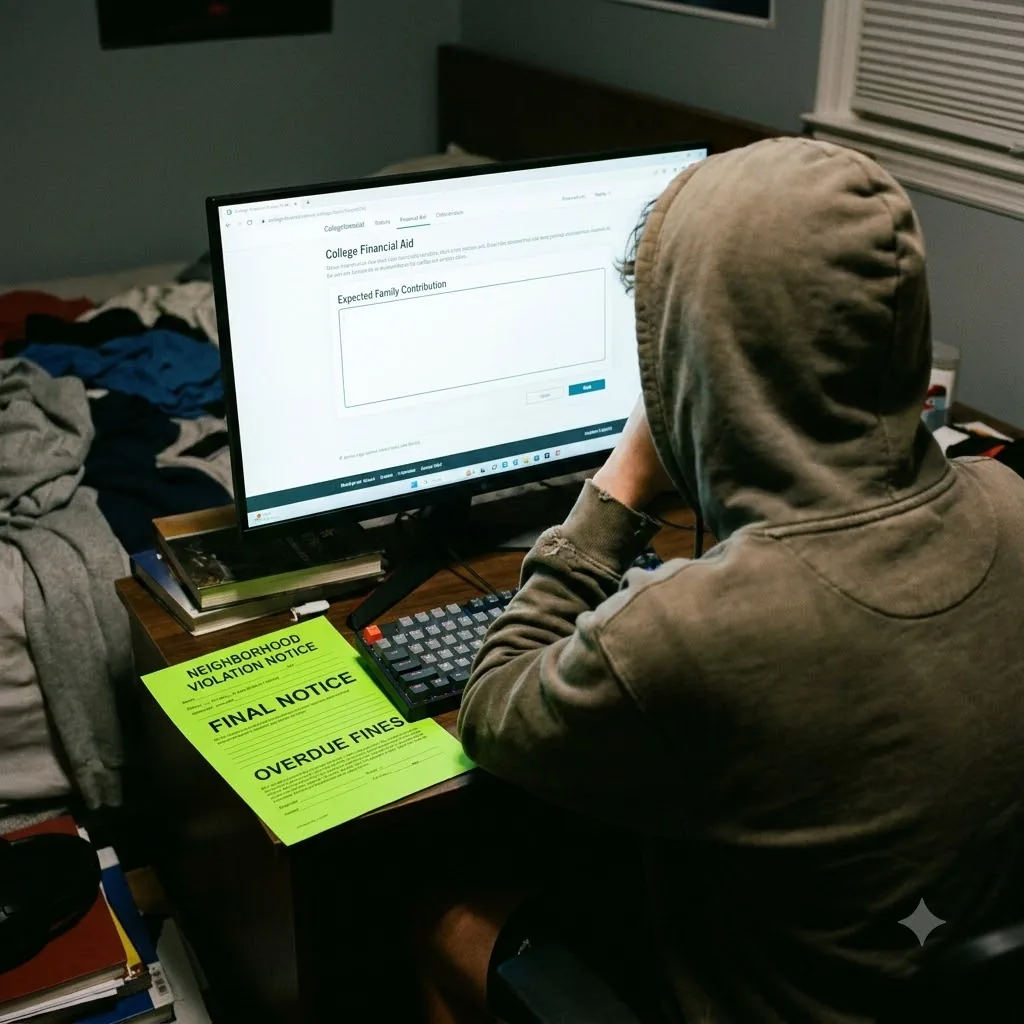
The red error message flashed on my laptop screen for the twelfth time, demanding nine digits I did not have to fill the empty Social Security box on my college financial aid form. I closed the lid hard enough to make the plastic hinges snap, needing to escape the suffocating heat of my small bedroom. I pulled open the front door to step onto the porch for a breath of fresh air, but my forward momentum stopped dead at the sight of a blinding neon green paper taped directly over the peephole. I ripped it down, my eyes catching the bold black letters declaring a five-hundred-dollar Homeowners Association violation. The citation listed the exact license plate of my father’s faded white work truck parked on the cracked concrete of our rental home driveway.
My stomach twisted into a tight knot. The heavy scent of gasoline and cut grass drifted up from the truck bed, a familiar smell that usually brought me comfort. Now, it only signaled disaster. The neighborhood rules strictly forbade parking commercial vehicles in the driveways, but we had been doing it for two years without a single complaint from our neighbors. The bottom of the neon slip stated the fine was due in exactly five days. Failure to pay would result in an immediate lien placed on the property. That meant our landlord would find out, and we would be evicted before the end of the month. My father worked twelve-hour days in the blistering sun just to keep food on our table. We did not have five hundred spare dollars hidden under a mattress. Every extra cent I had earned from tutoring underclassmen was supposed to go toward my college enrollment deposit. Now, my title as high school valedictorian felt like a cruel joke. I had the flawless grades, the thick stack of university acceptance letters, and the ambition to build a better life for my family. None of it mattered if I was walled out of my own future by a blank box on a digital form.
I folded the stiff green paper into a tight square and shoved it deep into my jeans pocket. I grabbed my backpack and practically ran the eight blocks to school, desperate to find a way out of this trap. The sprawling hallways of Westbridge High were entirely deserted at this early hour. My sneakers squeaked loudly against the freshly waxed linoleum as I marched straight to the guidance office. Mr. Caldwell had been my assigned counselor since my freshman year. He was the man who constantly praised my relentless work ethic and swore I was destined for an Ivy League campus. More importantly, he was the only faculty member at this school who knew the truth about my documentation status. I had to believe he held the key to bypassing the financial aid blockade.
I knocked twice on his heavy office door and pushed it open. Mr. Caldwell sat behind his massive mahogany desk, surrounded by colorful framed pennants from elite state universities. I dropped my backpack on the floor, took the leather seat opposite him, and pulled my laptop from my bag. I opened it to the rejected application screen and turned it around so he could see the glaring red text. I explained that I had hit an absolute dead end. I told him I needed to access the state tuition loophole we discussed last spring. I made it clear that without the specific state waiver form, I could not accept the admission offer from my top-choice university. I kept my voice steady, fighting the cold panic rising in my throat. I sat back and waited for him to turn his monitor, click through some obscure state counselor portal, and print out the magic piece of paper that would save my life.
Mr. Caldwell did not reach for his mouse. He did not even glance at my laptop screen. He simply stared at me for a long, uncomfortable moment, folding his hands together over his pristine desk blotter. The silence in the room stretched out, broken only by the steady, mechanical hum of the overhead air conditioning vent. He broke his gaze, reached down to his right side, and pulled open the heavy bottom drawer of his desk. The metal tracks groaned in the quiet office. He brought up a piece of blinding neon green paper. He laid it flat on the exact center of his desk.
My lungs froze.
It was the exact same harsh color, the exact same dimensions, and featured the exact same bold black font as the ruinous notice burning a hole in my pocket. Before my brain could even begin to process the sheer impossibility of that specific slip of paper sitting inside a high school guidance office, Caldwell reached down into his drawer again. This time, he hauled a thick plastic grocery bag onto his lap. He reached inside and pulled out a dark green landscaping polo. The fabric was heavily smeared with dried mud, dark engine grease, and fresh grass stains. Sewn meticulously over the left breast pocket was the white thread logo of my father’s small, struggling lawn care business. Mr. Caldwell pushed the filthy shirt and the neon green fine notice across the smooth mahogany surface until they rested directly on top of my keyboard. He leaned forward, resting his elbows on the edge of his desk. He tapped his index finger against the mud-stained logo of my father’s company and told me exactly what I was going to do for him.
The red error message flashed on my laptop screen for the twelfth time, demanding nine digits I did not have to fill the empty Social Security box on my college financial aid form. I closed the lid hard enough to make the plastic hinges snap, needing to escape the suffocating heat of my small bedroom. I pulled open the front door to step onto the porch for a breath of fresh air, but my forward momentum stopped dead at the sight of a blinding neon green paper taped directly over the peephole. I ripped it down, my eyes catching the bold black letters declaring a five-hundred-dollar Homeowners Association violation. The citation listed the exact license plate of my father’s faded white work truck parked on the cracked concrete of our rental home driveway.
My stomach twisted into a tight knot. The heavy scent of gasoline and cut grass drifted up from the truck bed, a familiar smell that usually brought me comfort. Now, it only signaled disaster. The neighborhood rules strictly forbade parking commercial vehicles in the driveways, but we had been doing it for two years without a single complaint from our neighbors. The bottom of the neon slip stated the fine was due in exactly five days. Failure to pay would result in an immediate lien placed on the property. That meant our landlord would find out, and we would be evicted before the end of the month. My father worked twelve-hour days in the blistering sun just to keep food on our table. We did not have five hundred spare dollars hidden under a mattress. Every extra cent I had earned from tutoring underclassmen was supposed to go toward my college enrollment deposit. Now, my title as high school valedictorian felt like a cruel joke. I had the flawless grades, the thick stack of university acceptance letters, and the ambition to build a better life for my family. None of it mattered if I was walled out of my own future by a blank box on a digital form.
I folded the stiff green paper into a tight square and shoved it deep into my jeans pocket. I grabbed my backpack and practically ran the eight blocks to school, desperate to find a way out of this trap. The sprawling hallways of Westbridge High were entirely deserted at this early hour. My sneakers squeaked loudly against the freshly waxed linoleum as I marched straight to the guidance office. Mr. Caldwell had been my assigned counselor since my freshman year. He was the man who constantly praised my relentless work ethic and swore I was destined for an Ivy League campus. More importantly, he was the only faculty member at this school who knew the truth about my documentation status. I had to believe he held the key to bypassing the financial aid blockade.
I knocked twice on his heavy office door and pushed it open. Mr. Caldwell sat behind his massive mahogany desk, surrounded by colorful framed pennants from elite state universities. I dropped my backpack on the floor, took the leather seat opposite him, and pulled my laptop from my bag. I opened it to the rejected application screen and turned it around so he could see the glaring red text. I explained that I had hit an absolute dead end. I told him I needed to access the state tuition loophole we discussed last spring. I made it clear that without the specific state waiver form, I could not accept the admission offer from my top-choice university. I kept my voice steady, fighting the cold panic rising in my throat. I sat back and waited for him to turn his monitor, click through some obscure state counselor portal, and print out the magic piece of paper that would save my life.
Mr. Caldwell did not reach for his mouse. He did not even glance at my laptop screen. He simply stared at me for a long, uncomfortable moment, folding his hands together over his pristine desk blotter. The silence in the room stretched out, broken only by the steady, mechanical hum of the overhead air conditioning vent. He broke his gaze, reached down to his right side, and pulled open the heavy bottom drawer of his desk. The metal tracks groaned in the quiet office. He brought up a piece of blinding neon green paper. He laid it flat on the exact center of his desk.
My lungs froze.
It was the exact same harsh color, the exact same dimensions, and featured the exact same bold black font as the ruinous notice burning a hole in my pocket. Before my brain could even begin to process the sheer impossibility of that specific slip of paper sitting inside a high school guidance office, Caldwell reached down into his drawer again. This time, he hauled a thick plastic grocery bag onto his lap. He reached inside and pulled out a dark green landscaping polo. The fabric was heavily smeared with dried mud, dark engine grease, and fresh grass stains. Sewn meticulously over the left breast pocket was the white thread logo of my father’s small, struggling lawn care business. Mr. Caldwell pushed the filthy shirt and the neon green fine notice across the smooth mahogany surface until they rested directly on top of my keyboard. He leaned forward, resting his elbows on the edge of his desk. He tapped his index finger against the mud-stained logo of my father’s company and told me exactly what I was going to do for him.