Story code: ST-001266
Part 1: The Third Citation
Elias tore the perforated edge of the certified letter, the thick paper rasping in the absolute silence of his kitchen. It was the third envelope of its kind this week, bearing the embossed crest of the Oakridge Homeowners Association. He unfolded the notice, his thumb tracing over the bold print demanding five hundred dollars. The violation listed was a trashcan handle visible from the street. He looked out his small window at the side gate. The plastic bin sat completely concealed behind a six-foot privacy fence. To see the handle, an observer would have to be standing on a stepladder peering over the wood in the dead of night.
The penalty brought his total balance owed to over three thousand dollars for the current month alone. Elias set the heavy cardstock on the laminate table next to a stack of final-notice utility bills and a single, half-empty box of generic oatmeal. The refrigerator hummed a hollow tune in the corner, cooling nothing but tap water stored in reused plastic jugs and a half-loaf of discount bread. He pulled his threadbare sweater tighter around his chest, shivering as a draft crept through the unsealed window frames. The thermostat remained firmly locked at fifty degrees. Every dollar he saved on heating was instantly absorbed by Margaret, the HOA president, who seemingly possessed unlimited time to patrol his exact address.
The fines were escalating in absurdity and physical impossibility. Monday had brought a two-hundred-dollar penalty for a dandelion in the backyard, a space entirely obscured from the sidewalk and completely fenced in. Wednesday delivered a three-hundred-dollar citation for his porch light emitting the wrong color temperature, a bulb he had not turned on or replaced in four years. Now, this. He rubbed his eyes, the physical pressure of the impending bankruptcy crushing the breath out of his lungs. He had not spoken to a neighbor in eight months. He left the house only for his night shift loading boxes at a fulfillment center, returning at dawn to lock his deadbolt and draw all the blinds. He wanted nothing but to be left entirely alone in the quiet, absolute anonymity of the suburbs.
Margaret would foreclose on the house if he failed to pay within thirty days. The bylaws explicitly granted the board the power to place a lien on his property for unpaid fines, a terrifying clause she took great pleasure in highlighting in bright yellow ink at the bottom of the current notice. He had ignored the first few citations back in autumn, assuming them to be absurd clerical errors. Then the certified letters began arriving in thick stacks. He tried calling the management company once, only to be placed on endless holds before a representative coldly stated the board’s decisions were final and non-negotiable. He possessed no energy for a drawn-out legal battle. He possessed absolutely no funds to hire a lawyer to fight for him.
Elias pushed his chair back. The wooden legs scraped loudly against the peeling linoleum floor. He needed to move the can before another compounding daily fine materialized at midnight. He slipped his cold feet into a pair of worn sneakers, crushing the heels down rather than taking the time to tie the frayed laces. The front door groaned heavily on its hinges as he pulled it open. The night air hit him like a damp towel, freezing and heavy with the scent of wet asphalt and impending frost. The street lamps bathed the manicured neighboring lawns in an artificial orange glow, but his driveway remained cloaked in deep, undisturbed shadow.
He shuffled down the cracked concrete path toward the side gate. The silence of the neighborhood felt oppressive, thick enough to drown in. He unlatched the wooden gate, the metal hinges squealing a sharp, violent protest into the quiet street. He grabbed the plastic handle of the municipal trash bin and dragged it a full three feet deeper into the yard, shoving it hard against the vinyl siding of his house. It was now completely shielded by the protruding brick chimney breast. No one could possibly claim it was visible from any angle. He paused, his chest heaving from the minor exertion, his breath pluming in the freezing air.
A low, mechanical hum vibrated through the quiet night.
Elias froze, his hand still resting on the cold plastic lid of the bin. It sounded like a swarm of angry hornets, steady and heavily localized, hovering somewhere just out of his immediate line of sight. He stepped back from the fence, his eyes scanning the pitch-black sky above his roofline. He expected to see a passing commercial airplane or a distant police helicopter breaking the silence.
Instead, a single red light pulsed in the absolute darkness.
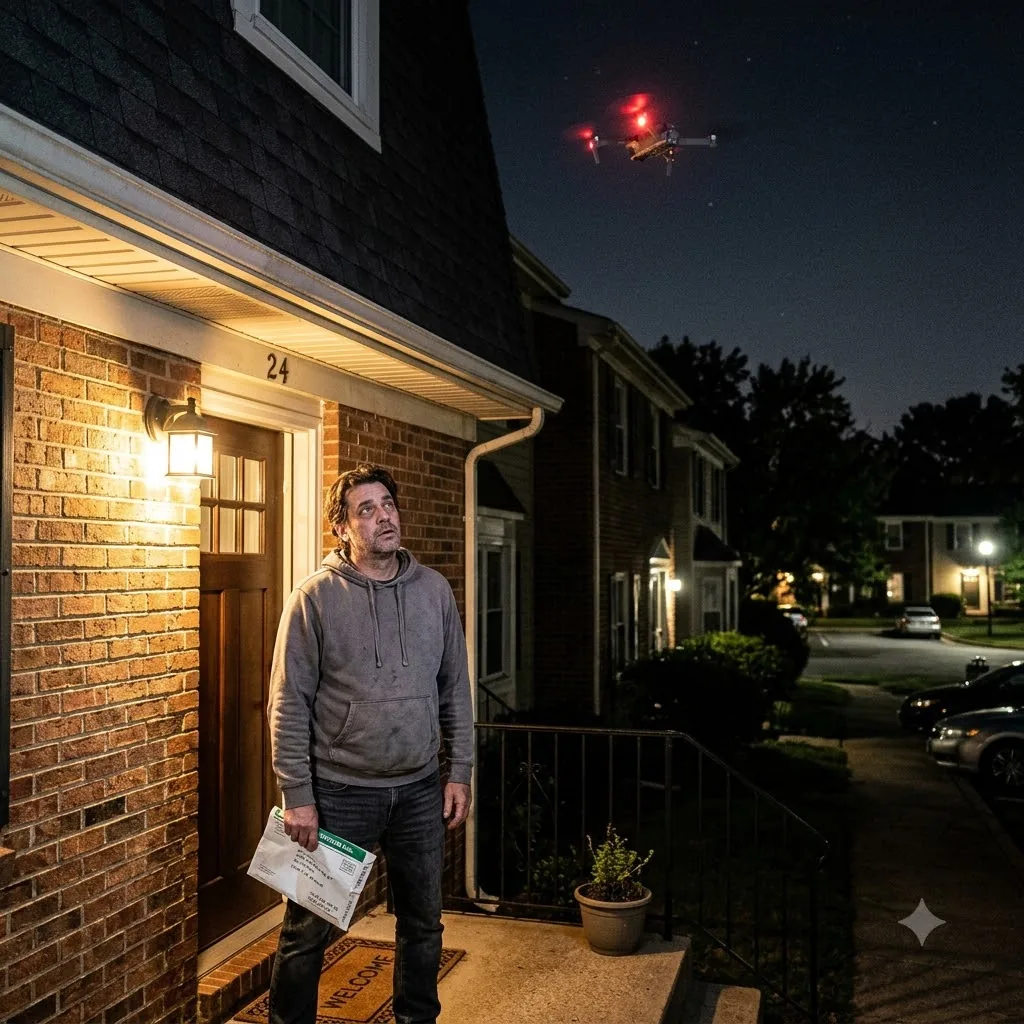
The light blinked in a rhythmic, steady sequence, hanging completely stationary ten feet above his shingles. As his eyes adjusted to the gloom, the faint street illumination caught the sleek, four-pronged silhouette of a high-end surveillance drone. The sophisticated camera lens hung from its underbelly, motorized and completely silent as it swiveled, pointing directly down at his upturned face.
Elias tore the perforated edge of the certified letter, the thick paper rasping in the absolute silence of his kitchen. It was the third envelope of its kind this week, bearing the embossed crest of the Oakridge Homeowners Association. He unfolded the notice, his thumb tracing over the bold print demanding five hundred dollars. The violation listed was a trashcan handle visible from the street. He looked out his small window at the side gate. The plastic bin sat completely concealed behind a six-foot privacy fence. To see the handle, an observer would have to be standing on a stepladder peering over the wood in the dead of night.
The penalty brought his total balance owed to over three thousand dollars for the current month alone. Elias set the heavy cardstock on the laminate table next to a stack of final-notice utility bills and a single, half-empty box of generic oatmeal. The refrigerator hummed a hollow tune in the corner, cooling nothing but tap water stored in reused plastic jugs and a half-loaf of discount bread. He pulled his threadbare sweater tighter around his chest, shivering as a draft crept through the unsealed window frames. The thermostat remained firmly locked at fifty degrees. Every dollar he saved on heating was instantly absorbed by Margaret, the HOA president, who seemingly possessed unlimited time to patrol his exact address.
The fines were escalating in absurdity and physical impossibility. Monday had brought a two-hundred-dollar penalty for a dandelion in the backyard, a space entirely obscured from the sidewalk and completely fenced in. Wednesday delivered a three-hundred-dollar citation for his porch light emitting the wrong color temperature, a bulb he had not turned on or replaced in four years. Now, this. He rubbed his eyes, the physical pressure of the impending bankruptcy crushing the breath out of his lungs. He had not spoken to a neighbor in eight months. He left the house only for his night shift loading boxes at a fulfillment center, returning at dawn to lock his deadbolt and draw all the blinds. He wanted nothing but to be left entirely alone in the quiet, absolute anonymity of the suburbs.
Margaret would foreclose on the house if he failed to pay within thirty days. The bylaws explicitly granted the board the power to place a lien on his property for unpaid fines, a terrifying clause she took great pleasure in highlighting in bright yellow ink at the bottom of the current notice. He had ignored the first few citations back in autumn, assuming them to be absurd clerical errors. Then the certified letters began arriving in thick stacks. He tried calling the management company once, only to be placed on endless holds before a representative coldly stated the board’s decisions were final and non-negotiable. He possessed no energy for a drawn-out legal battle. He possessed absolutely no funds to hire a lawyer to fight for him.
Elias pushed his chair back. The wooden legs scraped loudly against the peeling linoleum floor. He needed to move the can before another compounding daily fine materialized at midnight. He slipped his cold feet into a pair of worn sneakers, crushing the heels down rather than taking the time to tie the frayed laces. The front door groaned heavily on its hinges as he pulled it open. The night air hit him like a damp towel, freezing and heavy with the scent of wet asphalt and impending frost. The street lamps bathed the manicured neighboring lawns in an artificial orange glow, but his driveway remained cloaked in deep, undisturbed shadow.
He shuffled down the cracked concrete path toward the side gate. The silence of the neighborhood felt oppressive, thick enough to drown in. He unlatched the wooden gate, the metal hinges squealing a sharp, violent protest into the quiet street. He grabbed the plastic handle of the municipal trash bin and dragged it a full three feet deeper into the yard, shoving it hard against the vinyl siding of his house. It was now completely shielded by the protruding brick chimney breast. No one could possibly claim it was visible from any angle. He paused, his chest heaving from the minor exertion, his breath pluming in the freezing air.
A low, mechanical hum vibrated through the quiet night.
Elias froze, his hand still resting on the cold plastic lid of the bin. It sounded like a swarm of angry hornets, steady and heavily localized, hovering somewhere just out of his immediate line of sight. He stepped back from the fence, his eyes scanning the pitch-black sky above his roofline. He expected to see a passing commercial airplane or a distant police helicopter breaking the silence.
Instead, a single red light pulsed in the absolute darkness.
The light blinked in a rhythmic, steady sequence, hanging completely stationary ten feet above his shingles. As his eyes adjusted to the gloom, the faint street illumination caught the sleek, four-pronged silhouette of a high-end surveillance drone. The sophisticated camera lens hung from its underbelly, motorized and completely silent as it swiveled, pointing directly down at his upturned face.