Story code: ST-001795
Part 1: The Heat of the Debt
The red text on the payment terminal blinked twice before staying solid. Declined.
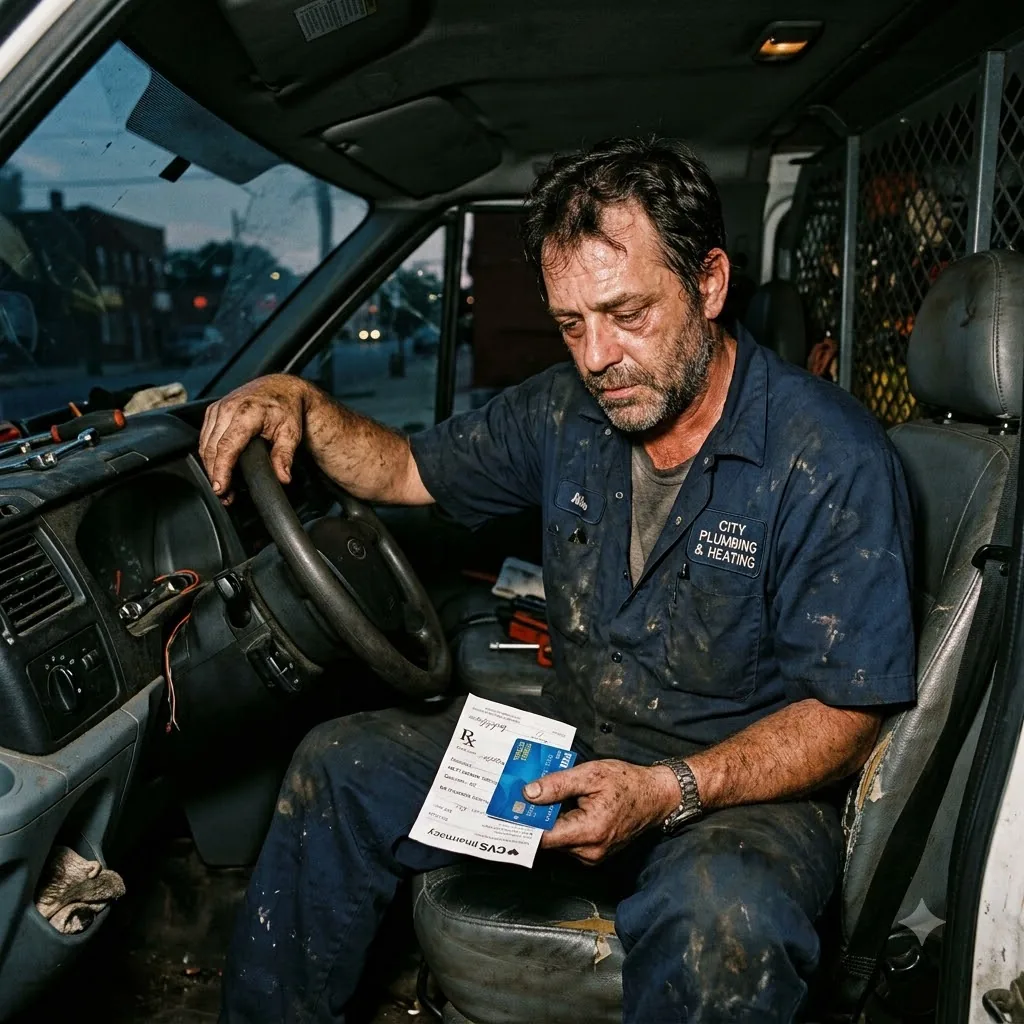
Marcus stared at the digital readout, the numbers burning into his retinas. Eight hundred and twelve dollars and forty cents. The pharmacist, a young woman with a plastic name badge crooked on her smock, slid the small paper bag back across the counter toward her side of the register. She refused to meet his eyes. That was the worst part. The pity was a physical weight he could not afford to carry. The bag contained his daughter’s month supply of combination inhalers and specialized steroids, the only thing keeping her lungs from seizing up in the summer humidity.
He tapped the plastic chip card against the counter, swallowing the dry ache in his throat. He reached for his wallet, thumbing through four crumpled dollar bills and a maxed-out gas card. There was nothing else. He nodded once, a sharp, jerky motion, and turned away from the counter without speaking.
The sliding glass doors parted, hitting him with a wall of late afternoon heat. The asphalt parking lot shimmered, radiating a brutal, suffocating energy that mirrored the tightness in his own chest. He walked to the far corner of the lot, keys jingling in his calloused hand, and unlocked the heavy side door of an unmarked, rust-spotted cargo van.
Marcus climbed into the driver’s seat. The interior was a sweltering oven. The AC compressor had died three weeks ago, and a replacement was out of the question. He rolled down the manual windows, gasping at the dead, stagnant air, and slammed his palms against the steering wheel. The steering column shook with the force of it. He rested his forehead against the worn leather grip, listening to the heavy thud of his own pulse.
His phone vibrated in the cup holder. The screen lit up with an automated SMS from the state compliance office, a sterile reminder of his mandatory check-in on Friday. A failure to appear meant a violation of his court mandates, which meant a swift return to a concrete room and a metal bunk. The state files owned his schedule, his movements, and his employment options. No legitimate company would hire a man with his specific class of paperwork. That left him with the unmarked van and the shadows.
The phone buzzed again, this time a direct message on a secure, encrypted app he used for under-the-table overflow work. The dispatcher was a guy named Lew, who routed emergency HVAC calls to unlicensed technicians willing to work odd hours.
Emergency. Oakridge Estates. High-velocity chiller failure. Client hosting an event tomorrow. $1500 cash in hand upon fix. Gate code 8492. Ignore main house, go direct to south mechanical room. Cut the lock if you have to.
Fifteen hundred dollars.
Marcus stared at the glowing text. Oakridge Estates was a gated enclave thirty miles north, a fortress of glass and steel mansions built into the cliffs. It was entirely out of his territory, entirely above his weight class, and exactly what he needed. The cash would cover the pharmacy, the overdue utility bills, and the compliance fees. He did not care about the odd instructions. Wealthy clients often wanted service workers invisible, operating in the dead of night without disturbing the main residence.
He turned the ignition. The van roared to life, the exhaust rattling against the undercarriage.
The drive up the canyon took forty-five minutes. The temperature dropped as he climbed higher into the hills, the dense smog of the valley giving way to crisp, pine-scented air. He punched the four-digit code into the keypad at the service entrance of Oakridge. The heavy wrought-iron gates swung open silently.
Marcus navigated the winding driveway, parking the van out of sight near a towering hedge line. The estate was immense, a sprawling modern compound illuminated by perfectly spaced architectural uplighting. He grabbed his tool bag and his heavy-duty bolt cutters from the back, moving quietly across the manicured lawn toward the south elevation.
The mechanical room was a detached concrete bunker set into the hillside, partially hidden by imported bamboo. The heavy steel door was secured by a thick, industrial padlock. True to Lew’s text, there was no key waiting. The roar of the failing chillers vibrated through the ground, a deep, mechanical groan indicating a severe pressure imbalance. If he did not vent the system soon, the compressor heads would blow, turning a fifteen-hundred-dollar repair into a fifty-thousand-dollar replacement.
Marcus positioned the jaws of the bolt cutters over the hardened steel shackle. He braced the handles against his hip and leaned his entire body weight into the tool. The metal snapped with a sharp crack that echoed off the canyon walls. He let the broken lock fall to the dirt and wrenched the heavy door open.
The noise inside was deafening. He reached for the wall switch, flooding the cavernous room with harsh fluorescent light. Three massive commercial chiller units sat in a row, their pressure gauges pinned into the red. He stepped toward the primary control panel to hit the emergency override, his eyes scanning the equipment for the manual bleed valve.
Taped directly above the main breaker was a yellow corporate safety compliance placard. It was required by the county for systems of this size, documenting the installation and ownership.
Marcus reached for the breaker switch. His hand froze in mid-air.
The name typed on the ownership line jumped out at him, a sequence of letters burned into his memory from thousands of pages of court documents and state filings. He looked at the signature scrawled in black ink at the bottom of the placard, the exact same signature that had authorized his disciplinary hearings, signed off on the mandated labor contracts, and profited from every single day he had spent trapped in the system.
He was standing inside a mechanical room owned by Arthur Sterling.
The red text on the payment terminal blinked twice before staying solid. Declined.
Marcus stared at the digital readout, the numbers burning into his retinas. Eight hundred and twelve dollars and forty cents. The pharmacist, a young woman with a plastic name badge crooked on her smock, slid the small paper bag back across the counter toward her side of the register. She refused to meet his eyes. That was the worst part. The pity was a physical weight he could not afford to carry. The bag contained his daughter’s month supply of combination inhalers and specialized steroids, the only thing keeping her lungs from seizing up in the summer humidity.
He tapped the plastic chip card against the counter, swallowing the dry ache in his throat. He reached for his wallet, thumbing through four crumpled dollar bills and a maxed-out gas card. There was nothing else. He nodded once, a sharp, jerky motion, and turned away from the counter without speaking.
The sliding glass doors parted, hitting him with a wall of late afternoon heat. The asphalt parking lot shimmered, radiating a brutal, suffocating energy that mirrored the tightness in his own chest. He walked to the far corner of the lot, keys jingling in his calloused hand, and unlocked the heavy side door of an unmarked, rust-spotted cargo van.
Marcus climbed into the driver’s seat. The interior was a sweltering oven. The AC compressor had died three weeks ago, and a replacement was out of the question. He rolled down the manual windows, gasping at the dead, stagnant air, and slammed his palms against the steering wheel. The steering column shook with the force of it. He rested his forehead against the worn leather grip, listening to the heavy thud of his own pulse.
His phone vibrated in the cup holder. The screen lit up with an automated SMS from the state compliance office, a sterile reminder of his mandatory check-in on Friday. A failure to appear meant a violation of his court mandates, which meant a swift return to a concrete room and a metal bunk. The state files owned his schedule, his movements, and his employment options. No legitimate company would hire a man with his specific class of paperwork. That left him with the unmarked van and the shadows.
The phone buzzed again, this time a direct message on a secure, encrypted app he used for under-the-table overflow work. The dispatcher was a guy named Lew, who routed emergency HVAC calls to unlicensed technicians willing to work odd hours.
Emergency. Oakridge Estates. High-velocity chiller failure. Client hosting an event tomorrow. $1500 cash in hand upon fix. Gate code 8492. Ignore main house, go direct to south mechanical room. Cut the lock if you have to.
Fifteen hundred dollars.
Marcus stared at the glowing text. Oakridge Estates was a gated enclave thirty miles north, a fortress of glass and steel mansions built into the cliffs. It was entirely out of his territory, entirely above his weight class, and exactly what he needed. The cash would cover the pharmacy, the overdue utility bills, and the compliance fees. He did not care about the odd instructions. Wealthy clients often wanted service workers invisible, operating in the dead of night without disturbing the main residence.
He turned the ignition. The van roared to life, the exhaust rattling against the undercarriage.
The drive up the canyon took forty-five minutes. The temperature dropped as he climbed higher into the hills, the dense smog of the valley giving way to crisp, pine-scented air. He punched the four-digit code into the keypad at the service entrance of Oakridge. The heavy wrought-iron gates swung open silently.
Marcus navigated the winding driveway, parking the van out of sight near a towering hedge line. The estate was immense, a sprawling modern compound illuminated by perfectly spaced architectural uplighting. He grabbed his tool bag and his heavy-duty bolt cutters from the back, moving quietly across the manicured lawn toward the south elevation.
The mechanical room was a detached concrete bunker set into the hillside, partially hidden by imported bamboo. The heavy steel door was secured by a thick, industrial padlock. True to Lew’s text, there was no key waiting. The roar of the failing chillers vibrated through the ground, a deep, mechanical groan indicating a severe pressure imbalance. If he did not vent the system soon, the compressor heads would blow, turning a fifteen-hundred-dollar repair into a fifty-thousand-dollar replacement.
Marcus positioned the jaws of the bolt cutters over the hardened steel shackle. He braced the handles against his hip and leaned his entire body weight into the tool. The metal snapped with a sharp crack that echoed off the canyon walls. He let the broken lock fall to the dirt and wrenched the heavy door open.
The noise inside was deafening. He reached for the wall switch, flooding the cavernous room with harsh fluorescent light. Three massive commercial chiller units sat in a row, their pressure gauges pinned into the red. He stepped toward the primary control panel to hit the emergency override, his eyes scanning the equipment for the manual bleed valve.
Taped directly above the main breaker was a yellow corporate safety compliance placard. It was required by the county for systems of this size, documenting the installation and ownership.
Marcus reached for the breaker switch. His hand froze in mid-air.
The name typed on the ownership line jumped out at him, a sequence of letters burned into his memory from thousands of pages of court documents and state filings. He looked at the signature scrawled in black ink at the bottom of the placard, the exact same signature that had authorized his disciplinary hearings, signed off on the mandated labor contracts, and profited from every single day he had spent trapped in the system.
He was standing inside a mechanical room owned by Arthur Sterling.