Story code: ST-001146
Part 1: The Semantic Net
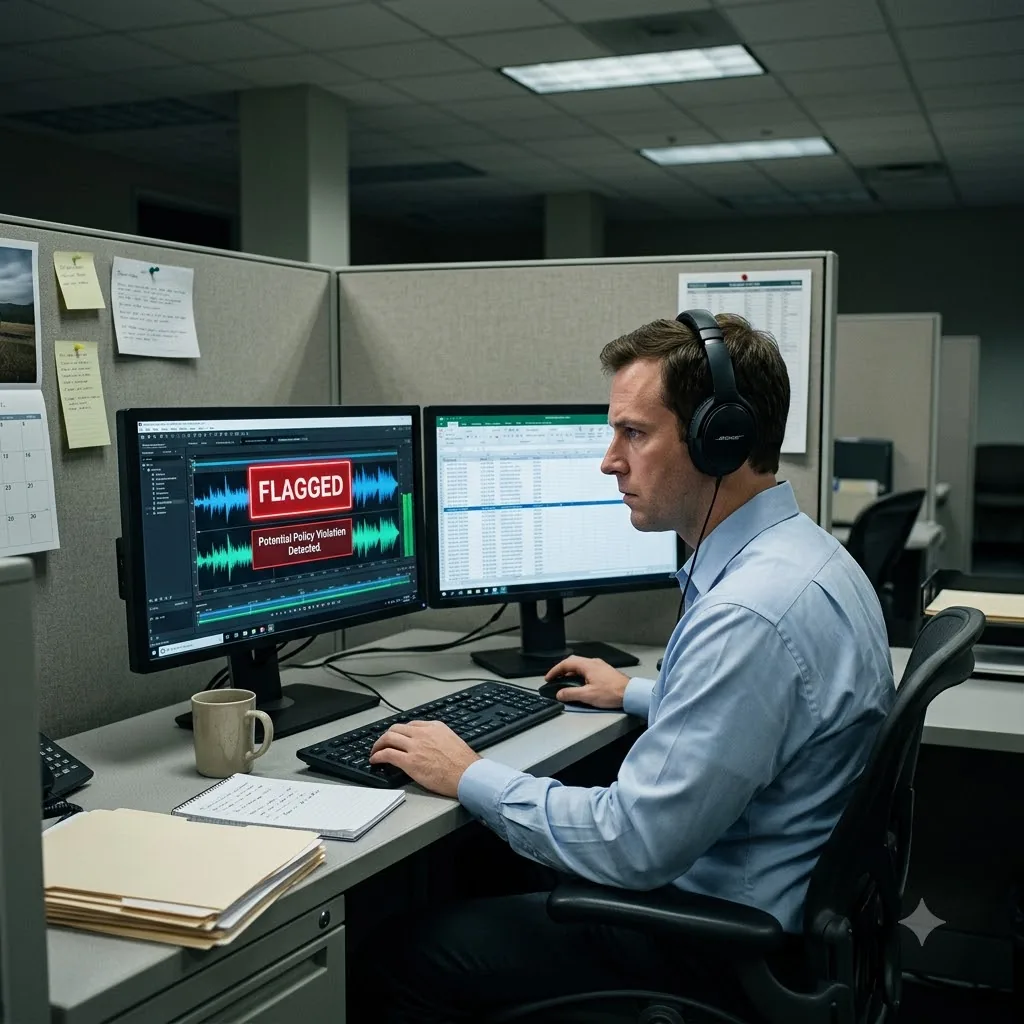
The fluorescent lights of the fourth-floor compliance department buzzed a steady, sterile hum over Marcus as he leaned closer to his dual monitors. On the left screen, the hospital network’s proprietary Overwatch system displayed a swirling blue audio waveform. On the right, Dr. Sarah Lin’s tired face occupied a paused telehealth video frame. Marcus adjusted his noise-canceling headset, sealing out the muffled typing of the three other analysts sharing his pod. He pressed the spacebar to resume playback, eyes locked on the scrolling transcription feed.
The patient on the screen looked down at her hands. Dr. Lin leaned forward, her voice dropping a fraction of a decibel. The software immediately spiked a yellow warning flag on the audio timeline, detecting the sudden shift in vocal tension. Marcus felt a familiar, cold rush of adrenaline. He had spent the last six months training this specific natural language processing model to catch evasive medical phrasing, moving the system beyond basic keyword searches into the highly nuanced territory of tone, hesitation, and semantic subtext.
“You have some vacation time saved up,” Dr. Lin said on the recording.
The young patient nodded slowly, her fingers twisting the hem of her shirt.
“My sister lives in Chicago,” Dr. Lin continued, maintaining unblinking eye contact with her webcam. “I highly recommend a long weekend in Illinois. The museums are beautiful this time of year, and the fresh air will do you good. Just take a few days. Do not wait.”
Marcus tapped his pen against his desk. The software’s transcription window flashed a bright, undeniable red. It isolated the phrase ‘long weekend in Illinois’ and automatically cross-referenced it with the patient’s active chart. The digital chart showed a six-week pregnancy confirmation from two days prior. Under the hospital network’s newly enacted regional protocols, advising a patient on out-of-state travel for restricted medical procedures was classified as a Category One violation.
The algorithm worked exactly as he had designed it to function. Marcus watched the confidence score in the upper right corner climb to ninety-nine percent. A month ago, a smart doctor might have slipped this exact interaction past the manual auditing team by masking it as casual bedside small talk. Human reviewers grew fatigued under the crushing volume of daily patient interactions. Marcus had argued that machines never got tired. He had pitched the enhanced Overwatch parameters directly to the executive board, promising a frictionless way to identify rogue staff members.
He rewound the footage ten seconds. He needed to be absolutely certain the semantic net had caught the implied urgency in Dr. Lin’s voice without generating a false positive. The playback confirmed his triumph. The deliberate pause before she mentioned Chicago, the heavy emphasis on the word wait, the sustained eye contact acting as an unspoken directive. It was a textbook circumvention attempt, caught in the act by a machine that did not care about bedside manner.
Marcus opened a fresh incident report window. His fingers flew across the mechanical keyboard, filling in the required metadata fields. Date of infraction, timestamp, employee identification number, flagged phrase, confidence score. The sterile quiet of his cubicle felt heavily charged with purpose. He was the invisible filter keeping the institution compliant, shielding the hospital from massive state fines. He took immense pride in the flawless execution of his logic gates.
He attached the encrypted video snippet and the parsed audio transcript to the digital dossier. Dr. Lin was one of the senior obstetricians on staff, which made this catch even more significant. It proved his system played no favorites. The code only saw raw data, institutional risk, and legal liability. He scrolled down to the disciplinary recommendation dropdown menu at the bottom of the form. The protocol for a Category One violation left no room for verbal warnings or retraining modules.
Marcus selected the final option from the list.
He moved his cursor over the bright red button labeled ‘Submit for Immediate Termination.’ He took a slow, deep breath, savoring the exact moment his hard work validated his entire position at the company. He clicked the mouse.
The button depressed on screen. Then, the entire application froze.
The Overwatch dashboard grayed out. The spinning loading wheel of the operating system appeared, hovering directly over Dr. Lin’s frozen face. Marcus frowned, pressing the escape key twice. He clicked the mouse again, dragging it across the pad, but the cursor remained locked in the dead center of the screen. A sharp, high-pitched chime echoed in his headset, loud enough to make him wince.
A dialogue box forced its way to the front of his dual monitors, overriding all of his administrative permissions. It was not a system error or a server timeout. It was a calendar invitation, branded with the dark gold crest of the executive suite. The sender was listed as Richard Vance, Vice President of Operations.
The subject line simply read ‘Algorithm Deployment and Transition.’ The time for the mandatory meeting was set for zero minutes from now. The location was a private executive server room Marcus did not have security clearance to access. The invitation had no decline button, only a mandatory acceptance prompt blinking steadily over his ruined termination report.
The fluorescent lights of the fourth-floor compliance department buzzed a steady, sterile hum over Marcus as he leaned closer to his dual monitors. On the left screen, the hospital network’s proprietary Overwatch system displayed a swirling blue audio waveform. On the right, Dr. Sarah Lin’s tired face occupied a paused telehealth video frame. Marcus adjusted his noise-canceling headset, sealing out the muffled typing of the three other analysts sharing his pod. He pressed the spacebar to resume playback, eyes locked on the scrolling transcription feed.
The patient on the screen looked down at her hands. Dr. Lin leaned forward, her voice dropping a fraction of a decibel. The software immediately spiked a yellow warning flag on the audio timeline, detecting the sudden shift in vocal tension. Marcus felt a familiar, cold rush of adrenaline. He had spent the last six months training this specific natural language processing model to catch evasive medical phrasing, moving the system beyond basic keyword searches into the highly nuanced territory of tone, hesitation, and semantic subtext.
“You have some vacation time saved up,” Dr. Lin said on the recording.
The young patient nodded slowly, her fingers twisting the hem of her shirt.
“My sister lives in Chicago,” Dr. Lin continued, maintaining unblinking eye contact with her webcam. “I highly recommend a long weekend in Illinois. The museums are beautiful this time of year, and the fresh air will do you good. Just take a few days. Do not wait.”
Marcus tapped his pen against his desk. The software’s transcription window flashed a bright, undeniable red. It isolated the phrase ‘long weekend in Illinois’ and automatically cross-referenced it with the patient’s active chart. The digital chart showed a six-week pregnancy confirmation from two days prior. Under the hospital network’s newly enacted regional protocols, advising a patient on out-of-state travel for restricted medical procedures was classified as a Category One violation.
The algorithm worked exactly as he had designed it to function. Marcus watched the confidence score in the upper right corner climb to ninety-nine percent. A month ago, a smart doctor might have slipped this exact interaction past the manual auditing team by masking it as casual bedside small talk. Human reviewers grew fatigued under the crushing volume of daily patient interactions. Marcus had argued that machines never got tired. He had pitched the enhanced Overwatch parameters directly to the executive board, promising a frictionless way to identify rogue staff members.
He rewound the footage ten seconds. He needed to be absolutely certain the semantic net had caught the implied urgency in Dr. Lin’s voice without generating a false positive. The playback confirmed his triumph. The deliberate pause before she mentioned Chicago, the heavy emphasis on the word wait, the sustained eye contact acting as an unspoken directive. It was a textbook circumvention attempt, caught in the act by a machine that did not care about bedside manner.
Marcus opened a fresh incident report window. His fingers flew across the mechanical keyboard, filling in the required metadata fields. Date of infraction, timestamp, employee identification number, flagged phrase, confidence score. The sterile quiet of his cubicle felt heavily charged with purpose. He was the invisible filter keeping the institution compliant, shielding the hospital from massive state fines. He took immense pride in the flawless execution of his logic gates.
He attached the encrypted video snippet and the parsed audio transcript to the digital dossier. Dr. Lin was one of the senior obstetricians on staff, which made this catch even more significant. It proved his system played no favorites. The code only saw raw data, institutional risk, and legal liability. He scrolled down to the disciplinary recommendation dropdown menu at the bottom of the form. The protocol for a Category One violation left no room for verbal warnings or retraining modules.
Marcus selected the final option from the list.
He moved his cursor over the bright red button labeled ‘Submit for Immediate Termination.’ He took a slow, deep breath, savoring the exact moment his hard work validated his entire position at the company. He clicked the mouse.
The button depressed on screen. Then, the entire application froze.
The Overwatch dashboard grayed out. The spinning loading wheel of the operating system appeared, hovering directly over Dr. Lin’s frozen face. Marcus frowned, pressing the escape key twice. He clicked the mouse again, dragging it across the pad, but the cursor remained locked in the dead center of the screen. A sharp, high-pitched chime echoed in his headset, loud enough to make him wince.
A dialogue box forced its way to the front of his dual monitors, overriding all of his administrative permissions. It was not a system error or a server timeout. It was a calendar invitation, branded with the dark gold crest of the executive suite. The sender was listed as Richard Vance, Vice President of Operations.
The subject line simply read ‘Algorithm Deployment and Transition.’ The time for the mandatory meeting was set for zero minutes from now. The location was a private executive server room Marcus did not have security clearance to access. The invitation had no decline button, only a mandatory acceptance prompt blinking steadily over his ruined termination report.