Story code: ST-000262
Part 1: The Pedestrian Hazard
Julian’s thumbs hovered over his glowing phone screen, meticulously backspacing the phrase ‘illegal food stand’ and replacing it with ‘unregulated pedestrian choke point.’ He stood behind the polished mahogany host stand of his establishment, adjusting his posture as he crafted the complaint for the local neighborhood app. It was vital that the post read as the desperate plea of a concerned citizen rather than the bitter grievance of a struggling bistro owner. He typed another sentence about the pressing danger to wheelchair users and mothers with strollers, ensuring his language dripped with civic duty and absolute selflessness.
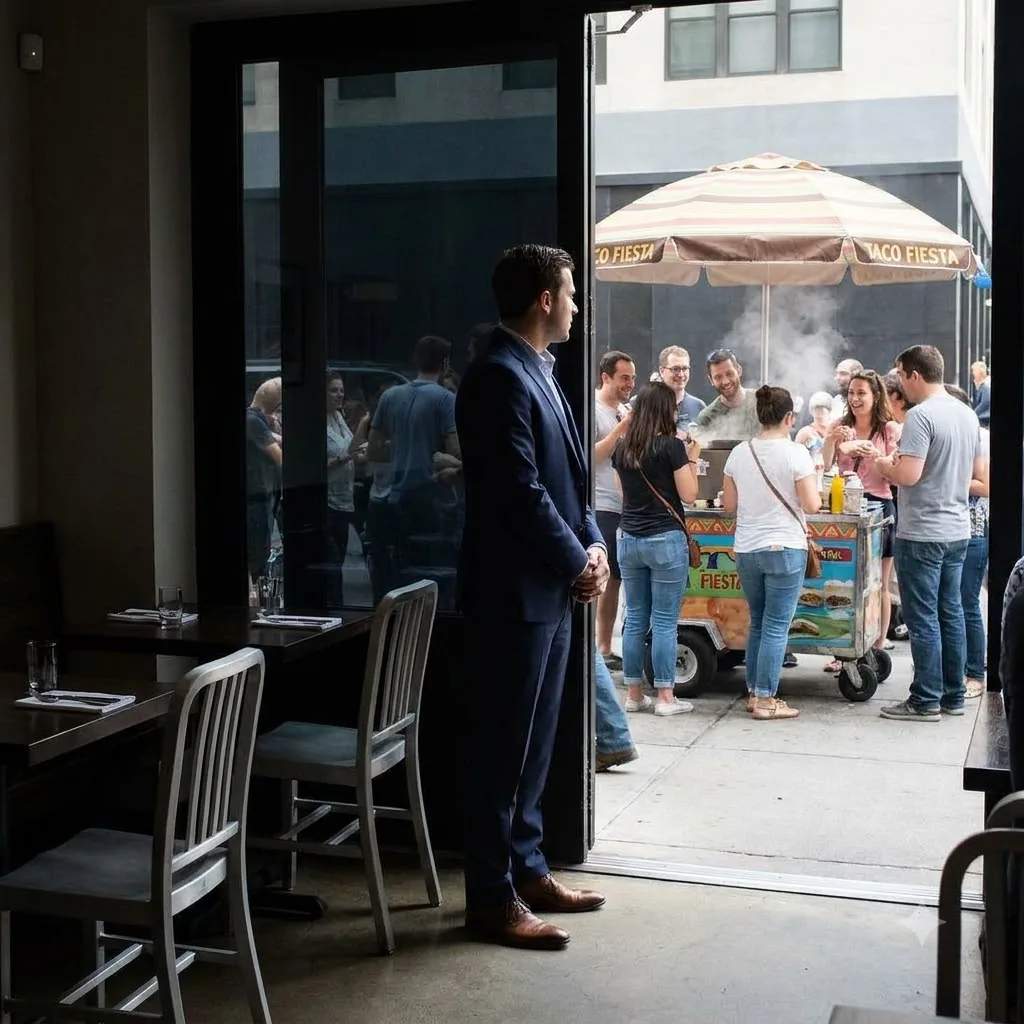
The interior of L’Aura was a masterpiece of minimalist design, featuring brushed brass fixtures, imported Italian velvet booths, and exactly zero customers. A faint scent of truffle oil and desperation hung in the air, amplified by the absolute silence of the dining room. Julian adjusted the pristine cuffs of his tailored blazer, his eyes flicking from his screen to the expansive plate-glass window at the front of the restaurant. Just beyond the meticulously cleaned glass, a chaotic mass of humanity spilled across the pavement. They were loud, they were disorganized, and they were completely ignoring his immaculate, empty dining room.
At the epicenter of this sidewalk circus sat a faded canvas umbrella, flapping slightly in the afternoon breeze. Beneath it, a small folding table and a set of battered propane burners churned out a continuous stream of steam. Julian curled his lip in disgust, watching a man in a tailored business suit happily accept a foil-wrapped package from the unseen vendor. The man immediately stepped right into the center of the sidewalk to take an enthusiastic bite, forcing a teenager on a skateboard to swerve dangerously close to the gutter. Julian quickly tapped that specific detail into his phone, expanding his paragraph on the severe public safety crisis unfolding at the corner of Elm and Fourth.
He reread the draft from the top, checking the tone for any hint of personal bias. He had spent ten grueling months securing the proper permits for L’Aura, paying exorbitant municipal fees for his outdoor seating variance, and enduring endless city inspections. His patio featured three tables, spaced according to strict city ordinance, currently occupied only by fallen leaves. Meanwhile, the woman under the canvas umbrella operated with what he perceived as total impunity. She dragged her metal cart to the exact same spot every afternoon at three o’clock, essentially stealing the peak transitional traffic between the financial district and the residential lofts. Julian refused to acknowledge the savory aroma of braised meat that occasionally infiltrated his high-end ventilation system. He focused entirely on the sheer audacity of her unregulated existence and the aesthetic damage she was doing to the block.
His thumb hovered over the glowing blue ‘post’ button. He had structured the complaint flawlessly. It highlighted the grease stains accumulating on the historic cobblestones and the alleged violation of the Americans with Disabilities Act. It was a masterpiece of passive-aggressive neighborhood policing. Yet, a cold knot of hesitation formed in his stomach. The local residents were fiercely defensive of the street vendor. He had seen the way the neighborhood app users viciously attacked anyone who dared criticize their so-called local treasures. If even one tech-savvy resident connected the anonymous account ‘ConcernedResident04’ to the owner of the struggling bistro directly behind the cart, the social media backlash would be catastrophic. The resulting boycott would finally sink his business.
Julian let out a slow, measured breath, watching a laughing young woman hand a crumpled ten-dollar bill to the vendor and receive a steaming container in return. The line of waiting customers now stretched past Julian’s empty patio, their bodies physically blocking the view of his daily specials board. His jaw tightened until his teeth ground together. The neighborhood app was a blunt, unpredictable instrument, and this situation required absolute, surgical precision. An anonymous internet post left too much to chance. He highlighted the entire four-paragraph diatribe he had just spent twenty minutes carefully crafting. He tapped the backspace key, watching the carefully chosen words of civic concern vanish into a stark, blank white screen.
He closed the neighborhood app entirely and opened his phone’s dialer. There were official channels designed specifically for this exact type of public nuisance, manned by people required to keep complaints confidential. He punched in the ten digits for the city’s non-emergency dispatch, a number he had memorized during the chaotic construction phase of his restaurant when delivery trucks blocked his alleyway. He pressed the phone to his ear, listening to the sterile, rhythmic ringing on the other end. Julian stepped out from behind the mahogany host stand and walked slowly toward the front window. The dining room remained dead silent, save for his leather soles tapping against the imported Spanish tile. He stopped inches from the plate glass, his stern reflection superimposed over the bustling, vibrant crowd outside. As the line connected and an automated voice instructed him to hold for the next available operator, Julian raised a perfectly manicured index finger, pressing it flat against the cold glass, pointing directly at the center of the canvas umbrella.
Julian’s thumbs hovered over his glowing phone screen, meticulously backspacing the phrase ‘illegal food stand’ and replacing it with ‘unregulated pedestrian choke point.’ He stood behind the polished mahogany host stand of his establishment, adjusting his posture as he crafted the complaint for the local neighborhood app. It was vital that the post read as the desperate plea of a concerned citizen rather than the bitter grievance of a struggling bistro owner. He typed another sentence about the pressing danger to wheelchair users and mothers with strollers, ensuring his language dripped with civic duty and absolute selflessness.
The interior of L’Aura was a masterpiece of minimalist design, featuring brushed brass fixtures, imported Italian velvet booths, and exactly zero customers. A faint scent of truffle oil and desperation hung in the air, amplified by the absolute silence of the dining room. Julian adjusted the pristine cuffs of his tailored blazer, his eyes flicking from his screen to the expansive plate-glass window at the front of the restaurant. Just beyond the meticulously cleaned glass, a chaotic mass of humanity spilled across the pavement. They were loud, they were disorganized, and they were completely ignoring his immaculate, empty dining room.
At the epicenter of this sidewalk circus sat a faded canvas umbrella, flapping slightly in the afternoon breeze. Beneath it, a small folding table and a set of battered propane burners churned out a continuous stream of steam. Julian curled his lip in disgust, watching a man in a tailored business suit happily accept a foil-wrapped package from the unseen vendor. The man immediately stepped right into the center of the sidewalk to take an enthusiastic bite, forcing a teenager on a skateboard to swerve dangerously close to the gutter. Julian quickly tapped that specific detail into his phone, expanding his paragraph on the severe public safety crisis unfolding at the corner of Elm and Fourth.
He reread the draft from the top, checking the tone for any hint of personal bias. He had spent ten grueling months securing the proper permits for L’Aura, paying exorbitant municipal fees for his outdoor seating variance, and enduring endless city inspections. His patio featured three tables, spaced according to strict city ordinance, currently occupied only by fallen leaves. Meanwhile, the woman under the canvas umbrella operated with what he perceived as total impunity. She dragged her metal cart to the exact same spot every afternoon at three o’clock, essentially stealing the peak transitional traffic between the financial district and the residential lofts. Julian refused to acknowledge the savory aroma of braised meat that occasionally infiltrated his high-end ventilation system. He focused entirely on the sheer audacity of her unregulated existence and the aesthetic damage she was doing to the block.
His thumb hovered over the glowing blue ‘post’ button. He had structured the complaint flawlessly. It highlighted the grease stains accumulating on the historic cobblestones and the alleged violation of the Americans with Disabilities Act. It was a masterpiece of passive-aggressive neighborhood policing. Yet, a cold knot of hesitation formed in his stomach. The local residents were fiercely defensive of the street vendor. He had seen the way the neighborhood app users viciously attacked anyone who dared criticize their so-called local treasures. If even one tech-savvy resident connected the anonymous account ‘ConcernedResident04’ to the owner of the struggling bistro directly behind the cart, the social media backlash would be catastrophic. The resulting boycott would finally sink his business.
Julian let out a slow, measured breath, watching a laughing young woman hand a crumpled ten-dollar bill to the vendor and receive a steaming container in return. The line of waiting customers now stretched past Julian’s empty patio, their bodies physically blocking the view of his daily specials board. His jaw tightened until his teeth ground together. The neighborhood app was a blunt, unpredictable instrument, and this situation required absolute, surgical precision. An anonymous internet post left too much to chance. He highlighted the entire four-paragraph diatribe he had just spent twenty minutes carefully crafting. He tapped the backspace key, watching the carefully chosen words of civic concern vanish into a stark, blank white screen.
He closed the neighborhood app entirely and opened his phone’s dialer. There were official channels designed specifically for this exact type of public nuisance, manned by people required to keep complaints confidential. He punched in the ten digits for the city’s non-emergency dispatch, a number he had memorized during the chaotic construction phase of his restaurant when delivery trucks blocked his alleyway. He pressed the phone to his ear, listening to the sterile, rhythmic ringing on the other end. Julian stepped out from behind the mahogany host stand and walked slowly toward the front window. The dining room remained dead silent, save for his leather soles tapping against the imported Spanish tile. He stopped inches from the plate glass, his stern reflection superimposed over the bustling, vibrant crowd outside. As the line connected and an automated voice instructed him to hold for the next available operator, Julian raised a perfectly manicured index finger, pressing it flat against the cold glass, pointing directly at the center of the canvas umbrella.