Story code: ST-001398
Part 2: The Gold Pen
“We all have to make hard choices, David,” Sterling whispered, the heavy gold pen rolling to a stop against the bottom edge of the tuition resolution. “It’s the burden of leadership. And as the adjunct representative, you are stepping into that leadership sphere today.”
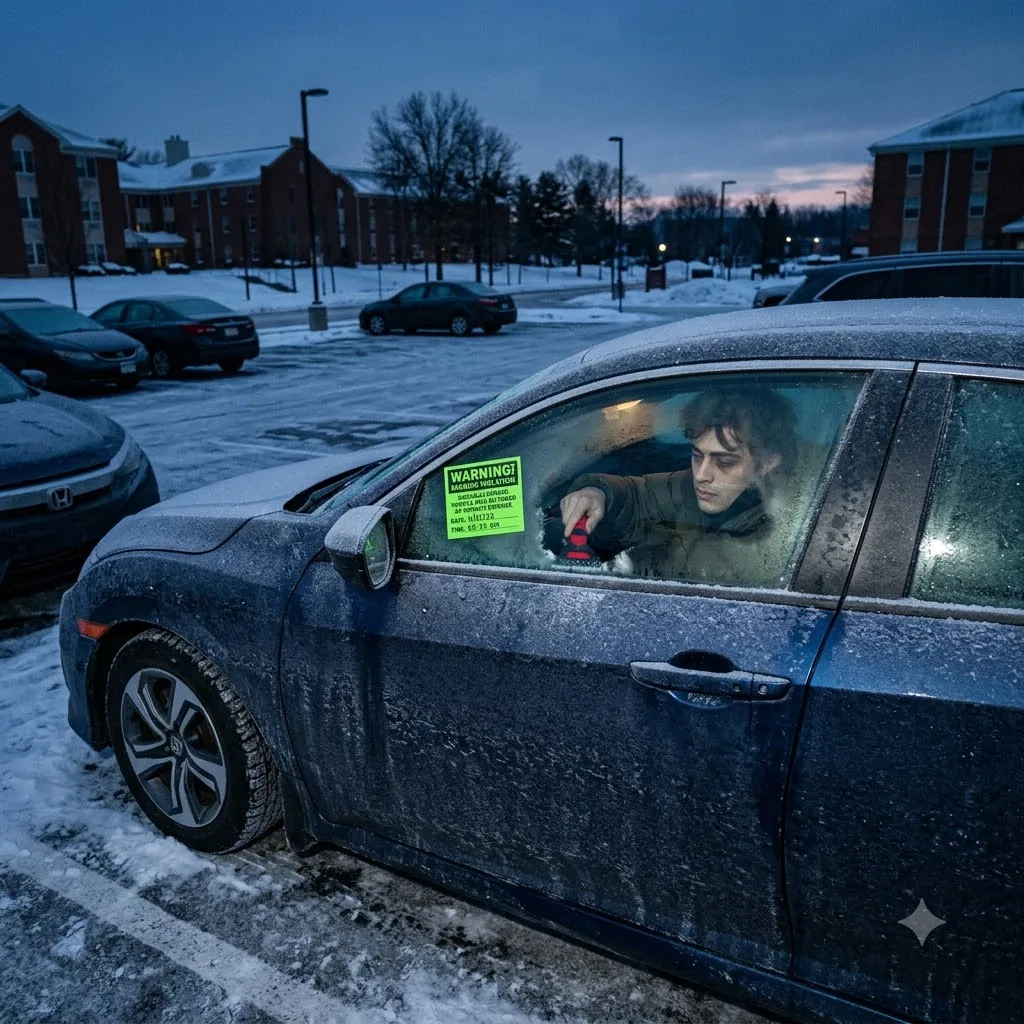
David stared at the pen. It was a Montblanc, thick and gleaming, likely worth more than the Kelley Blue Book value of his Honda Civic. His fingers, still mottled red and purple from the sub-zero morning, hovered over the mahogany desk. The joints in his knuckles ached with a dull, throbbing intensity. He could still feel the phantom scrape of the plastic protractor against the ice on his windshield.
“Nine percent,” David forced the words out. His voice was hoarse, scraping against a throat that hadn’t seen water since he drank from the Humanities basement fountain late last night. “That’s an enormous jump for the student body. The emails I get from them… half my freshman composition class is already working double shifts just to afford meal plans.”
Sterling’s expression shifted, the practiced smile melting into a mask of weary patience. He leaned back in his overstuffed leather chair, the upholstery creaking softly in the quiet room. He picked up his espresso mug, taking a slow, deliberate sip before setting it down on a leather coaster. “I understand your empathy, David. Truly, I do. It’s why you’re such an effective educator. But empathy doesn’t balance the ledger. Empathy doesn’t keep the lights on.”
David’s hand drifted toward his coat pocket, his numb thumb brushing the crumpled edge of the neon green tow warning. *Keep the lights on.* The university had just illuminated a massive, temporary billboard on the south quad, spotlighting the architectural renderings for the Vanguard Athletics Center. The industrial floodlights powering that billboard twenty-four hours a day could probably fund a semester of his salary.
“What about the Vanguard project?” David asked, the words tumbling out before his survival instinct could silence them. “Fifty million dollars. Surely, if we’re facing a crisis that requires squeezing the adjunct pool, we could delay the groundbreaking. Reallocate some of those capital funds to cover the operating deficit?”
Sterling let out a sharp, dismissive chuckle. It was the laugh of a parent correcting a toddler who didn’t understand how the world worked. “Capital campaigns and operating budgets are two entirely different silos, David. You can’t just pour water from one bucket into the other. The donors who funded Vanguard gave that money for a state-of-the-art gymnasium, not to subsidize the English department’s payroll.”
The Dean leaned forward, bridging his hands on the desk. “Besides, Vanguard is an investment. It elevates our national profile. It brings in the kind of high-net-worth applicants who don’t balk at a nine percent tuition increase. We have to look at the big picture to survive.”
David swallowed hard. The big picture was the freezing parking lot behind the old science building. The big picture was the icy asphalt where his home was currently parked, targeted for immediate removal so the construction crews could start digging the foundation for the very gym Sterling was using to justify bankrupting David’s students.
“If I don’t sign this?” David asked, his voice barely above a whisper.
Sterling didn’t blink. The paternal warmth vanished entirely, replaced by cold, administrative calculation. “The Board of Trustees meets at noon today. If they do not have a unanimous faculty endorsement for this tuition adjustment, the resolution fails. If the resolution fails, we face an immediate structural deficit. The first place we will be forced to look for reductions is non-essential, non-tenured staffing.”
The threat hung in the stifling, overheated air of the office. *Non-essential. Non-tenured.* Sterling was explicitly threatening to fire him. And with the adjunct pool gutted, there would be no classes for David to pick up next semester. No classes meant no paycheck. No paycheck meant he couldn’t even afford the gas to keep the Civic running through the nights. He wouldn’t just be homeless; he would freeze to death.
“But,” Sterling continued, his voice softening once more as he effortlessly pivoted to dangle the bait, “if we can show a united front, I can personally guarantee that the adjunct budget remains untouched. In fact, Professor Higgins is retiring in the spring. A tenure-track line is opening up. I’m looking for someone who understands the realities of modern academia to fill it. Someone who knows how to be a team player.”
A tenure-track position. It was the holy grail. It meant a salary that didn’t require choosing between food and gasoline. It meant health insurance. It meant a security deposit on a one-bedroom apartment with a working radiator and a lock on the door. It was everything David had starved and frozen for over the last three years. All he had to do was sell out his students and sign his name.
Sterling gestured to the gold pen again. “Just a signature, David. Then you can go home, get some rest, and not worry about a thing.”
*Go home.*
David looked past Sterling’s shoulder. The Dean’s office featured a massive, floor-to-ceiling window that overlooked the southern edge of the campus. From this elevated vantage point, David had a clear, unobstructed view of the sprawling parking lots. The morning sun was just beginning to break through the overcast sky, casting long, gray shadows across the snow banks.
His breath caught in his chest. At the far end of Lot C, a heavy-duty, flatbed tow truck with flashing yellow lights was turning off the main campus road. It crawled slowly past the plows, heading deliberately toward the isolated corner where a frost-covered Honda Civic sat alone.
It was eight-thirty. The neon sticker hadn’t specified an exact time for removal, but the construction crews were evidently eager to clear the site early.
“I need this resolved before my nine o’clock, David,” Sterling said, tapping his heavy silver wristwatch. “What’s it going to be?”
David’s empty stomach cramped violently. He looked at the gold pen resting on the mahogany desk, then back out the window at the flashing yellow lights creeping closer to his only shelter. If he signed, he might secure a future, but he would lose his car today while trapped in this office. If he ran out now to save his car, he was walking away from the signature, losing his job, and destroying any chance at the tenure-track lifeline.
The yellow lights flashed steadily in the distance, a silent, rhythmic countdown ticking away the last remaining pieces of his life.