Story code: ST-001703
Part 1: The Glass Barrier
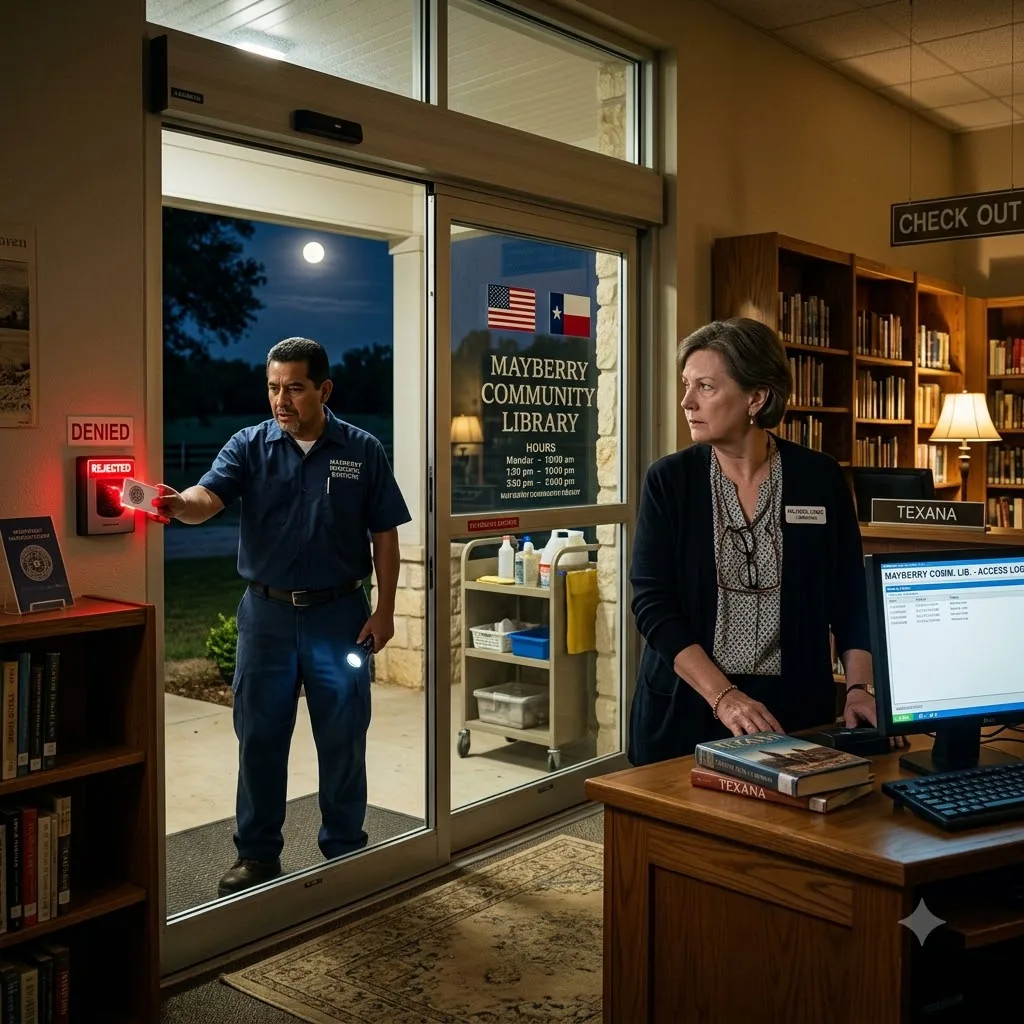
The heavy glass doors of the civic library refused to slide open for Hector. Sarah watched from the circulation desk as the night janitor tapped his municipal badge against the new automated scanner, only to be met with a harsh, pulsing red light. He tapped it again, shivering in the sharp autumn wind, but the deadbolt remained firmly engaged in the floor.
Sarah hurried to the master terminal behind the counter. She pulled up the building access dashboard, her fingers flying over the mechanical keyboard. Hector’s employee ID flashed on the screen under a glaring crimson banner. The diagnostic text read Tier 3 Moral Compliance Suspension. The words hovered there, bright and absolute, effectively terminating a man’s livelihood over a digital glitch.
Her stomach dropped as she cross-referenced the timestamp of his infraction. The automated system had flagged him at exactly seven-forty-two that evening. It perfectly matched the minute she had been down in the archives. She had manually re-coded the physical index of a banned historical novel to hide it in the basement racks instead of depositing it into the municipal incinerator chute. The new inventory algorithm had detected the discrepancy in the zone’s mass limits. Finding Hector’s badge as the only one officially logged in the basement corridor at that exact minute, the system had dropped the penalty on the wrong person. She had tried to save a piece of history and had ruined a man’s career instead.
Hector knocked on the thick safety glass. He mouthed that it was freezing out there, his breath creating a patch of fog on the pane. Sarah held up a hand, gesturing for him to give her a moment, and grabbed the desk phone. She dialed the vendor emergency line for the Secure-City Access System, the private contractor that ran the new network.
The line connected instantly to a synthetic, relentlessly cheerful voice. The recording droned through a list of menu options that did not apply to a man freezing on a concrete step. Sarah mashed the zero key, trying to force a connection to a live operator. The synthetic voice clicked, resetting its tone. The recording stated that all algorithmic lockouts were absolute and could not be reversed by human agents under any circumstances. It assured her the system was functioning flawlessly and disconnected the call.
Hector was pacing now, rubbing his arms. Sarah picked up the receiver again and dialed the direct office line of Councilman Thorne. Thorne was the politician who had championed the automated security overhaul, campaigning on its infallible nature. It was past regular business hours, but the emergency routing forwarded her call to an on-call deputy staffer.
The staffer answered with a tone of deep irritation. Sarah explained the situation, keeping her voice steady, stating that the doors were malfunctioning and an employee was trapped in the cold. The staffer typed loudly on his end. He told her that if the system flagged the janitor with a Tier 3 suspension, the janitor must have violated a local ordinance. The algorithm, he reminded her, did not make mistakes. When Sarah insisted there was a mechanical error with the localized inventory sync, the staffer scoffed. He informed her that interfering with an active moral compliance suspension carried a mandatory fine for the interfering party, and he promptly terminated the call.
Sarah stared at the dead receiver in her hand. She could not unlock the door from the software side. The digital ecosystem was a sealed black box, tightly controlled by the vendor and the council. But she realized the system only knew what the RFID scanners and weight sensors told it. The politicians claimed their digital net was omniscient. She knew it was entirely blind to anything that lacked a microchip.
She looked away from the glowing monitors. In the corner of the lobby sat the old wooden card catalogs, pushed aside and waiting to be hauled to the landfill. There was a secondary reality in the building, a paper trail of physical inventory that the new algorithm could not perceive. She walked away from the terminal and headed toward the dusty filing cabinet in the rear office.
She bypassed the digital files and pulled out the original architectural blueprints and the old hardcopy inventory logs. She ran her finger down the faded ink, finding the schematic for the lobby doors. The digital locks were layered over the old mechanical infrastructure, not replacing it entirely. She opened the bottom drawer of her desk and moved a stack of requisition forms. Beneath them sat a heavy brass master key, the original skeleton key the city planners assumed had been destroyed during the renovation.
Sarah gripped the cold metal. She marched back toward the front entrance, keeping her eyes fixed on the manual override slot at the base of the glass door. She knelt on the commercial carpet and slid the brass key into the old cylinder. As she turned it, the automated scanner above her emitted a piercing mechanical shriek, and the lobby plunged into total darkness.
The heavy glass doors of the civic library refused to slide open for Hector. Sarah watched from the circulation desk as the night janitor tapped his municipal badge against the new automated scanner, only to be met with a harsh, pulsing red light. He tapped it again, shivering in the sharp autumn wind, but the deadbolt remained firmly engaged in the floor.
Sarah hurried to the master terminal behind the counter. She pulled up the building access dashboard, her fingers flying over the mechanical keyboard. Hector’s employee ID flashed on the screen under a glaring crimson banner. The diagnostic text read Tier 3 Moral Compliance Suspension. The words hovered there, bright and absolute, effectively terminating a man’s livelihood over a digital glitch.
Her stomach dropped as she cross-referenced the timestamp of his infraction. The automated system had flagged him at exactly seven-forty-two that evening. It perfectly matched the minute she had been down in the archives. She had manually re-coded the physical index of a banned historical novel to hide it in the basement racks instead of depositing it into the municipal incinerator chute. The new inventory algorithm had detected the discrepancy in the zone’s mass limits. Finding Hector’s badge as the only one officially logged in the basement corridor at that exact minute, the system had dropped the penalty on the wrong person. She had tried to save a piece of history and had ruined a man’s career instead.
Hector knocked on the thick safety glass. He mouthed that it was freezing out there, his breath creating a patch of fog on the pane. Sarah held up a hand, gesturing for him to give her a moment, and grabbed the desk phone. She dialed the vendor emergency line for the Secure-City Access System, the private contractor that ran the new network.
The line connected instantly to a synthetic, relentlessly cheerful voice. The recording droned through a list of menu options that did not apply to a man freezing on a concrete step. Sarah mashed the zero key, trying to force a connection to a live operator. The synthetic voice clicked, resetting its tone. The recording stated that all algorithmic lockouts were absolute and could not be reversed by human agents under any circumstances. It assured her the system was functioning flawlessly and disconnected the call.
Hector was pacing now, rubbing his arms. Sarah picked up the receiver again and dialed the direct office line of Councilman Thorne. Thorne was the politician who had championed the automated security overhaul, campaigning on its infallible nature. It was past regular business hours, but the emergency routing forwarded her call to an on-call deputy staffer.
The staffer answered with a tone of deep irritation. Sarah explained the situation, keeping her voice steady, stating that the doors were malfunctioning and an employee was trapped in the cold. The staffer typed loudly on his end. He told her that if the system flagged the janitor with a Tier 3 suspension, the janitor must have violated a local ordinance. The algorithm, he reminded her, did not make mistakes. When Sarah insisted there was a mechanical error with the localized inventory sync, the staffer scoffed. He informed her that interfering with an active moral compliance suspension carried a mandatory fine for the interfering party, and he promptly terminated the call.
Sarah stared at the dead receiver in her hand. She could not unlock the door from the software side. The digital ecosystem was a sealed black box, tightly controlled by the vendor and the council. But she realized the system only knew what the RFID scanners and weight sensors told it. The politicians claimed their digital net was omniscient. She knew it was entirely blind to anything that lacked a microchip.
She looked away from the glowing monitors. In the corner of the lobby sat the old wooden card catalogs, pushed aside and waiting to be hauled to the landfill. There was a secondary reality in the building, a paper trail of physical inventory that the new algorithm could not perceive. She walked away from the terminal and headed toward the dusty filing cabinet in the rear office.
She bypassed the digital files and pulled out the original architectural blueprints and the old hardcopy inventory logs. She ran her finger down the faded ink, finding the schematic for the lobby doors. The digital locks were layered over the old mechanical infrastructure, not replacing it entirely. She opened the bottom drawer of her desk and moved a stack of requisition forms. Beneath them sat a heavy brass master key, the original skeleton key the city planners assumed had been destroyed during the renovation.
Sarah gripped the cold metal. She marched back toward the front entrance, keeping her eyes fixed on the manual override slot at the base of the glass door. She knelt on the commercial carpet and slid the brass key into the old cylinder. As she turned it, the automated scanner above her emitted a piercing mechanical shriek, and the lobby plunged into total darkness.