Story code: ST-001408
Part 1: Room 412
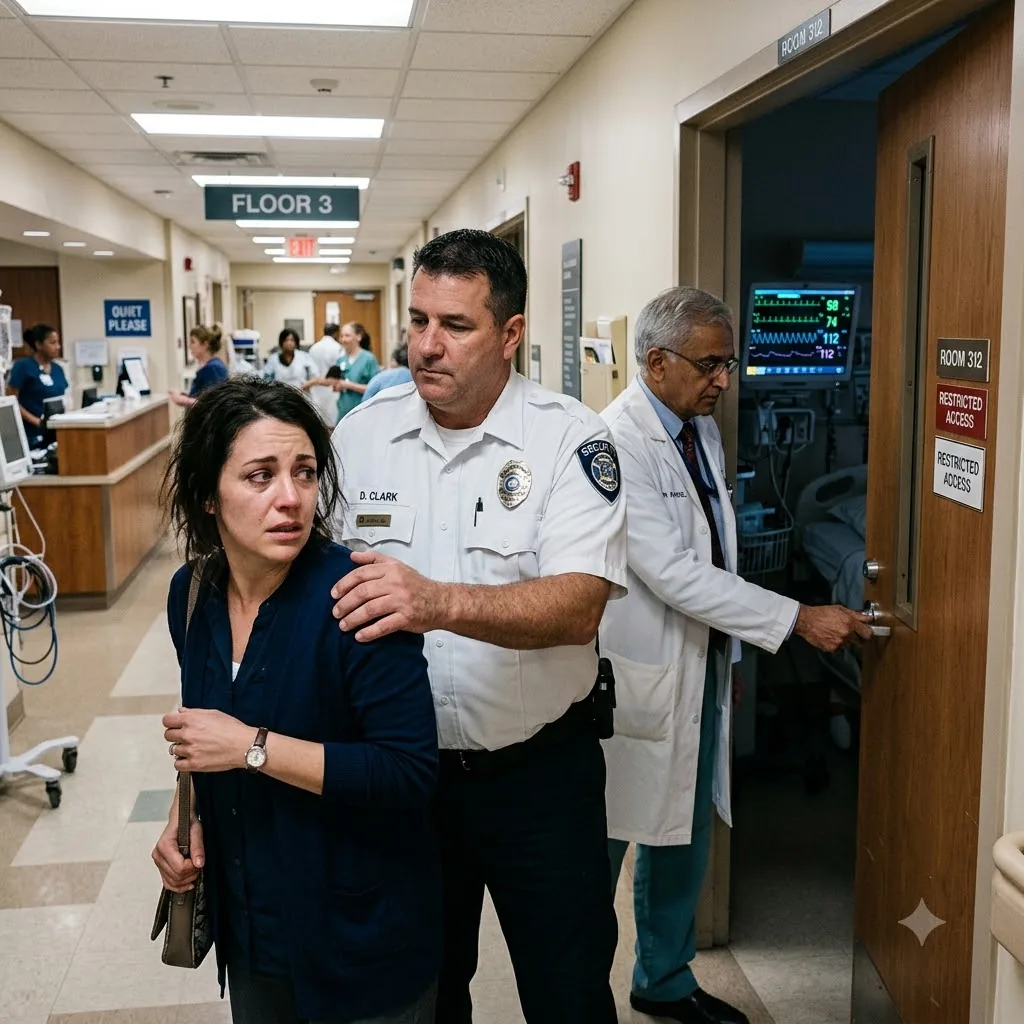
The heavy palm of the security guard hit Maya’s collarbone, shoving her backward just enough to keep her away from the cracked door of Room 412. His other hand gripped his radio, but his eyes stayed locked on her, exhausted and flat. He told her to lower her voice, speaking in that low, neutralizing tone meant for hysterical family members and lobby drunks.
Maya dug her rubber-soled shoes into the waxed linoleum and leaned forward, trying to see past his broad shoulder. Through the two-inch gap between the heavy door and the frame, the telemetry monitor beside the bed flashed a frantic strobe of amber and red. The jagged lines on the screen danced in erratic spikes, completely out of sync with the steady blips that had been there an hour ago.
She told the guard to let her through. She kept her voice leveled, forcing the panic down into her chest, telling him that someone needed to check the IV lines. The guard merely shifted his stance, widening his boots to block the view completely. His name tag read Miller, and he smelled faintly of stale coffee and industrial hand sanitizer. He warned her again that she was making a scene, that she was disturbing the other patients on the maternity ward.
The hallway behind them was a ghost town of dim fluorescent lighting and abandoned medication carts. It was the quietest hour in obstetrics, making Maya’s struggle with the guard the loudest event on the floor. She stepped to the right, ducking under Miller’s arm, but he was faster. He caught her by the elbow, his grip tightening into something that promised actual bruises.
Maya demanded he look at the screen inside the room. She pointed blindly toward the crack in the door, insisting that the numbers were dropping too fast. The systolic reading had been flashing eighty just seconds before, and the neon red digits were plummeting with every refresh of the screen.
Miller did not turn his head. He recited a script about hospital protocol, about authorized personnel, and about the waiting area at the end of the hall. He told her she was making the staff uncomfortable and that she had one chance to walk away on her own before he escorted her out.
The amber light from the monitor spilled through the gap, painting a sickly streak across the hallway floor. The silence inside the room was wrong. There were no nurses rushing in with crash carts. There were no shouted orders for epinephrine. There was only the increasingly erratic chirping of the machine, a sound that drilled directly into Maya’s temples.
She wrenched her arm against Miller’s grip, planting her feet. She told him that a woman was crashing in that bed and someone had to do their job.
The heavy oak door swung inward, hitting the rubber wall stop with a muffled thud.
Dr. Richard Thorne stepped into the doorway, filling the space entirely. His scrubs were pristine, lacking a single wrinkle, and his white coat hung perfectly square on his shoulders. He carried a tablet tucked casually under his left arm. He did not look at the monitor behind him, nor at the bed obscured by the curtain. He looked only at Maya.
His expression was a mask of utter serenity. The overhead lights caught the silver at his temples, framing a face that had commanded the obstetrics department for a decade. He exuded an aura of absolute control.
He told Miller that they would no longer need his de-escalation tactics. His voice was smooth, a rich baritone that carried down the empty corridor without raising a decibel. He informed the guard that Maya was severely distressed and disrupting a delicate clinical environment.
Maya started to speak, pointing at the frantic red spikes on the monitor visible just over Thorne’s shoulder. She told the doctor that the heart rate was bottoming out. She told him the blood pressure was crashing.
Thorne did not turn around to check the machine. He simply adjusted his grip on the tablet and gave Maya a practiced, sympathetic smile. It was the exact smile he used for promotional brochures and grand rounds, deeply reassuring and entirely hollow.
He instructed Miller to remove the disruption from the ward immediately.
The guard grabbed Maya’s other arm, hauling her backward with sudden force. Her shoes squeaked sharply against the floor as she fought to keep her balance. She yelled at Thorne to look at the screen.
Thorne maintained his perfect smile. He reached for the heavy silver handle of the door. He told Maya to have a safe drive home.
He pulled the door toward him. The gap narrowed, cutting off the sickly amber light, shrinking the view of the flashing monitor down to a sliver.
As the latch clicked shut, sealing the room in isolation, the erratic chirping from the machine stopped, replaced instantly by one long, continuous, unbroken tone.
The heavy palm of the security guard hit Maya’s collarbone, shoving her backward just enough to keep her away from the cracked door of Room 412. His other hand gripped his radio, but his eyes stayed locked on her, exhausted and flat. He told her to lower her voice, speaking in that low, neutralizing tone meant for hysterical family members and lobby drunks.
Maya dug her rubber-soled shoes into the waxed linoleum and leaned forward, trying to see past his broad shoulder. Through the two-inch gap between the heavy door and the frame, the telemetry monitor beside the bed flashed a frantic strobe of amber and red. The jagged lines on the screen danced in erratic spikes, completely out of sync with the steady blips that had been there an hour ago.
She told the guard to let her through. She kept her voice leveled, forcing the panic down into her chest, telling him that someone needed to check the IV lines. The guard merely shifted his stance, widening his boots to block the view completely. His name tag read Miller, and he smelled faintly of stale coffee and industrial hand sanitizer. He warned her again that she was making a scene, that she was disturbing the other patients on the maternity ward.
The hallway behind them was a ghost town of dim fluorescent lighting and abandoned medication carts. It was the quietest hour in obstetrics, making Maya’s struggle with the guard the loudest event on the floor. She stepped to the right, ducking under Miller’s arm, but he was faster. He caught her by the elbow, his grip tightening into something that promised actual bruises.
Maya demanded he look at the screen inside the room. She pointed blindly toward the crack in the door, insisting that the numbers were dropping too fast. The systolic reading had been flashing eighty just seconds before, and the neon red digits were plummeting with every refresh of the screen.
Miller did not turn his head. He recited a script about hospital protocol, about authorized personnel, and about the waiting area at the end of the hall. He told her she was making the staff uncomfortable and that she had one chance to walk away on her own before he escorted her out.
The amber light from the monitor spilled through the gap, painting a sickly streak across the hallway floor. The silence inside the room was wrong. There were no nurses rushing in with crash carts. There were no shouted orders for epinephrine. There was only the increasingly erratic chirping of the machine, a sound that drilled directly into Maya’s temples.
She wrenched her arm against Miller’s grip, planting her feet. She told him that a woman was crashing in that bed and someone had to do their job.
The heavy oak door swung inward, hitting the rubber wall stop with a muffled thud.
Dr. Richard Thorne stepped into the doorway, filling the space entirely. His scrubs were pristine, lacking a single wrinkle, and his white coat hung perfectly square on his shoulders. He carried a tablet tucked casually under his left arm. He did not look at the monitor behind him, nor at the bed obscured by the curtain. He looked only at Maya.
His expression was a mask of utter serenity. The overhead lights caught the silver at his temples, framing a face that had commanded the obstetrics department for a decade. He exuded an aura of absolute control.
He told Miller that they would no longer need his de-escalation tactics. His voice was smooth, a rich baritone that carried down the empty corridor without raising a decibel. He informed the guard that Maya was severely distressed and disrupting a delicate clinical environment.
Maya started to speak, pointing at the frantic red spikes on the monitor visible just over Thorne’s shoulder. She told the doctor that the heart rate was bottoming out. She told him the blood pressure was crashing.
Thorne did not turn around to check the machine. He simply adjusted his grip on the tablet and gave Maya a practiced, sympathetic smile. It was the exact smile he used for promotional brochures and grand rounds, deeply reassuring and entirely hollow.
He instructed Miller to remove the disruption from the ward immediately.
The guard grabbed Maya’s other arm, hauling her backward with sudden force. Her shoes squeaked sharply against the floor as she fought to keep her balance. She yelled at Thorne to look at the screen.
Thorne maintained his perfect smile. He reached for the heavy silver handle of the door. He told Maya to have a safe drive home.
He pulled the door toward him. The gap narrowed, cutting off the sickly amber light, shrinking the view of the flashing monitor down to a sliver.
As the latch clicked shut, sealing the room in isolation, the erratic chirping from the machine stopped, replaced instantly by one long, continuous, unbroken tone.