Story code: ST-001186
Part 2: The Network’s Reflection
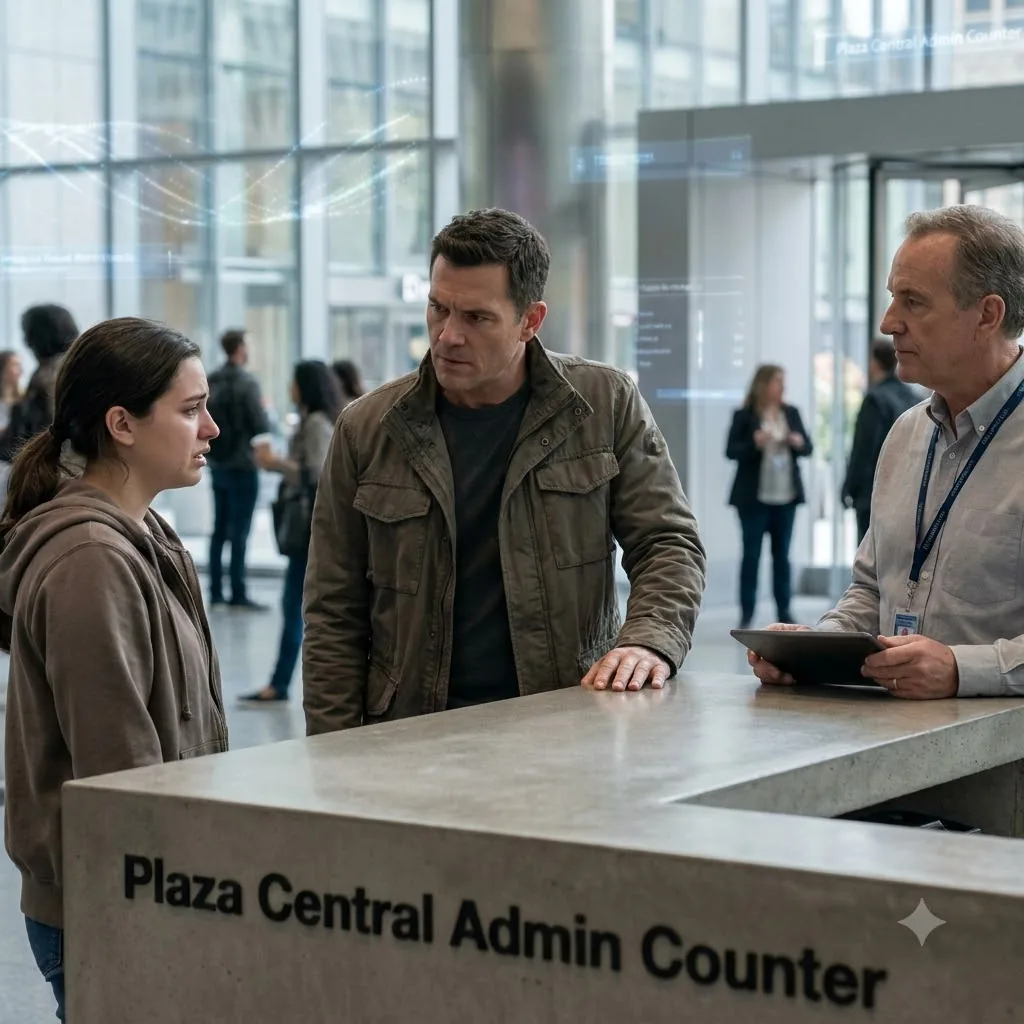
The diagnostic terminal displayed the glaring discrepancy in glowing green text. Marcus Vance adjusted his specialized AR headset, his gaze shifting from my screen to his sister, who stood with her arms crossed, watching the data populate. A small crowd of players, noticing the diagnostic screen on the main display, began to gather near the counter.
“You see?” Marcus said, his voice rising slightly as he pointed to the log output. “She hit the target before it was even rendered by the plaza servers. That is the definition of a pre-fire exploit. Her custom Chrono-Sight glasses had to be running a client-side prediction script that guessed the target location before the server broadcasted it.”
Elena shook her head, her persistent posture unchanging. “The targets in the Neon-Grid are randomly generated based on real-time server seeds. You designed the engine, Marcus. You know it’s impossible to predict the spawn pattern. I reacted to what I saw on the screen. I hit the target when it appeared.”
“Then your glasses modified the local timestamp,” Marcus insisted, his gestures becoming more rigid. He tapped his developer interface tablet, pulling up the plaza’s hardware compliance policy. “Under Section 9.1, any player using modified local hardware that desynchronizes from the master clock is subject to an immediate lifetime ban and forfeiture of all logged achievements. I am enforcing the policy.”
I looked back at the diagnostic terminal. Under the strict rules of system forensic reconstruction, a client-side hack would leave signature traces. If Elena’s glasses had manipulated the timestamps, the packet verification hashes would mismatch the server’s security handshake. I ran a hash verification query on the target packet sequence. The progress bar crept across the screen, flashing green as it completed.
“The hashes match,” I said, showing the screen to both of them. “The security handshake between Elena’s glasses and the server was fully authenticated. No client-side injection occurred. The glasses did not spoof the time.”
Marcus’s jaw tightened. He did not look at Elena. Instead, he reached for his tablet and began typing a system override command. “If the hardware is clean, then it’s a transmission delay on the local network. Either way, the sequence is out of order. An out-of-order sequence cannot be verified for the leaderboard. The rejection stands.”
But the diagnostic terminal was already parsing the next layer of data. The transmission logs showed zero packet loss and a steady ping of four milliseconds. The network was not the bottleneck. I pointed to the visual filter configuration tag embedded in the header of the target activation packet. It read: `Active Filter: Vance_High_Contrast_v4.2`.
“The delay wasn’t on the network, and it wasn’t on the glasses,” I said, tracing the processing steps on the public monitor. “The server generated the target, but the visual filter designed to render it on the plaza floor took four hundred milliseconds to process the image. The target was active in the game code, but invisible to the player.” The question remained: why did Marcus’s proprietary filter delay the visual render, and how far up the database chain did this sequence failure go?