Story code: ST-001881
Part 1: The Wizard in the Wire
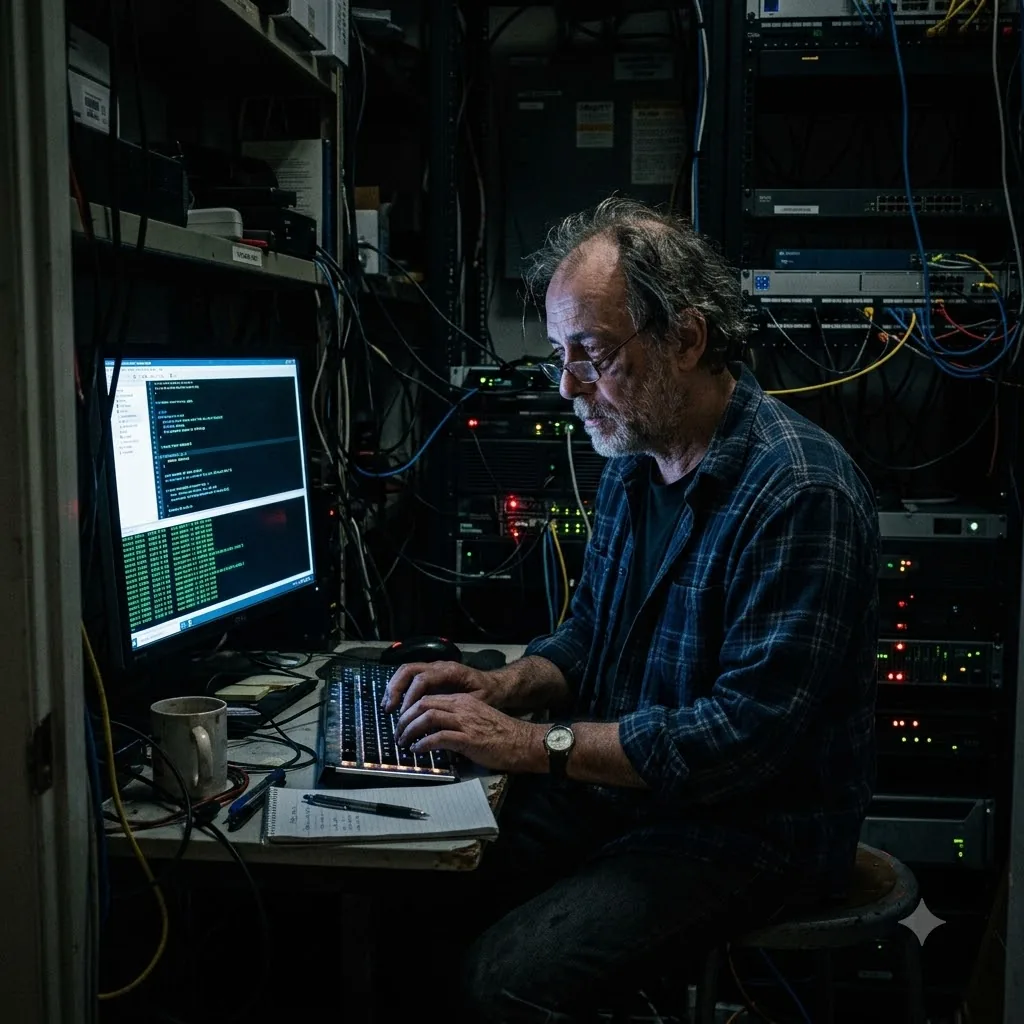
The server rack exhaust blasted a steady current of eighty-degree air directly into Arthur’s face, turning the windowless AV closet into a suffocating box of hot metal and dust. He blinked stinging sweat out of his left eye and forced his stiff, trembling fingers back into position over the illuminated keyboard. Through the covert earpiece jammed into his right ear, Julian’s smooth baritone voice vibrated with practiced confidence, floating through the drywall from the adjacent executive boardroom.
“Gentlemen, you are looking at the absolute end of human isolation,” Julian said, his leather shoes squeaking faintly as he paced the thick carpet. “A digital companion that does not merely parse keywords, but listens. An architecture that understands the profound nuance of human sorrow and answers with genuine, unscripted empathy.”
On the matte screen hovering two inches from Arthur’s nose, a chat terminal blinked green. The cursor pulsed like a fading heartbeat. A new prompt appeared from one of the venture capitalists holding a test tablet in the next room.
Investor_03: My wife left me yesterday after twenty years of marriage.
Arthur stared at the glowing text. His knuckles cracked as he hammered out a response in the dark.
Response: I am so deeply sorry. That kind of sudden absence leaves a silence in the house that must feel impossible to navigate right now. You do not have to process it all today.
He hit enter. A half-second later, a warm, synthetic female voice read his exact words out loud in the boardroom. A collective murmur of awe rose from the investors. Arthur let out a ragged breath, shifting his weight on the upturned plastic milk crate he was using as a stool. His knees ached with a dull, throbbing intensity. He had been wedged between the wall and the screaming cooling fans for forty-five minutes, acting as the manual, flesh-and-blood backend for Julian’s vaporware demo.
“Notice the phrasing,” Julian told the room, seizing the moment. “The AI recognizes the emotional weight of a twenty-year bond breaking. It offers validation rather than empty solutions. This is the proprietary sentiment analysis algorithm you are investing in. This is the core of Project Serenity.”
Arthur wiped his forehead with the back of his sleeve. The proprietary sentiment analysis algorithm was entirely composed of Arthur’s failing joints, his forty years of accumulated regrets, and his desperate need to survive until the end of the month. The real neural net had crashed three weeks ago, spitting out hostile gibberish and endless loops of nonsense. Julian had refused to delay the Series B pitch. He simply shoved a keyboard into Arthur’s hands and locked him in the closet.
The terminal interface was a brutalist block of stark white text on a black background, a relic of an operating system Arthur had patched together when the company was still just a dream in a rented garage. Now, that garage was a multi-million-dollar suite, and Arthur was reduced to a ghost in the machine. He adjusted the earpiece, the hard plastic biting into his ear canal. Every time Julian paced past the boardroom microphone, the rustle of his expensive suit fabric transmitted as a deafening burst of static. Arthur winced and kept his eyes locked on the blinking cursor.
Another prompt flashed on the screen.
Investor_01: I feel like I am failing my children.
Arthur’s breath caught in his throat. He stared at the stark white pixels. A dull pain radiated from his chest, pulsing in time with the server fans. He swallowed hard, pushing down the sudden spike of nausea. He forced his fingers to move.
Response: Parenting is an imperfect art. The fact that you are worried about failing them proves that you care deeply about their well-being. Sometimes the distance between two people is built on unspoken apologies that just need a brave first word.
He hit enter. The synthetic voice echoed through the wall.
“Incredible,” one of the investors muttered. “It feels entirely human. I have never seen a large language model demonstrate this level of intuition.”
“Because it is not just a language model,” Julian lied smoothly. “It is an empathy engine. We trained it on millions of hours of crisis counseling and deep-pity heuristics.”
Arthur took a sip from a plastic water bottle. The water was lukewarm and tasted of chemical plastic. His wrists were burning from the repetitive strain, a fiery tendril of pain shooting up his forearms. He glanced at the digital clock in the corner of his terminal. The pitch was scheduled for another fifteen minutes. If he could just hold out, if he could just keep typing, he would hit his targets. He focused on the rhythm of the keyboard, ignoring the cramped conditions, ignoring the stifling heat, ignoring the bitter irony of monetizing the exact brand of isolation that kept him awake at night.
“Let us push the system further,” Julian announced, his voice taking on a theatrical edge. “I want one of you to share something you have never told anyone. Something raw. Something that truly scares you. Let Serenity show you what it can do.”
Silence fell over the boardroom. Arthur leaned forward, squinting at the screen. The terminal remained empty for a long, agonizing minute. The heat in the closet seemed to double. A drop of sweat rolled down his nose and splattered onto the spacebar.
Finally, a new line of text began to populate on the screen, character by agonizing character, as an investor typed out a message.
Investor_02: I think I am going to die entirely alone, and I think I deserve it.
Arthur froze. His hands hovered over the keys. The words mirrored a thought he had buried deep in his own mind just that morning. He opened his mouth to draw a breath, but the air felt too thick.
Julian tapped his microphone, his voice sharp in Arthur’s ear. “Come on. Show them the magic.”
Arthur placed his shaking fingertips on the keys and prepared to type a response, but before he could press a single letter, the heavy brass handle of the AV closet door clicked loudly and began to turn.
The server rack exhaust blasted a steady current of eighty-degree air directly into Arthur’s face, turning the windowless AV closet into a suffocating box of hot metal and dust. He blinked stinging sweat out of his left eye and forced his stiff, trembling fingers back into position over the illuminated keyboard. Through the covert earpiece jammed into his right ear, Julian’s smooth baritone voice vibrated with practiced confidence, floating through the drywall from the adjacent executive boardroom.
“Gentlemen, you are looking at the absolute end of human isolation,” Julian said, his leather shoes squeaking faintly as he paced the thick carpet. “A digital companion that does not merely parse keywords, but listens. An architecture that understands the profound nuance of human sorrow and answers with genuine, unscripted empathy.”
On the matte screen hovering two inches from Arthur’s nose, a chat terminal blinked green. The cursor pulsed like a fading heartbeat. A new prompt appeared from one of the venture capitalists holding a test tablet in the next room.
Investor_03: My wife left me yesterday after twenty years of marriage.
Arthur stared at the glowing text. His knuckles cracked as he hammered out a response in the dark.
Response: I am so deeply sorry. That kind of sudden absence leaves a silence in the house that must feel impossible to navigate right now. You do not have to process it all today.
He hit enter. A half-second later, a warm, synthetic female voice read his exact words out loud in the boardroom. A collective murmur of awe rose from the investors. Arthur let out a ragged breath, shifting his weight on the upturned plastic milk crate he was using as a stool. His knees ached with a dull, throbbing intensity. He had been wedged between the wall and the screaming cooling fans for forty-five minutes, acting as the manual, flesh-and-blood backend for Julian’s vaporware demo.
“Notice the phrasing,” Julian told the room, seizing the moment. “The AI recognizes the emotional weight of a twenty-year bond breaking. It offers validation rather than empty solutions. This is the proprietary sentiment analysis algorithm you are investing in. This is the core of Project Serenity.”
Arthur wiped his forehead with the back of his sleeve. The proprietary sentiment analysis algorithm was entirely composed of Arthur’s failing joints, his forty years of accumulated regrets, and his desperate need to survive until the end of the month. The real neural net had crashed three weeks ago, spitting out hostile gibberish and endless loops of nonsense. Julian had refused to delay the Series B pitch. He simply shoved a keyboard into Arthur’s hands and locked him in the closet.
The terminal interface was a brutalist block of stark white text on a black background, a relic of an operating system Arthur had patched together when the company was still just a dream in a rented garage. Now, that garage was a multi-million-dollar suite, and Arthur was reduced to a ghost in the machine. He adjusted the earpiece, the hard plastic biting into his ear canal. Every time Julian paced past the boardroom microphone, the rustle of his expensive suit fabric transmitted as a deafening burst of static. Arthur winced and kept his eyes locked on the blinking cursor.
Another prompt flashed on the screen.
Investor_01: I feel like I am failing my children.
Arthur’s breath caught in his throat. He stared at the stark white pixels. A dull pain radiated from his chest, pulsing in time with the server fans. He swallowed hard, pushing down the sudden spike of nausea. He forced his fingers to move.
Response: Parenting is an imperfect art. The fact that you are worried about failing them proves that you care deeply about their well-being. Sometimes the distance between two people is built on unspoken apologies that just need a brave first word.
He hit enter. The synthetic voice echoed through the wall.
“Incredible,” one of the investors muttered. “It feels entirely human. I have never seen a large language model demonstrate this level of intuition.”
“Because it is not just a language model,” Julian lied smoothly. “It is an empathy engine. We trained it on millions of hours of crisis counseling and deep-pity heuristics.”
Arthur took a sip from a plastic water bottle. The water was lukewarm and tasted of chemical plastic. His wrists were burning from the repetitive strain, a fiery tendril of pain shooting up his forearms. He glanced at the digital clock in the corner of his terminal. The pitch was scheduled for another fifteen minutes. If he could just hold out, if he could just keep typing, he would hit his targets. He focused on the rhythm of the keyboard, ignoring the cramped conditions, ignoring the stifling heat, ignoring the bitter irony of monetizing the exact brand of isolation that kept him awake at night.
“Let us push the system further,” Julian announced, his voice taking on a theatrical edge. “I want one of you to share something you have never told anyone. Something raw. Something that truly scares you. Let Serenity show you what it can do.”
Silence fell over the boardroom. Arthur leaned forward, squinting at the screen. The terminal remained empty for a long, agonizing minute. The heat in the closet seemed to double. A drop of sweat rolled down his nose and splattered onto the spacebar.
Finally, a new line of text began to populate on the screen, character by agonizing character, as an investor typed out a message.
Investor_02: I think I am going to die entirely alone, and I think I deserve it.
Arthur froze. His hands hovered over the keys. The words mirrored a thought he had buried deep in his own mind just that morning. He opened his mouth to draw a breath, but the air felt too thick.
Julian tapped his microphone, his voice sharp in Arthur’s ear. “Come on. Show them the magic.”
Arthur placed his shaking fingertips on the keys and prepared to type a response, but before he could press a single letter, the heavy brass handle of the AV closet door clicked loudly and began to turn.