Story code: ST-000582
Part 4: She Didn’t Lose Face At The Gate, She Lost Something Worse Later
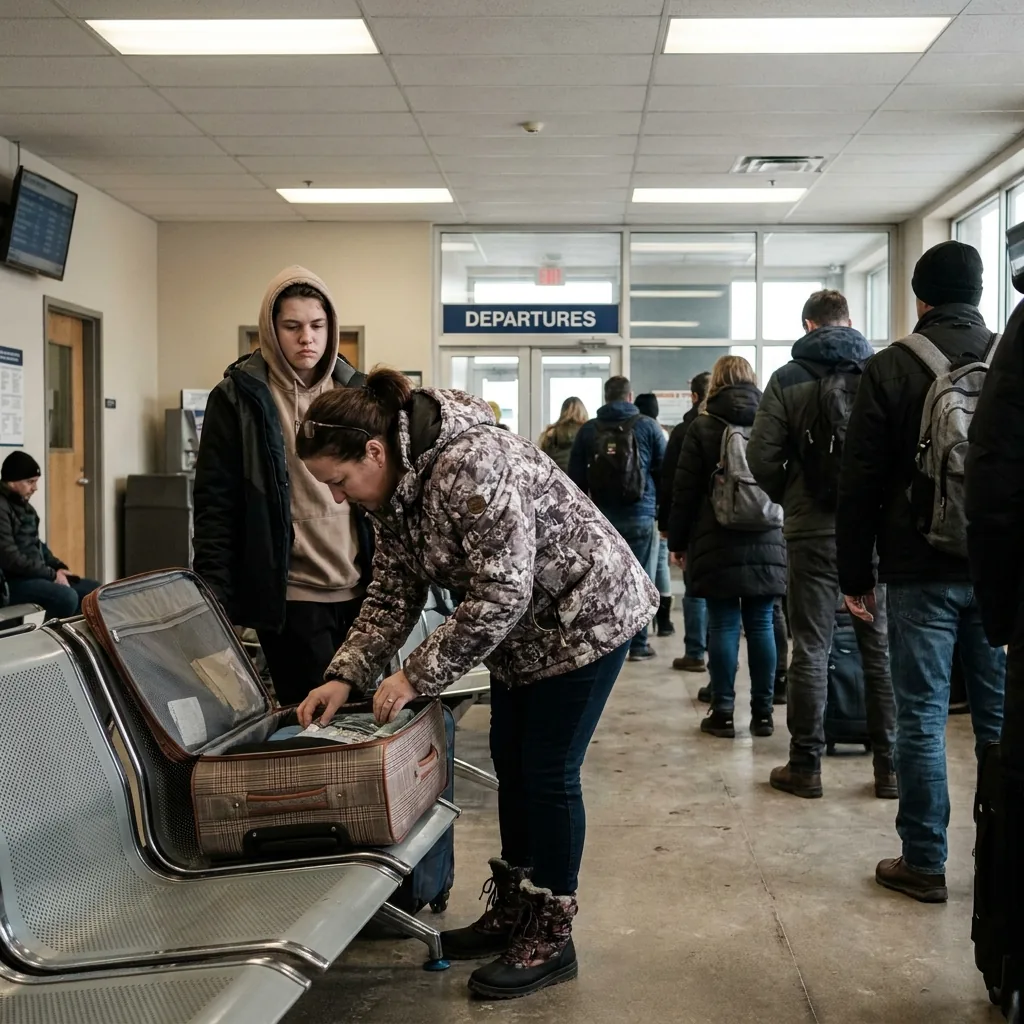
The bus pulled out with the station still running like nothing had happened. That is the part people usually expect to be louder, but it wasn’t. There was no crowd lecture, no staff intervention beyond the lane rules, no final showdown at the glass. Marisol boarded with the suitcase intact, the twisted tag photographed, and the folded note in her tote. Tanya moved on to the next departure. Nico stayed on the platform side with Dahlia after the bus doors closed.
What changed did not happen in a burst. It happened because the proof was small, physical, and hard to talk around once it was shown to the right people.
By that night, the first images were already moving through the family text thread used for rides, birthdays, and airport pickups. Nico sent only what he could support: one photo of the tag threaded backward into the zipper corner, one photo of the folded note after Marisol opened it on the bus and took a clearer picture under the overhead light, and one sentence under both: She told Marisol she was only fixing the tag.
Marisol added less than that. According to the timestamps later shown to me, her only message in that thread was: Do not give her access to my bags, keys, mail, or move-in information again. That wording mattered. It did not invite debate about intention. It named property, access, and a boundary going forward.
What followed was the kind of family fallout that leaves a record without becoming a courtroom. One older cousin asked where the note had been found. Marisol answered: under the disturbed zipper corner, at the tag. Nico answered separately with the sequence he had already kept straight all day: seats, vending machine, Dahlia bent over the case, barrier, second reach. Nobody had to decorate it. The object and the timing were enough.
Dahlia did respond, but the shape of her response had changed. In the screenshots I was shown, she did not deny touching the suitcase anymore. She wrote that she was trying to prevent trouble and that people were taking her help the wrong way. That shift mattered because it gave up the earlier version entirely. At the station, she had argued she was only fixing visibility. In the thread, after the note appeared, “help” had expanded into handling the bag for reasons she had not named at the gate.
The concrete consequence arrived two days later and stayed put. Marisol’s move depended on a family church van that was already scheduled to bring donated furniture and boxes to the room she had lined up in the next city. Dahlia had been the person who usually coordinated those volunteer runs because she kept the spare storage key and the contact list. After the tag photo and the note circulated, the pastor’s wife sent a short message into the same thread: For Marisol’s delivery, please coordinate with Elena instead. Dahlia no longer holds the storage key.
That was not dramatic language. It did not accuse her of a crime or turn the church chat into a trial. It did something heavier. It removed a piece of trusted access and recorded the reason in practice, even without spelling it out. People in that circle would know exactly why the key changed hands when it had never changed hands before.
There were other signs after that. Marisol’s new address was no longer posted in the family thread. Pickup details went to her directly and to Elena only. At the next sendoff for another relative weeks later, Dahlia was present in photos near the coffee kiosk, but not standing over luggage, not coordinating tags, not touching handles. That is the kind of quiet ruin this sort of thing leaves behind. Not exile. Not a speech. A narrowing.
Marisol did not celebrate any of it. On the bus, she sent one more image to Nico before the route crossed out of the city: the suitcase opened privately at last, clothes compressed at the top corner, nothing missing that she could identify, the note laid beside the tag on the seat. Her caption was plain: She doesn’t get to call this help anymore.
That line closed the proof lane all the way back to the first reach. The hand on the bag in the waiting area had not been harmless family fussing. The twisted tag had not been stray texture. It had been the visible edge of hidden access made possible by closeness, the exact thing Dahlia depended on everyone ignoring.
Marisol still left. The move still happened. But the standing Dahlia used to move through those departures with-touching, adjusting, claiming she knew best-did not come back cleanly after that. A key changed hands. Access narrowed. The record sat in screenshots and in memory, and nobody could unsee what the suitcase tag had already said at the gate.
That is why the quiet choice at the station mattered more than a public takedown would have. Marisol did not spend her boarding minute proving herself to a crowd. She carried the proof with her, let the bus leave, and the consequence arrived where family authority actually lives: in who still gets trusted near the next locked thing.