Story code: ST-000419
Part 1: Black Ink
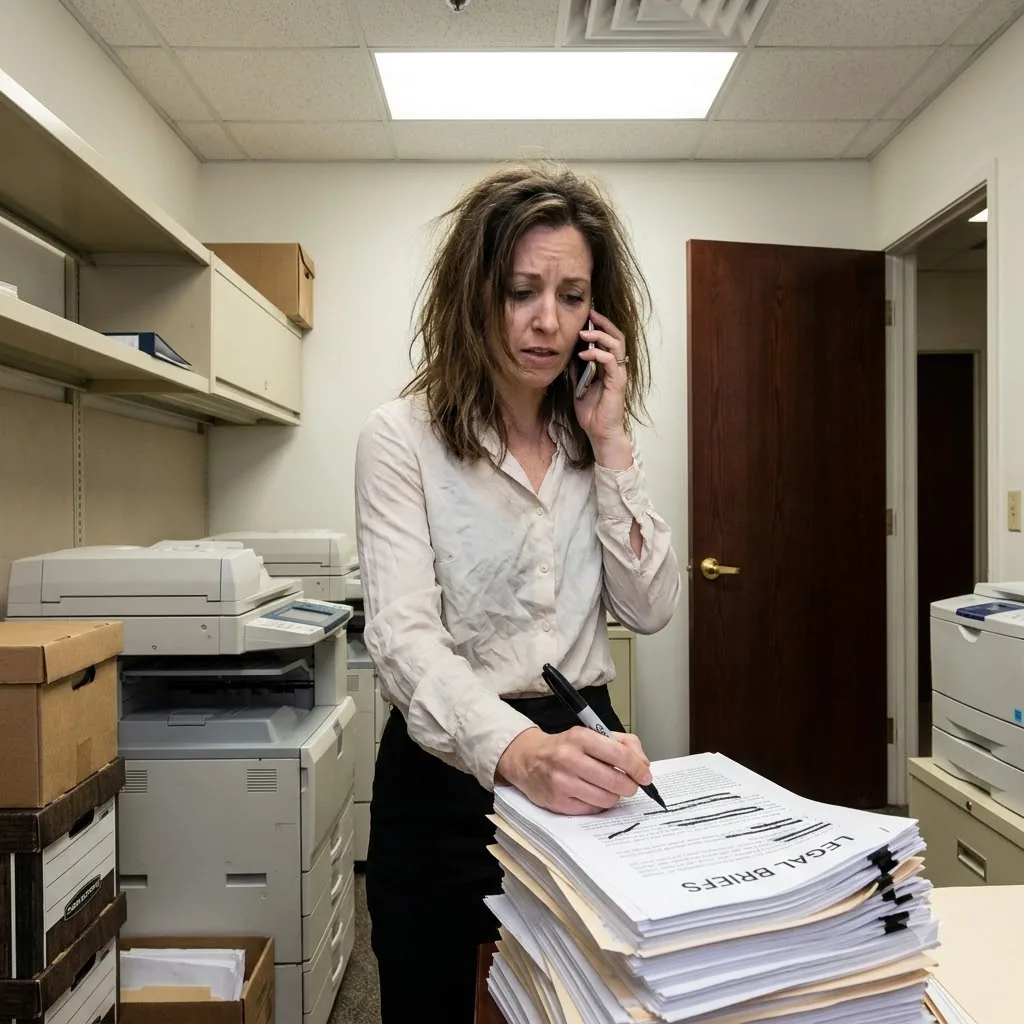
The fumes from the industrial Sharpie burned Sarah’s nostrils as she dragged the thick felt tip across another line of text. She was pressed into the corner of the firm’s windowless copy room, a phone wedged between her shoulder and ear, listening to the tinny, looping jazz of a health insurance hold track. The heavy steel door was pulled shut tight against the sterile hallway of Sterling & Hayes. A massive commercial printer hummed against her hip, radiating heat into the cramped, poorly ventilated closet.
She pressed harder on the marker, soaking the paper until the words trichloroethylene and parts per million vanished beneath a wet black bar. The automated voice on the phone cut through the jazz, informing her that her expected wait time was now forty-five minutes. Sarah let out a shallow breath and reached for the next sheet in the towering stack of water toxicity reports. She had to finish redacting the exhibits before Mr. Hayes returned from his lunch meeting. She also had to speak to a human at BlueCross before five o’clock. Failing at the first meant losing her job. Failing at the second meant her son Toby lost his bed in the pediatric intensive care unit.
The copy machine clicked into sleep mode, leaving only the sound of her frantic scribbling. She drew thick black lines over dates, locations, and chemical compounds. The firm represented the industrial manufacturing plant on the edge of the county, currently buried under a massive class-action lawsuit. Her specific instructions from Mr. Hayes were to obscure any proprietary data regarding waste management. In practice, this meant erasing any proof that the plant had been dumping untreated runoff into the municipal reservoir.
The phone crackled in her ear. A customer service representative named Brenda finally picked up, her voice flat and entirely devoid of empathy. Sarah straightened her spine, dropping the marker onto the glass of the copy machine. She stated Toby’s policy number in a hushed, urgent whisper, terrified the sound would bleed through the heavy steel door.
Brenda typed for a long time. The clacking of the keyboard echoed in Sarah’s ear like tiny hammers. Brenda then recited a boilerplate statement about coverage caps and denied out-of-network respiratory treatments.
Sarah gripped the edge of the copier. She explained the severity of Toby’s lung scarring, reading the diagnosis from a crumpled sticky note she kept in her blazer pocket. She kept her voice low, a desperate plea contained entirely within the four vibrating walls of the utility closet. She explained that transferring him to a lower-tier facility would interrupt his oxygen therapy. Brenda simply repeated the denial code in the same monotone drone. The appeal process would take up to ninety days.
Toby did not have ninety days. His ventilator support was scheduled to be downgraded on Friday unless the hospital received a pre-authorization code.
Sarah begged Brenda to transfer her to a supervisor. The line clicked, and the looping jazz returned, slightly louder and more distorted than before. Sarah slumped against the warm plastic casing of the printer, her chest tightening as the air in the tiny room grew thick with the smell of toxic solvent.
She picked up the marker again. Her hand shook as she pulled the cap off with her teeth. She dragged the ink across the next page, blacking out a table of heavy metal concentrations in the local water supply. Her eyes caught the zip code at the top of the report. It matched her own. It was the exact neighborhood where she and Toby lived. It was the same water Toby drank every day before the coughing fits started. It was the same water she used to boil his pasta and mix his powdered medication.
She stared at the wet black ink soaking through the cheap copy paper. She was standing in a hidden room, literally erasing the evidence of the poison in her own home to protect the people who put it there. The absurdity of it made her stomach turn. She wanted to scream, to rip the documents into pieces, to march into the hallway and expose the entire firm. Instead, she kept her head down and drew another thick black line over a paragraph detailing the devastating effects of the chemical compounds on pediatric respiratory systems. She needed the paycheck to afford the gas to drive to the hospital.
The hold music cut out again, replaced by the dead air of a transfer in progress. She held her breath, waiting for a supervisor to pick up. She needed an override code immediately. She dragged the marker across one more paragraph, obliterating a warning about permanent lung tissue damage.
Footsteps sounded outside the copy room. The distinctive, heavy thud of Mr. Hayes’s wingtips approached down the hardwood corridor. The pacing was brisk, purposeful, and heading straight for her location. The heavy footsteps paused right outside the door.
Sarah froze. The marker bled into the page, creating a dark, expanding pool over the word fatal. The phone in her ear crackled, and a deep, authoritative voice that did not belong to a health insurance supervisor finally came on the line.
At that exact second, the brass handle of the copy room door turned and clicked downward with a sharp metallic snap.
The fumes from the industrial Sharpie burned Sarah’s nostrils as she dragged the thick felt tip across another line of text. She was pressed into the corner of the firm’s windowless copy room, a phone wedged between her shoulder and ear, listening to the tinny, looping jazz of a health insurance hold track. The heavy steel door was pulled shut tight against the sterile hallway of Sterling & Hayes. A massive commercial printer hummed against her hip, radiating heat into the cramped, poorly ventilated closet.
She pressed harder on the marker, soaking the paper until the words trichloroethylene and parts per million vanished beneath a wet black bar. The automated voice on the phone cut through the jazz, informing her that her expected wait time was now forty-five minutes. Sarah let out a shallow breath and reached for the next sheet in the towering stack of water toxicity reports. She had to finish redacting the exhibits before Mr. Hayes returned from his lunch meeting. She also had to speak to a human at BlueCross before five o’clock. Failing at the first meant losing her job. Failing at the second meant her son Toby lost his bed in the pediatric intensive care unit.
The copy machine clicked into sleep mode, leaving only the sound of her frantic scribbling. She drew thick black lines over dates, locations, and chemical compounds. The firm represented the industrial manufacturing plant on the edge of the county, currently buried under a massive class-action lawsuit. Her specific instructions from Mr. Hayes were to obscure any proprietary data regarding waste management. In practice, this meant erasing any proof that the plant had been dumping untreated runoff into the municipal reservoir.
The phone crackled in her ear. A customer service representative named Brenda finally picked up, her voice flat and entirely devoid of empathy. Sarah straightened her spine, dropping the marker onto the glass of the copy machine. She stated Toby’s policy number in a hushed, urgent whisper, terrified the sound would bleed through the heavy steel door.
Brenda typed for a long time. The clacking of the keyboard echoed in Sarah’s ear like tiny hammers. Brenda then recited a boilerplate statement about coverage caps and denied out-of-network respiratory treatments.
Sarah gripped the edge of the copier. She explained the severity of Toby’s lung scarring, reading the diagnosis from a crumpled sticky note she kept in her blazer pocket. She kept her voice low, a desperate plea contained entirely within the four vibrating walls of the utility closet. She explained that transferring him to a lower-tier facility would interrupt his oxygen therapy. Brenda simply repeated the denial code in the same monotone drone. The appeal process would take up to ninety days.
Toby did not have ninety days. His ventilator support was scheduled to be downgraded on Friday unless the hospital received a pre-authorization code.
Sarah begged Brenda to transfer her to a supervisor. The line clicked, and the looping jazz returned, slightly louder and more distorted than before. Sarah slumped against the warm plastic casing of the printer, her chest tightening as the air in the tiny room grew thick with the smell of toxic solvent.
She picked up the marker again. Her hand shook as she pulled the cap off with her teeth. She dragged the ink across the next page, blacking out a table of heavy metal concentrations in the local water supply. Her eyes caught the zip code at the top of the report. It matched her own. It was the exact neighborhood where she and Toby lived. It was the same water Toby drank every day before the coughing fits started. It was the same water she used to boil his pasta and mix his powdered medication.
She stared at the wet black ink soaking through the cheap copy paper. She was standing in a hidden room, literally erasing the evidence of the poison in her own home to protect the people who put it there. The absurdity of it made her stomach turn. She wanted to scream, to rip the documents into pieces, to march into the hallway and expose the entire firm. Instead, she kept her head down and drew another thick black line over a paragraph detailing the devastating effects of the chemical compounds on pediatric respiratory systems. She needed the paycheck to afford the gas to drive to the hospital.
The hold music cut out again, replaced by the dead air of a transfer in progress. She held her breath, waiting for a supervisor to pick up. She needed an override code immediately. She dragged the marker across one more paragraph, obliterating a warning about permanent lung tissue damage.
Footsteps sounded outside the copy room. The distinctive, heavy thud of Mr. Hayes’s wingtips approached down the hardwood corridor. The pacing was brisk, purposeful, and heading straight for her location. The heavy footsteps paused right outside the door.
Sarah froze. The marker bled into the page, creating a dark, expanding pool over the word fatal. The phone in her ear crackled, and a deep, authoritative voice that did not belong to a health insurance supervisor finally came on the line.
At that exact second, the brass handle of the copy room door turned and clicked downward with a sharp metallic snap.