Story code: ST-001011
Part 1: The Barricade
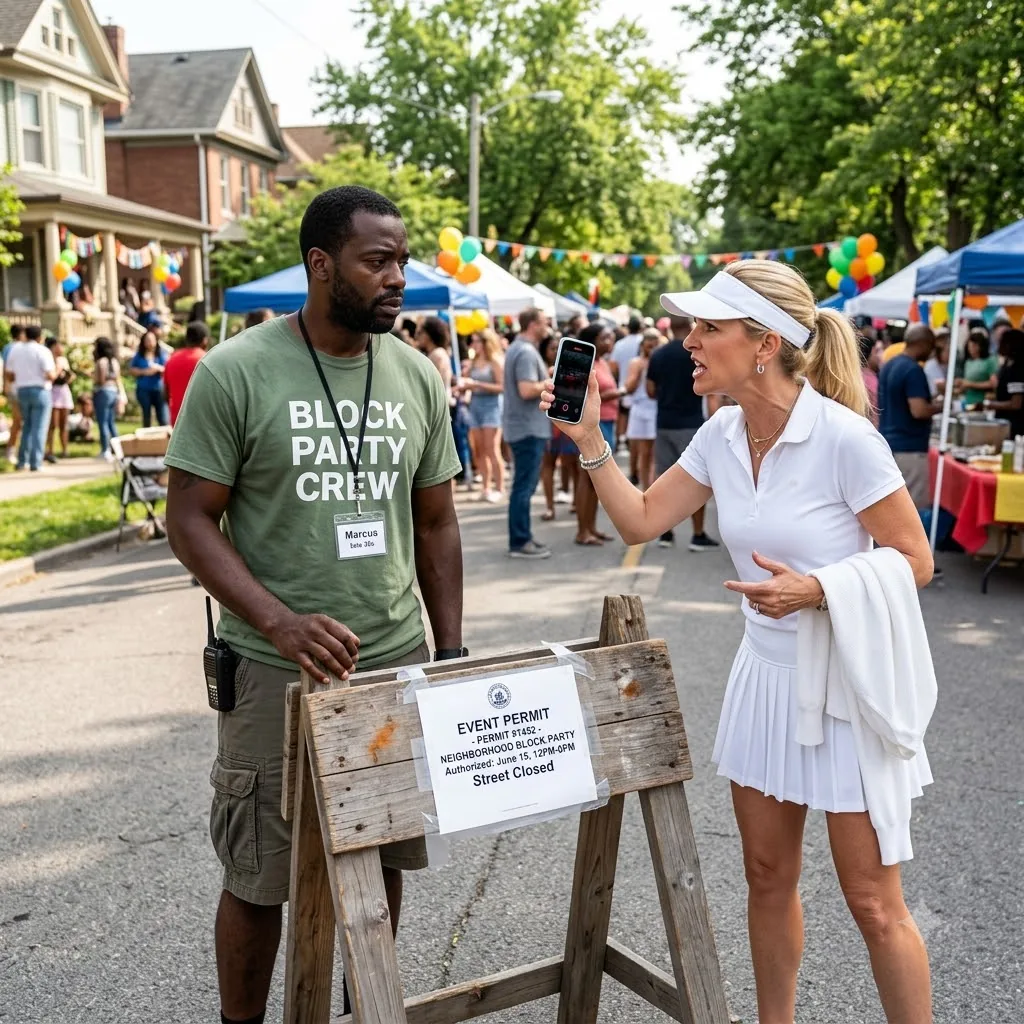
The heavy, rhythmic thump of bass from the corner speakers washed over Marcus, loosening the tight, exhausted knot at the base of his neck. Sweet blue smoke drifted from three massive oil-drum smokers, carrying the sharp, vinegary scent of barbecue past the brick facades. He leaned heavily against the folding table, letting the dull ache in his lower back and calves throb in time with the music. That intense, physical ache was the direct price of the bright yellow piece of paper currently secured to the wooden sawhorse with three strips of silver duct tape. Three agonizing days of waiting in the airless, fluorescent-lit corridors of the municipal annex had drained him. He had fought the permitting office, argued with the zoning board, and paid exorbitant fees out of his own pocket just to secure that official stamp.
Now, watching the neighborhood kids chasing each other through the sparkling spray of an open fire hydrant, the sheer exhaustion felt entirely justified. The annual block party was finally happening. More importantly, the block was at peace.
Then the woman in the pristine tennis whites stepped around the sawhorse barricade.
Marcus pushed off the table, wiping a thick smudge of barbecue sauce from his hands with a damp kitchen towel. He had never seen her before, but her demographic had been steadily moving into the renovated brownstones two streets over for the past year. Her pleated white skirt and rigid visor looked almost radioactive under the hazy summer sun. She marched straight toward the sound system, completely ignoring the children scrambling out of her path, her mouth set in a thin, furious line of authority.
Marcus intercepted her before she could reach the DJ booth and yank the power cord from the main generator. He offered a practiced, polite smile, the exact expression he reserved for dealing with unreasonable clerks at city hall.
She did not return the gesture. Instead, she pointed a sharply manicured finger directly at the towering speakers, shouting over the music about the local noise ordinance, her ruined quiet weekend, and the absolute lack of respect for the surrounding property owners.
Marcus kept his hands highly visible and entirely non-threatening. He gestured calmly toward the sawhorse at the end of the block. He explained in a steady, measured voice that the street was legally closed to all traffic until sundown. He emphasized the word permit, pointing directly at the city-issued yellow paper fluttering in the warm breeze.
The woman did not even turn her head to look at the barricade. She declared the paper an obvious forgery. She announced, loudly and with total conviction, that she was not going to tolerate an illegal, disruptive street takeover for another minute.
Marcus felt his chest tighten. He took a subtle step forward to physically block her path to the audio equipment. He reiterated that everything happening on the asphalt was fully sanctioned by the city. He suggested she return to her own street, where the noise was barely a background hum.
She reached into the pocket of her pristine tennis skirt and produced a sleek smartphone.
The polite, diplomatic smile vanished from Marcus’s face in an instant. The entire situation had just shifted violently from an irritating neighborhood dispute to a catastrophic emergency.
He looked past her shoulder to the perimeter of the party. At the far southern end of the street, sitting casually on the hoods of two parked sedans, were four young men wearing heavy jackets despite the blazing heat. At the exact opposite end, near the intersection bodega, another hardened group leaned against the graffiti-covered brick wall. These two groups were the architects of a fragile, extremely tense six-month street truce. The party was declared neutral ground. The neighborhood elders had negotiated for weeks to get both sides to eat barbecue on the same block without drawing their weapons.
The absolute, unbreakable rule of this delicate ceasefire was that no police could be called under any circumstances.
If sirens wailed and cruisers swarmed the barricades right now, both armed sides would instantly assume the other had set them up for a raid. The uneasy peace would shatter the exact second the first flashing blue light hit the brick walls. Blind panic would trigger an immediate firefight.
And directly between those two groups of men, completely oblivious to the simmering tension, were two dozen children splashing in the hydrant water and drawing elaborate murals on the asphalt with sidewalk chalk.
The woman in the tennis whites unlocked her screen. She stated loudly that the police would clear the street in five minutes.
Marcus felt a cold, terrifying sweat break out across his back. He told her to stop immediately. He explained, his voice cracking with panic, that calling the police right now would cause a violent riot. He told her that the men at the edges of the party were heavily armed, and that she was about to put every single child on the street in a deadly crossfire.
She rolled her eyes, clearly interpreting his desperate warning as a crude, dramatic scare tactic designed to protect an illegal gathering. She held the phone up high, her thumb hovering arrogantly over the emergency dial pad.
Marcus saw the number nine appear on her massive, bright screen. Then the number one.
There was absolutely no time left to reason with her oblivious entitlement. There was no time to explain the complex, violent history of the neighborhood that she had bought into without bothering to understand. The second she hit send, the countdown to a massacre would begin.
She pressed the second one and moved her manicured thumb toward the bright green call button.
Marcus lunged forward, throwing his entire body weight toward her raised hand just as her thumb made contact with the glass.
The heavy, rhythmic thump of bass from the corner speakers washed over Marcus, loosening the tight, exhausted knot at the base of his neck. Sweet blue smoke drifted from three massive oil-drum smokers, carrying the sharp, vinegary scent of barbecue past the brick facades. He leaned heavily against the folding table, letting the dull ache in his lower back and calves throb in time with the music. That intense, physical ache was the direct price of the bright yellow piece of paper currently secured to the wooden sawhorse with three strips of silver duct tape. Three agonizing days of waiting in the airless, fluorescent-lit corridors of the municipal annex had drained him. He had fought the permitting office, argued with the zoning board, and paid exorbitant fees out of his own pocket just to secure that official stamp.
Now, watching the neighborhood kids chasing each other through the sparkling spray of an open fire hydrant, the sheer exhaustion felt entirely justified. The annual block party was finally happening. More importantly, the block was at peace.
Then the woman in the pristine tennis whites stepped around the sawhorse barricade.
Marcus pushed off the table, wiping a thick smudge of barbecue sauce from his hands with a damp kitchen towel. He had never seen her before, but her demographic had been steadily moving into the renovated brownstones two streets over for the past year. Her pleated white skirt and rigid visor looked almost radioactive under the hazy summer sun. She marched straight toward the sound system, completely ignoring the children scrambling out of her path, her mouth set in a thin, furious line of authority.
Marcus intercepted her before she could reach the DJ booth and yank the power cord from the main generator. He offered a practiced, polite smile, the exact expression he reserved for dealing with unreasonable clerks at city hall.
She did not return the gesture. Instead, she pointed a sharply manicured finger directly at the towering speakers, shouting over the music about the local noise ordinance, her ruined quiet weekend, and the absolute lack of respect for the surrounding property owners.
Marcus kept his hands highly visible and entirely non-threatening. He gestured calmly toward the sawhorse at the end of the block. He explained in a steady, measured voice that the street was legally closed to all traffic until sundown. He emphasized the word permit, pointing directly at the city-issued yellow paper fluttering in the warm breeze.
The woman did not even turn her head to look at the barricade. She declared the paper an obvious forgery. She announced, loudly and with total conviction, that she was not going to tolerate an illegal, disruptive street takeover for another minute.
Marcus felt his chest tighten. He took a subtle step forward to physically block her path to the audio equipment. He reiterated that everything happening on the asphalt was fully sanctioned by the city. He suggested she return to her own street, where the noise was barely a background hum.
She reached into the pocket of her pristine tennis skirt and produced a sleek smartphone.
The polite, diplomatic smile vanished from Marcus’s face in an instant. The entire situation had just shifted violently from an irritating neighborhood dispute to a catastrophic emergency.
He looked past her shoulder to the perimeter of the party. At the far southern end of the street, sitting casually on the hoods of two parked sedans, were four young men wearing heavy jackets despite the blazing heat. At the exact opposite end, near the intersection bodega, another hardened group leaned against the graffiti-covered brick wall. These two groups were the architects of a fragile, extremely tense six-month street truce. The party was declared neutral ground. The neighborhood elders had negotiated for weeks to get both sides to eat barbecue on the same block without drawing their weapons.
The absolute, unbreakable rule of this delicate ceasefire was that no police could be called under any circumstances.
If sirens wailed and cruisers swarmed the barricades right now, both armed sides would instantly assume the other had set them up for a raid. The uneasy peace would shatter the exact second the first flashing blue light hit the brick walls. Blind panic would trigger an immediate firefight.
And directly between those two groups of men, completely oblivious to the simmering tension, were two dozen children splashing in the hydrant water and drawing elaborate murals on the asphalt with sidewalk chalk.
The woman in the tennis whites unlocked her screen. She stated loudly that the police would clear the street in five minutes.
Marcus felt a cold, terrifying sweat break out across his back. He told her to stop immediately. He explained, his voice cracking with panic, that calling the police right now would cause a violent riot. He told her that the men at the edges of the party were heavily armed, and that she was about to put every single child on the street in a deadly crossfire.
She rolled her eyes, clearly interpreting his desperate warning as a crude, dramatic scare tactic designed to protect an illegal gathering. She held the phone up high, her thumb hovering arrogantly over the emergency dial pad.
Marcus saw the number nine appear on her massive, bright screen. Then the number one.
There was absolutely no time left to reason with her oblivious entitlement. There was no time to explain the complex, violent history of the neighborhood that she had bought into without bothering to understand. The second she hit send, the countdown to a massacre would begin.
She pressed the second one and moved her manicured thumb toward the bright green call button.
Marcus lunged forward, throwing his entire body weight toward her raised hand just as her thumb made contact with the glass.