Story code: ST-001718
Part 1: The Voicemail
The Bluetooth speaker in my sedan crackled as Director Miller cleared his throat for the fourth time in a two-minute voicemail. He sounded completely out of breath, his carefully practiced administrative cadence fracturing as he struggled to find a polite way to describe a monster. He kept looping back to my father’s ‘impressive background’ and ‘formidable intellect’ as a conversational buffer. It was as if he believed treating the man’s old academic resume with reverence would somehow protect the facility from legal liability. Then came the phrase, delivered in a hushed, trembling rush: a severe behavioral escalation in the West Wing.
I slammed the car into park so hard the transmission ground in protest. The sprawling, sunlit campus of the Silver Leaf Care Facility looked idyllic through my windshield, all manicured rose bushes and tranquil water features. Yet the cold sweat slicking my palms told an entirely different story. I had meticulously constructed a seven-year wall of silence between myself and that man. When the county social workers called last month about his declining state and inability to care for himself, I handled the admission entirely through proxies, lawyers, and encrypted emails. I paid the exorbitant monthly fee for this private suite specifically to keep him contained, managed, and as far away from my daily existence as legally possible.
Just the thought of his pale, unblinking eyes brought a familiar, suffocating pressure to my chest. It was a dense, heavy darkness that used to leave me paralyzed on my apartment floor, my mind utterly shattered by his endless psychological games. I had spent years unlearning the damage of his precision cruelty. He never resorted to physical violence. He never had to. He used secrets, manufactured doubts, and microscopic observations to dismantle people from the inside out, turning their own minds into prisons.
I replayed the final seconds of the voicemail as I marched across the fresh asphalt of the parking lot. Miller’s voice had dropped to a frantic whisper, begging me to arrive immediately because local law enforcement was threatening to intervene, and the medical staff union representative was already on site. A behavioral escalation was an absurdly sterile term for what he did. It meant my father had found someone’s hidden pressure point and pushed relentlessly until the bone cracked.
The automatic glass doors parted with a bright, welcoming chime that felt jarringly out of place. Usually, the Silver Leaf lobby was a hive of forced cheerfulness, populated by nurses in brightly patterned scrubs and aides pushing hydration carts. Today, it was an absolute ghost town. The mahogany reception desk was abandoned. A stack of laminated visitor badges lay scattered across the polished tile floor, swimming in a spreading puddle of dark coffee from a shattered ceramic mug.
I stepped over the jagged shards, the silence in the lobby feeling heavy, charged, and deeply unnatural. A heavy blue patient binder lay open on the floor near the hallway entrance, its confidential pages violently torn from the metal rings and trampled underfoot. The deep dread in my stomach twisted into a sharp, icy spike. I could hear a faint, rhythmic sound drifting from the long corridor leading to the West Wing. It sounded like someone crying. It was not the soft, confused weeping of an elderly resident, but the harsh, ragged, hyperventilating sobs of a professional who had been pushed entirely past their breaking point.
My hands balled into tight fists inside my wool coat pockets. I aggressively reminded myself that I was only here to sign the involuntary discharge paperwork. I would coordinate a rapid transfer to a secure state facility, turn around, get back in my car, and drive away forever. I would absolutely not engage in conversation. I would not allow him to deploy his voice against me, not even for a single second.
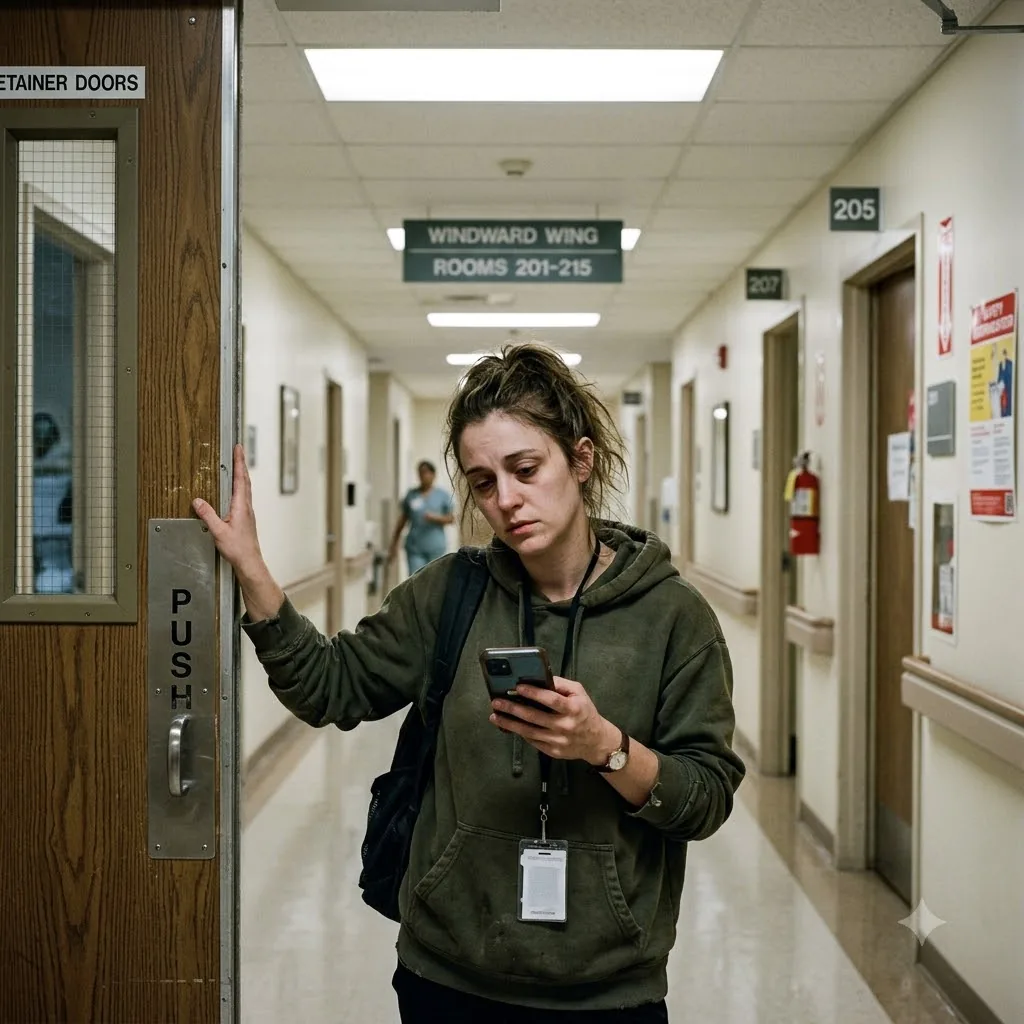
I followed the sound down the heavily carpeted hallway, passing completely empty recreation rooms and an abandoned medication station where a computer monitor still glowed with unlocked patient files. The weeping grew louder, echoing harshly off the soothing pastel walls. It was coming from just beyond the heavy oak double doors of the West Wing dining hall. The doors were shut tight, but the frosted glass panels seemed to vibrate with the raw tension radiating from the other side.
I placed both hands flat against the cold brass push-plates. My reflection in the glass looked pale and terrifyingly rigid, resembling a ghost returning to a burning house. I took one final, jagged breath, shoved all my weight forward against the heavy wood, and pushed through the swinging doors to face the absolute wreckage he had caused.
The Bluetooth speaker in my sedan crackled as Director Miller cleared his throat for the fourth time in a two-minute voicemail. He sounded completely out of breath, his carefully practiced administrative cadence fracturing as he struggled to find a polite way to describe a monster. He kept looping back to my father’s ‘impressive background’ and ‘formidable intellect’ as a conversational buffer. It was as if he believed treating the man’s old academic resume with reverence would somehow protect the facility from legal liability. Then came the phrase, delivered in a hushed, trembling rush: a severe behavioral escalation in the West Wing.
I slammed the car into park so hard the transmission ground in protest. The sprawling, sunlit campus of the Silver Leaf Care Facility looked idyllic through my windshield, all manicured rose bushes and tranquil water features. Yet the cold sweat slicking my palms told an entirely different story. I had meticulously constructed a seven-year wall of silence between myself and that man. When the county social workers called last month about his declining state and inability to care for himself, I handled the admission entirely through proxies, lawyers, and encrypted emails. I paid the exorbitant monthly fee for this private suite specifically to keep him contained, managed, and as far away from my daily existence as legally possible.
Just the thought of his pale, unblinking eyes brought a familiar, suffocating pressure to my chest. It was a dense, heavy darkness that used to leave me paralyzed on my apartment floor, my mind utterly shattered by his endless psychological games. I had spent years unlearning the damage of his precision cruelty. He never resorted to physical violence. He never had to. He used secrets, manufactured doubts, and microscopic observations to dismantle people from the inside out, turning their own minds into prisons.
I replayed the final seconds of the voicemail as I marched across the fresh asphalt of the parking lot. Miller’s voice had dropped to a frantic whisper, begging me to arrive immediately because local law enforcement was threatening to intervene, and the medical staff union representative was already on site. A behavioral escalation was an absurdly sterile term for what he did. It meant my father had found someone’s hidden pressure point and pushed relentlessly until the bone cracked.
The automatic glass doors parted with a bright, welcoming chime that felt jarringly out of place. Usually, the Silver Leaf lobby was a hive of forced cheerfulness, populated by nurses in brightly patterned scrubs and aides pushing hydration carts. Today, it was an absolute ghost town. The mahogany reception desk was abandoned. A stack of laminated visitor badges lay scattered across the polished tile floor, swimming in a spreading puddle of dark coffee from a shattered ceramic mug.
I stepped over the jagged shards, the silence in the lobby feeling heavy, charged, and deeply unnatural. A heavy blue patient binder lay open on the floor near the hallway entrance, its confidential pages violently torn from the metal rings and trampled underfoot. The deep dread in my stomach twisted into a sharp, icy spike. I could hear a faint, rhythmic sound drifting from the long corridor leading to the West Wing. It sounded like someone crying. It was not the soft, confused weeping of an elderly resident, but the harsh, ragged, hyperventilating sobs of a professional who had been pushed entirely past their breaking point.
My hands balled into tight fists inside my wool coat pockets. I aggressively reminded myself that I was only here to sign the involuntary discharge paperwork. I would coordinate a rapid transfer to a secure state facility, turn around, get back in my car, and drive away forever. I would absolutely not engage in conversation. I would not allow him to deploy his voice against me, not even for a single second.
I followed the sound down the heavily carpeted hallway, passing completely empty recreation rooms and an abandoned medication station where a computer monitor still glowed with unlocked patient files. The weeping grew louder, echoing harshly off the soothing pastel walls. It was coming from just beyond the heavy oak double doors of the West Wing dining hall. The doors were shut tight, but the frosted glass panels seemed to vibrate with the raw tension radiating from the other side.
I placed both hands flat against the cold brass push-plates. My reflection in the glass looked pale and terrifyingly rigid, resembling a ghost returning to a burning house. I took one final, jagged breath, shoved all my weight forward against the heavy wood, and pushed through the swinging doors to face the absolute wreckage he had caused.