Story code: ST-001698
Part 1: Shattered Sugar
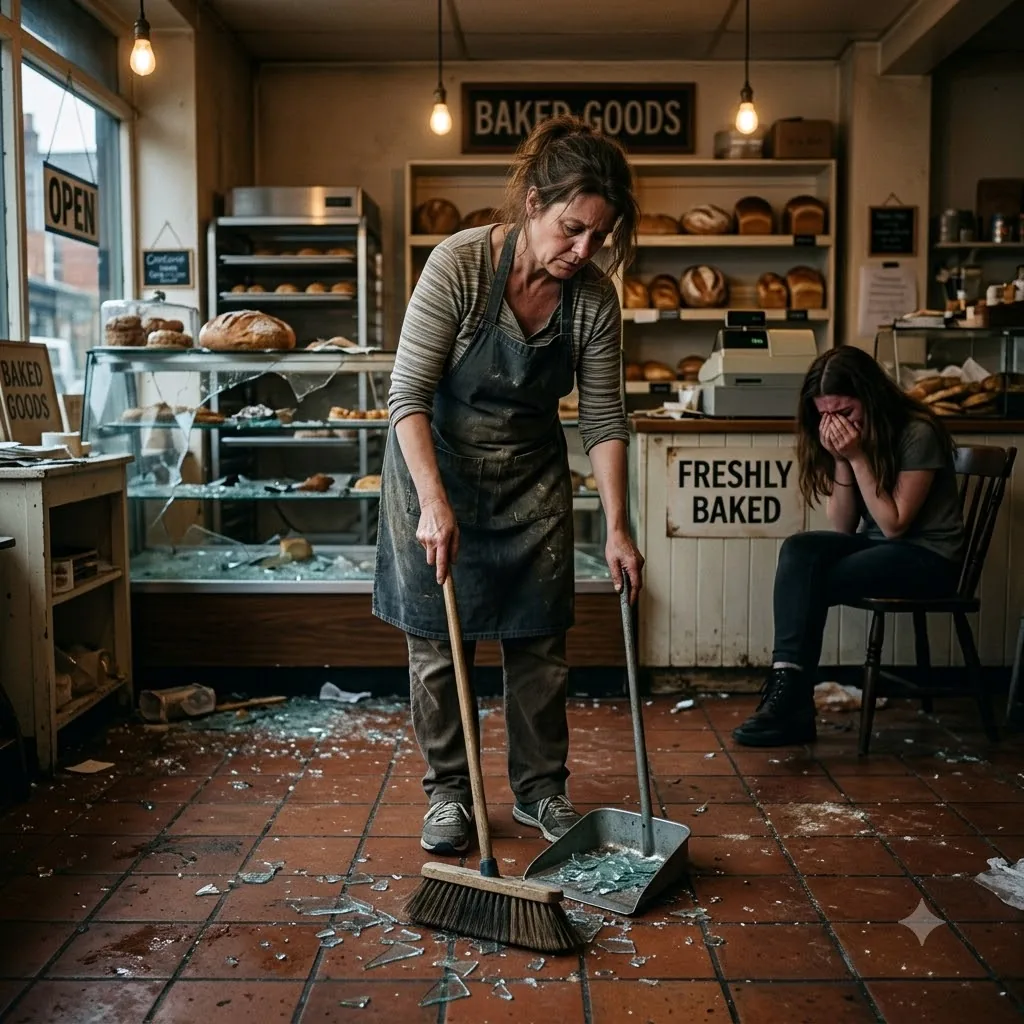
The flour was settling over the shattered display cases like dirty snow. Marisol kept her head bowed, sweeping the heavy bristles of the push broom across the linoleum, gathering a glittering pile of broken glass. Next to her, Doña Elena was on her hands and knees, weeping silently as she picked up crushed pastelitos and threw them into a heavy black trash bag. The sweet smell of guava and vanilla was completely overwhelmed by the sharp stench of ozone, sweat, and spilled bleach from the back room.
“They didn’t even let him grab his jacket,” Elena whispered, her voice wrecked. “Hector just kept saying he had his papers in the back. They didn’t listen.”
Marisol stopped sweeping long enough to put a hand on the older woman’s shaking shoulder. She squeezed, letting the heavy silence do the work. There was nothing to say. The raid had happened in under four minutes. Unmarked vans, heavy boots, shouting, and then the sickening vacuum left behind when three of the neighborhood’s anchor figures were dragged out the back door.
Marisol went back to the broom. Push, gather, drag. The rhythmic scraping was the only thing keeping the panic in the room at bay. Several other neighbors huddled near the blown-out front door, pointing at the tire tracks on the sidewalk, their voices hushed and terrified. No one understood how the tactical teams had known exactly when the shift change happened, exactly when the back alley gate would be unlocked for the morning delivery.
“Sit down, Elena,” Marisol instructed softly. She guided the baker to a surviving aluminum chair. “I will finish the floor. You are going to cut your hands.”
Elena slumped into the seat, burying her face in her flour-stained apron. Her shoulders heaved. Marisol grabbed the industrial dustpan, sweeping the massive pile of jagged shards into the metal bin. The glass clattered loudly, a harsh, violent sound that made the neighbors at the door flinch. Marisol kept her face blank, a mask of focused competence. She was the one people called when things fell apart. She knew how to file the emergency injunctions, how to organize the phone trees, how to stand tall when the vans rolled in.
She dumped the glass into the main bin. It was heavy. So heavy. She dragged the bin toward the alley door, her boots crunching on the few remaining shards. The back room was worse than the front. Dough bins were overturned, proofing racks smashed against the cinderblock walls. It looked like a tornado had touched down in the exact center of the neighborhood’s heart.
“They knew about the broken latch,” Elena said from the front room, staring blankly at the wall. “Someone had to tell them about the latch on the gate. The one Hector was supposed to fix tomorrow.”
Marisol stopped walking. She gripped the plastic rim of the garbage bin, her knuckles turning bone-white under the fluorescent lights. She stared down at a patch of spilled yeast slurry on the concrete floor. Her chest tightened, a heavy vice gripping her ribs.
“Don’t do that to yourself,” Marisol called back, her voice remarkably steady. “Do not look for shadows, Elena. We have to focus on finding them. On making the calls.”
She pushed the heavy bin out into the alley. The cold morning air hit her face, sharp and biting. The alley was empty now, the tactical vans long gone, leaving only deep grooves in the mud and a discarded zip-tie wrapper near the dumpsters. Marisol leaned against the brick wall, closing her eyes for just a second. The exhaustion was absolute, a heavy lead blanket draped over her shoulders. She rubbed her temples, trying to calculate the hours until she could get back to her own apartment, back to the safety of her own locked doors.
A sharp, rhythmic buzzing vibrated against her right hip bone.
She froze. Her hand shot to the pocket of her jeans, pressing flat against the denim. She did not carry her main phone in that pocket. Her main phone was in her purse, sitting on the counter inside. The buzzing stopped, then started again. Two short pulses. A pause. Two short pulses.
It was the burner phone.
Marisol looked left, then right down the empty alleyway. Her throat went completely dry. The vibration felt like a live wire burning through her clothes, a signal demanding immediate attention. She stepped behind the massive metal dumpster, out of the line of sight from the bakery’s shattered back door. She pulled the small, cheap plastic device from her pocket. The screen glowed harshly in the dim alley light.
Before she could read the incoming text, the heavy metal door of the bakery banged open, hitting the brick wall with a massive crash.
The flour was settling over the shattered display cases like dirty snow. Marisol kept her head bowed, sweeping the heavy bristles of the push broom across the linoleum, gathering a glittering pile of broken glass. Next to her, Doña Elena was on her hands and knees, weeping silently as she picked up crushed pastelitos and threw them into a heavy black trash bag. The sweet smell of guava and vanilla was completely overwhelmed by the sharp stench of ozone, sweat, and spilled bleach from the back room.
“They didn’t even let him grab his jacket,” Elena whispered, her voice wrecked. “Hector just kept saying he had his papers in the back. They didn’t listen.”
Marisol stopped sweeping long enough to put a hand on the older woman’s shaking shoulder. She squeezed, letting the heavy silence do the work. There was nothing to say. The raid had happened in under four minutes. Unmarked vans, heavy boots, shouting, and then the sickening vacuum left behind when three of the neighborhood’s anchor figures were dragged out the back door.
Marisol went back to the broom. Push, gather, drag. The rhythmic scraping was the only thing keeping the panic in the room at bay. Several other neighbors huddled near the blown-out front door, pointing at the tire tracks on the sidewalk, their voices hushed and terrified. No one understood how the tactical teams had known exactly when the shift change happened, exactly when the back alley gate would be unlocked for the morning delivery.
“Sit down, Elena,” Marisol instructed softly. She guided the baker to a surviving aluminum chair. “I will finish the floor. You are going to cut your hands.”
Elena slumped into the seat, burying her face in her flour-stained apron. Her shoulders heaved. Marisol grabbed the industrial dustpan, sweeping the massive pile of jagged shards into the metal bin. The glass clattered loudly, a harsh, violent sound that made the neighbors at the door flinch. Marisol kept her face blank, a mask of focused competence. She was the one people called when things fell apart. She knew how to file the emergency injunctions, how to organize the phone trees, how to stand tall when the vans rolled in.
She dumped the glass into the main bin. It was heavy. So heavy. She dragged the bin toward the alley door, her boots crunching on the few remaining shards. The back room was worse than the front. Dough bins were overturned, proofing racks smashed against the cinderblock walls. It looked like a tornado had touched down in the exact center of the neighborhood’s heart.
“They knew about the broken latch,” Elena said from the front room, staring blankly at the wall. “Someone had to tell them about the latch on the gate. The one Hector was supposed to fix tomorrow.”
Marisol stopped walking. She gripped the plastic rim of the garbage bin, her knuckles turning bone-white under the fluorescent lights. She stared down at a patch of spilled yeast slurry on the concrete floor. Her chest tightened, a heavy vice gripping her ribs.
“Don’t do that to yourself,” Marisol called back, her voice remarkably steady. “Do not look for shadows, Elena. We have to focus on finding them. On making the calls.”
She pushed the heavy bin out into the alley. The cold morning air hit her face, sharp and biting. The alley was empty now, the tactical vans long gone, leaving only deep grooves in the mud and a discarded zip-tie wrapper near the dumpsters. Marisol leaned against the brick wall, closing her eyes for just a second. The exhaustion was absolute, a heavy lead blanket draped over her shoulders. She rubbed her temples, trying to calculate the hours until she could get back to her own apartment, back to the safety of her own locked doors.
A sharp, rhythmic buzzing vibrated against her right hip bone.
She froze. Her hand shot to the pocket of her jeans, pressing flat against the denim. She did not carry her main phone in that pocket. Her main phone was in her purse, sitting on the counter inside. The buzzing stopped, then started again. Two short pulses. A pause. Two short pulses.
It was the burner phone.
Marisol looked left, then right down the empty alleyway. Her throat went completely dry. The vibration felt like a live wire burning through her clothes, a signal demanding immediate attention. She stepped behind the massive metal dumpster, out of the line of sight from the bakery’s shattered back door. She pulled the small, cheap plastic device from her pocket. The screen glowed harshly in the dim alley light.
Before she could read the incoming text, the heavy metal door of the bakery banged open, hitting the brick wall with a massive crash.