Story code: ST-000861
Part 1: Dana Said It Loud Enough for Everyone
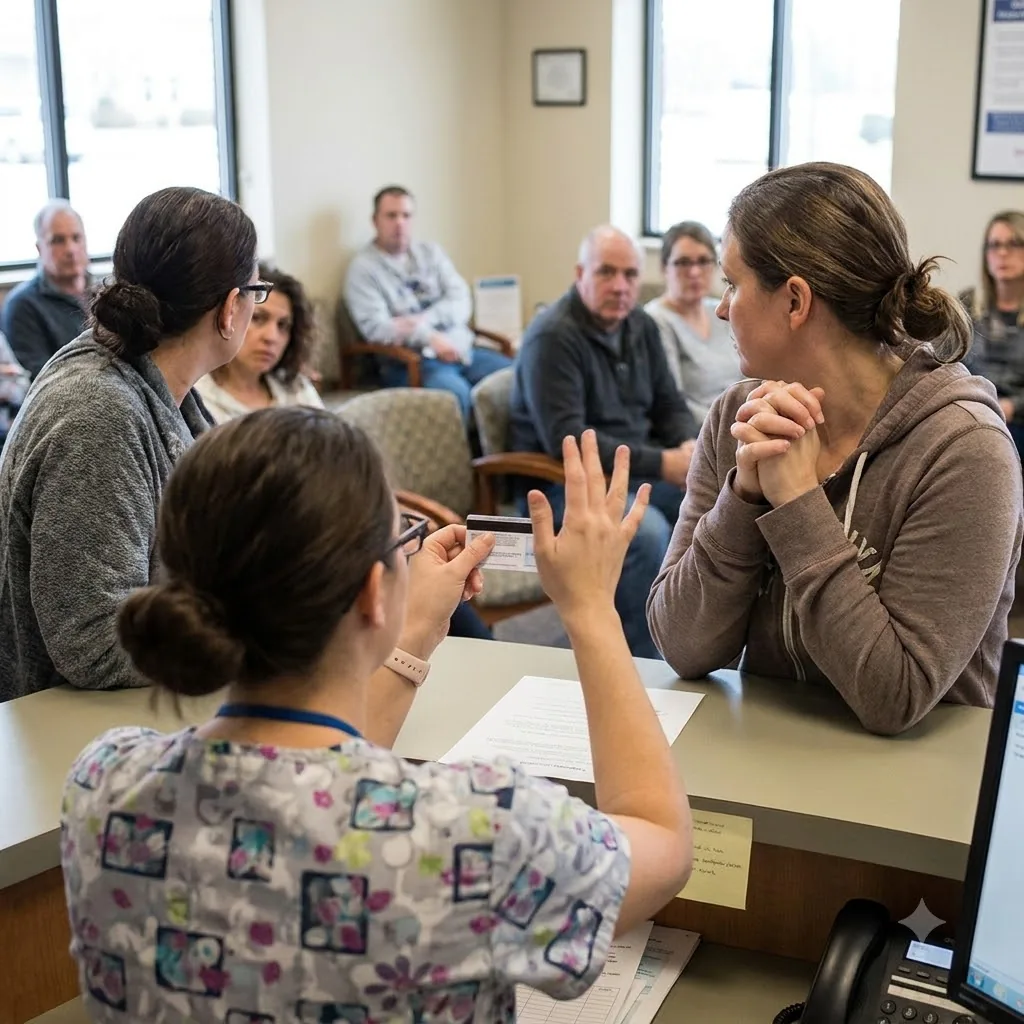
Dana Pike held up Tasha Coleman’s insurance card over the urgent care counter and said, loud enough for the whole waiting room, “This coverage is dead, ma’am. You can’t use an inactive card and expect treatment.” Tasha had only stepped up to hand over her ID and clipboard while a toddler coughed into a sleeve two chairs over and my scanner was still spitting out labels, and in one sentence Dana turned a normal check-in into a public accusation.
I was at the next terminal, logging a co-pay and calling out a last name for signature, when the whole front counter stalled. Chairs scraped. A man in a hunting cap near the door looked up so fast he nearly dropped his phone. Eli Benton, who had been tapping his knee with his folded intake paper, leaned forward and said to nobody in particular, “They always try that.”
Tasha kept both hands flat on the counter. Her photo ID was still under Dana’s wrist.
“My card isn’t dead,” she said. “Please look at it again.”
Dana gave a short shake of the card like that ended the question. “It came back inactive. If your insurance terminated, that’s not our problem. You can be seen as self-pay if you want to put a card on file.”
That changed the room instantly. A self-pay urgent care visit is not a small number, and everybody in earshot knew it. The older couple by the wall stopped talking. A mother with a little girl waiting on a strep test tightened her mouth and stared at Tasha like she had dragged everybody into something dirty.
Tasha’s shoulders went stiff, but her voice stayed even. “I used that same plan for my prescription last week.”
Dana slid the insurance card back across the counter with two fingers, except she didn’t let go all the way. “Then they haven’t updated their system. Here, it’s inactive.”
I could see my own reflection in the plexiglass and the blue band across Tasha’s card. The card was bent at one corner from being kept in a wallet. There was nothing dramatic about it. It was just a standard employer plan card with the member name, group number, Rx line, payer address, and the effective date printed in the lower right corner.
Dana’s screen was angled away from the waiting room but not from me. I couldn’t see everything, only the verification window and the red box she had clicked into. She was using the kind of clipped front-desk voice people use when they want process to sound final.
“Tasha Coleman,” she said, reading from the screen. “No active eligibility on file for today’s date.”
Tasha pointed at the card. “Read the date.”
Dana didn’t. “Ma’am, arguing won’t reactivate your insurance.”
That got a little laugh from the hunting-cap man. Eli gave one quick nod like he had heard the official version and that was enough for him. I hate how fast a room will borrow authority and turn it into permission.
I reached for the card before Dana could pull it back again. “Let me scan the front one more time.”
Dana looked at me. “I already did.”
I kept my hand out. “I heard you.”
For a second all I could hear was the printer ticking and a kid whining for apple juice. Then Dana let me take it.
Tasha’s name matched her ID. Same spelling, same middle initial. I looked at the lower corner because that was where her finger had landed when she said read the date. The effective date was plain as day. So was the line underneath it.
Effective 01/01 of this year.
Issue date 12/18 of last year.
There was no termination date printed anywhere on the card face. That alone didn’t prove active coverage, but it also didn’t match the way Dana had said “dead” like the card itself was old trash somebody kept trying to recycle. The card was newly issued for the current plan year.
I turned it over. Claims address. Member services. Pharmacy help desk. Nothing strange. Just an ordinary card that did not look expired, outdated, or mismatched.
Tasha watched my face instead of Dana’s.
I asked, “Dana, did the system reject the member or the payer route?”
Her jaw tightened. “Inactive eligibility.”
“Through which payer ID?”
She reached for the mouse without answering. That was when I noticed the card in my hand had one more ordinary detail printed under the plan logo, small enough to miss if you were moving fast at check-in.
The plan name on the front and the payer code on Dana’s verification window were not the same.
I looked back at the screen, then at the card, then at Dana.
And for the first time since she raised her voice, I knew the accusation had a crack in it big enough to matter.
Dana Pike held up Tasha Coleman’s insurance card over the urgent care counter and said, loud enough for the whole waiting room, “This coverage is dead, ma’am. You can’t use an inactive card and expect treatment.” Tasha had only stepped up to hand over her ID and clipboard while a toddler coughed into a sleeve two chairs over and my scanner was still spitting out labels, and in one sentence Dana turned a normal check-in into a public accusation.
I was at the next terminal, logging a co-pay and calling out a last name for signature, when the whole front counter stalled. Chairs scraped. A man in a hunting cap near the door looked up so fast he nearly dropped his phone. Eli Benton, who had been tapping his knee with his folded intake paper, leaned forward and said to nobody in particular, “They always try that.”
Tasha kept both hands flat on the counter. Her photo ID was still under Dana’s wrist.
“My card isn’t dead,” she said. “Please look at it again.”
Dana gave a short shake of the card like that ended the question. “It came back inactive. If your insurance terminated, that’s not our problem. You can be seen as self-pay if you want to put a card on file.”
That changed the room instantly. A self-pay urgent care visit is not a small number, and everybody in earshot knew it. The older couple by the wall stopped talking. A mother with a little girl waiting on a strep test tightened her mouth and stared at Tasha like she had dragged everybody into something dirty.
Tasha’s shoulders went stiff, but her voice stayed even. “I used that same plan for my prescription last week.”
Dana slid the insurance card back across the counter with two fingers, except she didn’t let go all the way. “Then they haven’t updated their system. Here, it’s inactive.”
I could see my own reflection in the plexiglass and the blue band across Tasha’s card. The card was bent at one corner from being kept in a wallet. There was nothing dramatic about it. It was just a standard employer plan card with the member name, group number, Rx line, payer address, and the effective date printed in the lower right corner.
Dana’s screen was angled away from the waiting room but not from me. I couldn’t see everything, only the verification window and the red box she had clicked into. She was using the kind of clipped front-desk voice people use when they want process to sound final.
“Tasha Coleman,” she said, reading from the screen. “No active eligibility on file for today’s date.”
Tasha pointed at the card. “Read the date.”
Dana didn’t. “Ma’am, arguing won’t reactivate your insurance.”
That got a little laugh from the hunting-cap man. Eli gave one quick nod like he had heard the official version and that was enough for him. I hate how fast a room will borrow authority and turn it into permission.
I reached for the card before Dana could pull it back again. “Let me scan the front one more time.”
Dana looked at me. “I already did.”
I kept my hand out. “I heard you.”
For a second all I could hear was the printer ticking and a kid whining for apple juice. Then Dana let me take it.
Tasha’s name matched her ID. Same spelling, same middle initial. I looked at the lower corner because that was where her finger had landed when she said read the date. The effective date was plain as day. So was the line underneath it.
Effective 01/01 of this year.
Issue date 12/18 of last year.
There was no termination date printed anywhere on the card face. That alone didn’t prove active coverage, but it also didn’t match the way Dana had said “dead” like the card itself was old trash somebody kept trying to recycle. The card was newly issued for the current plan year.
I turned it over. Claims address. Member services. Pharmacy help desk. Nothing strange. Just an ordinary card that did not look expired, outdated, or mismatched.
Tasha watched my face instead of Dana’s.
I asked, “Dana, did the system reject the member or the payer route?”
Her jaw tightened. “Inactive eligibility.”
“Through which payer ID?”
She reached for the mouse without answering. That was when I noticed the card in my hand had one more ordinary detail printed under the plan logo, small enough to miss if you were moving fast at check-in.
The plan name on the front and the payer code on Dana’s verification window were not the same.
I looked back at the screen, then at the card, then at Dana.
And for the first time since she raised her voice, I knew the accusation had a crack in it big enough to matter.