Story code: ST-001375
Part 1: The Severed Lifeline
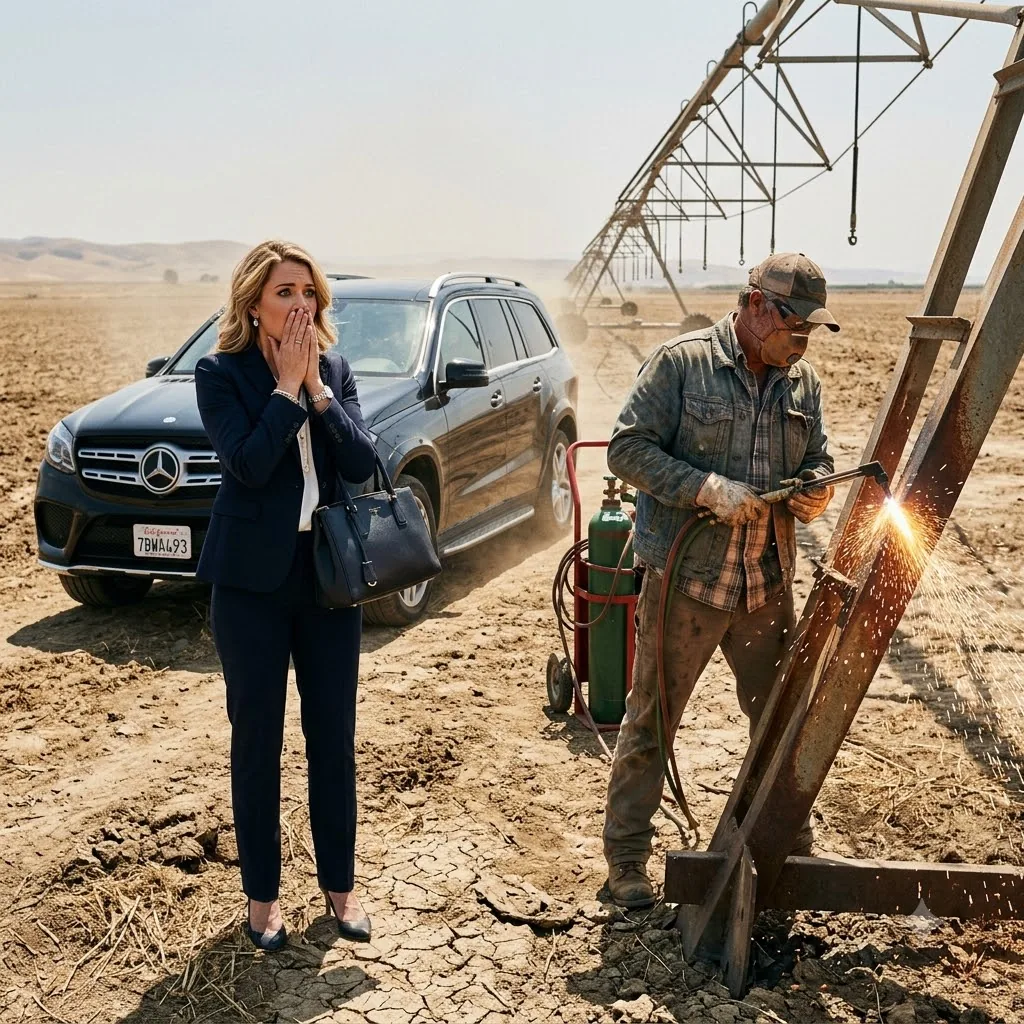
Sarah pushed the heavy door of her climate-controlled SUV outward, meeting a wall of dry, oppressive heat. She stepped onto the cracked dirt expecting the quiet defeat of a broken man waiting with a pen. Instead, the sharp, toxic stench of burning ozone and vaporized hydraulic fluid coated the back of her throat. A harsh hissing sound cut through the dead air of the drought-stricken valley, a violent mechanical screech that made no sense on an abandoned farm.
She clutched the leather portfolio containing the buyout agreement. Her heels sank into the loose topsoil as she navigated the rutted tractor path. The farm was a sprawling graveyard of withered crops, brittle stalks of corn snapping under the hot wind, but the dead dirt was completely irrelevant to her bosses. The only reason the corporate agriculture board had approved this acquisition was the water rights. The massive steel skeleton of the center-pivot irrigation system stretched for a half-mile across the horizon, a million-dollar lifeline connected directly to the deepest aquifer in the county. It was a mechanical beast of aluminum and iron, designed to pump thousands of gallons an hour.
A shower of white-hot sparks cascaded onto the dry earth beneath the towering main pump housing. Sarah shielded her eyes from the glare. Elias was on his knees in the dirt, wielding an industrial blowtorch. He was methodically slicing through the hardened steel of the primary intake valve.
The sheer absurdity of the sight froze her in place. Elias was completely bankrupt. The ink on his foreclosure notices had dried weeks ago. This buyout was his only way out of absolute ruin, a corporate grace period that would clear his crippling debts in exchange for the land and the machinery. Taking a torch to the pump was tantamount to burning his own parachute. Sarah needed this acquisition finalized by Friday to secure her regional director promotion. She had spent months negotiating the terms, fighting legal battles with his creditors, and anticipating tears, begging, or quiet resignation from the old farmer. She had not prepared for sabotage. Every calculation she had made over the last six months evaporated into the heat waves rising off the severed pipe.
“Elias,” Sarah yelled over the roar of the torch.
He did not flinch. The blue flame continued its steady, devastating path across the reinforced steel casing. Thick grease boiled and hissed, dripping onto his heavy work boots. He was cutting the structural supports that held the immense pressure of the underground water system. Once those gave way, the entire wellhead would collapse. The resulting implosion would permanently seal the borehole and render the millions of dollars of above-ground aluminum piping completely useless.
“Elias, shut that off.” She stepped closer, waving a hand to clear the acrid smoke. “You are destroying corporate collateral. That machinery is the only thing keeping you out of federal court.”
He killed the torch. The sudden silence in the vast, empty field felt heavy, broken only by the pinging of superheated metal rapidly cooling in the dry air. Elias pushed his welding goggles up to his forehead, wiping a streak of soot across his brow with the back of a thick leather glove. His eyes were clear. There was no panic in his expression, no manic desperation of a man backed into a corner. He looked at the glowing, severed steel, then at her pristine tailored suit, and smiled.
It was a small, genuine smile that made Sarah’s stomach drop.
A strange, invasive sensation crept into Sarah’s chest as she watched him examine his destructive work. It was a tight, ugly knot of envy. She spent eighty hours a week terrified of missing an email, terrified of her superiors, terrified of losing her grip on a lifestyle that required her to drive a hundred miles into the wasteland to squeeze blood from dying farms. She was a prisoner to her ambition, constantly adjusting her mask to please people who would replace her in an afternoon.
Elias had nothing left to lose. He was orchestrating his own absolute downfall with his own two hands, severing his last tie to survival, and in the smoke-filled air, he looked entirely at peace. He looked completely free. She gripped the leather portfolio tighter, acutely resentful of the calm radiating from the ruined man. She wanted him to be crying. She wanted him to be grateful for the paperwork in her hands.
“You understand what you are doing,” Sarah stated, fighting to keep her voice level. “The contract requires all infrastructure to remain intact. If you damage the wellhead, the deal is dead. The bank will take the house, they will take the land, and my company will prosecute you for malicious destruction of property.”
Elias reached down and picked up a heavy, long-handled sledgehammer resting in the dirt. He stood up slowly, his joints popping in the quiet air.
He rested the heavy iron head of the hammer against his shoulder. He looked at the farmhouse in the distance, a sagging, weather-beaten structure that had been in his family for three generations. He stared at it for a long moment, as if memorizing the slant of the porch roof. Then he turned his attention back to the massive cast-iron housing of the aquifer pump.
The heat radiating from the freshly cut steel distorted the air between them, making Elias look like a mirage. He stepped forward, planting his boots firmly in the dust. He tightened his grip on the hickory handle, his knuckles turning white under the grime.
“I read the contract,” Elias said, swinging the sledgehammer back in a wide, punishing arc.
Sarah pushed the heavy door of her climate-controlled SUV outward, meeting a wall of dry, oppressive heat. She stepped onto the cracked dirt expecting the quiet defeat of a broken man waiting with a pen. Instead, the sharp, toxic stench of burning ozone and vaporized hydraulic fluid coated the back of her throat. A harsh hissing sound cut through the dead air of the drought-stricken valley, a violent mechanical screech that made no sense on an abandoned farm.
She clutched the leather portfolio containing the buyout agreement. Her heels sank into the loose topsoil as she navigated the rutted tractor path. The farm was a sprawling graveyard of withered crops, brittle stalks of corn snapping under the hot wind, but the dead dirt was completely irrelevant to her bosses. The only reason the corporate agriculture board had approved this acquisition was the water rights. The massive steel skeleton of the center-pivot irrigation system stretched for a half-mile across the horizon, a million-dollar lifeline connected directly to the deepest aquifer in the county. It was a mechanical beast of aluminum and iron, designed to pump thousands of gallons an hour.
A shower of white-hot sparks cascaded onto the dry earth beneath the towering main pump housing. Sarah shielded her eyes from the glare. Elias was on his knees in the dirt, wielding an industrial blowtorch. He was methodically slicing through the hardened steel of the primary intake valve.
The sheer absurdity of the sight froze her in place. Elias was completely bankrupt. The ink on his foreclosure notices had dried weeks ago. This buyout was his only way out of absolute ruin, a corporate grace period that would clear his crippling debts in exchange for the land and the machinery. Taking a torch to the pump was tantamount to burning his own parachute. Sarah needed this acquisition finalized by Friday to secure her regional director promotion. She had spent months negotiating the terms, fighting legal battles with his creditors, and anticipating tears, begging, or quiet resignation from the old farmer. She had not prepared for sabotage. Every calculation she had made over the last six months evaporated into the heat waves rising off the severed pipe.
“Elias,” Sarah yelled over the roar of the torch.
He did not flinch. The blue flame continued its steady, devastating path across the reinforced steel casing. Thick grease boiled and hissed, dripping onto his heavy work boots. He was cutting the structural supports that held the immense pressure of the underground water system. Once those gave way, the entire wellhead would collapse. The resulting implosion would permanently seal the borehole and render the millions of dollars of above-ground aluminum piping completely useless.
“Elias, shut that off.” She stepped closer, waving a hand to clear the acrid smoke. “You are destroying corporate collateral. That machinery is the only thing keeping you out of federal court.”
He killed the torch. The sudden silence in the vast, empty field felt heavy, broken only by the pinging of superheated metal rapidly cooling in the dry air. Elias pushed his welding goggles up to his forehead, wiping a streak of soot across his brow with the back of a thick leather glove. His eyes were clear. There was no panic in his expression, no manic desperation of a man backed into a corner. He looked at the glowing, severed steel, then at her pristine tailored suit, and smiled.
It was a small, genuine smile that made Sarah’s stomach drop.
A strange, invasive sensation crept into Sarah’s chest as she watched him examine his destructive work. It was a tight, ugly knot of envy. She spent eighty hours a week terrified of missing an email, terrified of her superiors, terrified of losing her grip on a lifestyle that required her to drive a hundred miles into the wasteland to squeeze blood from dying farms. She was a prisoner to her ambition, constantly adjusting her mask to please people who would replace her in an afternoon.
Elias had nothing left to lose. He was orchestrating his own absolute downfall with his own two hands, severing his last tie to survival, and in the smoke-filled air, he looked entirely at peace. He looked completely free. She gripped the leather portfolio tighter, acutely resentful of the calm radiating from the ruined man. She wanted him to be crying. She wanted him to be grateful for the paperwork in her hands.
“You understand what you are doing,” Sarah stated, fighting to keep her voice level. “The contract requires all infrastructure to remain intact. If you damage the wellhead, the deal is dead. The bank will take the house, they will take the land, and my company will prosecute you for malicious destruction of property.”
Elias reached down and picked up a heavy, long-handled sledgehammer resting in the dirt. He stood up slowly, his joints popping in the quiet air.
He rested the heavy iron head of the hammer against his shoulder. He looked at the farmhouse in the distance, a sagging, weather-beaten structure that had been in his family for three generations. He stared at it for a long moment, as if memorizing the slant of the porch roof. Then he turned his attention back to the massive cast-iron housing of the aquifer pump.
The heat radiating from the freshly cut steel distorted the air between them, making Elias look like a mirage. He stepped forward, planting his boots firmly in the dust. He tightened his grip on the hickory handle, his knuckles turning white under the grime.
“I read the contract,” Elias said, swinging the sledgehammer back in a wide, punishing arc.