Story code: ST-001798
Part 1: Plausible Deniability
Sarah adjusted her reading glasses and stared at the glowing screen of her MacBook. Her fingers moved purposefully over the keys, the clatter sharp in the quiet kitchen. *The traumatizing presence of firearms near Oak Creek Elementary is a burden our children should never have to bear.* She highlighted the word burden, replacing it with terror, then deleted it entirely and typed threat. The cursor blinked at the end of the sentence, steady and demanding. She took a slow breath, inhaling the rich scent of her freshly brewed espresso, and clicked the blue button to post her statement to the neighborhood forum.
Beyond the spotless glass of her kitchen bay window, Marcus stood at the edge of her manicured fescue lawn. He wore a matte-black tactical vest tightly strapped over a heavy flannel shirt. The dark barrel of an AR-15 rested casually against his chest, suspended by a nylon sling.
Sarah took a sip of her coffee. The handmade ceramic mug transferred a comforting warmth to her palms. Outside, Marcus caught her eye through the glass and raised two fingers to the brim of his cap in a clipped, silent greeting.
Sarah did not wave back. She turned away from the window, leaving her laptop open on the pristine quartz island, and walked down the hallway to the mudroom. Her cashmere socks made no sound on the heated oak floorboards.
The security panel beside the garage door glowed a faint, reassuring blue. Sarah punched in her six-digit code. The system gave a soft, double-chirp to indicate the perimeter alarm was disabled. Below the primary keypad sat a secondary panel, a brushed-steel installation she had rush-ordered three weeks ago when the situation out back became intolerable. She pressed and held the heavy release button.
A low, grinding mechanical hum vibrated up through the foundation of the house. Four hundred yards away, at the absolute rear edge of her two-acre property, the twelve-foot iron privacy gate groaned on its motorized hinges. The gate opened directly into the wooded creek bed. It was a steep, unmaintained strip of county land that had been completely overtaken by the encampment.
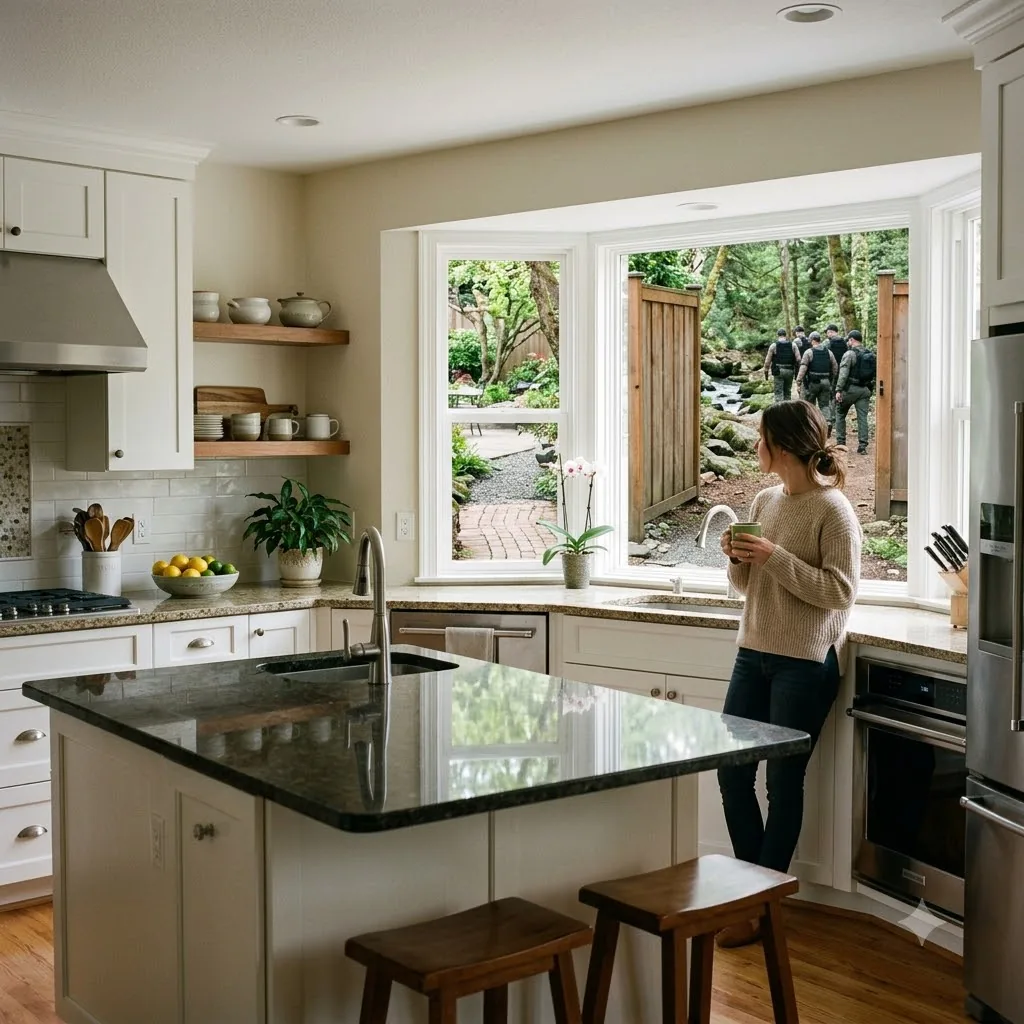
Sarah stepped back into the kitchen. She positioned herself at an angle, hiding her silhouette behind the edge of the linen Roman shades. From this vantage point, she had a clear, unobstructed view of the yard.
Marcus turned and signaled toward the street. Three other men materialized from the shadows of the neighboring empty lot. They wore mismatched surplus camouflage, tactical belts, and heavy combat boots. They moved with a deliberate, aggressive stride, cutting straight across Sarah’s pristine lawn. They bypassed her newly planted hydrangeas and marched directly toward the open iron gate at the back of the property.
Sarah watched the armed men disappear into the dense, overgrown brush. She had spent the entire spring council cycle organizing the Gun-Free Zone initiative. She had stood on the steps of the municipal building holding a megaphone in the freezing rain. She had given a breathless, passionate speech about creating a sanctuary of peace for the community. Now, she stood in her designer kitchen, tracking the movement of four heavily armed vigilantes she had just granted unfettered access to her land.
It was the only way for them to reach the encampment without crossing the public access road where the police cruisers idled in passive observation.
The blue tarps down in the creek started as a single pup tent in late August. By October, it was a sprawling, chaotic settlement of pallets, shopping carts, and canvas. The county cited complex jurisdictional overlaps and flatly refused to clear it. The city claimed their hands were tied by pending litigation. Meanwhile, the encampment crept closer to Sarah’s property line every single night. The smell of burning trash and melting plastic drifted into her bedroom windows while she tried to sleep. On Monday, she found a rusted bicycle frame tipped into her prized azalea bushes. On Wednesday, a man screaming at the sky wandered within fifty feet of her patio before stumbling back into the woods.
Marcus and his self-appointed Oak Creek Defenders had offered to patrol the neighborhood. On the forums, Sarah publicly decried them as a dangerous, fascist militia. In reality, they were a highly effective tool. A blunt, deniable instrument. She never spoke to Marcus. She never exchanged a single text message or email with him. The arrangement was entirely built on unspoken timing. He would stand at the edge of her lawn at precisely eight in the morning. She would disable her alarm and open the gate.
Plausible deniability. If the authorities ever asked, she had simply forgotten to secure her perimeter.
Sarah picked up a microfiber cloth and wiped a microscopic smudge of espresso off the counter. Her phone buzzed on the island. The screen lit up with a notification. The PTA president had liked her post about gun control. A neighbor named Janet commented, thanking Sarah for her unwavering courage in speaking out against the armed patrols.
Sarah unlocked the screen and typed a humble, folded-hands emoji in response.
She looked back out the window. The sun caught the morning frost on the grass, highlighting the heavy, muddy boot prints the men had tracked across her lawn. The woods down by the creek were unnervingly quiet. She gripped the cold stone counter, waiting for the sound of shouting or the panicked scattering of trespassers. She needed them gone to reclaim her peace.
The silence stretched on, thick and heavy in the morning air.
Then, the sharp, unmistakable crack of a gunshot echoed from the creek bed, rattling the glass in her bay window and sending a flock of crows bursting upward from the tree line.
Sarah adjusted her reading glasses and stared at the glowing screen of her MacBook. Her fingers moved purposefully over the keys, the clatter sharp in the quiet kitchen. *The traumatizing presence of firearms near Oak Creek Elementary is a burden our children should never have to bear.* She highlighted the word burden, replacing it with terror, then deleted it entirely and typed threat. The cursor blinked at the end of the sentence, steady and demanding. She took a slow breath, inhaling the rich scent of her freshly brewed espresso, and clicked the blue button to post her statement to the neighborhood forum.
Beyond the spotless glass of her kitchen bay window, Marcus stood at the edge of her manicured fescue lawn. He wore a matte-black tactical vest tightly strapped over a heavy flannel shirt. The dark barrel of an AR-15 rested casually against his chest, suspended by a nylon sling.
Sarah took a sip of her coffee. The handmade ceramic mug transferred a comforting warmth to her palms. Outside, Marcus caught her eye through the glass and raised two fingers to the brim of his cap in a clipped, silent greeting.
Sarah did not wave back. She turned away from the window, leaving her laptop open on the pristine quartz island, and walked down the hallway to the mudroom. Her cashmere socks made no sound on the heated oak floorboards.
The security panel beside the garage door glowed a faint, reassuring blue. Sarah punched in her six-digit code. The system gave a soft, double-chirp to indicate the perimeter alarm was disabled. Below the primary keypad sat a secondary panel, a brushed-steel installation she had rush-ordered three weeks ago when the situation out back became intolerable. She pressed and held the heavy release button.
A low, grinding mechanical hum vibrated up through the foundation of the house. Four hundred yards away, at the absolute rear edge of her two-acre property, the twelve-foot iron privacy gate groaned on its motorized hinges. The gate opened directly into the wooded creek bed. It was a steep, unmaintained strip of county land that had been completely overtaken by the encampment.
Sarah stepped back into the kitchen. She positioned herself at an angle, hiding her silhouette behind the edge of the linen Roman shades. From this vantage point, she had a clear, unobstructed view of the yard.
Marcus turned and signaled toward the street. Three other men materialized from the shadows of the neighboring empty lot. They wore mismatched surplus camouflage, tactical belts, and heavy combat boots. They moved with a deliberate, aggressive stride, cutting straight across Sarah’s pristine lawn. They bypassed her newly planted hydrangeas and marched directly toward the open iron gate at the back of the property.
Sarah watched the armed men disappear into the dense, overgrown brush. She had spent the entire spring council cycle organizing the Gun-Free Zone initiative. She had stood on the steps of the municipal building holding a megaphone in the freezing rain. She had given a breathless, passionate speech about creating a sanctuary of peace for the community. Now, she stood in her designer kitchen, tracking the movement of four heavily armed vigilantes she had just granted unfettered access to her land.
It was the only way for them to reach the encampment without crossing the public access road where the police cruisers idled in passive observation.
The blue tarps down in the creek started as a single pup tent in late August. By October, it was a sprawling, chaotic settlement of pallets, shopping carts, and canvas. The county cited complex jurisdictional overlaps and flatly refused to clear it. The city claimed their hands were tied by pending litigation. Meanwhile, the encampment crept closer to Sarah’s property line every single night. The smell of burning trash and melting plastic drifted into her bedroom windows while she tried to sleep. On Monday, she found a rusted bicycle frame tipped into her prized azalea bushes. On Wednesday, a man screaming at the sky wandered within fifty feet of her patio before stumbling back into the woods.
Marcus and his self-appointed Oak Creek Defenders had offered to patrol the neighborhood. On the forums, Sarah publicly decried them as a dangerous, fascist militia. In reality, they were a highly effective tool. A blunt, deniable instrument. She never spoke to Marcus. She never exchanged a single text message or email with him. The arrangement was entirely built on unspoken timing. He would stand at the edge of her lawn at precisely eight in the morning. She would disable her alarm and open the gate.
Plausible deniability. If the authorities ever asked, she had simply forgotten to secure her perimeter.
Sarah picked up a microfiber cloth and wiped a microscopic smudge of espresso off the counter. Her phone buzzed on the island. The screen lit up with a notification. The PTA president had liked her post about gun control. A neighbor named Janet commented, thanking Sarah for her unwavering courage in speaking out against the armed patrols.
Sarah unlocked the screen and typed a humble, folded-hands emoji in response.
She looked back out the window. The sun caught the morning frost on the grass, highlighting the heavy, muddy boot prints the men had tracked across her lawn. The woods down by the creek were unnervingly quiet. She gripped the cold stone counter, waiting for the sound of shouting or the panicked scattering of trespassers. She needed them gone to reclaim her peace.
The silence stretched on, thick and heavy in the morning air.
Then, the sharp, unmistakable crack of a gunshot echoed from the creek bed, rattling the glass in her bay window and sending a flock of crows bursting upward from the tree line.