Story code: ST-000996
Part 1: The Twelve-Panel Cup
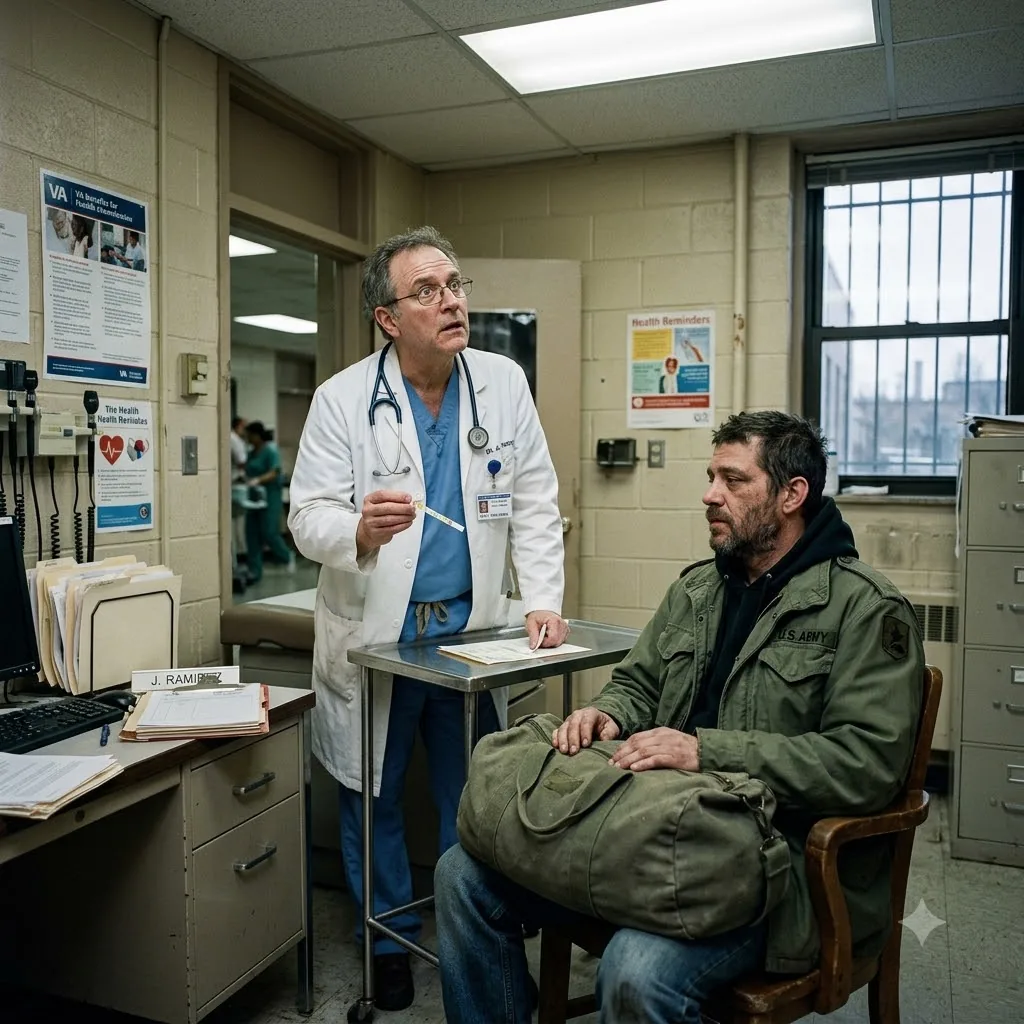
Dr. Sarah Thorne held the plastic specimen cup up to the harsh fluorescent light of Exam Room 4. The urine inside was warm, the temperature strip registering a valid ninety-six degrees, checking the first box on the mandatory VA compliance form. Across the cramped room, Elias sat on the edge of the examination table, his boots scuffing the peeling linoleum. Outside the frosted window, the gray decay of the Ohio valley stretched out in freezing rain, a landscape currently suffocating under a fentanyl epidemic that filled Thorne’s clinic with casualties every single day. She set the cup down on the stainless steel counter with a sharp, plastic clack. This was a routine screening, mandatory for Elias to keep his benefits. It was also the exact moment Thorne usually watched a veteran’s life unravel.
Elias stared at the floor, the muscles in his jaw ticking. He gripped the edge of the exam table so hard his knuckles stretched white against his weathered skin. Thorne knew the statistics of this county by heart. She knew the death toll, the diversion tactics, the desperate lies told in this exact room by good men hollowed out by pain and addiction. She ran a rigid practice because flexibility killed patients. VA protocol dictated immediate cessation of all scheduled medications and a mandatory referral to the substance abuse program upon a positive result. No exceptions. Thorne peeled back the adhesive label on the twelve-panel test cup, her gloved fingers precise and mechanical. The paper tore with a loud zip in the silent room. She did not look at Elias. Making eye contact right before a failure only made the inevitable confrontation worse.
The test strips inside the plastic chamber began to wick the amber fluid upward. Thorne crossed her arms over her white coat, her eyes tracking the slow creep of moisture across the paper membranes. Cocaine, amphetamines, benzodiazepines, barbiturates. And the opiates. Especially the opiates. The synthetic variants flooding the streets were cheap and lethal, and they always left a trace. The red lines began to materialize, faint at first, then darkening as the chemical reagents activated. One line meant positive. Two lines meant negative. Thorne waited for the singular, damning red line in the opioid column to solidify and end Elias’s current treatment plan.
The silence in Exam Room 4 felt heavy, pressing down on the cracked plastic chairs and the outdated medical posters curling at the edges. A siren wailed faintly in the distance, a common soundtrack for a town losing a war against narcotics. Elias shifted his weight, the paper barrier on the exam table crinkling sharply. He dragged a hand over his face, a gesture Thorne had seen a thousand times from men bracing for the worst. She kept her focus locked on the plastic cup. Protocol was her armor. Without the strict adherence to federal regulations, the sheer volume of tragedy in this clinic would consume her entirely. She noted the control lines forming across the top row, validating the test. Negative for amphetamines. Negative for cocaine. Negative for THC. The fluid continued its slow, inexorable climb into the final testing block.
Thorne reached for her pen, ready to check the box that would trigger the cascade of administrative actions, the suspension of his file, the mandatory counseling mandate. She positioned the tip of the blue ink pen over the official VA form.
The moisture hit the synthetic opiate zone. The strips saturated. Thorne watched for the red lines. Instead of a standard chemical reaction, the strip for the fentanyl analog panel turned a violent, bruised purple.
Thorne leaned in, her brow furrowing. VA-issued test strips utilized a standard gold-conjugate immunoassay. They turned red or pink. They did not turn purple.
The dark violet color began to bleed laterally, spreading across the neighboring panels like an ink drop in water, obliterating the other test results. The plastic casing of the cup emitted a faint, sharp hiss. Thorne froze, her pen hovering an inch above the clipboard. The purple stain darkened to a pitch black, eating through the paper membrane of the test strip itself. A tiny wisp of acrid, metallic-smelling vapor curled up from the edge of the sealed plastic lid. This was not a reaction to a street narcotic. This was not a chemical interaction Thorne had ever seen in a decade of toxicology screenings. Elias stopped breathing, his eyes fixed on the black, smoking stain expanding inside the plastic chamber. Thorne slowly lowered her pen, the strict federal guidelines in her head suddenly useless against the impossible black corrosion eating through the evidence.
Dr. Sarah Thorne held the plastic specimen cup up to the harsh fluorescent light of Exam Room 4. The urine inside was warm, the temperature strip registering a valid ninety-six degrees, checking the first box on the mandatory VA compliance form. Across the cramped room, Elias sat on the edge of the examination table, his boots scuffing the peeling linoleum. Outside the frosted window, the gray decay of the Ohio valley stretched out in freezing rain, a landscape currently suffocating under a fentanyl epidemic that filled Thorne’s clinic with casualties every single day. She set the cup down on the stainless steel counter with a sharp, plastic clack. This was a routine screening, mandatory for Elias to keep his benefits. It was also the exact moment Thorne usually watched a veteran’s life unravel.
Elias stared at the floor, the muscles in his jaw ticking. He gripped the edge of the exam table so hard his knuckles stretched white against his weathered skin. Thorne knew the statistics of this county by heart. She knew the death toll, the diversion tactics, the desperate lies told in this exact room by good men hollowed out by pain and addiction. She ran a rigid practice because flexibility killed patients. VA protocol dictated immediate cessation of all scheduled medications and a mandatory referral to the substance abuse program upon a positive result. No exceptions. Thorne peeled back the adhesive label on the twelve-panel test cup, her gloved fingers precise and mechanical. The paper tore with a loud zip in the silent room. She did not look at Elias. Making eye contact right before a failure only made the inevitable confrontation worse.
The test strips inside the plastic chamber began to wick the amber fluid upward. Thorne crossed her arms over her white coat, her eyes tracking the slow creep of moisture across the paper membranes. Cocaine, amphetamines, benzodiazepines, barbiturates. And the opiates. Especially the opiates. The synthetic variants flooding the streets were cheap and lethal, and they always left a trace. The red lines began to materialize, faint at first, then darkening as the chemical reagents activated. One line meant positive. Two lines meant negative. Thorne waited for the singular, damning red line in the opioid column to solidify and end Elias’s current treatment plan.
The silence in Exam Room 4 felt heavy, pressing down on the cracked plastic chairs and the outdated medical posters curling at the edges. A siren wailed faintly in the distance, a common soundtrack for a town losing a war against narcotics. Elias shifted his weight, the paper barrier on the exam table crinkling sharply. He dragged a hand over his face, a gesture Thorne had seen a thousand times from men bracing for the worst. She kept her focus locked on the plastic cup. Protocol was her armor. Without the strict adherence to federal regulations, the sheer volume of tragedy in this clinic would consume her entirely. She noted the control lines forming across the top row, validating the test. Negative for amphetamines. Negative for cocaine. Negative for THC. The fluid continued its slow, inexorable climb into the final testing block.
Thorne reached for her pen, ready to check the box that would trigger the cascade of administrative actions, the suspension of his file, the mandatory counseling mandate. She positioned the tip of the blue ink pen over the official VA form.
The moisture hit the synthetic opiate zone. The strips saturated. Thorne watched for the red lines. Instead of a standard chemical reaction, the strip for the fentanyl analog panel turned a violent, bruised purple.
Thorne leaned in, her brow furrowing. VA-issued test strips utilized a standard gold-conjugate immunoassay. They turned red or pink. They did not turn purple.
The dark violet color began to bleed laterally, spreading across the neighboring panels like an ink drop in water, obliterating the other test results. The plastic casing of the cup emitted a faint, sharp hiss. Thorne froze, her pen hovering an inch above the clipboard. The purple stain darkened to a pitch black, eating through the paper membrane of the test strip itself. A tiny wisp of acrid, metallic-smelling vapor curled up from the edge of the sealed plastic lid. This was not a reaction to a street narcotic. This was not a chemical interaction Thorne had ever seen in a decade of toxicology screenings. Elias stopped breathing, his eyes fixed on the black, smoking stain expanding inside the plastic chamber. Thorne slowly lowered her pen, the strict federal guidelines in her head suddenly useless against the impossible black corrosion eating through the evidence.