Story code: ST-000568
Part 1: Room 302
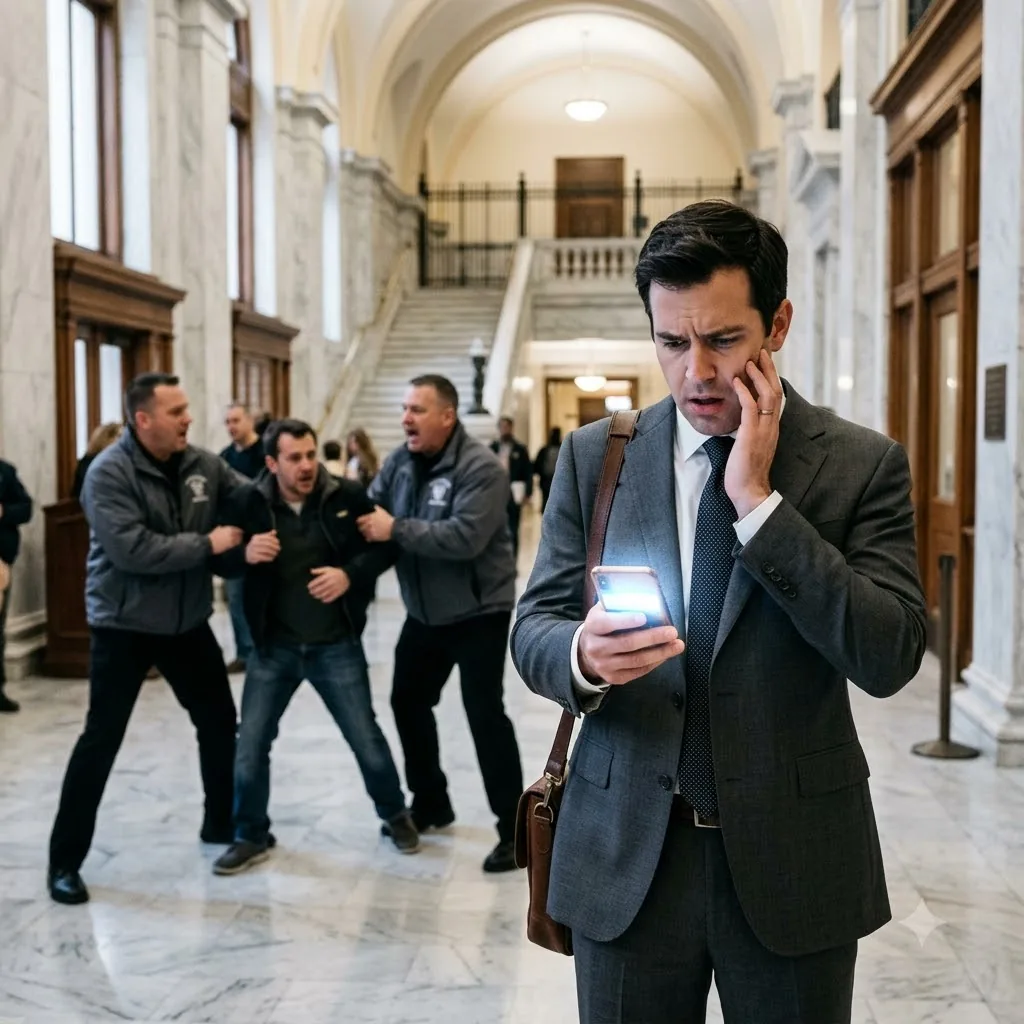
The screen of my personal phone lit up with a pale blue banner just as I poured my morning coffee. I froze with the mug halfway to my mouth, watching the steam curl around the glowing glass. The icon next to the notification was a simple geometric owl. It was a dead project, a phantom beta test scrubbed from every hard drive I owned five years ago. I stared at the text glowing against the lock screen. It displayed a name, Mateo Vargas, followed by a location and a timestamp. Municipal Courthouse, Room 302. Nine-fourteen in the morning.
I set the mug down so hard hot coffee sloshed over my knuckles. I ignored the burn, grabbed my coat, and bypassed my security detail entirely. I told them I needed a solitary walk and commanded them to wait by the gates. The crisp autumn air hit me as I crossed the plaza toward the towering limestone pillars of the municipal courthouse. As Mayor, I had staked my entire re-election on shutting out federal overreach. Just three weeks prior, I signed an executive order permanently severing our local dockets from all national databases.
We spent four million dollars auditing the network to guarantee its integrity. We fired three separate IT contractors who left lingering vulnerabilities in the code. I stood at a podium on live television and promised every terrified family in this city that our records were impenetrable. No federal agency could cross-reference utility bills or court dockets to map their locations. The agencies were effectively blind here. They had been resorting to desperate, random sweeps, knocking on doors in the dark. The notification on my phone represented an impossible breach.
I pushed through the heavy brass doors of the courthouse, flashing my badge at the guards. They straightened up, startled to see me rushing through the lobby without my usual entourage, but I waved them down and kept walking. The cavernous marble halls echoed with the sounds of shuffling feet and distressed whispers. I checked the lock screen again. Nine-ten. I took the eastern stairwell two steps at a time to the third floor. I needed to prove the alert was just a ghost-glitch, an echo of obsolete code bouncing off a forgotten server.
Room 302 was a massive space packed with frustrated citizens waiting to dispute minor infractions. I slipped through the heavy oak doors and took a seat in the back row of the pews. The air smelled of damp wool and industrial floor wax. I scanned the crowded room. My eyes locked onto a man in a faded yellow construction jacket sitting near the center aisle. He was twisting a crumpled citation in his calloused hands, his knee bouncing with nervous energy. It had to be Mateo. I watched the digital clock above the judge’s bench tick forward. Nine-twelve. Nine-thirteen.
At exactly nine-fourteen, the heavy wooden doors at the back of the courtroom swung open. Two men walked in. They wore unzipped windbreakers over plain gray t-shirts, heavy denim jeans, and scuffed tactical boots. They did not look like local law enforcement. They possessed the rigid, heavy-footed posture of men used to wearing body armor, now poorly disguised as regular civilians. One had a thick neck and a pale scar cutting through his eyebrow. The other kept his right hand hovering rigidly near his waistband. They moved with a terrifying, synchronized efficiency.
They did not scan the room. They did not check in with the armed bailiff or the court clerk. They walked directly down the center aisle, their eyes locked entirely on the man in the yellow jacket. The man on the left stepped into the pew, blocking Mateo from the inside. The man on the right placed a heavy, immovable hand on Mateo’s shoulder. I leaned forward, straining to hear over the monotonous drone of the clerk calling the next docket number. The agent leaned down and whispered a harsh command into Mateo’s ear. It was a short string of administrative codes, a phrase so brutally specific it made the blood drain entirely from my face.
Mateo did not struggle. He dropped his crumpled citation on the bench, stood up with his head completely bowed, and let the two men escort him out the side exit. Nobody else in the crowded room even noticed. The judge kept stamping files. The bailiff kept scrolling on his phone. A highly targeted federal extraction had just occurred in under thirty seconds, entirely off the books, inside our locked-down sanctuary facility. I sat alone in the wooden pew for a long time after the side door swung shut behind them. I pulled my phone from my pocket with a shaking hand. The pale blue banner was still there.
As I watched, the screen flashed. A new notification slid down from the top edge of the glass. A new name. A new room number. A timestamp twenty-two minutes from now. The precision was surgical, absolute, and completely impossible given the firewall we had built around the municipal grid. I stared at the little geometric owl icon sitting on my lock screen, my thumb hovering over the dead beta-app I had coded myself in my basement five years ago.
The screen of my personal phone lit up with a pale blue banner just as I poured my morning coffee. I froze with the mug halfway to my mouth, watching the steam curl around the glowing glass. The icon next to the notification was a simple geometric owl. It was a dead project, a phantom beta test scrubbed from every hard drive I owned five years ago. I stared at the text glowing against the lock screen. It displayed a name, Mateo Vargas, followed by a location and a timestamp. Municipal Courthouse, Room 302. Nine-fourteen in the morning.
I set the mug down so hard hot coffee sloshed over my knuckles. I ignored the burn, grabbed my coat, and bypassed my security detail entirely. I told them I needed a solitary walk and commanded them to wait by the gates. The crisp autumn air hit me as I crossed the plaza toward the towering limestone pillars of the municipal courthouse. As Mayor, I had staked my entire re-election on shutting out federal overreach. Just three weeks prior, I signed an executive order permanently severing our local dockets from all national databases.
We spent four million dollars auditing the network to guarantee its integrity. We fired three separate IT contractors who left lingering vulnerabilities in the code. I stood at a podium on live television and promised every terrified family in this city that our records were impenetrable. No federal agency could cross-reference utility bills or court dockets to map their locations. The agencies were effectively blind here. They had been resorting to desperate, random sweeps, knocking on doors in the dark. The notification on my phone represented an impossible breach.
I pushed through the heavy brass doors of the courthouse, flashing my badge at the guards. They straightened up, startled to see me rushing through the lobby without my usual entourage, but I waved them down and kept walking. The cavernous marble halls echoed with the sounds of shuffling feet and distressed whispers. I checked the lock screen again. Nine-ten. I took the eastern stairwell two steps at a time to the third floor. I needed to prove the alert was just a ghost-glitch, an echo of obsolete code bouncing off a forgotten server.
Room 302 was a massive space packed with frustrated citizens waiting to dispute minor infractions. I slipped through the heavy oak doors and took a seat in the back row of the pews. The air smelled of damp wool and industrial floor wax. I scanned the crowded room. My eyes locked onto a man in a faded yellow construction jacket sitting near the center aisle. He was twisting a crumpled citation in his calloused hands, his knee bouncing with nervous energy. It had to be Mateo. I watched the digital clock above the judge’s bench tick forward. Nine-twelve. Nine-thirteen.
At exactly nine-fourteen, the heavy wooden doors at the back of the courtroom swung open. Two men walked in. They wore unzipped windbreakers over plain gray t-shirts, heavy denim jeans, and scuffed tactical boots. They did not look like local law enforcement. They possessed the rigid, heavy-footed posture of men used to wearing body armor, now poorly disguised as regular civilians. One had a thick neck and a pale scar cutting through his eyebrow. The other kept his right hand hovering rigidly near his waistband. They moved with a terrifying, synchronized efficiency.
They did not scan the room. They did not check in with the armed bailiff or the court clerk. They walked directly down the center aisle, their eyes locked entirely on the man in the yellow jacket. The man on the left stepped into the pew, blocking Mateo from the inside. The man on the right placed a heavy, immovable hand on Mateo’s shoulder. I leaned forward, straining to hear over the monotonous drone of the clerk calling the next docket number. The agent leaned down and whispered a harsh command into Mateo’s ear. It was a short string of administrative codes, a phrase so brutally specific it made the blood drain entirely from my face.
Mateo did not struggle. He dropped his crumpled citation on the bench, stood up with his head completely bowed, and let the two men escort him out the side exit. Nobody else in the crowded room even noticed. The judge kept stamping files. The bailiff kept scrolling on his phone. A highly targeted federal extraction had just occurred in under thirty seconds, entirely off the books, inside our locked-down sanctuary facility. I sat alone in the wooden pew for a long time after the side door swung shut behind them. I pulled my phone from my pocket with a shaking hand. The pale blue banner was still there.
As I watched, the screen flashed. A new notification slid down from the top edge of the glass. A new name. A new room number. A timestamp twenty-two minutes from now. The precision was surgical, absolute, and completely impossible given the firewall we had built around the municipal grid. I stared at the little geometric owl icon sitting on my lock screen, my thumb hovering over the dead beta-app I had coded myself in my basement five years ago.