Story code: ST-001173
Part 1: Culture Alignment
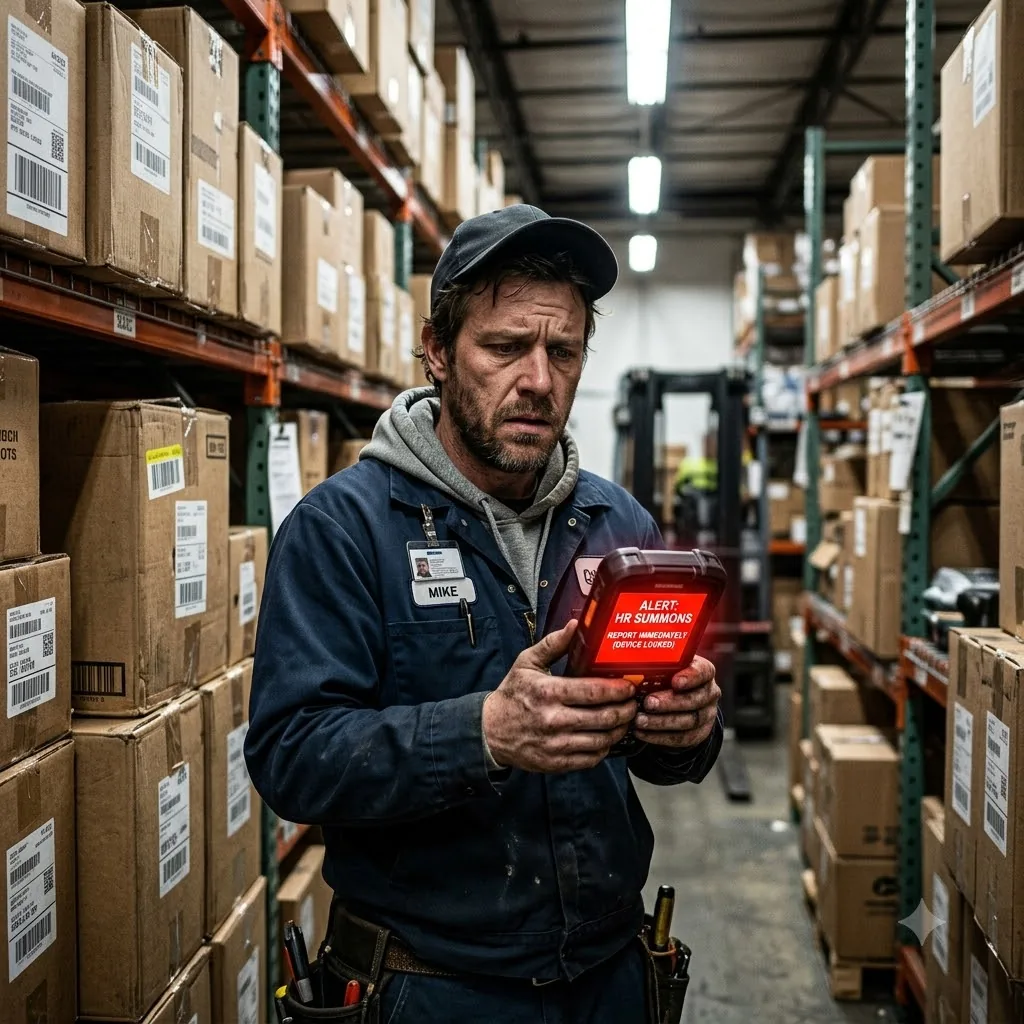
The cardboard box weighed forty pounds, sliding easily from the conveyor belt to the pallet as Marcus triggered his handheld inventory scanner. Instead of the familiar green confirmation beep that usually marked his rhythm, the device emitted a harsh, sustained electronic whine. The screen locked instantly, projecting a flashing red message into the dim warehouse lighting. MANDATORY HR SUMMONS: CULTURE ALIGNMENT.
Marcus tapped the side of the heavy plastic housing, hoping for a routine system glitch. The conveyor belt kept moving. Three more boxes bumped against the metal stopper, grinding against each other. He pressed the reset sequence, holding the power button and the trigger simultaneously, a trick another loader had shown him on his second day. The screen refused to clear. The red letters pulsed, locking him out of the entire inventory system. His workstation was dead, and production on his line was coming to a halted bottleneck.
A forklift beeped its reverse warning two aisles over, masking the sound of his floor supervisor approaching until a heavy, gloved hand landed on his shoulder. The supervisor glanced at the locked screen, offered a grim shake of his head, and pointed a thumb toward the front administrative offices. No words were exchanged. There was no argument to be made. Marcus set the useless scanner on the metal rack, turned away from his unfinished pallet, and started the long walk down the main aisle.
Panic flared cold and sharp in his chest, making it difficult to draw a full breath. This warehouse job was not just a paycheck. It was the mandated anchor of his state parole release program. For three grueling months, he had maintained a completely flawless attendance record. He clocked in fifteen minutes early for every single shift. He took exactly twenty-nine minutes for his thirty-minute meal breaks. He kept his head down, crushed his daily packing quotas, and drove straight back to his approved transitional housing unit every single night.
A termination would trigger an automatic violation report to his parole officer within twenty-four hours. A violation report meant a hearing, and a hearing almost certainly meant going back inside.
He wiped his sweating palms on his heavy denim work pants. The concrete floor of Sector 4 seemed to stretch out for miles, lined with towering steel racks of consumer goods. As he walked past his coworkers, he kept his eyes locked straight ahead, avoiding the curious stares of the people he loaded trucks with. He mentally cataloged every single interaction he had endured over the past two weeks. He spoke to no one unless directly spoken to first. He ate his cold turkey sandwiches in the driver’s seat of his aging sedan with the radio off. He actively walked away from the breakroom whenever the older guys started complaining about upper management. There was absolutely nothing he had done to violate any cultural alignment policy, primarily because he had entirely removed himself from the warehouse culture altogether.
The air grew significantly cooler as he crossed the invisible boundary between the dusty warehouse floor and the corporate wing. The heavy industrial hum of conveyor belts and diesel engines faded behind a heavy set of double steel doors. Now his steel-toed boots thudded loudly on the thin, gray commercial carpeting. The sudden quiet in the hallway felt oppressive, amplifying the rushing sound of blood in his ears.
He adjusted his neon high-visibility vest, wishing he had taken a moment in the restroom to wash the gray cardboard dust off his hands and face. The pristine walls were lined with framed motivational posters that made his stomach twist with anxiety. He desperately needed to keep this position. He needed the program compliance forms signed at the end of the month. Without this job, the fragile, quiet life he had built over the last ninety days would collapse instantly.
He promised himself he would apologize for whatever they accused him of doing. He would nod, accept the write-up, sign whatever disciplinary forms they pushed across the desk, and promise to be better. Pride was a dangerous luxury he could not afford to indulge.
He finally stopped in front of the heavy door labeled Human Resources. The frosted glass pane obscured the interior, letting only a vague, shadowy silhouette of a person sitting at the desk show through. His own reflection in the glass looked pale and exhausted, shadows dark under his eyes. He took a slow, deep breath to steady his racing heart, grabbed the brushed metal handle, and pushed the door open to face his fate.
The room was not set up for a standard employee reprimand. The HR manager, a stern woman who had barely looked up from her clipboard during his initial orientation, sat behind her desk with a tight, unnatural smile plastered on her face. Beside her sat a man he had never seen before, wearing a perfectly tailored dark suit that looked entirely out of place in a logistics distribution center.
But it was the setup sitting in the very center of the polished wooden desk that made Marcus freeze dead in the doorway.
A professional, heavy-duty silver microphone stood on a weighted metal stand, its red recording indicator light glowing brightly in the dim office, pointing directly at the empty wooden chair meant for him.
The cardboard box weighed forty pounds, sliding easily from the conveyor belt to the pallet as Marcus triggered his handheld inventory scanner. Instead of the familiar green confirmation beep that usually marked his rhythm, the device emitted a harsh, sustained electronic whine. The screen locked instantly, projecting a flashing red message into the dim warehouse lighting. MANDATORY HR SUMMONS: CULTURE ALIGNMENT.
Marcus tapped the side of the heavy plastic housing, hoping for a routine system glitch. The conveyor belt kept moving. Three more boxes bumped against the metal stopper, grinding against each other. He pressed the reset sequence, holding the power button and the trigger simultaneously, a trick another loader had shown him on his second day. The screen refused to clear. The red letters pulsed, locking him out of the entire inventory system. His workstation was dead, and production on his line was coming to a halted bottleneck.
A forklift beeped its reverse warning two aisles over, masking the sound of his floor supervisor approaching until a heavy, gloved hand landed on his shoulder. The supervisor glanced at the locked screen, offered a grim shake of his head, and pointed a thumb toward the front administrative offices. No words were exchanged. There was no argument to be made. Marcus set the useless scanner on the metal rack, turned away from his unfinished pallet, and started the long walk down the main aisle.
Panic flared cold and sharp in his chest, making it difficult to draw a full breath. This warehouse job was not just a paycheck. It was the mandated anchor of his state parole release program. For three grueling months, he had maintained a completely flawless attendance record. He clocked in fifteen minutes early for every single shift. He took exactly twenty-nine minutes for his thirty-minute meal breaks. He kept his head down, crushed his daily packing quotas, and drove straight back to his approved transitional housing unit every single night.
A termination would trigger an automatic violation report to his parole officer within twenty-four hours. A violation report meant a hearing, and a hearing almost certainly meant going back inside.
He wiped his sweating palms on his heavy denim work pants. The concrete floor of Sector 4 seemed to stretch out for miles, lined with towering steel racks of consumer goods. As he walked past his coworkers, he kept his eyes locked straight ahead, avoiding the curious stares of the people he loaded trucks with. He mentally cataloged every single interaction he had endured over the past two weeks. He spoke to no one unless directly spoken to first. He ate his cold turkey sandwiches in the driver’s seat of his aging sedan with the radio off. He actively walked away from the breakroom whenever the older guys started complaining about upper management. There was absolutely nothing he had done to violate any cultural alignment policy, primarily because he had entirely removed himself from the warehouse culture altogether.
The air grew significantly cooler as he crossed the invisible boundary between the dusty warehouse floor and the corporate wing. The heavy industrial hum of conveyor belts and diesel engines faded behind a heavy set of double steel doors. Now his steel-toed boots thudded loudly on the thin, gray commercial carpeting. The sudden quiet in the hallway felt oppressive, amplifying the rushing sound of blood in his ears.
He adjusted his neon high-visibility vest, wishing he had taken a moment in the restroom to wash the gray cardboard dust off his hands and face. The pristine walls were lined with framed motivational posters that made his stomach twist with anxiety. He desperately needed to keep this position. He needed the program compliance forms signed at the end of the month. Without this job, the fragile, quiet life he had built over the last ninety days would collapse instantly.
He promised himself he would apologize for whatever they accused him of doing. He would nod, accept the write-up, sign whatever disciplinary forms they pushed across the desk, and promise to be better. Pride was a dangerous luxury he could not afford to indulge.
He finally stopped in front of the heavy door labeled Human Resources. The frosted glass pane obscured the interior, letting only a vague, shadowy silhouette of a person sitting at the desk show through. His own reflection in the glass looked pale and exhausted, shadows dark under his eyes. He took a slow, deep breath to steady his racing heart, grabbed the brushed metal handle, and pushed the door open to face his fate.
The room was not set up for a standard employee reprimand. The HR manager, a stern woman who had barely looked up from her clipboard during his initial orientation, sat behind her desk with a tight, unnatural smile plastered on her face. Beside her sat a man he had never seen before, wearing a perfectly tailored dark suit that looked entirely out of place in a logistics distribution center.
But it was the setup sitting in the very center of the polished wooden desk that made Marcus freeze dead in the doorway.
A professional, heavy-duty silver microphone stood on a weighted metal stand, its red recording indicator light glowing brightly in the dim office, pointing directly at the empty wooden chair meant for him.