Story code: ST-000765
Part 1: The Broadside
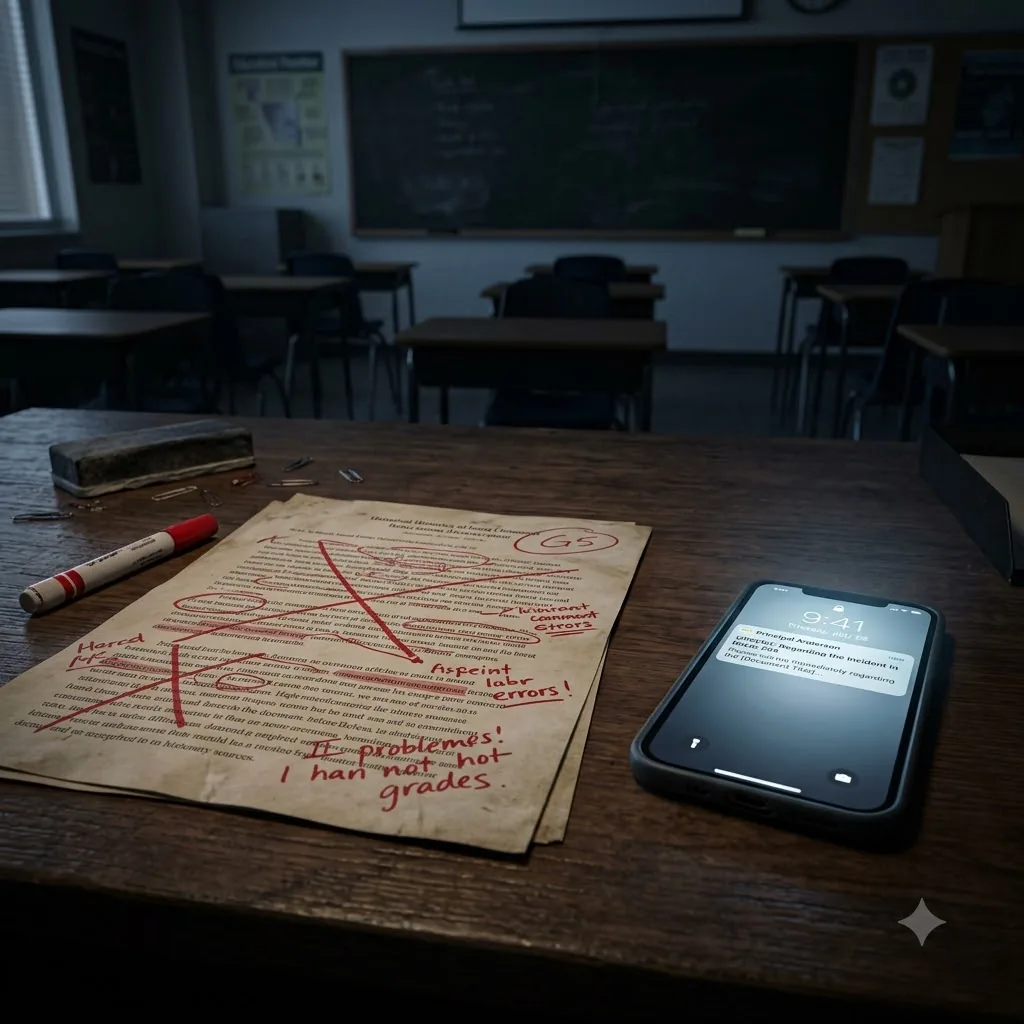
The reproduction of the 1850 fugitive slave broadside lay dead center on Marcus’s desk, its historical text obliterated by thick, jagged slashes of red marker. The ink had bled entirely through the heavy cardstock, carrying a frantic, looping accusation written over and over across the vintage typography. The words Psychological Abuse completely obscured the primary source assignment he had handed out to his eleventh-grade history class just that morning. Marcus stared at the ruined document, listening to the hum of the overhead fluorescent lights in his empty classroom. The sheer violence of the handwriting made his chest tighten. The red strokes tore through the paper in three places, leaving ragged holes where the marker had been pressed down with staggering force.
He picked up the broadside by its unmarred corner. This was a standard lesson. It was a primary source document used in the district curriculum for over a decade. He had taught this exact unit on the antebellum era twenty times without a single incident. The assignment required students to analyze the rhetoric of the poster, nothing more. Now, it had been returned to him as an artifact of pure hostility.
His desktop computer chimed, breaking the heavy silence of the empty room.
Marcus dropped the defaced paper and moved to his keyboard. A high-priority district alert flashed on his screen, flagged with the red exclamation point reserved for active emergencies and severe disciplinary actions. He clicked the notification. The subject line stated his full name alongside an immediate termination demand. The sender was not Principal Hayes, nor the department chair. The email originated directly from the district superintendent’s grievance portal.
He read the sterile, bureaucratic text twice to make sure his eyes were working. Sarah, the mother of a quiet student in his fourth period, had bypassed every standard protocol. She had skipped the teacher conference, ignored the principal’s open-door policy, and gone straight to the top of the district hierarchy. Her official complaint demanded the immediate revocation of his teaching license. She claimed he was terrorizing her son with targeted, traumatic propaganda. The phrase scorched-earth echoed in Marcus’s mind as he scrolled through the attached demands. She was not asking for an alternative assignment. She was demanding the sudden and absolute end of his career.
Marcus leaned back in his chair, feeling the professional shock settle deep into his bones. He pictured Sarah from the back-to-school open house a month prior. She had worn a neat beige cardigan and carried a sensible canvas tote, speaking softly about her son’s study habits. There had been no warning signs, no hint of this unhinged escalation. Now, she was deploying the kind of administrative warfare designed to ruin educators permanently. If the district took her complaint at face value, his fifteen years of spotless evaluations would mean absolutely nothing. A parental accusation of psychological abuse, especially one escalated directly to the superintendent, was a career death sentence. The modern educational climate did not allow for nuanced defense hearings. It demanded swift sacrifices to appease enraged parents.
The sudden vibration of his cell phone on the metal desk made him flinch. The screen displayed Principal Hayes’s private extension.
Marcus answered the call, keeping his eyes locked on the defaced broadside.
Hayes spoke in a hushed, exhausted monotone, the voice of an administrator trapped in a corner. The superintendent had already contacted the school. Sarah was currently standing in the district lobby, refusing to leave until Marcus was escorted off the property. The media relations office was panicking over the potential optics of a mother screaming about classroom abuse in the central office. Hayes delivered the district’s immediate directive without a shred of support or solidarity.
The school wanted the problem to vanish. Hayes instructed Marcus to pack his briefcase, delete the lesson plan from the school servers, and sign a voluntary administrative leave form that effectively admitted fault. The district was ordering him to surrender before the sun even went down.
Marcus traced his finger just above the frantic red letters on the ruined paper. Surrendering meant throwing away his entire professional life to appease a sudden, inexplicable madness. It meant accepting a permanent black mark on his record that would prevent him from ever stepping foot in a classroom again. He told Hayes he would not sign a confession for teaching the approved curriculum.
Hayes sighed heavily through the speaker. The principal warned him that Sarah was not acting alone, citing a sudden influx of automated emails flooding the district server in support of her demand. It was a highly coordinated strike.
Marcus gathered the defaced broadside and folded it carefully into his jacket pocket. He told Hayes he was coming to the main office to discuss the matter in person. He ended the call, cutting off the principal’s immediate protest.
The hallway outside his classroom remained unnervingly quiet as he stepped out and locked the door. He turned toward the stairwell, intent on confronting the administration, only to stop short at the end of the corridor. Three district security officers stood shoulder-to-shoulder, blocking the path to the main office.
The reproduction of the 1850 fugitive slave broadside lay dead center on Marcus’s desk, its historical text obliterated by thick, jagged slashes of red marker. The ink had bled entirely through the heavy cardstock, carrying a frantic, looping accusation written over and over across the vintage typography. The words Psychological Abuse completely obscured the primary source assignment he had handed out to his eleventh-grade history class just that morning. Marcus stared at the ruined document, listening to the hum of the overhead fluorescent lights in his empty classroom. The sheer violence of the handwriting made his chest tighten. The red strokes tore through the paper in three places, leaving ragged holes where the marker had been pressed down with staggering force.
He picked up the broadside by its unmarred corner. This was a standard lesson. It was a primary source document used in the district curriculum for over a decade. He had taught this exact unit on the antebellum era twenty times without a single incident. The assignment required students to analyze the rhetoric of the poster, nothing more. Now, it had been returned to him as an artifact of pure hostility.
His desktop computer chimed, breaking the heavy silence of the empty room.
Marcus dropped the defaced paper and moved to his keyboard. A high-priority district alert flashed on his screen, flagged with the red exclamation point reserved for active emergencies and severe disciplinary actions. He clicked the notification. The subject line stated his full name alongside an immediate termination demand. The sender was not Principal Hayes, nor the department chair. The email originated directly from the district superintendent’s grievance portal.
He read the sterile, bureaucratic text twice to make sure his eyes were working. Sarah, the mother of a quiet student in his fourth period, had bypassed every standard protocol. She had skipped the teacher conference, ignored the principal’s open-door policy, and gone straight to the top of the district hierarchy. Her official complaint demanded the immediate revocation of his teaching license. She claimed he was terrorizing her son with targeted, traumatic propaganda. The phrase scorched-earth echoed in Marcus’s mind as he scrolled through the attached demands. She was not asking for an alternative assignment. She was demanding the sudden and absolute end of his career.
Marcus leaned back in his chair, feeling the professional shock settle deep into his bones. He pictured Sarah from the back-to-school open house a month prior. She had worn a neat beige cardigan and carried a sensible canvas tote, speaking softly about her son’s study habits. There had been no warning signs, no hint of this unhinged escalation. Now, she was deploying the kind of administrative warfare designed to ruin educators permanently. If the district took her complaint at face value, his fifteen years of spotless evaluations would mean absolutely nothing. A parental accusation of psychological abuse, especially one escalated directly to the superintendent, was a career death sentence. The modern educational climate did not allow for nuanced defense hearings. It demanded swift sacrifices to appease enraged parents.
The sudden vibration of his cell phone on the metal desk made him flinch. The screen displayed Principal Hayes’s private extension.
Marcus answered the call, keeping his eyes locked on the defaced broadside.
Hayes spoke in a hushed, exhausted monotone, the voice of an administrator trapped in a corner. The superintendent had already contacted the school. Sarah was currently standing in the district lobby, refusing to leave until Marcus was escorted off the property. The media relations office was panicking over the potential optics of a mother screaming about classroom abuse in the central office. Hayes delivered the district’s immediate directive without a shred of support or solidarity.
The school wanted the problem to vanish. Hayes instructed Marcus to pack his briefcase, delete the lesson plan from the school servers, and sign a voluntary administrative leave form that effectively admitted fault. The district was ordering him to surrender before the sun even went down.
Marcus traced his finger just above the frantic red letters on the ruined paper. Surrendering meant throwing away his entire professional life to appease a sudden, inexplicable madness. It meant accepting a permanent black mark on his record that would prevent him from ever stepping foot in a classroom again. He told Hayes he would not sign a confession for teaching the approved curriculum.
Hayes sighed heavily through the speaker. The principal warned him that Sarah was not acting alone, citing a sudden influx of automated emails flooding the district server in support of her demand. It was a highly coordinated strike.
Marcus gathered the defaced broadside and folded it carefully into his jacket pocket. He told Hayes he was coming to the main office to discuss the matter in person. He ended the call, cutting off the principal’s immediate protest.
The hallway outside his classroom remained unnervingly quiet as he stepped out and locked the door. He turned toward the stairwell, intent on confronting the administration, only to stop short at the end of the corridor. Three district security officers stood shoulder-to-shoulder, blocking the path to the main office.