Story code: ST-001804
Part 1: The Brass Lock
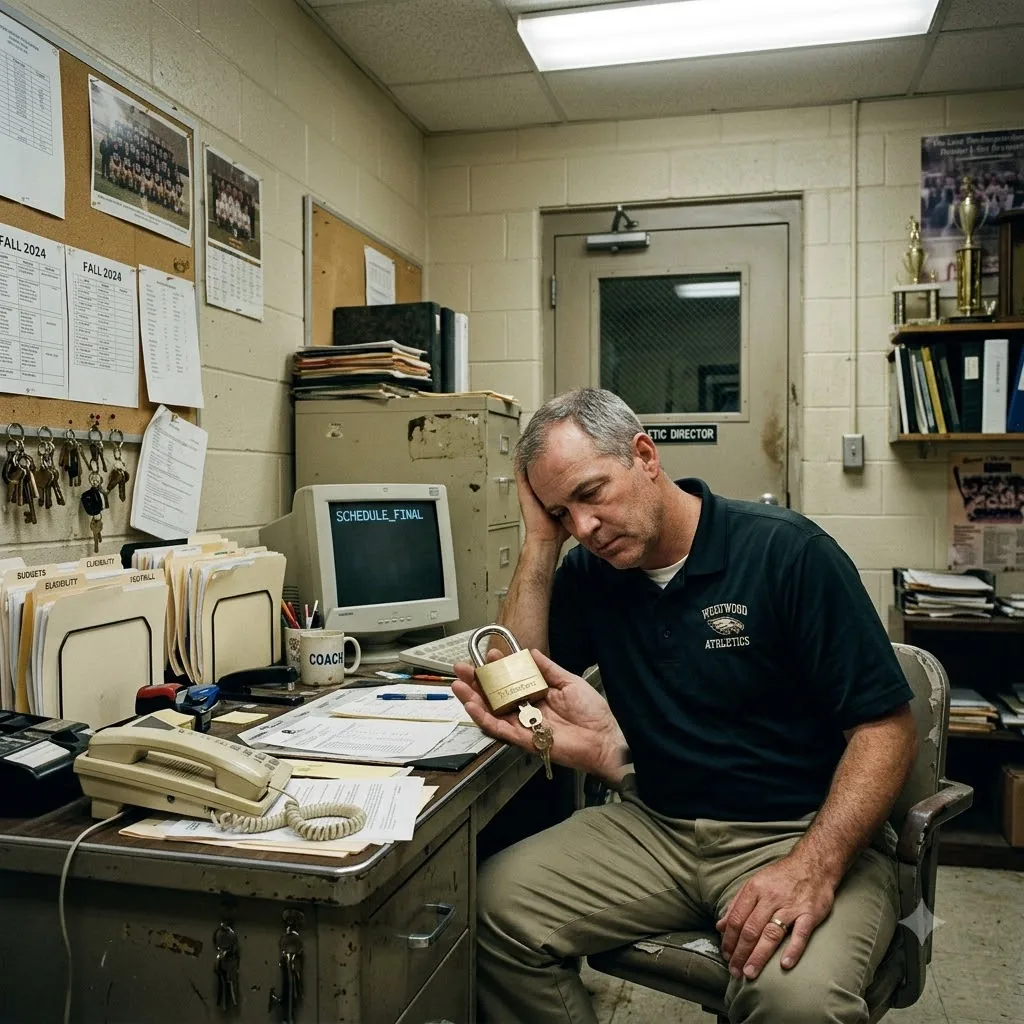
The solid brass padlock weighed exactly two pounds, but to Coach Miller, it felt like an anvil resting in the center of his palm. He sat at his battered laminate desk in the athletic director’s office, tracing the cold metal of the shackle with his thumb. The district superintendent’s memo sat next to his elbow, printed on official blue letterhead, outlining the new facilities policy with zero room for interpretation. The mandate was absolute, backed by the full authority of the school board. Miller closed his fingers around the lock. His knuckles turned white. He was a man who had spent thirty years teaching teenagers about integrity, courage, and doing the hard thing when the easy thing was wrong. Now, he was about to trade all of that for a piece of hardware and a quiet life.
He dropped the lock into his windbreaker pocket. It sagged against his hip, a heavy, rhythmic reminder of his own cowardice as he pushed out of his squeaking desk chair. Race day was already in full swing outside. Through the frosted window of his office door, he could hear the muffled pop of the starter pistol and the roar of the crowd in the grandstands. He should have been out there, recording split times and barking encouragement at his distance runners. Instead, he was making a stealthy retreat toward the old academic wing.
Miller stepped into the corridor. The fluorescent lights hummed a harsh, sterile tune. His rubber-soled shoes squeaked against the polished linoleum, the sound echoing down the empty, locker-lined walls. Every step felt like a betrayal. He kept his head down, avoiding his own reflection in the dusty glass of the trophy cases. He had built this athletic program from the ground up. He had fought for these kids. But the school board had made it explicitly clear that any deviation from the new locker room policy would result in immediate suspension, pending termination. He was three years from a pension. He had a mortgage. He had spent the entire morning convincing himself those were valid reasons to follow orders, even when the orders forced him to look the other way while a teenager was isolated and put at risk.
The academic wing was deserted, a ghost town of closed doors and darkened classrooms. The air felt stagnant here, far from the crisp autumn breeze of the track. Miller rounded the final corner, his hand gripping the brass lock inside his pocket so tightly his fingernails dug into his palm. He dreaded this walk. He dreaded the moment he would have to look the kid in the eye and finalize this shameful compromise.
At the far end of the hallway, a solitary figure stood beneath a flickering overhead light. It was Alex. The teenager leaned against a heavy wooden doorframe marked ‘Custodial’ in faded black stenciling. A heavy nylon duffel bag rested on the floor by Alex’s worn running shoes. The runner wore the school’s maroon and gold track warmup gear, clutching a plastic water bottle with tense, rigid fingers. The posture screamed vulnerability.
Miller slowed his pace, the silence between them stretching into something brittle and sharp. He knew what the school board members would say if they saw this arrangement. They would cite liability. They would point to the blue memo. They would completely ignore the human being standing in the shadows of a mop closet just to prepare for a cross-country race.
“Coach,” Alex said. The voice was tight, stripped of the usual pre-race adrenaline.
Miller did not speak immediately. He couldn’t find any words that wouldn’t sound hollow. He pulled the brass padlock from his pocket. The metal gleamed under the harsh fluorescent glare. He stepped past the teenager and inserted his master key into the old doorknob of the custodial closet. The lock clicked. The hinges whined a high, metallic protest as he pushed the door open.
The smell of industrial bleach and damp cotton mops spilled into the hallway. A single bare bulb hung from a pull chain. There was barely enough room to stand between the rolling yellow mop bucket and the industrial shelving stocked with toilet paper rolls. This was the compromise. This was the only safe space the school board’s strict new mandate had left him to provide off the books.
“It is secure,” Miller said, his voice dropping to a gravelly whisper. “I will lock it from the outside. Nobody comes down this hall until the meet is over.”
Alex looked at the dark, cramped closet, then down at the duffel bag. The teenager’s jaw tightened. Miller felt a hot flush of shame crawl up his neck. He was an educator, a protector, and he was shoving a kid into a dark supply closet because he was too terrified to stand up to a panel of politicians.
Alex picked up the duffel bag and stepped into the cramped space. The teenager turned around, eyes meeting Miller’s. There was no anger in that gaze, only a quiet, crushing resignation that hurt worse than a punch to the gut.
“I need ten minutes to change and tape my ankle,” Alex said.
Miller nodded silently. He grabbed the heavy brass padlock and threaded the thick shackle through the exterior latch he had illegally installed with a cordless drill that morning. He pressed the mechanism closed.
The heavy metallic snap echoed down the empty corridor like a gunshot.
Miller took a step back, staring at the brass lock. He had done it. He had secured the door. He turned to walk back to the track, telling himself it was the only way to keep the kid safe and keep his job.
Then the heavy metal handle of the custodial door began to rattle violently from the inside, followed by a sudden, muffled crash.
The solid brass padlock weighed exactly two pounds, but to Coach Miller, it felt like an anvil resting in the center of his palm. He sat at his battered laminate desk in the athletic director’s office, tracing the cold metal of the shackle with his thumb. The district superintendent’s memo sat next to his elbow, printed on official blue letterhead, outlining the new facilities policy with zero room for interpretation. The mandate was absolute, backed by the full authority of the school board. Miller closed his fingers around the lock. His knuckles turned white. He was a man who had spent thirty years teaching teenagers about integrity, courage, and doing the hard thing when the easy thing was wrong. Now, he was about to trade all of that for a piece of hardware and a quiet life.
He dropped the lock into his windbreaker pocket. It sagged against his hip, a heavy, rhythmic reminder of his own cowardice as he pushed out of his squeaking desk chair. Race day was already in full swing outside. Through the frosted window of his office door, he could hear the muffled pop of the starter pistol and the roar of the crowd in the grandstands. He should have been out there, recording split times and barking encouragement at his distance runners. Instead, he was making a stealthy retreat toward the old academic wing.
Miller stepped into the corridor. The fluorescent lights hummed a harsh, sterile tune. His rubber-soled shoes squeaked against the polished linoleum, the sound echoing down the empty, locker-lined walls. Every step felt like a betrayal. He kept his head down, avoiding his own reflection in the dusty glass of the trophy cases. He had built this athletic program from the ground up. He had fought for these kids. But the school board had made it explicitly clear that any deviation from the new locker room policy would result in immediate suspension, pending termination. He was three years from a pension. He had a mortgage. He had spent the entire morning convincing himself those were valid reasons to follow orders, even when the orders forced him to look the other way while a teenager was isolated and put at risk.
The academic wing was deserted, a ghost town of closed doors and darkened classrooms. The air felt stagnant here, far from the crisp autumn breeze of the track. Miller rounded the final corner, his hand gripping the brass lock inside his pocket so tightly his fingernails dug into his palm. He dreaded this walk. He dreaded the moment he would have to look the kid in the eye and finalize this shameful compromise.
At the far end of the hallway, a solitary figure stood beneath a flickering overhead light. It was Alex. The teenager leaned against a heavy wooden doorframe marked ‘Custodial’ in faded black stenciling. A heavy nylon duffel bag rested on the floor by Alex’s worn running shoes. The runner wore the school’s maroon and gold track warmup gear, clutching a plastic water bottle with tense, rigid fingers. The posture screamed vulnerability.
Miller slowed his pace, the silence between them stretching into something brittle and sharp. He knew what the school board members would say if they saw this arrangement. They would cite liability. They would point to the blue memo. They would completely ignore the human being standing in the shadows of a mop closet just to prepare for a cross-country race.
“Coach,” Alex said. The voice was tight, stripped of the usual pre-race adrenaline.
Miller did not speak immediately. He couldn’t find any words that wouldn’t sound hollow. He pulled the brass padlock from his pocket. The metal gleamed under the harsh fluorescent glare. He stepped past the teenager and inserted his master key into the old doorknob of the custodial closet. The lock clicked. The hinges whined a high, metallic protest as he pushed the door open.
The smell of industrial bleach and damp cotton mops spilled into the hallway. A single bare bulb hung from a pull chain. There was barely enough room to stand between the rolling yellow mop bucket and the industrial shelving stocked with toilet paper rolls. This was the compromise. This was the only safe space the school board’s strict new mandate had left him to provide off the books.
“It is secure,” Miller said, his voice dropping to a gravelly whisper. “I will lock it from the outside. Nobody comes down this hall until the meet is over.”
Alex looked at the dark, cramped closet, then down at the duffel bag. The teenager’s jaw tightened. Miller felt a hot flush of shame crawl up his neck. He was an educator, a protector, and he was shoving a kid into a dark supply closet because he was too terrified to stand up to a panel of politicians.
Alex picked up the duffel bag and stepped into the cramped space. The teenager turned around, eyes meeting Miller’s. There was no anger in that gaze, only a quiet, crushing resignation that hurt worse than a punch to the gut.
“I need ten minutes to change and tape my ankle,” Alex said.
Miller nodded silently. He grabbed the heavy brass padlock and threaded the thick shackle through the exterior latch he had illegally installed with a cordless drill that morning. He pressed the mechanism closed.
The heavy metallic snap echoed down the empty corridor like a gunshot.
Miller took a step back, staring at the brass lock. He had done it. He had secured the door. He turned to walk back to the track, telling himself it was the only way to keep the kid safe and keep his job.
Then the heavy metal handle of the custodial door began to rattle violently from the inside, followed by a sudden, muffled crash.