Story code: ST-000953
Part 1: The Glass and the Snare
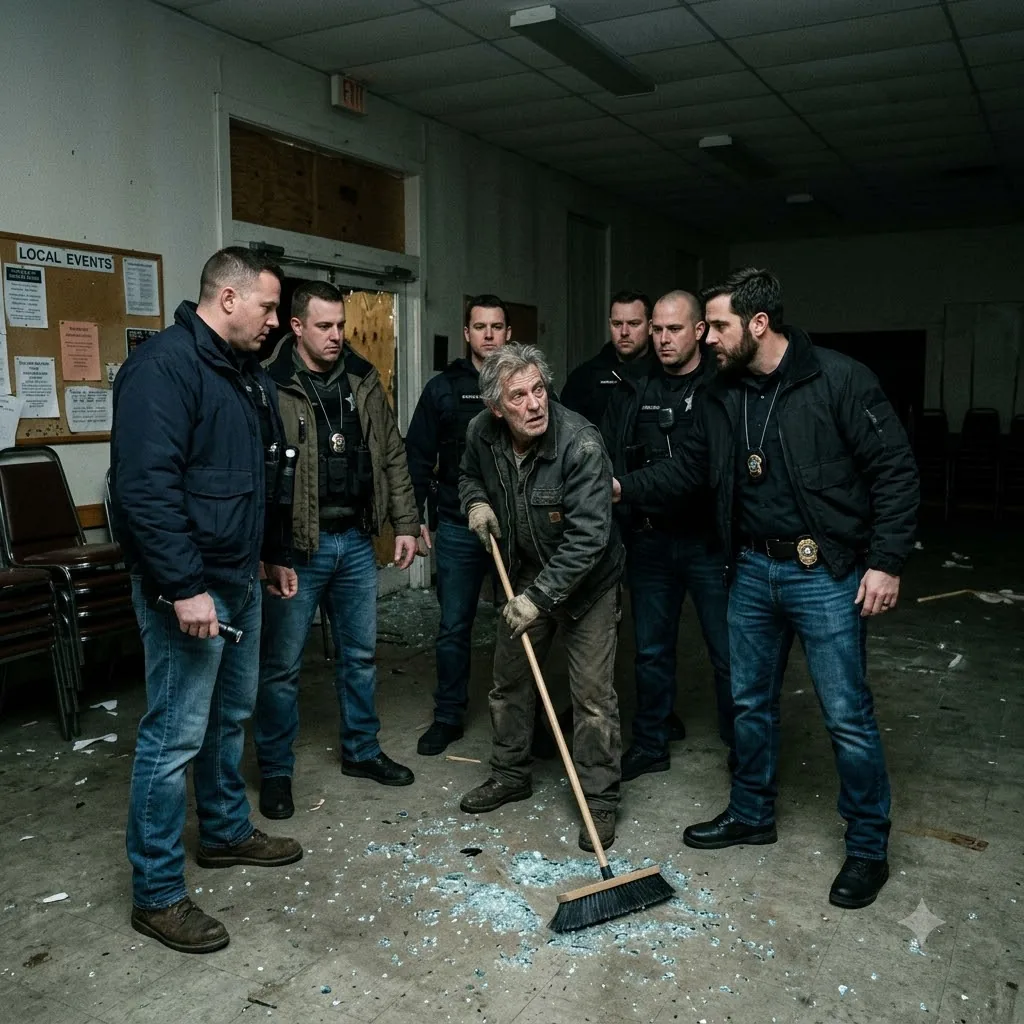
The broom bristles scratched against the scuffed linoleum, pushing a glittering wave of shattered safety glass into a jagged pile. Marcus stood alone in the center of the recreation hall, the midnight silence pressing heavy against the bullet-starred storefront window. Just six hours ago, he had stepped between two drawn firearms to keep the neighborhood from burning, and his reward was an empty room, a ringing in his ears, and a plastic dustpan. He nudged a twisted piece of lead with the toe of his work boot. The city uniforms had already come and gone, taking their flash photographs and rolling their eyes at the lack of cooperating witnesses. They had left him to clean up the mess.
The community center smelled of ozone and cheap pine cleaner, a sharp contrast to the adrenaline sweat that had soaked into the collar of Marcus’s shirt. He leaned the wooden broom handle against a folding table and rubbed his temples. Posters drawn by the after-school kids hung crookedly on the cinderblock walls, some of them pierced by the stray rounds that had shattered the front glass. He had dedicated ten years to keeping this block safe. Today, he had finally stopped the escalating war between the Reyes crew and the Eastside boys, standing in the crossfire until both sides lowered their weapons. It should have been a victory. Instead, the isolation in the room felt suffocating.
The streets outside were entirely devoid of traffic. A heavy engine rumbled at the curb, its headlights cutting off abruptly instead of sweeping past the ruined window. Tires crunched heavily on the broken glass littering the sidewalk.
Heavy boots hit the pavement in unison. Before Marcus could turn toward the front, the rear steel door of the center blew open with a deafening crash, the heavy metal bouncing violently off the concrete wall.
Four men in dark tactical vests over plainclothes surged into the hall. They did not shout the usual police warnings. They did not wear silver shields on their belts. They moved with absolute, silent precision. The lead man, a broad-shouldered heavy with a military buzz cut, crossed the room in three massive strides and slammed a thick, manila federal folder onto the plastic folding table. The impact cracked the cheap plastic down the center.
Marcus backed up, his hands instinctively rising to his chest.
“Hands where I can see them,” the lead man ordered, his voice a low, gravelly scrape that barely carried over the hum of the fluorescent lights. He lunged forward, pinning Marcus’s wrist against the cinderblock wall with terrifying speed and force.
The other three men fanned out instantly, systematically kicking over chairs, ripping open locked metal filing cabinets, and tearing down the children’s artwork to check behind the corkboards. The federal folder sat under the glaring overhead light. Stamped across the top in bold red ink was a federal conspiracy and racketeering designation. Papers spilled from the cracked edges, revealing surveillance photographs of Marcus standing between the gang leaders, alongside thick stacks of transcribed wiretaps.
The heavy-set man leaned in painfully close, smelling of stale black coffee and wintergreen.
“You played the hero today,” the man said, pressing his forearm harder against Marcus’s throat. “You brokered a peace treaty with known cartels. Very brave. Also very illegal, considering the federal statutes on operating as a central node for organized crime.”
Marcus stared at the folder, his mind racing through the absurdity of the accusation. He was a mediator. He ran de-escalation workshops and handed out backpacks. But the red federal stamp on that file meant an ambitious prosecutor was building a massive RICO case. They were slotting him in as the kingpin, twisting his community negotiations into criminal collusion.
“You have a right to an attorney,” the man whispered, easing the pressure just enough for Marcus to draw a ragged breath. “You have a right to make a phone call. I highly recommend you do exactly that. Call your board of directors. Call your legal aid buddy down at the clinic. Call the mayor’s office. The second you dial a number, that person gets added to this conspiracy indictment as an accessory after the fact.”
Marcus felt the cold block against his spine. The trap snapped shut. The prosecutor did not just want a gang conviction. The prosecutor wanted a career-making headline, and taking down a celebrated community organizer along with his entire network of politicians, lawyers, and donors was the ultimate prize. If he called Pastor Thomas for bail money, the feds would seize the church’s assets. If he called Sarah at Legal Aid, she would be disbarred and indicted by morning. Reaching out meant dragging innocent people into a federal cage.
He shifted his weight, his fingers twitching toward the denim pocket where his cell phone rested. If he could just hit the emergency broadcast combination, maybe he could alert the neighborhood council without naming a specific accomplice.
The plainclothes officer caught the microscopic shift in Marcus’s posture. He drove a heavy knee into Marcus’s thigh, sending a blinding shockwave of numbness down his leg, and violently ripped the phone from Marcus’s jeans. The man threw the device onto the floor and brought his tactical boot down with crushing force, grinding the screen into the exact pile of glass Marcus had just swept.
“Like I said,” the officer smiled, pulling a pair of thick plastic zip-ties from his tactical vest. “You should definitely call for help.”
The man grabbed Marcus by the collar and slammed him face-first onto the cracked folding table, his cheek hitting the cold, slick surface of the federal file as the remaining officers closed in.
The broom bristles scratched against the scuffed linoleum, pushing a glittering wave of shattered safety glass into a jagged pile. Marcus stood alone in the center of the recreation hall, the midnight silence pressing heavy against the bullet-starred storefront window. Just six hours ago, he had stepped between two drawn firearms to keep the neighborhood from burning, and his reward was an empty room, a ringing in his ears, and a plastic dustpan. He nudged a twisted piece of lead with the toe of his work boot. The city uniforms had already come and gone, taking their flash photographs and rolling their eyes at the lack of cooperating witnesses. They had left him to clean up the mess.
The community center smelled of ozone and cheap pine cleaner, a sharp contrast to the adrenaline sweat that had soaked into the collar of Marcus’s shirt. He leaned the wooden broom handle against a folding table and rubbed his temples. Posters drawn by the after-school kids hung crookedly on the cinderblock walls, some of them pierced by the stray rounds that had shattered the front glass. He had dedicated ten years to keeping this block safe. Today, he had finally stopped the escalating war between the Reyes crew and the Eastside boys, standing in the crossfire until both sides lowered their weapons. It should have been a victory. Instead, the isolation in the room felt suffocating.
The streets outside were entirely devoid of traffic. A heavy engine rumbled at the curb, its headlights cutting off abruptly instead of sweeping past the ruined window. Tires crunched heavily on the broken glass littering the sidewalk.
Heavy boots hit the pavement in unison. Before Marcus could turn toward the front, the rear steel door of the center blew open with a deafening crash, the heavy metal bouncing violently off the concrete wall.
Four men in dark tactical vests over plainclothes surged into the hall. They did not shout the usual police warnings. They did not wear silver shields on their belts. They moved with absolute, silent precision. The lead man, a broad-shouldered heavy with a military buzz cut, crossed the room in three massive strides and slammed a thick, manila federal folder onto the plastic folding table. The impact cracked the cheap plastic down the center.
Marcus backed up, his hands instinctively rising to his chest.
“Hands where I can see them,” the lead man ordered, his voice a low, gravelly scrape that barely carried over the hum of the fluorescent lights. He lunged forward, pinning Marcus’s wrist against the cinderblock wall with terrifying speed and force.
The other three men fanned out instantly, systematically kicking over chairs, ripping open locked metal filing cabinets, and tearing down the children’s artwork to check behind the corkboards. The federal folder sat under the glaring overhead light. Stamped across the top in bold red ink was a federal conspiracy and racketeering designation. Papers spilled from the cracked edges, revealing surveillance photographs of Marcus standing between the gang leaders, alongside thick stacks of transcribed wiretaps.
The heavy-set man leaned in painfully close, smelling of stale black coffee and wintergreen.
“You played the hero today,” the man said, pressing his forearm harder against Marcus’s throat. “You brokered a peace treaty with known cartels. Very brave. Also very illegal, considering the federal statutes on operating as a central node for organized crime.”
Marcus stared at the folder, his mind racing through the absurdity of the accusation. He was a mediator. He ran de-escalation workshops and handed out backpacks. But the red federal stamp on that file meant an ambitious prosecutor was building a massive RICO case. They were slotting him in as the kingpin, twisting his community negotiations into criminal collusion.
“You have a right to an attorney,” the man whispered, easing the pressure just enough for Marcus to draw a ragged breath. “You have a right to make a phone call. I highly recommend you do exactly that. Call your board of directors. Call your legal aid buddy down at the clinic. Call the mayor’s office. The second you dial a number, that person gets added to this conspiracy indictment as an accessory after the fact.”
Marcus felt the cold block against his spine. The trap snapped shut. The prosecutor did not just want a gang conviction. The prosecutor wanted a career-making headline, and taking down a celebrated community organizer along with his entire network of politicians, lawyers, and donors was the ultimate prize. If he called Pastor Thomas for bail money, the feds would seize the church’s assets. If he called Sarah at Legal Aid, she would be disbarred and indicted by morning. Reaching out meant dragging innocent people into a federal cage.
He shifted his weight, his fingers twitching toward the denim pocket where his cell phone rested. If he could just hit the emergency broadcast combination, maybe he could alert the neighborhood council without naming a specific accomplice.
The plainclothes officer caught the microscopic shift in Marcus’s posture. He drove a heavy knee into Marcus’s thigh, sending a blinding shockwave of numbness down his leg, and violently ripped the phone from Marcus’s jeans. The man threw the device onto the floor and brought his tactical boot down with crushing force, grinding the screen into the exact pile of glass Marcus had just swept.
“Like I said,” the officer smiled, pulling a pair of thick plastic zip-ties from his tactical vest. “You should definitely call for help.”
The man grabbed Marcus by the collar and slammed him face-first onto the cracked folding table, his cheek hitting the cold, slick surface of the federal file as the remaining officers closed in.