Story code: ST-000101
Part 1: The Campaign Stop
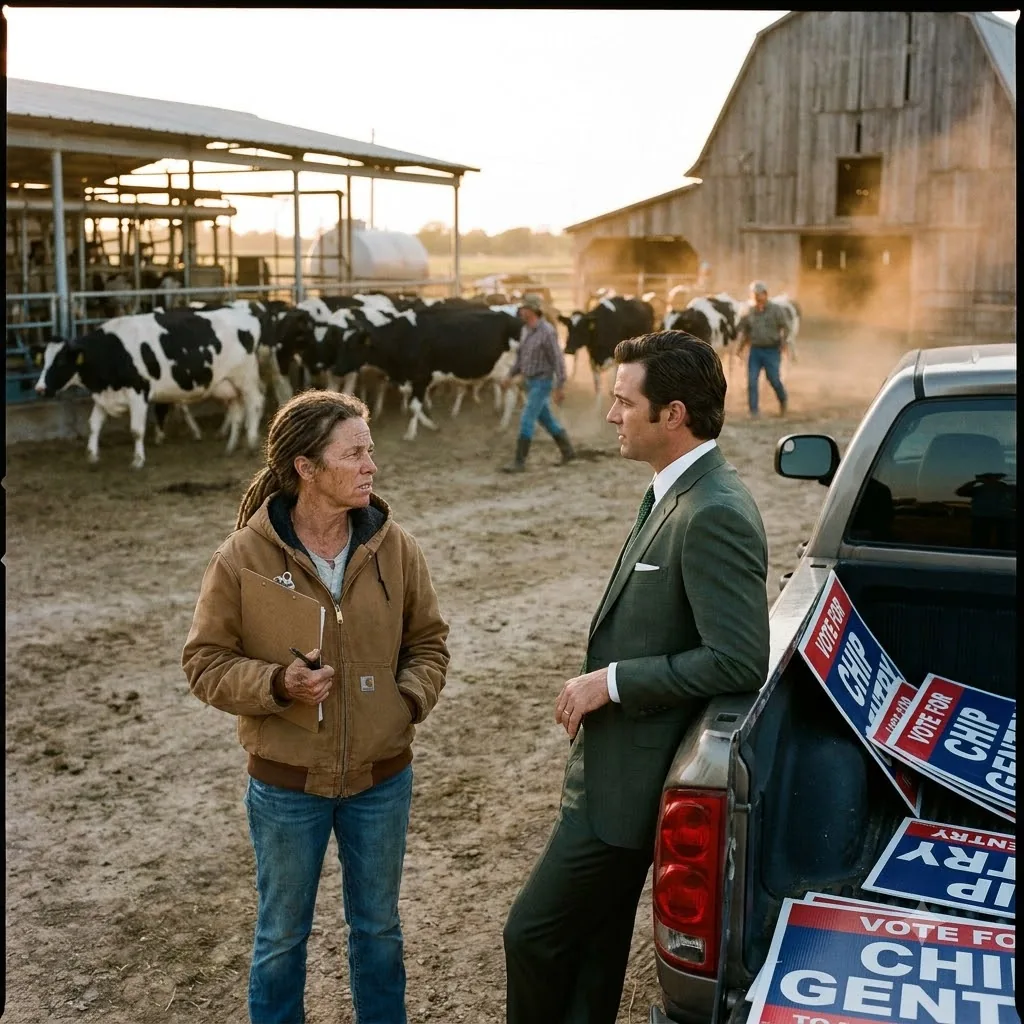
State Representative Gary Thorne slammed the tailgate of his heavy silver pickup truck, hauling out a massive bundle of glossy red-and-white campaign yard signs. Helen wiped the black grease from her palms with a shop rag and stepped out of the milking parlor into the glaring afternoon sun. She had twelve hundred head of Holstein cattle needing feed and a broken tractor hydraulic line, leaving zero time for a politician’s unannounced visit. She walked quickly down the gravel driveway to head him off before he could cross into the main yard.
Helen told him firmly that the dairy maintained strict neutrality for all local elections, pointing toward the public road boundary. Gary ignored her outstretched hand, tucking the bulky bundle under his arm and strolling right past her. He wore a crisp navy suit that had no business being anywhere near a manure pit, but his shiny leather loafers marched straight toward the calf hutches where Mateo and the rest of her crew were hauling heavy grain sacks.
Helen told him to leave the signs by the highway and tried to step in his path to block him.
He did not slow down. He planted one of the wire stakes straight into the soft earth next to her prized flowerbed. Then he turned his full attention to the men working in the midday heat. Mateo hoisted a fifty-pound bag of calf starter over his shoulder, his cousins moving in perfect, silent synchronization right behind him. They had worked for Helen for four years, keeping the farm alive when local hires quit after three days. They were also the men who had driven her daughter to the emergency room in the middle of the night two weeks ago when Helen had been trapped at a cattle auction two states over.
Gary leaned against the white fencing, a patronizing smile stretching across his face. He remarked on the incredible work ethic of her crew. He observed aloud that they were doing the backbreaking labor nobody born in this county wanted to do anymore. He pitched his voice loud enough for the men to hear, though they kept their heads down, focusing entirely on the grain sacks. Helen stepped between Gary and the fence, demanding that he state his business and leave the premises.
Gary chuckled, adjusting his silk tie. He said he was just out visiting the backbone of the community. He noted how difficult it must be to find reliable labor, especially labor that lacked the proper paperwork to complain about long hours or federal wage laws. Helen tightened her grip on the shop rag. The faux-friendly tone in his voice felt like a heavy stone pressing against her chest. She told him again that he was trespassing on an active work site and needed to return to his truck immediately.
Instead of leaving, Gary took a step closer, crowding her against the wooden slats of the fence. The smell of his expensive cologne mixed sickeningly with the scent of fermented silage. He lowered his voice, dropping the booming political cadence for a quiet, lethal murmur. He shifted the conversation away from the farm entirely, mentioning that he had heard about her daughter’s recent medical emergency.
Helen stopped breathing. She forced her expression to remain perfectly blank, staring at the polished silver tie clip on his chest. She told him Chloe was fine and that it had been a simple stomach bug.
Gary shook his head slowly, clicking his tongue in mock sympathy. He reached into the inner pocket of his suit jacket and withdrew a folded sheet of printer paper. He flattened it out against the top rail of the fence, sliding it right under Helen’s field of vision.
It was a printed screenshot of a text message conversation. Helen recognized her daughter’s blue bubbles instantly. The text detailed specific, frantic instructions regarding the pills Chloe had ordered online, the severe cramping, and the desperate plea for a ride to the clinic because the bleeding would not stop. The contact name at the top of the screenshot belonged to Gary’s niece, a girl Chloe had trusted since middle school.
The heavy machinery of the milking parlor hummed in the background, but the sound vanished from Helen’s ears. Gary tapped a manicured fingernail against the most damning lines of text. He reminded her that the new state laws carried mandatory minimum sentences for anyone procuring or assisting with an illegal medical procedure. He added that an ambitious local prosecutor could easily seize the property of anyone providing a vehicle for such an act, pointing a steady finger toward the barn where Mateo was currently stacking feed.
Helen tried to snatch the paper. Gary yanked it back, folding it with excruciating slowness before tucking it securely behind his lapel. He told her she had exactly forty-eight hours to provide his office with the full names, addresses, and schedules of every undocumented worker on her property. He explained that a high-profile immigration raid right before the election would secure his district and that her cooperation would ensure the screenshot never made it to the district attorney.
Helen felt the rough splintered wood of the fence digging into her spine. She looked over Gary’s shoulder at Mateo, who was currently wiping sweat from his forehead, completely unaware that the man standing in the driveway was demanding his freedom in exchange for her daughter’s life.
Gary took one last red-and-white campaign sign from his stack and shoved the metal stakes into the dirt directly between Helen’s work boots. He leaned in so close she could feel his breath on her cheek, whispering that he expected the list delivered to his campaign headquarters by noon on Friday. Helen reached for the metal wire of the sign to rip it out of the ground, but Gary grabbed her wrist, his grip tightening like a steel vise just as the roar of Mateo’s tractor engine flared up right behind them.
State Representative Gary Thorne slammed the tailgate of his heavy silver pickup truck, hauling out a massive bundle of glossy red-and-white campaign yard signs. Helen wiped the black grease from her palms with a shop rag and stepped out of the milking parlor into the glaring afternoon sun. She had twelve hundred head of Holstein cattle needing feed and a broken tractor hydraulic line, leaving zero time for a politician’s unannounced visit. She walked quickly down the gravel driveway to head him off before he could cross into the main yard.
Helen told him firmly that the dairy maintained strict neutrality for all local elections, pointing toward the public road boundary. Gary ignored her outstretched hand, tucking the bulky bundle under his arm and strolling right past her. He wore a crisp navy suit that had no business being anywhere near a manure pit, but his shiny leather loafers marched straight toward the calf hutches where Mateo and the rest of her crew were hauling heavy grain sacks.
Helen told him to leave the signs by the highway and tried to step in his path to block him.
He did not slow down. He planted one of the wire stakes straight into the soft earth next to her prized flowerbed. Then he turned his full attention to the men working in the midday heat. Mateo hoisted a fifty-pound bag of calf starter over his shoulder, his cousins moving in perfect, silent synchronization right behind him. They had worked for Helen for four years, keeping the farm alive when local hires quit after three days. They were also the men who had driven her daughter to the emergency room in the middle of the night two weeks ago when Helen had been trapped at a cattle auction two states over.
Gary leaned against the white fencing, a patronizing smile stretching across his face. He remarked on the incredible work ethic of her crew. He observed aloud that they were doing the backbreaking labor nobody born in this county wanted to do anymore. He pitched his voice loud enough for the men to hear, though they kept their heads down, focusing entirely on the grain sacks. Helen stepped between Gary and the fence, demanding that he state his business and leave the premises.
Gary chuckled, adjusting his silk tie. He said he was just out visiting the backbone of the community. He noted how difficult it must be to find reliable labor, especially labor that lacked the proper paperwork to complain about long hours or federal wage laws. Helen tightened her grip on the shop rag. The faux-friendly tone in his voice felt like a heavy stone pressing against her chest. She told him again that he was trespassing on an active work site and needed to return to his truck immediately.
Instead of leaving, Gary took a step closer, crowding her against the wooden slats of the fence. The smell of his expensive cologne mixed sickeningly with the scent of fermented silage. He lowered his voice, dropping the booming political cadence for a quiet, lethal murmur. He shifted the conversation away from the farm entirely, mentioning that he had heard about her daughter’s recent medical emergency.
Helen stopped breathing. She forced her expression to remain perfectly blank, staring at the polished silver tie clip on his chest. She told him Chloe was fine and that it had been a simple stomach bug.
Gary shook his head slowly, clicking his tongue in mock sympathy. He reached into the inner pocket of his suit jacket and withdrew a folded sheet of printer paper. He flattened it out against the top rail of the fence, sliding it right under Helen’s field of vision.
It was a printed screenshot of a text message conversation. Helen recognized her daughter’s blue bubbles instantly. The text detailed specific, frantic instructions regarding the pills Chloe had ordered online, the severe cramping, and the desperate plea for a ride to the clinic because the bleeding would not stop. The contact name at the top of the screenshot belonged to Gary’s niece, a girl Chloe had trusted since middle school.
The heavy machinery of the milking parlor hummed in the background, but the sound vanished from Helen’s ears. Gary tapped a manicured fingernail against the most damning lines of text. He reminded her that the new state laws carried mandatory minimum sentences for anyone procuring or assisting with an illegal medical procedure. He added that an ambitious local prosecutor could easily seize the property of anyone providing a vehicle for such an act, pointing a steady finger toward the barn where Mateo was currently stacking feed.
Helen tried to snatch the paper. Gary yanked it back, folding it with excruciating slowness before tucking it securely behind his lapel. He told her she had exactly forty-eight hours to provide his office with the full names, addresses, and schedules of every undocumented worker on her property. He explained that a high-profile immigration raid right before the election would secure his district and that her cooperation would ensure the screenshot never made it to the district attorney.
Helen felt the rough splintered wood of the fence digging into her spine. She looked over Gary’s shoulder at Mateo, who was currently wiping sweat from his forehead, completely unaware that the man standing in the driveway was demanding his freedom in exchange for her daughter’s life.
Gary took one last red-and-white campaign sign from his stack and shoved the metal stakes into the dirt directly between Helen’s work boots. He leaned in so close she could feel his breath on her cheek, whispering that he expected the list delivered to his campaign headquarters by noon on Friday. Helen reached for the metal wire of the sign to rip it out of the ground, but Gary grabbed her wrist, his grip tightening like a steel vise just as the roar of Mateo’s tractor engine flared up right behind them.