Story code: ST-001258
Part 3: The Sandbox Test
On my secondary monitor, the network traffic utility registered a sudden spike. One by one, the teachers on the call clicked the URL Clara had pasted into the chat. The active user counter on the training sandbox dashboard climbed from zero to fourteen, then twenty-eight, and within a minute, over fifty staff members were logged in. I watched the live cursor tracks on the backend log populate across the sandbox home screen. The system was running perfectly, completely stable, and entirely empty of live student records.
“The sandbox appears to be fully online, Dr. Vance,” Clara said. Her voice remained level, devoid of any mocking undertone. “I am logged in now. The integration panel is accessible, but the configuration options are locked for standard teacher accounts. If you share your screen, you can show us how to route the local storage partition to bypass the security firewall as you described.”
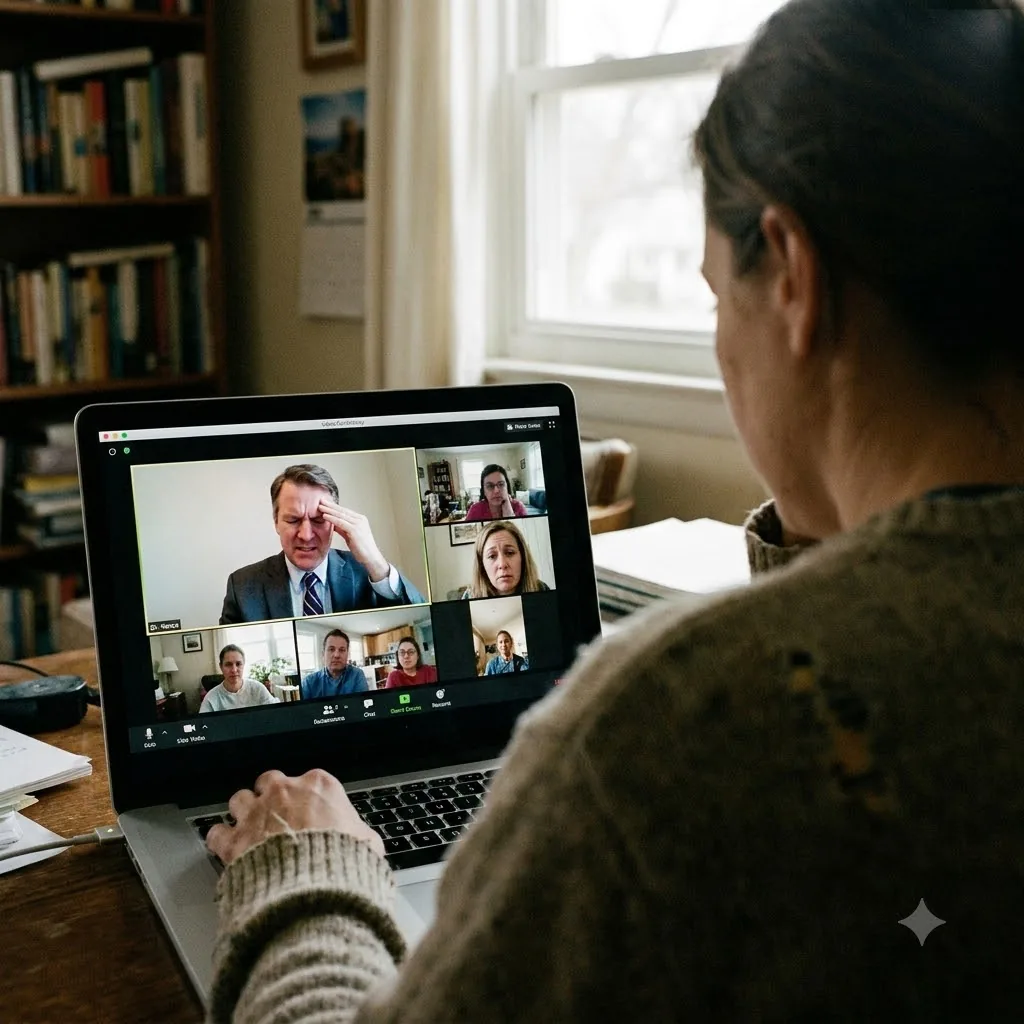
Dr. Vance did not respond immediately. His video tile showed him leaning slightly forward, his eyes fixed on the bottom corner of his monitor, where the chat window remained open. His hand moved toward his keyboard, then retreated. He adjusted his glasses again, his fingers tapping a fast, silent rhythm against the edge of his desk. Through his webcam feed, I saw his gaze drop to a sheet of paper resting on his lap-the printed cheat sheet he had kept out of view of the camera.
“As I mentioned, Mrs. Diaz, the sandbox is a testing environment,” Dr. Vance said, his tone dropping into a lower, slower register, as if explaining a basic concept to a child. “It does not mirror the live network security layers. Performing the configuration there would not translate to your classroom machines.”
“The vendor documentation in the help files states the sandbox uses the exact same Active Directory handshake,” Clara replied. On her screen share, she scrolled down to the sandbox system architecture page, highlighting the paragraph that confirmed the matching backend protocols. “If it works there, we can copy the configuration parameters directly. We just need you to show us the steps.”
In the meeting participant window, another tile illuminated. Mr. Henderson, the head of the history department, unmuted his microphone. “Dr. Vance, if this is the only way to save our grades from dropping out of the queue, we need to see it. Most of my department has been re-entering the same vocabulary scores three times this week. We cannot wait for a ticket response.”
Two more teachers unmuted, their voices overlapping in agreement. The collective silence of the meeting had broken, replaced by a quiet, persistent demand for a resolution. The red recording indicator in the top-left corner of the platform continued to pulse, a constant reminder that this session was being saved directly to the district’s compliance database.
Dr. Vance’s cursor stopped its erratic circling. He looked directly into his camera, his expression tightening into a hard, flat mask. “Very well,” he said. “If the department heads insist on micro-managing the system architecture, I will demonstrate the procedure. Please observe closely.”
He clicked the screen-share button. The shared window changed from Clara’s screen to his browser, displaying the administrator login page for the sandbox environment. I watched the console logs on my screen as he entered his credentials. The system accepted the login, displaying the primary dashboard. On his shared screen, he navigated to the system integration menu, his mouse hovering over a series of tabs he had clearly never opened before.