Story code: ST-000321
Part 1: The Commuter Lot
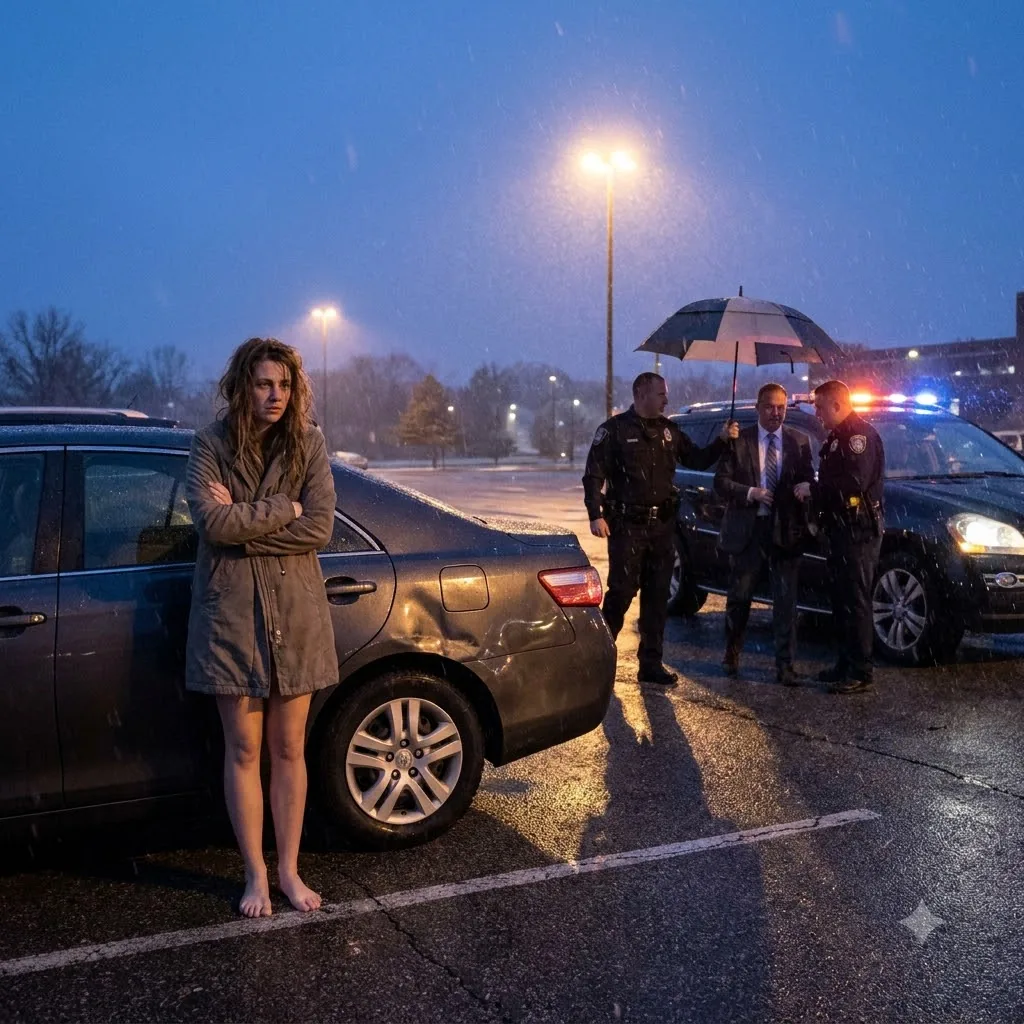
The freezing sleet stung the fresh cut above my eyebrow as I stood beside the rusted chain-link fence of the commuter lot, watching three campus patrol cruisers skid to a halt. Flashing red and blue lights cut through the midnight downpour, illuminating the twisted metal of my 2004 Honda Civic. Less than twenty feet away, the crumpled front end of a silver Lexus SUV remained deeply embedded in my driver’s side door. The impact had shoved my car entirely out of its parking space. Steam hissed from both shattered radiators, rising in thick gray plumes against the freezing rain. The smell of burnt rubber and leaking antifreeze hung heavy in the damp air.
I wiped a trickle of blood from my forehead with a numb hand, my boots cemented to the icy asphalt. My head throbbed violently where it had struck the steering wheel just moments before I scrambled out through the passenger side in a blind panic. I made no sound. I did not wave my arms to signal for help.
The campus police officers ignored my crushed car entirely when they leaped from their cruisers. Two of them sprinted directly toward the driver’s side of the Lexus. A man in a tailored camel-hair overcoat stumbled out, his expensive leather shoes sliding on the slick pavement. He braced himself heavily against the door frame, his head lolling. The sharp, unmistakable scent of gin carried on the bitter wind, strong enough to reach me in the shadows. He slurred a greeting to the lead officer, slapping him clumsily on the shoulder and calling him by his first name.
The officer did not pull out a breathalyzer. He did not order the man to walk a straight line. Instead, he draped a thick, thermal emergency blanket over the stumbling driver, speaking in hushed, respectful tones. I recognized the man instantly. It was Vice Chancellor Miller, the administrator who had just approved the new campus parking enforcement budget the previous semester. The officers treated him like fragile cargo, carefully guiding him toward the warmth of an idling patrol cruiser. They deliberately stood between him and the wreckage he had just caused, shielding him from the driving sleet.
My chest tightened until my ribs ached. I needed to step forward. I needed to tell them I was the owner of the Honda, that I had been inside it reading a textbook by flashlight when the Lexus came barreling through the empty lot doing fifty miles an hour. But an overwhelming, suffocating terror kept my jaw locked shut. Stepping out of the shadows meant claiming the car. Claiming the car meant they would look inside.
I stood shivering in the biting wind, pressing my back against the icy fence. Vice Chancellor Miller gestured wildly toward my vehicle from the back seat of the cruiser. His words were a muddy drawl about unmarked hazards, ruined paint jobs, and irresponsible students leaving junk cars in his path. The lead officer nodded sympathetically, his voice carrying over the wind as he assured the man the paperwork would be handled quietly and that the university towing service would take care of the mess before the morning commute.
Only then did a junior officer pull a heavy Maglite from his utility belt and turn his attention toward my ruined vehicle.
The bright, aggressive beam swept over the shattered safety glass scattered like diamonds across the black pavement. I flinched, pulling the thin collar of my denim jacket up to my chin. My heart hammered against my ribs like a trapped bird. The officer approached the passenger side, his boots crunching loudly over the fragments of my broken taillight. He did not call out to check for victims. He did not lean in to see if anyone was trapped under the collapsed dashboard.
I forced my frozen legs to move. I stepped out of the shadows, my sneakers splashing in the oily puddles. The freezing rain soaked instantly through my jeans as I walked into the intersecting beams of the police cruisers.
I held my hand up to block the glare, the blood from my forehead highly visible on my pale skin. I told him the blue Honda was my vehicle.
The officer aimed his blinding flashlight directly through my blown-out rear window instead of looking at my injuries.
The white beam danced over the tightly rolled wool blankets, the portable butane camping stove, the stacked plastic storage bins, and the foil sunshades. My winter coat served as a makeshift pillow on the folded-down back seat.
The officer let out a loud, derisive scoff. He did not ask if I needed a paramedic. He did not offer me a blanket or take down Vice Chancellor Miller’s insurance information. He simply clicked his pen and began scrawling furiously on a yellow slip of paper from his heavy leather citation book.
He tore the ticket from the pad and thrust it into my shivering hand. The citation was for unauthorized overnight camping on university property. My entire life, every single thing I possessed in the world, had just been criminalized in a matter of seconds.
He stated the vehicle was a public health hazard, pulling a bright orange impound warning sticker from his pocket. He slapped the heavy adhesive directly over the cracked glass of my driver’s side window, sealing my fate.
“A tow truck will clear this hazard in fifteen minutes,” the officer said, turning his back on my bleeding face to open the warm cruiser door for the Vice Chancellor.
The freezing sleet stung the fresh cut above my eyebrow as I stood beside the rusted chain-link fence of the commuter lot, watching three campus patrol cruisers skid to a halt. Flashing red and blue lights cut through the midnight downpour, illuminating the twisted metal of my 2004 Honda Civic. Less than twenty feet away, the crumpled front end of a silver Lexus SUV remained deeply embedded in my driver’s side door. The impact had shoved my car entirely out of its parking space. Steam hissed from both shattered radiators, rising in thick gray plumes against the freezing rain. The smell of burnt rubber and leaking antifreeze hung heavy in the damp air.
I wiped a trickle of blood from my forehead with a numb hand, my boots cemented to the icy asphalt. My head throbbed violently where it had struck the steering wheel just moments before I scrambled out through the passenger side in a blind panic. I made no sound. I did not wave my arms to signal for help.
The campus police officers ignored my crushed car entirely when they leaped from their cruisers. Two of them sprinted directly toward the driver’s side of the Lexus. A man in a tailored camel-hair overcoat stumbled out, his expensive leather shoes sliding on the slick pavement. He braced himself heavily against the door frame, his head lolling. The sharp, unmistakable scent of gin carried on the bitter wind, strong enough to reach me in the shadows. He slurred a greeting to the lead officer, slapping him clumsily on the shoulder and calling him by his first name.
The officer did not pull out a breathalyzer. He did not order the man to walk a straight line. Instead, he draped a thick, thermal emergency blanket over the stumbling driver, speaking in hushed, respectful tones. I recognized the man instantly. It was Vice Chancellor Miller, the administrator who had just approved the new campus parking enforcement budget the previous semester. The officers treated him like fragile cargo, carefully guiding him toward the warmth of an idling patrol cruiser. They deliberately stood between him and the wreckage he had just caused, shielding him from the driving sleet.
My chest tightened until my ribs ached. I needed to step forward. I needed to tell them I was the owner of the Honda, that I had been inside it reading a textbook by flashlight when the Lexus came barreling through the empty lot doing fifty miles an hour. But an overwhelming, suffocating terror kept my jaw locked shut. Stepping out of the shadows meant claiming the car. Claiming the car meant they would look inside.
I stood shivering in the biting wind, pressing my back against the icy fence. Vice Chancellor Miller gestured wildly toward my vehicle from the back seat of the cruiser. His words were a muddy drawl about unmarked hazards, ruined paint jobs, and irresponsible students leaving junk cars in his path. The lead officer nodded sympathetically, his voice carrying over the wind as he assured the man the paperwork would be handled quietly and that the university towing service would take care of the mess before the morning commute.
Only then did a junior officer pull a heavy Maglite from his utility belt and turn his attention toward my ruined vehicle.
The bright, aggressive beam swept over the shattered safety glass scattered like diamonds across the black pavement. I flinched, pulling the thin collar of my denim jacket up to my chin. My heart hammered against my ribs like a trapped bird. The officer approached the passenger side, his boots crunching loudly over the fragments of my broken taillight. He did not call out to check for victims. He did not lean in to see if anyone was trapped under the collapsed dashboard.
I forced my frozen legs to move. I stepped out of the shadows, my sneakers splashing in the oily puddles. The freezing rain soaked instantly through my jeans as I walked into the intersecting beams of the police cruisers.
I held my hand up to block the glare, the blood from my forehead highly visible on my pale skin. I told him the blue Honda was my vehicle.
The officer aimed his blinding flashlight directly through my blown-out rear window instead of looking at my injuries.
The white beam danced over the tightly rolled wool blankets, the portable butane camping stove, the stacked plastic storage bins, and the foil sunshades. My winter coat served as a makeshift pillow on the folded-down back seat.
The officer let out a loud, derisive scoff. He did not ask if I needed a paramedic. He did not offer me a blanket or take down Vice Chancellor Miller’s insurance information. He simply clicked his pen and began scrawling furiously on a yellow slip of paper from his heavy leather citation book.
He tore the ticket from the pad and thrust it into my shivering hand. The citation was for unauthorized overnight camping on university property. My entire life, every single thing I possessed in the world, had just been criminalized in a matter of seconds.
He stated the vehicle was a public health hazard, pulling a bright orange impound warning sticker from his pocket. He slapped the heavy adhesive directly over the cracked glass of my driver’s side window, sealing my fate.
“A tow truck will clear this hazard in fifteen minutes,” the officer said, turning his back on my bleeding face to open the warm cruiser door for the Vice Chancellor.